Your Search Results

      • Clare Painter Associates Ltd

        Licensing digital rights can be complicated and time-consuming. For 15 years our digital licensing agency, founded by pioneering digital publisher David Attwooll (as Attwooll Associates), has guided publishers through rapid and complex digital change. Clare and her small team of digital rights experts take a personal approach to each publisher, recommending specific licences and digital business models. We attend the book fairs in London and Frankfurt each year, and deal regularly with over 50 e-vendors across all sectors of the market: professional, academic, educational, and consumer.

        View Rights Portal
      • Trusted Partner
        The Arts
        December 2015

        Classical Hollywood cinema

        Point of view and communication

        by James Zborowski

        This book offers a new approach to filmic point of view by combining close analyses informed by the tools of narratology and philosophy with concepts derived from communication studies. Each chapter stages a conversation between two masterpieces of classical Hollywood cinema and one critical concept that can enrich our understanding of them: Vertigo (Alfred Hitchcock, 1958) and Mr. Deeds Goes to Town (Frank Capra, 1936) are interpreted in relation to point of view; Anatomy of a Murder (Otto Preminger, 1959) and The Man Who Shot Liberty Valance (John Ford, 1962) are considered with reference to the concept of distance; and Letter from an Unknown Woman (Max Ophuls, 1948) and Only Angels Have Wings (Howard Hawks, 1939) are explored through the lens of communication. Each encounter reveals new, exciting and mutually illuminating ways of appreciating not only these case studies, but also the critical concepts at stake. ;

      • Trusted Partner
      • Trusted Partner
        The Arts
        September 2025

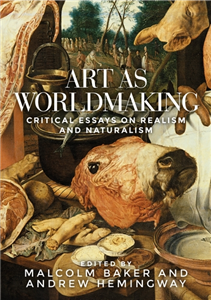
        Art as worldmaking

        Critical essays on realism and naturalism

        by Malcolm Baker, Andrew Hemingway

        Introduction : Realism and its others in the 21st century: Why Realism won't go away - Andrew Hemingway Part I: Theory 1. The figure as double agent: realism and abstraction in European post-war art - Briony Fer 2. Realism's Credibility Problem - Joshua Shannon 3. If only; only if ... - Adrian Rifkin Part II: Sculpture 4. Confronting the Veristic Sculptural Portrait - Malcolm Baker 5. Sculpture, Realism and the Neo-classical Ideal - Martina Droth 6. Elasticity and Victorian Sculptural Form - Caroline Arscott 7. Image of the People: Charles Ray's Recent Work - Anne M. Wagner Part III: Garden Design 8. Of Gardens and Persons: the English Engagement with China's Garden Design - Martin Powers 9. Traditional Views. Conservative Anti-Naturalism and Landscape Aesthetics in France around 1900 - Neil McWilliam Part IV: Painting and Photography 10. Willem Kalf on Reflexykonst and the Aesthetics of Transformation in Still Life - Celeste Brusati 11. Democratic light: phenomenology and the worldliness of painting - Brendan Prendeville 12. The Visibility of Labor - T.J. Clark 13. Body and Soul in the work of Thomas Eakins and F. Holland Day - Rebecca Zurier Part V: Photography and Conema 14. Photography as counter forensics - Steve Edwards 15. Woman, War and Social Documentary Photography in South Africa - Tamar Garb 16. Antonioni's Blow-Up (1966): photography and film - Lisa Tickner Part VI: Post-Media / Contemporary Practice 17. Peter Dreher's Everyday Realism - Alistair Rider 18. From grey and rainy Vermont - Thomas Crow 19. 'Every day, something happens to us': Realism at the crossroads - Gail Day Index

      • Trusted Partner
        Humanities & Social Sciences
        March 2017

        Cultural identities and the aesthetics of Britishness

        by Dana Arnold

        Considers how notions of Britishness were constructed and promoted through architecture, landscape, painting, sculpture and literature. Maps important moments in the self-conscious evolution of the idea of 'nation' against a broad cultural historical framework. An important addition to the field of postcolonial studies as it looks at how British identity creation affected those living in England - most study in this area has thus far focused on the effect of such identity creation upon the colonial subject. Broad appeal due to wide subject matter covered. Examines just how 'constructed' a national identity is - past and present.

      • Trusted Partner
        The Arts
        July 2025

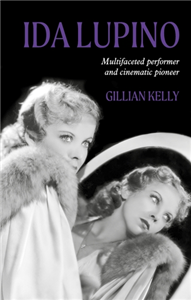
        Ida Lupino

        Multifaceted performer and cinematic pioneer

        by Gillian Kelly

        This book contributes to a welcome new wave focusing on the importance of female filmmakers, providing a reappraisal of Ida Lupino, a cinematic figure of significant importance. Given her ability to move between popular and independent cinemas and her status as both a Hollywood star and director/writer/producer of socially relevant films overlooked by the mainstream, Lupino is a particularly interesting case study. Employing a range of critical approaches, including feminist theory, auteur theory and critical theory, this book investigates key themes and motifs that developed across Lupino's unusual and unique career as one of the most significant female players in film history. Investigating her oeuvre as actress, director, writer and producer, it discusses Lupino as a complex and important filmmaker whose career, on both sides of the camera, requires substantially more critical attention than it has been awarded thus far.

      • Trusted Partner
      • Trusted Partner
        The Arts
        September 2007

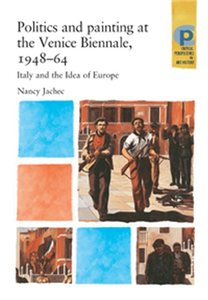
        Politics and painting at the Venice Biennale, 1948–64

        Italy and the Idea of Europe

        by Nancy Jachec, Marsha Meskimmon, Shearer West, Tim Barringer

        Although cultural exchanges were named within the Council of Europe in the mid- 1950s as being second only in importance to the military as a tool for ensuring a stable and integrated Western Europe in the aftermath of the Second World War, European-led initiatives have generally been overlooked in the historiography of art of the immediate post-war period. Popularly remembered as the era of the United States' cultural 'triumph', American Abstract Expressionism in particular is commonly identified as the cultural 'weapon' by which that nation conquered Western European culture. Using the Venice Biennale as a case study, this book challenges the idea that there was an American cultural conquest in the 1950s through the fine arts, arguing instead that Western Europe retained a strong sense of world cultural leadership in the immediate post-war years. An institutional history that combines political and diplomatic with art history, and is informed by extensive archival research, it argues that Italian political and cultural figures actively promoted the 'Idea of Europe' - the Council of Europe's cultural initiative of 1955 designed to promote the idea of a homogeneous post-war European culture - at the Biennale in the form of gesture painting as an international style, as the emblem of a culturally united Western Europe, and as the repository of universal humanist values for the international community. Scholarly but accessible, this book will be of interest not only to researchers and to students of international cultural relations during the Cold War, but to general, interested readers, too. ;

      • Trusted Partner
        The Arts
        September 2025

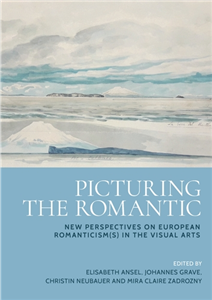
        Picturing the Romantic

        New perspectives on European Romanticism(s) in the visual arts

        by Elisabeth Ansel, Johannes Grave, Christin Neubauer, Mira Claire Zadrozny

        European Romanticism in the visual arts has always been defined by transnational transfer processes. It is surprising that international aspects of Romantic movements have been, in contrast to literary studies, a gap in art historical research. Picturing the Romantic addresses this issue and reveals new perspectives on European Romanticism(s) in the visual arts by reconsidering the phenomenon's traditional canon, geographical dimensions and terminology and analysing various examples of the complex and heterogeneous works of Romantic painting. In sixteen original essays, renowned and early career researchers examine the question of whether to speak of several independently considered Romanticisms or one European Romanticism. They adopt a transnational perspective on Romantic art in and beyond Europe, focusing on the interconnections between the countries.

      • Trusted Partner
        Humanities & Social Sciences
        January 2013

        Tyrants of Sicily by Hugo Falcandus

        by Graham Loud, Thomas Wiedemann

        This book is our principal source for the history of the Kingdom of Sicily in the troubled years between the death of its founder, King Roger, in February 1154 and the spring of 1169. It covers the reign of Roger's son, King William I, known to later centuries as 'the Bad', and the minority of the latter's son, William II 'the Good'. The book illustrates the revival of classical learning during the twelfth-century renaissance. It presents a vivid and compelling picture of royal tyranny, rebellion and factional dispute at court. Sicily had historically been ruled by tyrants, and that the rule of the new Norman kings could be seen, for a variety of reasons, as a revival of that classical tyranny. A more balanced view of Sicilian history of the period 1153-1169 has been provided as an appendix to the translation in the section of the contemporary world chronicle ascribed to Archbishop Romuald II of Salerno, who died in April 1181. In particular the chronicle of Romuald enables us to see how the papal schism of 1159 and the simultaneous dispute between the German Emperor Frederick Barbarossa and the north Italian cities affected the destiny of the kingdom of Sicily. In contrast to the shadowy figure of Hugo Falcandus, the putative author of the principal narrative of mid-twelfth-century Sicilian history, Romuald II, Archbishop of Salerno 1153-1181, is well-documented.

      • Trusted Partner
        Children's & YA

        Things. My 200 Picture Book

        by Magdalena Skala

        The very smallest children can identify and name objects from their homes in this award-winning, large-format board book. Magdalena Skala’s fantastic illustrations use bright colours and clear forms to depict the most important objects from the nursery, kitchen, garden, lounge, bathroom – in short from children’s everyday worlds: a great start into the world of words – and books! Magdalena Skala was awarded the 2019 Meefisch Prize and the Marktheidenfeld Prize for picture book illustration for THINGS. MY 200-PICTURE BOOK.

      • Trusted Partner
        The Arts
        June 2021

        Genre and performance: film and television

        by Christine Cornea

        Looking at contemporary film and television, this book explores how popular genres frame our understanding of on-screen performance. Previous studies of screen performance have tended to fix upon star actors, directors, or programme makers, or they have concentrated upon particular training and acting styles. Moving outside of these confines, this book provides a truly interdisciplinary account of performance in film and television and examines a much neglected area in our understanding of how popular genres and performance intersect on screen. Each chapter concentrates upon a particular genre or draws upon generic case studies in examining the significance of screen performance. Individual chapters examine contemporary film noir, horror, the biopic, drama-documentary, the western, science fiction, comedy performance in 'spoof news' programmes and the television 'sit com' and popular Bollywood films.

      • Trusted Partner
      • Trusted Partner
        The Arts
        March 2017

        Images of the army

        The military in British art, 1815-1914

        by J. W. M. Hichberger

        In an age when engraving and photography were making artistic images available to a much wider public, artists were able to influence public attitudes more powerfully than ever before. This book examines works of art on military themes in relation to ruling-class ideologies about the army, war and the empire. The first part of the book is devoted to a chronological survey of battle painting, integrated with a study of contemporary military and political history. The chapters link the debate over the status and importance of battle painting to contemporary debates over the role of the army and its function at home and abroad. The second part discusses the intersection of ideologies about the army and military art, but is concerned with an examination of genre representations of soldiers. Another important theme which runs through the book is the relation of English to French military art. During the first eighty years of the period under review France was the cynosure of military artists, the school against which British critics measured their own, and the place from which innovations were imported and modified. In every generation after Waterloo battle painters visited France and often trained there. The book shows that military art, or the 'absence' of it, was one of the ways in which nationalist commentators articulated Britain's moral superiority. The final theme which underlies much of the book is the shifts which took place in the perception of heroes and hero-worship.

      • Trusted Partner
        Humanities & Social Sciences
        March 2017

        Popular imperialism and the military, 1850-1950

        by John M. MacKenzie

        Colonial war played a vital part in transforming the reputation of the military and placing it on a standing equal to that of the navy. The book is concerned with the interactive culture of colonial warfare, with the representation of the military in popular media at home, and how these images affected attitudes towards war itself and wider intellectual and institutional forces. It sets out to relate the changing image of the military to these fundamental facts. For the dominant people they were an atavistic form of war, shorn of guilt by Social Darwinian and racial ideas, and rendered less dangerous by the increasing technological gap between Europe and the world. Attempts to justify and understand war were naturally important to dominant people, for the extension of imperial power was seldom a peaceful process. The entertainment value of war in the British imperial experience does seem to have taken new and more intensive forms from roughly the middle of the nineteenth century. Themes such as the delusive seduction of martial music, the sketch of the music hall song, powerful mythic texts of popular imperialism, and heroic myths of empire are discussed extensively. The first important British war correspondent was William Howard Russell (1820-1907) of The Times, in the Crimea. The 1870s saw a dramatic change in the representation of the officer in British battle painting. Up to that point it was the officer's courage, tactical wisdom and social prestige that were put on display.

      • Trusted Partner
        Humanities & Social Sciences
        March 2023

        Golden Mummies of Egypt

        Interpreting identities from the Graeco-Roman period

        by Campbell Price, Julia Thorne

        Golden Mummies of Egypt presents new insights and a rich perspective on beliefs about the afterlife during an era when Egypt was part of the Greek and Roman worlds (c. 300 BCE-200 CE). This beautifully illustrated book, featuring photography by Julia Thorne, accompanies Manchester Museum's first-ever international touring exhibition. Golden Mummies of Egypt is a visually spectacular exhibition that offers visitors unparalleled access to the museum's outstanding collection of Egyptian and Sudanese objects - one of the largest in the UK.

      • Trusted Partner
        Biography & True Stories
        May 2026

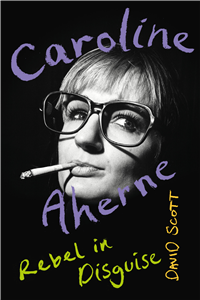
        Caroline Aherne

        Rebel in disguise

        by David Scott

        A thoughtful exploration of the work of this unique comedian and writer. Caroline Aherne was one of the most influential and beloved of British comedians. In this book David Scott explores Aherne's comedic artistry and creative legacy, focusing on her iconic characters and ground-breaking TV shows. Scott dives into Aherne's most beloved creations, from the sharp-tongued Mrs Merton to the quietly revolutionary The Royle Family. Drawing on the tales of collaborators and telling behind-the-scenes stories, he provides an intimate glimpse into the creative processes that brought these iconic works to life. At the same time, he examines the social and cultural influences that shaped Aherne's work, from the rich traditions of Northern working-class humour to the experiences of Irish migrants. Aherne's work is celebrated for its sharp wit, warmth and ability to find comedy in adversity. This book offers an exploration and celebration of one of comedy's most inventive minds, revealing how she reshaped the British comedy landscape.

      • Family & home stories (Children's/YA)
        February 1905

        Little Women

        by Louise May Alcott

        Little Women "has been read as a romance or as a quest, or both. It has been read as a family drama that validates virtue over wealth", but also "as a means of escaping that life by women who knew its gender constraints only too well".[6]:34 According to Sarah Elbert, Alcott created a new form of literature, one that took elements from Romantic children's fiction and combined it with others from sentimental novels, resulting in a totally new format. Elbert argued that within Little Women can be found the first vision of the "All-American girl" and that her multiple aspects are embodied in the differing March sisters.

      • Trusted Partner
        Literature & Literary Studies
        May 2023

        Pasts at play

        Childhood encounters with history in British culture, 1750–1914

        by Rachel Bryant Davies, Barbara Gribling

        This collection brings together scholars from disciplines including Children's Literature, Classics, and History to develop fresh approaches to children's culture and the uses of the past. It charts the significance of historical episodes and characters during the long nineteenth-century (1750-1914), a critical period in children's culture. Boys and girls across social classes often experienced different pasts simultaneously, for purposes of amusement and instruction. The book highlights an active and shifting market in history for children, and reveals how children were actively involved in consuming and repackaging the past: from playing with historically themed toys and games to performing in plays and pageants. Each chapter reconstructs encounters across different media, uncovering the cultural work done by particular pasts and exposing the key role of playfulness in the British historical imagination.

      Subscribe to our

      newsletter