
Your Search Results


-
Promoted Content

 Literature & Literary StudiesMarch 2021
Thomas Heywood and the classical tradition
by Tania Demetriou, Janice Valls-Russell
-
Promoted Content
 The ArtsDecember 2015
Classical Hollywood cinema
Point of view and communication
by James Zborowski
This book offers a new approach to filmic point of view by combining close analyses informed by the tools of narratology and philosophy with concepts derived from communication studies. Each chapter stages a conversation between two masterpieces of classical Hollywood cinema and one critical concept that can enrich our understanding of them: Vertigo (Alfred Hitchcock, 1958) and Mr. Deeds Goes to Town (Frank Capra, 1936) are interpreted in relation to point of view; Anatomy of a Murder (Otto Preminger, 1959) and The Man Who Shot Liberty Valance (John Ford, 1962) are considered with reference to the concept of distance; and Letter from an Unknown Woman (Max Ophuls, 1948) and Only Angels Have Wings (Howard Hawks, 1939) are explored through the lens of communication. Each encounter reveals new, exciting and mutually illuminating ways of appreciating not only these case studies, but also the critical concepts at stake. ;
-
 Trusted Partner
 Humanities & Social SciencesJanuary 2013
Tyrants of Sicily by Hugo Falcandus
by Graham Loud, Thomas Wiedemann
This book is our principal source for the history of the Kingdom of Sicily in the troubled years between the death of its founder, King Roger, in February 1154 and the spring of 1169. It covers the reign of Roger's son, King William I, known to later centuries as 'the Bad', and the minority of the latter's son, William II 'the Good'. The book illustrates the revival of classical learning during the twelfth-century renaissance. It presents a vivid and compelling picture of royal tyranny, rebellion and factional dispute at court. Sicily had historically been ruled by tyrants, and that the rule of the new Norman kings could be seen, for a variety of reasons, as a revival of that classical tyranny. A more balanced view of Sicilian history of the period 1153-1169 has been provided as an appendix to the translation in the section of the contemporary world chronicle ascribed to Archbishop Romuald II of Salerno, who died in April 1181. In particular the chronicle of Romuald enables us to see how the papal schism of 1159 and the simultaneous dispute between the German Emperor Frederick Barbarossa and the north Italian cities affected the destiny of the kingdom of Sicily. In contrast to the shadowy figure of Hugo Falcandus, the putative author of the principal narrative of mid-twelfth-century Sicilian history, Romuald II, Archbishop of Salerno 1153-1181, is well-documented.
-
Trusted Partner
 Literature & Literary StudiesMay 2023
Pasts at play
Childhood encounters with history in British culture, 1750–1914
by Rachel Bryant Davies, Barbara Gribling
This collection brings together scholars from disciplines including Children's Literature, Classics, and History to develop fresh approaches to children's culture and the uses of the past. It charts the significance of historical episodes and characters during the long nineteenth-century (1750-1914), a critical period in children's culture. Boys and girls across social classes often experienced different pasts simultaneously, for purposes of amusement and instruction. The book highlights an active and shifting market in history for children, and reveals how children were actively involved in consuming and repackaging the past: from playing with historically themed toys and games to performing in plays and pageants. Each chapter reconstructs encounters across different media, uncovering the cultural work done by particular pasts and exposing the key role of playfulness in the British historical imagination.
-
Trusted Partner
 Humanities & Social SciencesMay 2020
Beginning classical social theory
by Marcel Stoetzler, Peter Barry
-
Trusted Partner
-
Trusted Partner
-
Trusted Partner
-
Trusted Partner

 November 2005
The 100 Classic Dishes of Austria
Perlenreihe
by Herausgegeben von Plachutta, Ewald; Herausgegeben von Wagner, Christoph
-
Trusted Partner

 December 1996
KHK Classic Line 8
Mit Version 97
by Wehmeier, Werner; Kuhlmann, Gregor; Karrasch, Bernhard
-
Trusted Partner
-
Trusted Partner
-
Trusted Partner
-
Trusted Partner
-
Trusted Partner
 September 2009
Applied Classics
Comparisons, Constructs, Controversies
by Herausgegeben von Chaniotis, Angelos; Herausgegeben von Kuhn, Annika; Herausgegeben von Kuhn, Christina
-
Trusted Partner
-
Trusted Partner
 The ArtsAugust 2014
David Lean
by Melanie Williams, Brian McFarlane, Neil Sinyard
'A rule of mine is this', said William Goldman in 1983, 'there are always three hot directors and one of them is always David Lean.' One of the best known and most admired of British film makers, David Lean had a directorial career that spanned five decades and encompassed everything from the intimate black-and-white romance of Brief Encounter (1945) to the spectacular Technicolor epic of Lawrence of Arabia (1962). This book offers comprehensive coverage of every feature film directed by Lean, yielding new insights on the established classics of his career as well as its lesser-known treasures. Its analysis prioritises questions of gender and emphasises the often-overlooked but highly significant recurrence of female-centred narratives throughout Lean's career. Drawing extensively on archival historical materials while also presenting nuanced close readings of individual films, David Lean offers a fascinating and original account of the work of a remarkable British film maker. ;
-
Trusted Partner
 The ArtsJanuary 2019
Tears of laughter
Comedy-drama in 1990s British cinema
by Nigel Mather
Tears of laughter' examines the interactions of comedy and drama in three vital thematic strands of British cinema during the 1990s: comedies exploring issues of class, culture and community in British society, 'ethnic' comedy-dramas engaging with complex issues of identity and allegiance in modern Britain, and romantic comedies featuring characters searching (somewhat desperately or frantically) for a suitable and desirable long-term or short-term partner. Films to be discussed in detail include 'Brassed Off' (1996), 'The Full Monty' (1997), 'East is East' (1999), 'Four Weddings and a Funeral' (1994), 'Notting Hill' (1999) and a post-1990s romantic comedy, 'Love Actually' (2003). The study discusses these specific films and a range of other 1990s British comedy-drama films within the context of community-orientated Ealing comedy classics, contentious situation comedies treating race relations as both a laughing matter and a site of conflict ('Till Death Us Do Part' and 'Love Thy Neighbour'), and romantic comedies set and produced in Britain. It is aimed at film studies academics, students and film enthusiasts.
-
Trusted Partner

 January 2016
AngularJS & Ionic Framework
Hybride App-Entwicklung mit JavaScript und HTML5
by Weiße, Bengt
-
Trusted Partner
 The ArtsFebruary 2006
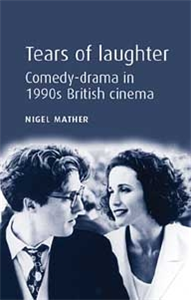
Tears of laughter
Comedy-drama in 1990s British cinema
by Nigel Mather
'Tears of laughter' examines the interactions of comedy and drama in three vital thematic strands of British cinema during the 1990s: comedies exploring issues of class, culture and community in British society, 'ethnic' comedy-dramas engaging with complex issues of identity and allegiance in modern Britain, and romantic comedies featuring characters searching (somewhat desperately or frantically) for a suitable and desirable long-term or short-term partner. Films to be discussed in detail include 'Brassed Off' (1996), 'The Full Monty' (1997), 'East is East' (1999), 'Four Weddings and a Funeral' (1994), 'Notting Hill' (1999) and a post-1990s romantic comedy, 'Love Actually' (2003). The study discusses these specific films and a range of other 1990s British comedy-drama films within the context of community-orientated Ealing comedy classics, contentious situation comedies treating race relations as both a laughing matter and a site of conflict ('Till Death Us Do Part' and 'Love Thy Neighbour'), and romantic comedies set and produced in Britain. It is aimed at film studies academics, students and film enthusiasts. ;



