
Your Search Results


-
Promoted Content

 Children's & YA
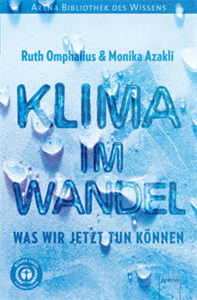
Climate Change. What We Can Do Now
by Ruth Omphalius/ Monika Azakli
“There is no Planet B!” More and more young people are worried about the future of Planet Earth. Climate change is heating not only the planet but also people’s emotions. But what exactly is climate? And why are the changes threatening the lives of both polar bears and us humans. In simple language but with solid science, the authors explain the most important aspects of climate, from the greenhouse effect to the Gulf Stream. Current developments are described as well, and the scientific background is supplemented by gripping reports. The book also offers a glimpse of the future: what will happen if we go on in the same way as now? How can climate change be halted? This makes for riveting reading – and not just for young activists.
-
Promoted Content
-
 Trusted Partner

 Geography & the EnvironmentOctober 2025
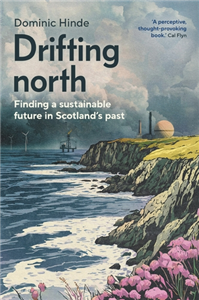
Drifting north
Finding the future at the top of the world
by Dominic Hinde
Scotland's past and future collide in this engaging journey through climate change, fossil capitalism and the struggle for a sustainable world. Scotland's history and future are entangled with climate change and the story of the modern world. This small country on the fringes of northern Europe pioneered fossil capitalism and played a key role in its spread across the planet. It is a living museum of the crisis of the west, of deindustrialisation, stagnation and the struggle to build a better future from the ashes. Journalist and sociologist Dominic Hinde travels from the treeless Highlands to the lowland cities, struggling to balance memories with aspiration. Through this journey he finds that his own sensory turmoil, shaped by recovery from a near fatal accident, mirrors the disarray of the fossil fuel transition - an uncertain passage between what was and what must be. Part memoir, part environmental history, part travelogue, this is a compelling narrative of connections - to place, energy and the possibility of renewal. Through the lens of one country, it asks a vital question: can the lessons of the past help us build a more sustainable future?
-
Trusted Partner

 October 2020
The Eco-Balance on the Plate
How What We Eat Can Protect the Climate
by Dr. Malte Rubach
How much CO₂ is emitted by one serving of spaghetti bolognese? About 1.5 kilograms! This example shows what the meat industry and food logistics mean for the eco-balance of our food. But is it enough to switch to meat-free and dairy-free alternatives or local specialities? Dr. Malte Rubach takes a closer look and reviews our food regime and its impact on our climate. We live in a society influenced by technology and the rising consumption of resources. Rubach argues for a sensible attitude to food and shows what we can still eat with a clear conscience.
-
Trusted Partner
 March 2024
The Strategy of Rescue
The past and present of a power-political concept
by Johannes F. Lehmann
"Rescue” has two fundamentally different “existential” dimensions. One is aimed at “saving” individual lives that are in danger. Firefighters, for instance, rescue people from fires, while the sea rescue services rescue shipwrecked people from the Mediterranean. The second dimension of “rescue”, on the other hand, concerns systems – think of the bailing out of banks, the euro or the climate disaster – and so points to a larger context that creates the conditions for “life” to even be possible, or at least to be preserved. The complex subject of this stringent essay is just to what extent politics enable or prevent “rescue attempts”, to what extent it understands its actions as “rescue actions”, and how decisively the “narrative”, i.e. the “talk of rescue”, ultimately dominates our entire understanding of politics.
-
Trusted Partner
 Humanities & Social SciencesFebruary 2024
Political ecologies of the Far Right
by Irma Kinga Allen, Ståle Holgersen, Andreas Malm, Kristoffer Ekberg
-
Trusted Partner
-
Trusted Partner
 Humanities & Social SciencesJuly 2018
Climate change and the oil industry
by Jon Birger Skjaerseth, Jon Skjaerseth, Tora Skodvin, Mikael Anderssen, Duncan Liefferink, Caroline Wilding
-
Trusted Partner
-
Trusted Partner
 Children's & YA
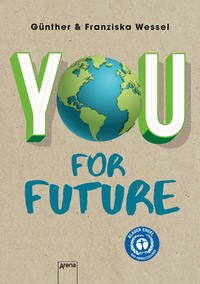
You for Future
by Franziska Wessel/ Günther Wessel
‘We will not stop demonstrating,’ writes Franziska Wessel in a guest column in the Berliner Zeitung. Franziska is pursuing a goal. Decisive measures must finally be taken to protect the climate. While that is not happening she spends every Friday on the streets, gives interviews and puts pressure on politicians. But climate change isn’t the only thing threatening our future. There is so much suffering, injustice and destruction in the world. Something must be done about it. And as a climate activist, Franziska knows exactly how to be active. Together with her father, the journalist and author, Günther Wessel, she explains: How do I start a petition? How do I organise a campaign? How does lobbying work? So that everyone knows how they can make things happen.
-
Trusted Partner
 The ArtsMarch 2025
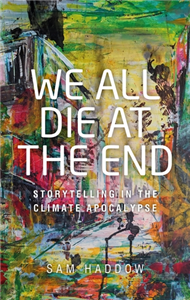
We all die at the end
Storytelling in the climate apocalypse
by Sam Haddow
We all die at the end offers a survey of contemporary end-of-the-world fiction, spanning literature, children's fiction, video games, theatre and film. It draws on eco-critical philosophy and narrative theory to show ways in which the climate crisis is reorienting storytelling in the face of foreseeable human extinction. In the process, it argues that such stories have a role to play in helping us come to terms with the severity and scale of the crisis that we face.
-
Trusted Partner

 Medicine
Humor in Psychiatric Care
by Jonathan Gutmann
How can humor be used to engage with and help people suffering from mental illness? This practical handbook explains the concept of humor in psychiatric treatment and sets out the case for employing it. The author outlines how nurses can assess who might benefit from the use of humor and for whom it would be out of place, and provides a toolkit of humorous interventions for daily nursing practice. Target Group: Practicing nurses, psychiatric nurses, care clowns
-
Trusted Partner
 Humanities & Social SciencesJanuary 2025
Crisis and change in European Union foreign policy
by Nikki Ikani
-
Trusted Partner
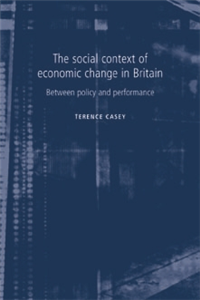 Humanities & Social SciencesOctober 2008
The social context of economic change in Britain
Between policy and performance
by Terrence Casey
This important book, newly available in paperback, examines a period of dramatic economic change in Britain during the Thatcher era. The Conservatives' free market policies generally improved the performance of the economy in Britain, but some parts of the country still did poorly (for example northern England). Casey argues that this was as a result of variations in social contexts - a combination of institutions, interests and economic culture. Southern England, possessing a more individualistic culture and higher levels of entrepreneurialism, has a 'market responsive' social context that can prosper under free market policies. Social context is thus a crucial intervening variable between the policies selected by decision-makers and the performance of economies, the key for enhancing prosperity is the proper match between economic policies and the context in which they are implemented. The social context of economic change in Britain provides an original theoretical framework linking economic growth and civil society and offers a unique insight into the Thatcher era. This book will be of interest to students of British politics and comparative political economy, public policy and political history. ;
-
Trusted Partner
 Business, Economics & LawJanuary 2022
Reclaiming economics for future generations
by Lucy Ambler, Joe Earle, Nicola Scott, Julie Froud
-
Trusted Partner
 Business, Economics & LawJune 2026
Power plants
Bioenergy, vegetal labour and the politics of productivity
by James Palmer
Power Plants offers an unflinching assessment of society's underappreciated but growing addiction to the industrial burning of crops and trees for energy. As vehicles increasingly run on fuels made from sugarcane and oil-palm, wood pellets replace coal, and scientists rush to engineer crops to produce renewable jet fuel, this book blows apart bioenergy's reputation as a simple, benign substitute for fossil fuels. Scrutinising modern bioenergy systems in the UK, Europe and United States, Power Plants shows how vegetal lifeforms are being enrolled to reinforce energy cultures centred around logics of efficiency, productivity and economic growth at all costs. Nonetheless, the book insists that a closer attention to plants could yet provoke a rethink of the social and economic purposes of all kinds of energy, with radical implications for ideas about growth, waste, prosperity and even pleasure.
-
Trusted Partner
 Political structure & processesMay 2007
Devolution and constitutional change in Northern Ireland
by Edited by Paul Carmichael, Colin Knox and Robert Osborne
This edited book, written by a collection of scholars with an interest in Northern Ireland, tracks its uneasy experience with devolution following the optimistic political period associated with the 1998 Belfast (Good Friday) Agreement. The volume brings together researchers from the Economic and Social Research Council's (ESRC) 'Devolution and Constitutional Change' Programme and other experts to record four key perspectives on Northern Ireland. First, it considers the inextricable link between devolution and constitutional developments. Second, it examines how the main political parties responded to devolution and the major challenges faced by society in moving beyond conflict (such as political symbolism, the role of women, equality and human rights issues). Third, it attempts to assess some of the workings of devolved government in its short-lived form or those seeded in devolution and carried on by direct rule ministers. Finally, Northern Irelands devolved government and associated institutions are located within the wider relationships with Westminster, the Republic of Ireland and Europe. This edited volume will be of interest to students of Irish politics and public policy, but more generally, from a comparative perspective, those with an interest in devolution and constitutional change. It may even assist politicians in Northern Ireland to reflect on the real potential to restore its devolved institutions and draw back from the brink of permanently copper-fastening 'direct rule' from Westminster.
-
Trusted Partner

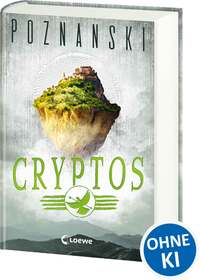 Children's & YAAugust 2020
Cryptos
by Poznanski, Ursula
Where do we go when Nowhere is the only destination left? Kerrybrook is Jana‘s favourite virtual escape. An idyllic fishing village with beautiful nature and, every now and then, a breeze of fresh air from the nearby sea. Jana, is this world‘s designer and person in power, she’s satisfied with her masterpiece. Best job so far. Until one day, a dead body is found, in both, ’Virtual Reality‘ and the real world. In times of climate change, VR is the only safe place for humankind. That‘s why Jana needs to solve the crime, she’s responsible for stopping the destruction. • CliFi Thriller (Climate Fiction): Climate change & virtual reality • For fans of Black Mirror (Netflix) • All age readers • Strong, female protagonist • Highly relevant topic WHITE RAVENS recommendation (2021): "In the not too distant future, the world is an inhospitable place: droughts, storms, floods. That’s why world designers construct »alternative realities«, such as landscapes populated by dinosaurs, life at court in the Middle Ages, and surfing and chilling out on a beach. People can switch between these worlds at will and, when they die there, they are not truly dead; instead, they merely return to the »real world« – same as at night when they sleep. Then they are reunited with their body, which is lying inside a capsule. In »Cryptos«, Ursula Poznanski pulls out all the stops of storytelling: She embeds numerous references to human and intellectual history in an action-packed and extremely suspenseful thriller plot. In the process, she raises central existential and ontological questions that result from the interplay between the real and the virtual worlds. This complex dystopian novel is narrated in such an enjoyable way that readers will hardly notice their brains going into overdrive as they devour it."
-
Trusted Partner
-
Trusted Partner

 2019
2019History of the Throw-Away Society
The drawback of consumption
by Wolfgang König
Sooner or later everything is thrown away. In the consumer society, however, usable and serviceable products that may be as good as new are also thrown away. Such behaviour is the result of a long-term process that has developed over a period of one-and-a-half centuries. The change was led by the USA, and the Federal Republic of Germany followed. It started at the turn of the last century with personal hygiene: articles such as toilet paper, sanitary towels, nappies and paper handkerchiefs. After the Second World War, a large number of other disposable articles were soon added, such as paper cups and plastic dishes, nylon stockings and pens, razor blades, beverage cans and much more besides. Wolfgang König shows how business and consumers have together made throwing things away perfectly normal – and discusses how the throwaway society may be overcome.



