
Theart Press
Theart Press is a South African publisher specialisingin inspirational books - including poetry, children's books and biography.
View Rights Portal
Theart Press is a South African publisher specialisingin inspirational books - including poetry, children's books and biography.
View Rights Portal
We are a publisher from Germany with a selected list of children's and young adult books.
View Rights Portal
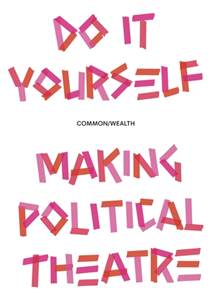
A unique guide to creating political theatre, produced by one of the UK's most exciting companies. Do It Yourself is a vital resource for anyone interested in exploring theatre culture grounded in and produced by working-class, multi-racial communities. Designed for artists, activists and community organisers, the book offers a step-by-step guide to creating political theatre that is relevant, impactful and rooted in the lives of everyday people. Common Wealth have spent fifteen years working at the cutting edge of political theatre. In Do It Yourself, they share their experimental and activist approach to performance-making, based on DIY principles and the belief that ground-breaking theatre can be made with anyone, anywhere, in ways that truly resonate with the communities it serves. Do It Yourself introduces Common Wealth's artistic and political ethos, provides unique insights into their most significant performances and offers practical exercises for creating your own work. But this is not just a manual. It is a celebration of culture as a collective endeavour, one that can challenge the status quo and inspire change.

Death in modern theatre offers a unique account of modern Western theatre, focusing on the ways in which dramatists and theatre-makers have explored historically informed ideas about death and dying in their work. It investigates the opportunities theatre affords to reflect on the end of life in a compelling and socially meaningful fashion. In a series of interrelated, mostly chronological, micronarratives beginning in the late nineteenth century and ending in the early twenty-first century, this book considers how and why death and dying are represented at certain historical moments using dramaturgy and aesthetics that challenge audiences' conceptions, sensibilities, and sense-making faculties. It includes a mix of well-known and lesser-known plays from an international range of dramatists and theatre-makers, and offers original interpretations through close reading and performance analysis.
 Trusted Partner
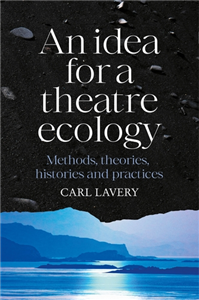
An Idea for a Theatre Ecology is the first book in the discipline of Theatre and Performance Studies to provide a rigorous and coherent theory of the ecology that is immanent to the theatrical medium. Over six clearly written chapters, the book provides a genealogy, outlines a method, provides a lexicon and demonstrates an alternative practice of ecoperformance analysis grounded in the figure of the archipelago. Focusing on Antonin Artaud's theatre of cruelty, the book argues that theatre has no need to provide ecological messages nor to transform itself into a platform for the narration of ecological stories. Instead, more is to be gained, environmentally and politically, by concentrating on the power of images, gestures and voices to create corporeal affects and sensations that implicate the spectators in a terrestrial event.
Trusted Partner
 Trusted Partner


There are many things in life that we are (more or less) free to choose: our circle of friends, our workplace, our place of residence. However, we have to take some communities as they come: We cannot choose our family or our neighbours, for example. Why this does not only lead to the much-vaunted idyllic sense of belonging and what tensions forced social relationships can cause: This is the subject of this fascinating collection of essays by Bernd Imgrund. It sheds light on a piece of social history that we all know from our own experience: who hasn't had an argument with their immediate neighbour or made fun of the residents of the neighbouring district? But it is by no means only negative aspects that characterise neighbourly relations. Pride in one's neighbourhood, help within a village community: the many advantages of a social community, its importance and its representation in art and literature have also found their way into this book.
Trusted Partner
Trusted Partner

This electronic version has been made available under a Creative Commons (BY-NC-ND) open access license. This book is about science in theatre and performance. It explores how theatre and performance engage with emerging scientific themes from artificial intelligence to genetics and climate change. The book covers a wide range of performance forms from Broadway musicals to educational theatre, from Somali drama to grime videos. It features work by pioneering companies including Gob Squad, Headlong Theatre and Theatre of Debate as well as offering fresh analysis of global blockbusters such as Wicked and Urinetown. The book offers detailed description and analysis of theatre and performance practices as well as broader commentary on the politics of theatre as public engagement with science. Science in performance is essential reading for researchers, students and practitioners working between science and the arts within fields such as theatre and performance studies, science communication, interdisciplinary arts and health humanities.
Trusted Partner

Blair's community is an exciting and timely book which challenges the accepted wisdom about the role of communitarian thought in the development of New Labour under Tony Blair. From the mid-1990s there has been a widespread view that Labour policies have reflected, or even been influenced by, the work of communitarian writers like Amitai Etzioni and John Macmurray, and philosophers such as Alasdair MacIntyre and Michael Sandel. The book begins by establishing that such a view was widely, and frequently unquestioningly, held, in both popular and academic forums. It then identifies reasons for the persistence of this impression, the evidence on which it was based, and the understandings of communitarianism used by commentators. The book argues that existing accounts of 'New Labour's communitarianism' fail to present an accurate picture because they are - in some cases explicitly - working with a generic or composite conception of communitarianism which bears little relation to the work of the communitarian writers whose names have been associated with the party. ;
Trusted Partner
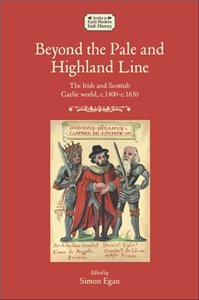
This book offers important new insights into the history and culture of the Gaelic-speaking world from the mid-fifteenth century through to the reign of James VI and I. Throughout this period, the reach of the English and Scottish crowns within these western regions was limited. The initiative lay with local communities and royal power was contingent upon negotiating with well-established and largely autonomous aristocratic lineages. Moreover, events within this western world could exert a powerful, often unpredictable, influence upon the affairs of the wider archipelago. Using a series of case studies, this collection examines the evolving relationship between Ireland and Scotland in rich detail. It demonstrates how this world interacted with the encroaching English and Scottish states and underlines the importance of paying closer attention to this neglected area of Irish and British history.
Trusted Partner
The unimagined community proposes a reexamination of the Vietnam War from a perspective that has been largely excluded from historical accounts of the conflict, that of the South Vietnamese. Challenging the conventional view that the war was a struggle between the Vietnamese people and US imperialism, the study presents a wide-ranging investigation of South Vietnamese culture, from political philosophy and psychological warfare to popular culture and film. Beginning with a genealogy of the concept of a Vietnamese "culture," as the latter emerged during the colonial period, the book concludes with a reflection on the rise of popular culture during the American intervention. Reexamining the war from the South Vietnamese perspective, The unimagined community pursues the provocative thesis that the conflict, in this early stage, was not an anti-communist crusade, but a struggle between two competing versions of anticolonial communism.
Trusted Partner

Charting a collaborative art-based project using carpet-making skills and the industrial heritage of the region, the book investigates how a cleaved ex-industrial community used arts methodologies as a cohesion strategy. Drawing on images from the company's archives, the book mines the history of Firths Carpets Limited, a firm that carpeted interiors across the globe from the mid-1800s. Women's labour and tastes were business critical to the production and sale of Firths carpets. Drawing on the author's personal connection to the village, an ethnographic sensibility and novel research techniques, ex-worker responses to a village radically altered by ruination are explored. Ex-workers felt nostalgia for the dignity of work and a sense of homesickness in a village ghosted by industrial spectres of the past. Threads of Labour argues that left-behind deindustrialised places require acts of social re-making if their communities are to survive.
Trusted Partner

Building a neighborly community, available for the first time in paperback, explores the political economy of post-cold war East Asian co-operation by examining the history of intra-regional co-operation, against the background of China's rise and Japan's relative decline, both real and perceived. The book in particular examines how East Asian states have dealt with the South China Sea as a region-wide security challenge and the imperative for self-help after the 1997 economic crisis. The book builds on the explanatory strength of analytical eclecticism, and ultimately concludes that China, South Korea, Japan, and ASEAN states have aimed for constructing a neighborly community. The fundamental differences between a neighborly community and the kind of community that has emerged in Europe and North America are that qualification for membership is not conditional, the process of routine interactions is itself one of reassurance, the aim of inter-state interactions is to foster acceptance of each other, and changes in a member's foreign policy behaviour are accepted. ;
Trusted Partner

A compilation of case studies illustrating the use of arts, culture and other community assets individuals and communities used to cope and develop resilience during the Covid-19 pandemic, demonstrating valuable lessons that might help us develop resilience in similar future crises.
Trusted Partner
The first in a new annual series, Women, Theatre and Performance that will consist of themed volumes on diverse aspects of women's engagement with theatre and performance. Ranging across three hundred years the essays in this volume address key questions in women's theatre history and retrieve a number of hitherto 'hidden' histories of women performers. Resituates women's, largely neglected, creative contribution within theatre and cultural history and seeks to challenge orthodox readings of both history and text. Topics include: Susanna Centlivre and the notion of intertheatricality; gender and theatrical space; the repositioning of women performers such as Wagner's Muse, Willhelmina Schröder-Devrient, the Comédie Français' 'Mademoiselle Mars', Mme Arnould-Plessey, and the actresses of the Russian serf theatre. ;
Trusted Partner

There is no-one else in theatre who takes this position There is a lack of books on serious theatre theory Written in a particularly accessible form. ;
Trusted Partner
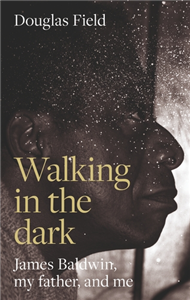
A moving exploration of the life and work of the celebrated American writer, blending biography and memoir with literary criticism. Since James Baldwin's death in 1987, his writing - including The Fire Next Time, one of the manifestoes of the Civil Rights Movement, and Giovanni's Room, a pioneering work of gay fiction - has only grown in relevance. Douglas Field was introduced to Baldwin's essays and novels by his father, who witnessed the writer's debate with William F. Buckley at Cambridge University in 1965. In Walking in the dark, he embarks on a journey to unravel his life-long fascination and to understand why Baldwin continues to enthral us decades after his death. Tracing Baldwin's footsteps in France, the US and Switzerland, and digging into archives, Field paints an intimate portrait of the writer's life and influence. At the same time, he offers a poignant account of coming to terms with his father's Alzheimer's disease. Interweaving Baldwin's writings on family, illness, memory and place, Walking in the dark is an eloquent testament to the enduring power of great literature to illuminate our paths.
Trusted Partner
Trusted Partner

 Trusted Partner
Trusted Partner
Trusted Partner
A wide-ranging look at the state of contemporary theatre practice, economics, and issues related to identity, politics, and technology. Contains a snapshot dissection of where theatre is, where it has been and where it might be going through the voices of established and emerging theatre artists and scholars from the UK, US and elsewhere. Offers an examination of how to make theatre in a time of crisis and why it is a vital form of communication are at the heart of the book's mission. Asks questions such as: where is theatre now taking place?; what is the relationship between play and performance?; how does funding work?; what states does theatre flourish under?; and if there is a current 'crisis of theatre' should it not be seen as a welcome opportunity to develop a vigorous 'theatre of crisis'?. The international list of contributors includes Jim Carmody, Phyllis Nagy, Michael Billington, Max Stafford-Clark, Peter Sellars, Dragan Klaic, Goat Island, Erik Ehn and many others, making up a vast array of practising artists, thinkers, and scholars. ;



