Your Search Results

      • International Committee for Conflict Mangagement (ICCM) - Arno Editions

        ICCM is a charitable organization created in Brussels in 1994 by a group of human rights experts, university professors, civil society actors and representatives of women's and youth organizations concerned with sharing the experience acquired through their research, teaching, projects and humanitarian interventions in countries affected by conflicts in several regions of the world.The purpose of the organization is to promote the protection and promotion of human rights, peaceful resolution, prevention and transformation of conflicts.Thus, through training, research, publication and book distribution, ICCM, through its publishing house (Arno) contributes to the peaceful resolution, management and prevention of armed conflicts to mitigate their consequences on the civilian population.

        View Rights Portal
      • Residenz Verlag GmbH

        Residenz Verlag, founded in 1956 and located in Salzburg and Vienna, is one of the most renowned publishers in Austria. Residenz Verlag stands for an ambitious literature program and dedicated non-fiction books. In the area of non-fiction, Residenz Verlag publishes on the topics of politics, sustainability, contemporary history, and arts as well as biographies.In fiction, the focus is on new discoveries from the German-speaking world, the continuous support of renowned Austrian writers’ oeuvre, and selected translations from (South-)Eastern and Northern European languages as well as from English. The authors’ list includes Thomas Bernhard, Peter Henisch, Walter Kappacher, Christine Nöstlinger, Alek Popov, Clemens Setz, Tanja Maljartschuk.

        View Rights Portal
      • Trusted Partner
        Humanities & Social Sciences
        December 2025

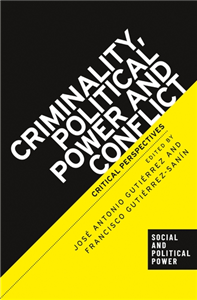
        Criminality, political power and conflict

        Critical perspectives

        by José Antonio Gutiérrez Danton, Francisco Gutiérrez Sanín

        In the aftermath of the greed vs. grievance debate and the new wars paradigm, the focus of conflict studies shifted decisively to understanding "predatory" behaviours as the raison d'etre of contemporary conflict. Conflict was viewed as a continuum in which the more you engage in criminal behaviour, the less political you are.This approach has been robustly criticised over the past 15 years; however, in the process, we have been left with unsuitable concepts to handle the complex interactions between civil war, political power and criminality. The departure point here is the understanding of politics and criminality as two historically differentiated domains of human activity. Different, but interrelated, often co-constitutive and overlapping. Here, we empirically and theoretically explore their interactions, connections, and convergences, not focusing solely on irregular actors, thus bringing back the State and elites into this debate.

      • Trusted Partner
        Humanities & Social Sciences
        January 2025

        The four dimensions of power

        Understanding domination, empowerment and democracy

        by Mark Haugaard

        In this accessible and sophisticated exploration of the nature and workings of social and political power, Haugaard examines the interrelation between domination and empowerment. Building upon the perspectives of Steven Lukes, Michel Foucault, Amy Allen, Hannah Arendt, Anthony Giddens, Pierre Bourdieu and others, he offers a clear theoretical framework, delineating power in four interrelated dimensions. The first and second dimensions of power entail two different types of social conflict. The third dimension concerns tacit knowledge, uses of truth and reification. Drawing upon genealogical theory and accounts of slavery as social death, the fourth dimension of power concerns the power to create social subjects. The book concludes with an original normative pragmatist power-based account of democracy. Offering lucid and entertaining illustrations of complex theoretical perspectives, this book is essential reading for scholars and activists.

      • Trusted Partner
      • Trusted Partner
        Humanities & Social Sciences
        December 2006

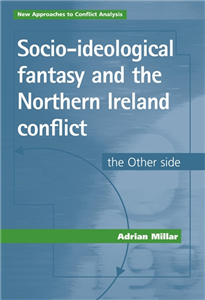
        Socio-ideological fantasy and the Northern Ireland conflict

        The Other side

        by Adrian Millar, Peter Lawler, Emmanuel Pierre Guittet

        Conducting a Lacanian-inspired psychoanalysis of some of the most candid interview materials ever gathered from former IRA members and loyalists, the author demonstrates through a careful examination of their slips of the tongue, jokes, rationalisations and contradictions, that it is the unconscious dynamics of socio-ideological fantasy, i.e. the unconscious pleasure people find in suffering, domination, submission, ignorance, failure and rivalry over jouissance, that lead to the reproduction of antagonism between the Catholic and Protestant communities in Northern Ireland. In the light of this, he concludes that traditional approaches to conflict resolution which overlook the unconscious are doomed to failure and that a Lacanian psychoanalytic understanding of socio-ideological fantasy has great potential for informing the way we understand and study all inter-religious and ethnic conflicts. Whether you find yourself agreeing with the arguments in this book or not, you are sure to find it a welcome change from both the existing, mainly conservative, analyses of the Northern Ireland conflict and traditional approaches to conflict resolution.

      • Trusted Partner
      • Trusted Partner
        Humanities & Social Sciences
        March 2017

        Borders and conflict in South Asia

        The Radcliffe Boundary Commission and the partition of Punjab

        by Lucy Chester

        Borders and conflict in South Asia is the first full-length study of the 1947 drawing of the Indo-Pakistani boundary in Punjab. Using the Radcliffe commission as a window onto the decolonization and independence of India and Pakistan, and examining the competing interests, both internal and international, that influenced the actions of the various major players, it highlights British efforts to maintain a grip on India even as the decolonization process spun out of control. Drawing on extensive archival research in India, Pakistan, and Britain, combined with innovative use of cartographic sources, the book paints a vivid picture of both the partition process and the Radcliffe line's impact on Punjab. This book will be vital reading for scholars and students of colonialism, decolonization, partition, and borderlands studies, while providing anyone interested in South Asia's independence with a highly readable account of one of its most controversial episodes.

      • Trusted Partner
        Business, Economics & Law
        May 2005

        The UN, human rights and post-conflict situations

        by Nigel White, Dirk Klaasen

        The United Nations is one of the largest providers of assistance in post-conflict situations in the world. This book considers the human rights standards applicable to the United Nations and applied by the United Nations in post-conflict situations, including East Timor, Kosovo and Afghanistan. It looks at legal principles, peace agreements, support of democracy, human rights protection, development and other forms of reconstruction with which the UN has become involved, including the grandly-named task of "state-building". It deals both with the obligation upon the UN to respect human rights in post-conflict situations, and the obligation upon the UN to ensure that human rights are respected by those in positions of power in post-conflict situations. Written by an internationally renowned list of contributors, this book will be of vital use to anyone studying conflict analysis, international relations, international law and the role of the United Nations on the world stage. ;

      • Trusted Partner
        Humanities & Social Sciences
        March 2014

        Transforming conflict through social and economic development

        Practice and policy lessons from Northern Ireland and the Border Counties

        by Sandra Buchanan

        Transforming conflict through social and economic development examines lessons learned from the Northern Ireland and Border Counties conflict transformation process through social and economic development and their consequent impacts and implications for practice and policymaking, with a range of functional recommendations produced for other regions emerging from and seeking to transform violent conflict. It provides, for the first time, a comprehensive assessment of the region's transformation activity, largely amongst grassroots actors, enabled by a number of specific funding programmes, namely the International Fund for Ireland, Peace I, II and III and INTERREG I, II and IIIA. These programmes have been responsible for a huge increase in grassroots practice which to date has attracted virtually no academic analysis; this book seeks to fill this gap. In focusing on the politics of the socioeconomic activities that underpinned the elite negotiations of the peace process, key theoretical transformation concepts are firstly explored, followed by an examination of the social and economic context of Northern Ireland and the border counties. The three programmes and their impacts are then assessed before considering what policy lessons can be learned and what recommendations can be made for practice. This is underpinned by a range of semi-structured interviews and the author's own experience as a project promoter through these programmes in the border counties for more than a decade. The book will be essential reading for students, practitioners and policymakers in the fields of peace and conflict studies, conflict transformation, peacebuilding, post-agreement reconstruction and the political economy of conflict and those interested in contemporary developments in the Northern Ireland peace process. ;

      • Trusted Partner
      • Trusted Partner
        Business, Economics & Law
        May 2008

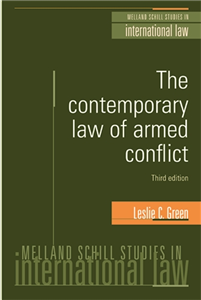
        The contemporary law of armed conflict

        by Leslie C. Green, Iain Scobbie, Jean D'Aspremont, Dominic McGoldrick

        Green's The contemporary law of armed conflict has been acclaimed as one of the most significant works on the law of armed conflict to appear in recent years. The first edition was adopted as a basic text by military institutions and educational establishments throughout the world and is among the most comprehensive and readable works on the subject. This new edition brings the work up to date, examining the significance of the World Court's Opinion on the legality of the nuclear weapon. It also considers the importance of such matters as the laser weapon agreement, the mines treaty and the jurisprudence of the two war crimes tribunals, that for the former Yugoslavia as well as for Rwanda, and assesses the role of the proposed International Criminal Court as it may affect the law of armed conflict. The book applies a practical as well as a theoretical approach, and draws on an extensive range of national and international practice. It is thus an indispensable reference for the armed forces and government defence organizations, as well as academics and students interested in the modern law of war. ;

      • Trusted Partner
        Humanities & Social Sciences
        October 2010

        The Northern Ireland experience of conflict and agreement

        A model for export?

        by Robin Wilson

        The Northern Ireland Experience of Conflict and Agreement presents a salutary warning to the international community against the fashionable view that there is an 'Irish model' which can be exported to cauterise ethnic troubles around the globe. The book draws on extensive archive research in London and Dublin on the 1970s power-sharing experiment, and on interviews with senior officials and political figures from the two capitals-as well as reconciliation practitioners-about the negotiation and chequered implementation of the Belfast agreement. It shows how stereotyped conceptions of the problem as a product of 'ancient hatreds', allied to solutions based on Realpolitik, have failed to transform Northern Ireland from a fragile peace, following the exhaustion of protracted paramilitary campaigns, to genuine reconciliation. The book concludes with practical proposals for constitutional reforms which would favour genuine power-sharing-rather than merely sharing power out-and set Northern Ireland on the road to the 'normal', civic society its long-suffering residents desire. It will be essential reading not only for academics and postgraduates interested in ethnic conflict but also for policy-makers who confront it in practice. ;

      • Trusted Partner
        Business, Economics & Law
        July 2018

        The contemporary law of armed conflict (3rd edn)

        by Leslie C. Green, Iain Scobbie, Jean D'Aspremont, Dominic McGoldrick

        Green's The contemporary law of armed conflict has been acclaimed as one of the most significant works on the law of armed conflict to appear in recent years. The first edition was adopted as a basic text by military institutions and educational establishments throughout the world and is among the most comprehensive and readable works on the subject. This new edition brings the work up to date, examining the significance of the World Court's Opinion on the legality of the nuclear weapon. It also considers the importance of such matters as the laser weapon agreement, the mines treaty and the jurisprudence of the two war crimes tribunals, that for the former Yugoslavia as well as for Rwanda, and assesses the role of the proposed International Criminal Court as it may affect the law of armed conflict. The book applies a practical as well as a theoretical approach, and draws on an extensive range of national and international practice. It is thus an indispensable reference for the armed forces and government defence organizations, as well as academics and students interested in the modern law of war.

      • Trusted Partner
        Humanities & Social Sciences
        January 2026

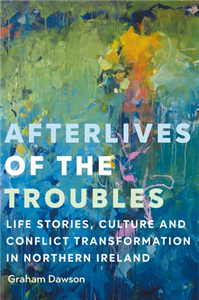
        Afterlives of the Troubles

        Life stories, culture and conflict transformation in Northern Ireland

        by Graham Dawson

        Focusing on experiential life stories across a range of forms and practices, this book investigates subjectivity, culture and the cultural politics of representation as a neglected dimension of conflict transformation in the Northern Irish peace process. Interdisciplinary critical perspectives from historical cultural studies, oral history and popular-memory theory inform close interpretive engagement with life stories in their cultural, historical and geographical contexts. This enables exploration of the complex temporal dynamics of 'post-conflict' subjectivities in the lengthening 'afterlife' of the Troubles, where feelings attached to conflict experiences are not 'past' but haunt the present, and memory-work carries future-oriented desires for truth, justice and reconciliation. Through case studies responding to the evolving peace process through this prism of life-storytelling, Afterlives maps a contested history of legacy policy-making and approaches to 'dealing with the past', from devolution in 2005-7 through to the Legacy and Reconciliation Act of 2023.

      • Trusted Partner
        Teaching, Language & Reference
        August 2024

        The Northern Ireland peace process

        by Eamonn O'Kane

      • Trusted Partner
        April 2021

        Ukraine's fateful years 2013–2019

        Vol. 1: The Maidan uprising in 2013/2014 Vol. 2: The annexation of Crimea and the war in Donbass

        by Winfried Schneider-Deters

        — Comprehensive and detailled analysis of the Euromaidan and the ongoing war in Ukraine — Brussels versus Moscow, Russian aggression and geopolitical interests — China's role in a new East-West conflict The years between 2013 and 2019 were almost as significant for Ukraine as the attainment of independence in 1991, as this very independence was in danger of being lost again after the Euromaidan. The nationwide popular uprising against the regime of President Yanukovych had led to a change of power: the former parliamentary opposition formed a new government, resulting in a loss of influence for Russia. Russian agents therefore tried to bring about a "Crimea scenario", another secession in the eastern and southern parts of Ukraine. The resulting "Ukraine conflict", often called a civil war, is in fact a Russian war of attrition against Ukraine. President Putin intends to resolve it on his terms in the Minsk process: through a de facto "autonomous" part of the Donbass in the Ukrainian state, independent of Kiev, as a lever for Russian political influence. Winfried Schneider- Deters, a renowned expert on Ukraine, analyses narratively and in detail the events from 2013 to 2019 and places the Russian- Ukrainian conflict in the context of the dawning "Chinese century".

      • Trusted Partner
        Humanities & Social Sciences
        April 2020

        The sword is not enough

        by Jeremy Pressman

      • Trusted Partner
      • Trusted Partner
        Humanities & Social Sciences
        September 2022

        Unofficial peace diplomacy

        by Lior Lehrs, J. Simon Rofe, Giles Scott-Smith

      Subscribe to our

      newsletter