
Thekla Verlag
We are a publisher from Germany with a selected list of children's and young adult books.
View Rights Portal
We are a publisher from Germany with a selected list of children's and young adult books.
View Rights Portal
Theart Press is a South African publisher specialisingin inspirational books - including poetry, children's books and biography.
View Rights Portal

The twin towers of the World Trade Center were blown up on behalf of the US government. Vapour trails in the sky contain chemicals that cause disease. The moon landing never took place; it was staged in a studio. Many people believe in conspiracy theories: supporting evidence can seem plausible, until you look closely. To refute conspiracy theories often requires scientific and technical knowledge. Dr. Holm Gero Hümmler has precisely this sort of knowledge, and he is able to communicate it clearly for laypeople. In his book “Conspiracy Myths” he provides guidelines on how to deal with questionable facts. He gives valuable tips for personal research and shows how to deconstruct well-known conspiracy theories – from 9-11 to the “earthquake machine” HAARP, to chemtrails and “Nazi UFOs”. Sometimes, refutation is easy: you only need a sand pit and game pieces ...

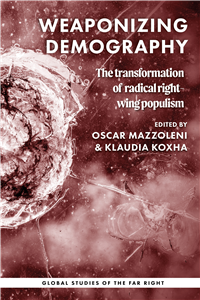
This book introduces a new framework for understanding how the radical right reimagines demographic change as an existential threat. Across Europe and the Americas, low birth rates, immigration, and gender equality are reframed as signs of civilisational decline. This volume explores how radical right actors mobilise fears around fertility, migration, race, family, and sexuality through narratives of crisis, ethnic purity, and control over borders, reproduction, and social norms. It examines conspiracy thinking fuelled by demographic anxiety to justify attacks on gender and sexual rights and reinforce exclusionary ideas of national belonging. Grounded in empirical case studies and interdisciplinary approaches, this book reveals how these narratives converge to reinforce dominance of a native, heteronormative, Christian population. In linking domains often treated separately, it provides a timely and critical perspective on the evolving logic of radical right politics worldwide.
 Trusted Partner
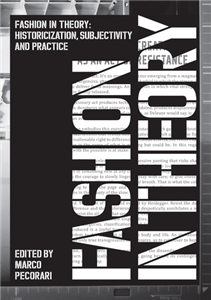
For Spring Summer 2020, Gucci showed a collection questioning identity politics and capitalism. Rather than the usual explanation of the material, shapes or inspirations behind the collection, the press release handed out at the show quoted the philosopher Michel Foucault and questioned the very nature of fashion itself. Gucci's press release reflects the popularization of critical theory in public discourse and fashion in particular. Philosophers, activists and academics are increasingly recruited to collaborate with luxury brands, and main-stream fashion brands have begun to adopt a discourse about politics and critical thinking using, in their communication, concepts such as "resistance", "gender fluidity", "national identity" or "cultural heritage" without accompanying these discourses with any form of political engagement or activism. Based on this intellectualization of the fashion industry and the recent proliferation of critical theory in fashion education, this book stresses the importance of rethinking the relationship between fashion and theory. Drawing together eleven chapters and four conversations by and with philosophers, cultural theorists, historians, anthropologists, activists, performers and designers, the book investigates both the theorization of fashion and the ways in which fashion offers a useful landscape in understanding the current state of critical theory today.
Trusted Partner

Lukácsian film theory and cinema explores Georg Lukács' writings on film. The Hungarian Marxist critic Georg Lukács is primarily known as a literary theorist, but he also wrote extensively on the cinema. These writings have remained little known in the English-speaking world because the great majority of them have never actually been translated into English - until now. Aitken has gathered together the most important essays and the translations appear here, often for the first time. This book thus makes a decisive contribution to understandings of Lukács within the field of film studies, and, in doing so, also challenges many existing preconceptions concerning his theoretical position. For example, whilst Lukács' literary theory is well known for its repudiation of naturalism, in his writings on film Lukács appears to advance a theory and practice of film that can best be described as naturalist. Lukácsian film theory and cinema is divided into two parts. In part one, Lukács' writings on film are explored, and placed within relevant historical and intellectual contexts, whilst part two consists of the essays themselves. This book will be of considerable interest to scholars and students working within the fields of film studies, literary studies, intellectual history, media and cultural studies. It is also intended to be the final volume in a trilogy of works on cinematic realism, which includes the author's earlier European film theory and cinema (2001), and Realist film theory and cinema (2006).
Trusted Partner

'Realist film theory and cinema' embraces studies of cinematic realism and 19th century tradition, the realist film theories of Lukács, Grierson, Bazin and Kracauer, and the relationship of realist film theory to the general field of film theory and philosophy. This is the first book to attempt a rigorous and systematic application of realist film theory to the analysis of particular films. The book suggests new ways forward for a new series of studies in cinematic realism, and for a new form of film theory based on realism. It stresses the importance of the question of realism both in film studies and in contemporary life. Aitken's work will be of interest to scholars and advanced students of film studies, literary studies, media studies, cultural studies and philosophy.
Trusted Partner
The book addresses what is political in critical theory and which aspects, arguments or notions of critical theory maintain political significance for the 20th and the 21st centuries. The collection of essays comprises itself of a series of clear and critical perspectives that analyze the extent to which critical theory relates political argument to modern societies and, thereby, exerts a critique of the multiple social and political phenomena of late modernity. The contributors focus on a multiplicity of universal phenomena such as globalization, multiple crises, late capitalism and the social role of the sciences, and posit some novel criticism of the contemporary social sphere, as it is situated within the wider system of global capitalism. They also present a plurivalent critique that links arguments in Marxism and Freud to all three generations of critical theory.
Trusted Partner
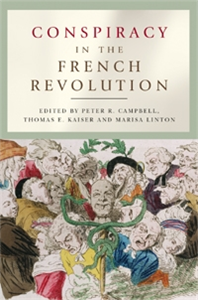
Conspiratorial views of events abound even in our modern, rational world. Often such theories serve to explain the inexplicable. Sometimes they are developed for motives of political expediency: it is simpler to see political opponents as conspirators and terrorists, putting them into one convenient basket, than to seek to understand and disentangle the complex motivations of opponents. So it is not surprising to see that just when the French Revolution was creating the modern political world, a constant obsession with conspiracies lay at the heart of the revolutionary conception of politics. The book considers the nature and development of the conspiracy obsession from the end of the old regime to the Directory. Chapters focus on conspiracy and fears of conspiracy in the old regime; in the Constituent Assembly; by the king and Marie Antoinette; amongst the people of Paris; on attitudes towards the peasantry and conspiracy; on Jacobin politics of the Year II and the 'foreign plot'; on counter-revolutionary plots and imaginary plots; on Babeuf and the 'conspiracy of equals'; and finally on fear of conspiracy as an intellectual impasse in the revolutionary mentality. Inspired by recent debates, this book is a comprehensive survey of the nature of conspiracy in the French Revolution, with each chapter written by a leading historian on the question. Each chapter is an original contribution to the topic, written however to include the wider issues for the area concerned. There is an emphasis throughout on clarity and accessibility, making the volume suitable for a wide readership as well as undergraduates and advanced researchers ;
Trusted Partner

This book offers a unique and timely reading of the early Frankfurt School in response to the recent 'affective turn' within the arts and humanities. Resisting the overly rationalist tendencies of political philosophy, it argues that critical theory actively cultivates a powerful connection between thinking and feeling, and rediscovers a range of often neglected concepts that were of vital importance to the first generation of critical theorists, including melancholia, hope, (un)happiness, objects and mimesis. In doing so, it brings the dynamic work of Walter Benjamin, Theodor Adorno, Ernst Bloch and Siegfried Kracauer into conversation with more recent debates around politics and affect. An important intervention in the fields of affect studies and social and political thought, Critical theory and feeling shows that sensuous experience is at the heart of the Frankfurt School's affective politics.
Trusted Partner

De-centering queer theory seeks to reorient queer theory to a different conception of bodies and sexuality derived from Eastern European Marxism. The book articulates a contrast between the concept of the productive body, which draws its epistemology from Soviet and avant-garde theorists, and Cold War gender, which is defined as the social construction of the body. The first part of the book concentrates on the theoretical and visual production of Eastern European Marxism, which proposed an alternative version of sexuality to that of western liberalism. In doing so it offers a historical angle to understand the emergence not only of an alternative epistemology, but also of queer theory's vocabulary. The second part of the book provides a Marxist, anti-capitalist archive for queer studies, which often neglects to engage critically with its liberal and Cold War underpinnings.
Trusted Partner
Trusted Partner

Populism is a powerful force today, but its full scope has eluded the analytical tools of both orthodox and heterodox 'populism studies'. This book provides a valuable alternative perspective. It reconstructs in detail for the first time the sociological analyses of US demagogues by members of the Frankfurt School and compares these with contemporary approaches. Modern demagogy emerges as a key under-researched feature of populism, since populist movements, whether 'left' or 'right', are highly susceptible to 'demagogic capture'. The book also details the culture industry's populist contradictions - including its role as an incubator of modern demagogues - from the 1930s through to today's social media and 'Trumpian psychotechnics'. Featuring a previously unpublished text by Adorno on modern demagogy as an appendix, it will be of interest to researchers and students in critical theory, sociology, politics, German studies, philosophy and history of ideas, as well as all those concerned about the rise of demagogic populism today.
Trusted Partner
 Trusted Partner
Film theory: an introduction offers a highly readable account of film theory and is an indispensable resource for students. The discussion ranges from the late 1960s to the present, a period in which a number of conceptual strands, notably politics, semiotics and psychoanalysis were woven together in an ambitious synthesis. In this book, the authors chart the construction of this synthesis and its subsequent fragmentation, and clearly explain the various intellectual currents which have contributed to it. Divided into two parts, the first covers the conceptual background of film theory, dealing with historical materialism, semiotics and psychoanalysis, whilst in the second the authors concentrate on particular topics such as authorship, narrative, realism, the avant-garde and postmodernism. For this new edition, the authors have added a new foreword, a fully updated and expanded bibliography, and a 60-page Retrospect outlining developments within film theory since the book's original publication in 1988. This Retrospect identifies a number of broad readings of Theory, each with a different perspective on the main content of the book. As such, it provides a new and original mapping of the 'post-theory' moment in this complex and often fractured terrain. Accessible and authoritative, this book is essential reading for students of film theory, or indeed anyone seeking a deeper understanding of modern cinema. ;
Trusted Partner
 Trusted Partner
Trusted Partner
Trusted Partner

This volume in the Critical Theory and Contemporary Society series explores the arguments between critical theory and epistemology in the twentieth and twenty-first centuries. Focusing on the first and second generations of critical theorists and Luhmann's systems theory, the book examines how each approaches epistemology. It opens by looking at twentieth-century epistemology, particularly the concept of lifeworld (Lebenswelt). It then moves on to discuss structuralism, poststructuralism, critical realism, the epistemological problematics of Foucault's writings and the dialectics of systems theory. This unique work takes a comparative look at structuralism and post-structuralism's epistemological theory with special reference to scientific reason. It also investigates Luhmann's works in epistemology. The aim is to explore whether the focal point for epistemology and the sciences remain that social and political interests actually form a concrete point of concern for the sciences as well.
Trusted Partner
Trusted Partner
Trusted Partner
An important collection of essays which treats Bakhtin as a provocative theorist whose work must be tested, explored and compared with the work of others. Contributors assess Bakhtin's contribution to difficult issues of colonialism, feminism, reception theory and theories of the body, amongst others. New articles explore the origins, previously unacknowledged, of Bakhtin's theory of language and provide a vivid account of the dramatic scandal surrounding Bakhtin's thesis on Rabelais. Contains dramatic new material, drawn from post-perestroika sources, which demythologizes the image of this important writer. A new bibliographical essay and introduction bring the English-language reader up-to-date with the progress of Bakhtin studies in Russia. ;
Trusted Partner
Critical theory and dystopia offers a uniquely rich study of dystopian fiction, drawing on the insights of critical theory. Asking what ideological work these dark imaginings perform, the book reconstructs the historical emergence, consolidation and transformation of the genre across the twentieth century and into our own, ranging from Yevgeny Zamayatin's We (1924) and Aldous Huxley's Brave New World (1932) to Anthony Burgess's A Clockwork Orange (1963) and Suzanne Collins's Hunger Games series (2000s and 2010s). In doing so, it reveals the political logics opened up or neutered by the successive moments of this dystopian history.



