
Your Search Results
-

-

Gyeonggi Content Agency
GCA supports the planning, production, distribution, overseas expansion of contents including videos and films, music, publishing, webtoons and animations, games, etc
View Rights Portal
-
Promoted Content

 The ArtsMarch 2017
Images of the army
The military in British art, 1815-1914
by J. W. M. Hichberger
In an age when engraving and photography were making artistic images available to a much wider public, artists were able to influence public attitudes more powerfully than ever before. This book examines works of art on military themes in relation to ruling-class ideologies about the army, war and the empire. The first part of the book is devoted to a chronological survey of battle painting, integrated with a study of contemporary military and political history. The chapters link the debate over the status and importance of battle painting to contemporary debates over the role of the army and its function at home and abroad. The second part discusses the intersection of ideologies about the army and military art, but is concerned with an examination of genre representations of soldiers. Another important theme which runs through the book is the relation of English to French military art. During the first eighty years of the period under review France was the cynosure of military artists, the school against which British critics measured their own, and the place from which innovations were imported and modified. In every generation after Waterloo battle painters visited France and often trained there. The book shows that military art, or the 'absence' of it, was one of the ways in which nationalist commentators articulated Britain's moral superiority. The final theme which underlies much of the book is the shifts which took place in the perception of heroes and hero-worship.
-
Promoted Content
 Humanities & Social SciencesJanuary 2025
England’s military heartland
Preparing for war on Salisbury Plain
by Vron Ware, Antonia Lucia Dawes, Mitra Pariyar, Alice Cree
What is it like to live next door to a British Army base? England's military heartland provides an eye-opening account of the sprawling military presence on Salisbury Plain, drawing on a wide range of voices from both sides of the divide. Targeted for expansion under government plans to reorganise the UK's global defence estate, the Salisbury 'super garrison' offers a unique opportunity to explore the impact of the military footprint in a particular place. But this is no ordinary environment: as well as being the world-famous site of Stonehenge, the grasslands of Salisbury Plain are home to rare plants and wildlife. How does the army take responsibility for conserving this unique landscape as it trains young men and women to use lethal weapons? Are its claims that its presence is a positive for the environment anything more than propaganda? This book investigates these questions against the backdrop of a historic landscape inscribed with the legacy of perpetual war.
-
 Trusted Partner
 Humanities & Social SciencesJanuary 2025
England’s military heartland
Preparing for war on Salisbury Plain
by Vron Ware, Antonia Dawes, Mitra Pariyar, Alice Cree
A considered investigation of a long-standing army base's impact on the British countryside. What is it like to live next door to a British Army base? Beyond the barracks provides an eye-opening account of the sprawling military presence on Salisbury Plain, drawing on a wide range of voices from both sides of the divide. Targeted for expansion under government plans to reorganise the UK's global defence estate, the Salisbury 'super garrison' offers a unique opportunity to explore the impact of the military footprint in a particular place. But this is no ordinary environment: as well as being the world-famous site of Stonehenge, the grasslands of Salisbury Plain are home to rare plants and wildlife. How does the army take responsibility for conserving this unique landscape as it trains young men and women to use lethal weapons? Are its claims that its presence is a positive for the environment anything more than propaganda? Beyond the barracks investigates these questions against the backdrop of a historic landscape inscribed with the legacy of perpetual war.
-
Trusted Partner
 Business, Economics & LawMay 2008
The contemporary law of armed conflict
by Leslie C. Green, Iain Scobbie, Jean D'Aspremont, Dominic McGoldrick
Green's The contemporary law of armed conflict has been acclaimed as one of the most significant works on the law of armed conflict to appear in recent years. The first edition was adopted as a basic text by military institutions and educational establishments throughout the world and is among the most comprehensive and readable works on the subject. This new edition brings the work up to date, examining the significance of the World Court's Opinion on the legality of the nuclear weapon. It also considers the importance of such matters as the laser weapon agreement, the mines treaty and the jurisprudence of the two war crimes tribunals, that for the former Yugoslavia as well as for Rwanda, and assesses the role of the proposed International Criminal Court as it may affect the law of armed conflict. The book applies a practical as well as a theoretical approach, and draws on an extensive range of national and international practice. It is thus an indispensable reference for the armed forces and government defence organizations, as well as academics and students interested in the modern law of war. ;
-
Trusted Partner
 Business, Economics & LawJuly 2018
The contemporary law of armed conflict (3rd edn)
by Leslie C. Green, Iain Scobbie, Jean D'Aspremont, Dominic McGoldrick
Green's The contemporary law of armed conflict has been acclaimed as one of the most significant works on the law of armed conflict to appear in recent years. The first edition was adopted as a basic text by military institutions and educational establishments throughout the world and is among the most comprehensive and readable works on the subject. This new edition brings the work up to date, examining the significance of the World Court's Opinion on the legality of the nuclear weapon. It also considers the importance of such matters as the laser weapon agreement, the mines treaty and the jurisprudence of the two war crimes tribunals, that for the former Yugoslavia as well as for Rwanda, and assesses the role of the proposed International Criminal Court as it may affect the law of armed conflict. The book applies a practical as well as a theoretical approach, and draws on an extensive range of national and international practice. It is thus an indispensable reference for the armed forces and government defence organizations, as well as academics and students interested in the modern law of war.
-
Trusted Partner
 Literature & Literary StudiesOctober 2025
Early modern drama and the theatre of war
Militarism, conflict and disruption in the plays of Shakespeare and his contemporaries
by Bronwen Price, Hilary Hinds
This volume explores the disruptive effects of militarism, war and social unrest in early modern drama. Engaging with Simon Barker's seminal work on dramatic representations of war and militarism, contributors highlight what often lies hidden beneath the surface of martial narratives, treating them as formative interventions in contemporary discourses, whether in justifying war, excluding dissident voices or shaping cultural identities. Discussions include new examinations of militarism, the figure of the soldier and early modern theories of war in Shakespearean tragedy, history and comedy, alongside antimasque and dramatic satire by lesser-known playwrights. The essays investigate how ideas of war underpin emerging concepts of gender, leadership, marriage and the family, as well as the continuing mobilisation of Shakespearean drama in the context of modern armed conflict. Together, they offer rich new contributions to the current lively critical debates on this topic.
-
Trusted Partner
Humanities & Social SciencesMarch 2017
Popular imperialism and the military, 1850-1950
by John M. MacKenzie
Colonial war played a vital part in transforming the reputation of the military and placing it on a standing equal to that of the navy. The book is concerned with the interactive culture of colonial warfare, with the representation of the military in popular media at home, and how these images affected attitudes towards war itself and wider intellectual and institutional forces. It sets out to relate the changing image of the military to these fundamental facts. For the dominant people they were an atavistic form of war, shorn of guilt by Social Darwinian and racial ideas, and rendered less dangerous by the increasing technological gap between Europe and the world. Attempts to justify and understand war were naturally important to dominant people, for the extension of imperial power was seldom a peaceful process. The entertainment value of war in the British imperial experience does seem to have taken new and more intensive forms from roughly the middle of the nineteenth century. Themes such as the delusive seduction of martial music, the sketch of the music hall song, powerful mythic texts of popular imperialism, and heroic myths of empire are discussed extensively. The first important British war correspondent was William Howard Russell (1820-1907) of The Times, in the Crimea. The 1870s saw a dramatic change in the representation of the officer in British battle painting. Up to that point it was the officer's courage, tactical wisdom and social prestige that were put on display.
-
Trusted Partner
-
Trusted Partner
 Humanities & Social SciencesDecember 2013
Contemporary history on trial
Europe since 1989 and the role of the expert historian
by Harriet Jones, Kjell Ostberg, Nico Randeraad
Is it right for historians to serve as 'expert witnesses' to past events? Since the end of the Cold War, a series of heated and politicised debates across Europe have questioned the 'truth' about painful episodes in the twentieth century. From the Holocaust to Srebrenica, inquiries and fact-finding commissions have become a common device employed by governments to deal with the pressure of public opinion. State-sponsored programmes of education and research attempt to encourage a common moral understanding of the lessons we learn from these painful memories. Contemporary historians have increasingly been drawn into these efforts since 1989 - in the courtroom, in the media, on commissions, as advisers. In a series of thoughtful essays, written by leading historians from across Europe, this volume considers the ethics and responsibilities that this new role entails. For anyone concerned with the role of the historian in contemporary society and how we arrive at a public understanding of history, this book is essential reading. ;
-
Trusted Partner
 Humanities & Social SciencesJuly 2023
Now that's what I call a history of the 1980s
by Lucy Robinson
-
Trusted Partner
 Humanities & Social SciencesJuly 2021
Post-everything
An intellectual history of post-concepts
by Herman Paul, Adriaan van Veldhuizen
Postmodern, postcolonial and post-truth are broadly used terms. But where do they come from? When and why did the habit of interpreting the world in post-terms emerge? And who exactly were the 'post boys' responsible for this? Post-everything examines why post-Christian, post-industrial and post-bourgeois were terms that resonated, not only among academics, but also in the popular press. It delves into the historical roots of postmodern and poststructuralist, while also subjecting more recent post-constructions (posthumanist, postfeminist) to critical scrutiny. This study is the first to offer a comprehensive history of post-concepts. In tracing how these concepts found their way into a broad range of genres and disciplines, Post-everything contributes to a rapprochement between the history of the humanities and the history of the social sciences.
-
Trusted Partner
 Humanities & Social SciencesApril 2022
A new naval history
by Quintin Colville, James Davey, Katherine Parker, Elaine Chalus, Evan Wilson, Barbara Korte, Cicely Robinson, Cindy McCreery, Ellie Miles, Mary A. Conley, Jonathan Rayner, Daniel Spence, Emma Hanna, Ulrike Zimmerman, Max Jones, Jan Rüger
A New Naval History brings together the most significant and interdisciplinary approaches to contemporary naval history. The last few decades have witnessed a transformation in how this field is researched and understood and this volume captures the state of a field that continues to develop apace. It examines - through the prism of naval affairs - issues of nationhood and imperialism; the legacy of Nelson; the socio-cultural realities of life in ships and naval bases; and the processes of commemoration, journalism and stage-managed pageantry that plotted the interrelationship of ship and shore. This bold and original publication will be essential for undergraduate and postgraduate students of naval and maritime history. Beyond that, though, it marks an important intervention into wider historiographies that will be read by scholars from across the spectrum of social history, cultural studies and the analysis of national identity.
-
Trusted Partner
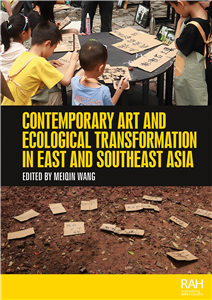 The ArtsMarch 2026
Contemporary art and ecological transformation in East and Southeast Asia
by Meiqin Wang
This anthology, presenting new research from fourteen scholars, delves into the interplay between contemporary art and ecological concerns in East and Southeast Asia. Focused on the concept of artistic remediation, the book unravels the diverse capacities of art to combat systemic anthropogenic destruction to the environment and ecology. At its core, the book articulates the ongoing ecological transformation in art and art history that embraces a paradigm shift in human-nature relationships, emphasizing interconnectedness of all life forms of the Earth. Bridging art studies, activism, and environmental studies, the book examines how artistic practices in the region have engaged with ecocritical reflection, biodiversity advocacy, sustainable practices, and environmental justice, among others. Providing a platform for critical and timely analysis of artistic interventions in the face of existential crises, the book acknowledges diverse voices of scholars who have situated their scholarship in the cultural and artistic specificities of various societies, locales, and communities in the region.
-
Trusted Partner
 Humanities & Social SciencesApril 2020
Early modern war narratives and the Revolt in the Low Countries
by Raymond Fagel, Leonor Álvarez Francés, William G. Naphy, Beatriz Santiago Belmonte
-
Trusted Partner
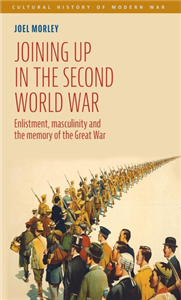 Humanities & Social SciencesJuly 2025
Joining up in the Second World War
Enlistment, masculinity and the memory of the Great War
by Joel Morley
This book connects the First and Second World Wars. It uses oral histories and Mass Observation material to explore men's attitudes to Second World War enlistment and the relationship they perceived between military service and masculinity, and how these were influenced by understandings of the First World War. Locating the cultural legacy of First World War in the subjectivities of men who participated in the Second World War demonstrates the breadth of sources that informed men's understandings of the First World War in interwar Britain. Its cultural legacy was omnipresent and diverse, and informed young men's attitudes and service preferences, but it reinforced Edwardian conceptions of wartime masculinity as often as it undermined them. Two decades after the First World War ended, they remained resilient in the subjective understandings of men who grew up in the Great War's shadow.
-
Trusted Partner
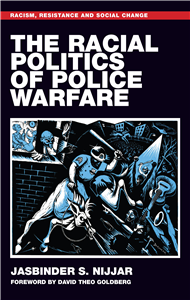 Humanities & Social SciencesMay 2026
The racial politics of police warfare
by Jasbinder S. Nijjar
Amid renewed anti-racist resistance to violent policing, The racial politics of police warfare unpacks the racisms that rationalise militarised policing in contemporary Britain. Jasbinder S. Nijjar shatters prevailing myths about British police as an impartial public service, by revealing it as an institution where racism and war reinforce one another. In examining flagship anti-gang and counter-terrorism policies and practices, the book offers a unique analysis of the relationship between anti-black and anti-Muslim racisms, to demonstrate how racialised populations are institutionalised as common enemies of modernity. Combining perspectives from sociology, history, criminology and social policy, Nijjar illustrates how British policing defends law and order and national security from the perceived threat of race through hyper-intrusive, pre-emptive and deathly measures. Accordingly, he gives a fresh take on resisting racial police warfare, calling for strategies that are at once political, collective, anti-militaristic and abolitionist.
-
Trusted Partner
 Humanities & Social SciencesJuly 2016
The humanitarian-military complex in Afghanistan
by Bertrand Taithe, Eric James, Tim Jacoby
Violent conflict brings together two seemingly disparate groups: humanitarians and soldiers. This mixes and convolutes agendas, blurring lines that are often perceived to be sacrosanct. Delving deeply into the history and reasons of why these two groups work in close proximity, this study provide a unique insight into the history, ethical dilemmas and policy conundrums when aid workers operate close to the military. Using Afghanistan as a case study, analytical rigour, deep primary research and "field" knowledge are combined in an exceptional contribution to this important area. This book gives scholars and practitioners alike a nuanced perspective on the challenges faced by aid workers, military personnel and decision-makers alike in countries affected by violent conflicts, hosting foreign military interventions and receiving international aid. ;
-
Trusted Partner
 Humanities & Social SciencesOctober 2020
A global history of early modern violence
by Erica Charters, Marie Houllemare, Peter H. Wilson
-
Trusted Partner
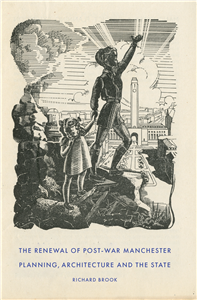 The ArtsSeptember 2024
The renewal of post-war Manchester
Planning, architecture and the state
by Richard Brook
A compelling account of the project to transform post-war Manchester, revealing the clash between utopian vision and compromised reality. Urban renewal in Britain was thrilling in its vision, yet partial and incomplete in its implementation. For the first time, this deep study of a renewal city reveals the complex networks of actors behind physical change and stagnation in post-war Britain. Using the nested scales of region, city and case-study sites, the book explores the relationships between Whitehall legislation, its interpretation by local government planning officers and the on-the-ground impact through urban architectural projects. Each chapter highlights the connections between policy goals, global narratives and the design and construction of cities. The Cold War, decolonialisation, rising consumerism and the oil crisis all feature in a richly illustrated account of architecture and planning in post-war Manchester.
-
Trusted Partner
 Literature & Literary StudiesJune 2025
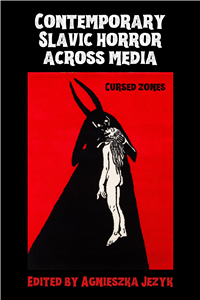
Contemporary Slavic horror across media
Cursed zones
by Agnieszka Jezyk
In the Western cultural production that puts individual or collective fear at its center, East/Central Europe has been portrayed as an othered space of horror - lawless, frightening zones where anything can happen. Incorporating articles on literature, film, visual arts, video games, music videos, and music festivals, Contemporary Slavic horror across media: Cursed zones is a pioneering anthology of academic essays devoted to Slavic horror fiction. The book focuses on works from the mid-20th century through the present, particularly the post-Soviet period. Assessing current trends in Czech, Polish, Russian, Slovak, Ukrainian, and East/Central European horror media, the book looks at similarities and idiosyncrasies of the genre in its Slavic variant. With this anthology we hope to tame 'the Easterner Other' and start exorcising 'monstrous' East/Central Europe.

