
Spatterlight
We manage rights for science-fiction and fantasy legend Jack Vane (1916 - 2013) and selected titles by Tanith Lee, Michael Shea, Matthew Hughes, and others.
View Rights Portal
We manage rights for science-fiction and fantasy legend Jack Vane (1916 - 2013) and selected titles by Tanith Lee, Michael Shea, Matthew Hughes, and others.
View Rights Portal
GCA supports the planning, production, distribution, overseas expansion of contents including videos and films, music, publishing, webtoons and animations, games, etc
View Rights Portal
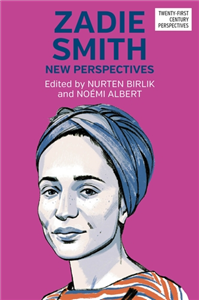
Zadie Smith's fiction reimagines subjectivity, relationality, and the conditions of contemporary life. This book offers a timely reassessment of her work, addressing identity, urban experience, and the category of the human. Moving beyond postcolonial and multiculturalist readings, it brings psychoanalytic, historical, symptomatic, and cultural materialist perspectives to bear across her novels, stories, essays, and plays. The collection explores how Smith's characters, shaped by diverse backgrounds and settings, challenge fixed ideas of Britishness and personhood. It argues that her writing opens up a new ontological space-defined by fluid identities, shifting subjectivities, and evolving forms of relationality. By reconsidering both the human and the spatial in Smith's work, the book makes a valuable contribution to contemporary literary criticism and to current thinking on narrative, identity, and urban life.

Middle English literature is intimately concerned with sleep and the spaces in which it takes place. In the medieval English imagination, sleep is an embodied and culturally determined act. It is both performed and interpreted by characters and contemporaries, subject to a particular habitus and understood through particular hermeneutic lenses. While illuminating the intersecting medical and moral discourses by which it is shaped, sleep also sheds light on subjects in favour of which it has hitherto been overlooked: what sleep can enable (dreams and dream poetry) or what it can stand in for or supersede (desire and sex). This book argues that sleep mediates thematic concerns and questions in ways that have ethical, affective and oneiric implications. At the same time, it offers important contributions to understanding different Middle English genres: romance, dream vision, drama and fabliau.
 Trusted Partner
Trusted Partner
Trusted Partner
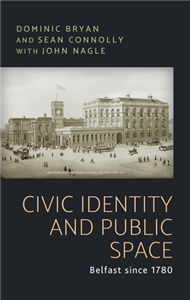
Civic identity and public space, focussing on Belfast, and bringing together the work of a historian and two social scientists, offers a new perspective on the sometimes lethal conflicts over parades, flags and other issues that continue to disrupt political life in Northern Ireland. It examines the emergence during the nineteenth century of the concept of public space and the development of new strategies for its regulation, the establishment, the new conditions created by the emergence in 1920 of a Northern Ireland state, of a near monopoly of public space enjoyed by Protestants and unionists, and the break down of that monopoly in more recent decades. Today policy makers and politicians struggle to devise a strategy for the management of public space in a divided city, while endeavouring to promote a new sense of civic identity that will transcend long-standing sectarian and political divisions.
Trusted Partner

What do we imagine when we imagine Europe and the European Union? To what extent is our understanding of the EU - of its development, its policies and its working processes - shaped by unacknowledged assumptions about what Europe really is? The book constructs a case for re-imagining Europe - not as an entity in Brussels or a series of fixed relations - but as a simultaneously real and imagined space of action which exists to the extent that Europeans and others act in and on it. This Europe is constantly being made in particular spaces, through specific actor struggles, whose interconnections are often ill-defined. We ask how do those concerned with building Europe, with extending and elaborating the EU, think of where they are and what they are doing? The book captures Europeans in the process of making Europe: of performing, interpreting, modelling, referencing, consulting, measuring and de-politicising Europe. ;
Trusted Partner
Trusted Partner
 Trusted Partner
Trusted Partner
Trusted Partner

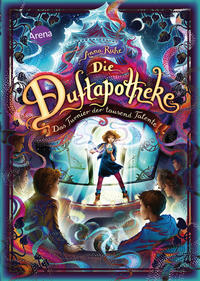
A world full of scents – and an adventure full of magic, racing hearts and dangers! Luzie Alvenstein can sense it right down to her fingertips: there is something wrong with the invitation she is holding in her hand. Her rival Elodie de Richemont has invited her to enter the “Contest of a thousand talents” – a competition for the world’s finest scent pharmacists. Of course the only thing Elodie is interested in is finding new talents to run her scent pharmacies. But Luzie has no choice. Together with Mats, Leon and Daan de Bruijn she goes to England in order to take part in the competition. What begins as a great game soon develops into a fight for survival – and this threatens to rob Luzie of everything she has ever loved… This is the fourth volume in the bestselling series of children’s books for boys and girls aged 10+. Written by the highly successful author Anna Ruhe and with atmospheric and beautifully detailed black-and-white illustrations by Claudia Carls.
Trusted Partner
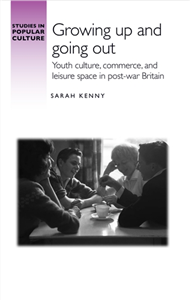
In the decades following the Second World War, youthful sociability was remade as young people across Britain flocked to newly-opened coffee bars, beat clubs, and discos. These spaces, increasingly unknown and unfamiliar to the adults who passed by them, played a remarkable role in reshaping town and city centres after dark as sites of leisure and recreation. Telling the history of youth in post-war Britain from the ground up, through the towns and cities that young people moved through, this book traces how the new spaces of post-war youth leisure transformed both young people's relationship with their local environment and adults' perceptions of the possibilities and dangers of modern leisure. Growing up and going out offers a timely study of youth, commerce, and leisure that explores the reimagination, remaking, and regulation of the post-war city after dark.
Trusted Partner
Trusted Partner
 Trusted Partner
At a time when education appears to be simply reproducing social class relations, Radical childhoods offers a timely consideration of how children's and young people's education can confront and challenge social inequality. Presenting detailed analysis of archival material and oral testimony, the book examines the experiences of students and educators in two schooling initiatives that were connected to two of the most significant social movements in Britain: Socialist Sunday Schools (est. 1892) and Black Saturday/Supplementary Schools (est. 1967). Analysing across time, the author explores the ways in which these two very different schooling movements incorporated large numbers of women, challenged class and race inequality, and attempted to create spaces of 'emancipatory' education independent to the state. It argues that despite appearing to be on the 'margins' of the public sphere these schools were important, if contested and complex, sites of political struggle.
Trusted Partner
Trusted Partner
This book provides an exhaustive analysis of the relationship between violence, urban space, and political subjectivity in Syria. It does so through an exploration of how urbicide, the violent destruction and alteration of the urban fabric, becomes a tool for the regime's governmental and sovereign exercise of power, decisively redefining state-society dynamics and cementing political loyalty in Syria. Adopting a critical and postcolonial perspective, and through the cases of Damascus and Aleppo, the volume presents a unique perspective on the civil war by examining socio-material changes in everyday political spaces and processes, from mundane destruction to urban development and reconstruction efforts, and how these are experienced by local communities. Featuring rich data collection through interviews, archival research, and aesthetic sources, the book ultimately foregrounds Syrians' political agency and creativity despite ruination.
Trusted Partner
 Trusted Partner
Trusted Partner
Trusted Partner
Trusted Partner
Trusted Partner
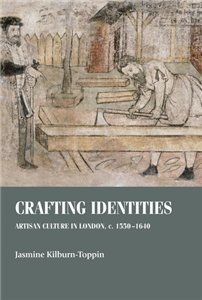
Crafting identities explores artisanal identity and culture in early modern London. It demonstrates that the social, intellectual and political status of London's crafts and craftsmen were embedded in particular material and spatial contexts. Through examination of a wide range of manuscript, visual and material culture sources, the book investigates for the first time how London's artisans physically shaped the built environment of the city and how the experience of negotiating urban spaces impacted directly on their distinctive individual and collective identities. Applying an innovative and interdisciplinary methodology to the examination of artisanal cultures, the book engages with the fields of social and cultural history and the histories of art, design and architecture. It will appeal to scholars of early modern social, cultural and urban history, as well as those interested in design and architectural history.
Trusted Partner
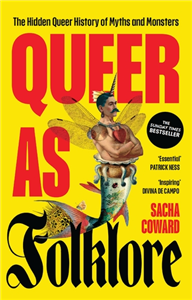
A celebration of queer history like you've never seen it before. Queer as folklore travels across centuries and continents to reveal the unsung heroes and villains of storytelling, magic and fantasy. Featuring images from archives, galleries and museums around the world, each chapter investigates the queer history of different mythic and folkloric characters, both old and new. Leaving no headstone unturned, Sacha Coward takes you on a wild ride through the night from ancient Greece to the main stage of RuPaul's Drag Race, visiting cross-dressing pirates, radical fairies and the graves of the 'queerly departed' along the way. Queer communities have often sought refuge in the shadows and created safe spaces in underworlds. But these forgotten narratives tell stories of resilience that deserve to be heard. Join any Pride march and you will see a glorious display of papier-mâché unicorn heads, drag queens in mermaid tails and more fairy wings than you can shake a trident at. These are not just accessories: they are queer symbols with historic roots. To truly understand who queer people are today, we must confront the twisted tales of the past.



