
Self-Counsel Press
Livres Canada Books
View Rights Portal


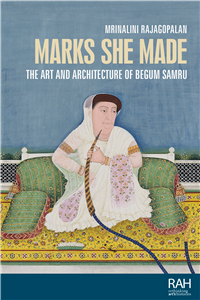
Begum Samru (b. circa 1750-d. 1836) was a north Indian woman ruler who used art and architecture to facilitate her social, political, and financial station in early modern India. Rising from the ranks of courtesans in Mughal Delhi to become the commander of her own mercenary army, she later became the ruler of an independent territory of Sardhana (60 km northwest of Delhi). The begum (Urdu/ Hindustani title for noblewoman) was a trusted ally to the Mughal emperor and the English East India Company, two of the dominant political powers in north India at the time. As a sovereign ruler, she corresponded with two popes and King Louis Philippe of France, exchanging portraits, architectural drawings, and letters with these powerful men in addition to her Mughal counterparts in India. Art and architecture played a key role in establishing Begum Samru as a powerful but non-threatening ruler; as an upholder and patron of the Catholic faith in India; as a political ally to several European and Indian factions that were vying for power; and as ruling matriarch of a cosmopolitan household, court, and army. In narrating the story of a single woman in nineteenth-century India, this book offers a path to think of the creative ways in which women participated in public and political spheres. It also illustrates how women without pedigree, women who did not bear biological children or produce male heirs, and women who lived in contravention of gendered norms found alternative methods of recognition, dignity, power, and sometimes, as in the case of Begum Samru, global visibility.


Rome, 1570: gazette writer Michelangelo moves in as a tenant with rich courtesan Mercuria. During an illicit excavation he comes across a strange skeleton and uncovers a scandal, in which a former contract killer, now cardinal, plays the lead a leading role – together with Mercuria herself, who carries a terrible secret around with her. Michael Römling carries us off into the splendid, chaotic, unholy Rome of the Renaissance popes and their courtesans. Strong women, unscrupulous men, intrigues, seduction and violence – an all-consuming reading trip.
 Trusted Partner
Trusted Partner
Trusted Partner
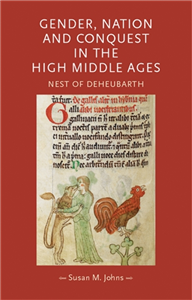
Nest of Deheubarth was one of the most notorious women of the Middle Ages, mistress of Henry I and many other men, famously beautiful and strong-willed, object of one of the most notorious abduction/elopements of the period and ancestress of one of the most famous dynasties in medieval Ireland, the Fitzgeralds. This volume sheds light on women, gender, imperialism and conquest in the Middle Ages. From it emerges a picture of a woman who, though remarkable, was not exceptional, representative not of a group of victims or pawns in the dramatic transformations of the high Middle Ages but powerful and decisive actors. The book examines beauty, love, sex and marriage and the interconnecting identities of Nest as wife/concubine/mistress, both at the time and in the centuries since her death, when for Welsh writers and other commentators she has proved a powerful symbol. ;
Trusted Partner
This is the first single volume edition of A Trick to Catch the Old One for many decades. This edition presents a thoroughly reconsidered text based on collation of all known copies of the 1608 quarto (including material unnoticed by earlier editors). Textual analysis draws on detailed internal investigation and the printer's wider practice to propose that relatively improvisational procedures and a paper quota governed A Trick's printing operations. Discovery of an overlooked record revises the date of court performance to 1 January 1607, with implications for the play's early history. Critical discussion freshly examines the play's multi-layered ironic texture in relation to such issues as the status of women, marriage's relation to prostitution and vice versa, and the contemporary marriage market. And the Courtesan receives special attention in the context of this overarching ironic scheme. An extensive stage history explores original staging and documents revivals to 2011. The commentary is the most wide-ranging and comprehensive of all modern editions. ;
Trusted Partner
Art History: A critical introduction to its methods provides a lively and stimulating introduction to methodological debates within art history. Offering a lucid account of approaches from Hegel to post-colonialism, the book provides a sense of art history's own history as a discipline from its emergence in the late-eighteenth century to contemporary debates. By explaining the underlying philosophical and political assumptions behind each method, along with clear examples of how these are brought to bear on visual and historical analysis, the authors show that an adherence to a certain method is, in effect, a commitment to a set of beliefs and values. The book makes a strong case for the vitality of the discipline and its methodological centrality to new fields such as visual culture. This book will be of enormous value to undergraduate and graduate students, and also makes its own contributions to ongoing scholarly debates about theory and method. ;


