
Your Search Results


-
Promoted Content

 Humanities & Social SciencesMarch 2024
Diaspora as translation and decolonisation
by Ipek Demir
This innovative study engages critically with existing conceptualisations of diaspora, arguing that if diaspora is to have analytical purchase, it should illuminate a specific angle of migration or migrancy. To reveal the much-needed transformative potential of the concept, the book looks specifically at how diasporas undertake translation and decolonisation. It offers various conceptual tools for investigating diaspora, with a specific focus on diasporas in the Global North and a detailed empirical study of the Kurdish diaspora in Europe. The book also considers the backlash diasporas of colour have faced in the Global North.
-
Promoted Content
 Humanities & Social SciencesMarch 2022
Diaspora as translation and decolonisation
by Ipek Demir, Gurminder Bhambra
-
 Trusted Partner
Teaching, Language & ReferenceJanuary 2026
Trusted Partner
Teaching, Language & ReferenceJanuary 2026Conceptualising China through translation
by James St André
-
Trusted Partner
Geography & the EnvironmentJune 2026
Gendered urban violence among Brazilians
by Cathy McIlwaine, Paul Heritage, Miriam Krenzinger Azambuja, Moniza Rizzini Ansari, Eliana Sousa Silva, Yara Evans
-
Trusted Partner
 Literature & Literary StudiesAugust 2025
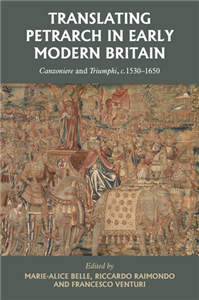
Translating Petrarch in early modern Britain
Canzoniere and Triumphi, c. 1530–1650
by Marie-Alice Belle, Riccardo Raimondo, Francesco Venturi
Translating Petrarch in early modern Britain gathers twelve essays by international scholars focusing on the translation of Petrarch's vernacular verse (Canzoniere and Triumphi) into English, from the Tudor age to the mid-seventeenth century (and beyond). Approaching translation as an interpretive process, but also a mode of literary emulation and cultural engagement with Petrarch's prestigious precedent, the collection explores the complex and interconnected trajectories of both poetic works in English and Scottish literary milieux. While situating each translation in its distinct historical, material, and literary context, the essays trace the reception of Petrarch's works in early modern Britain through the combined processes of linguistic and metric innovation, literary imitation, musical adaptation and cultural and material 'domestication'. The collection sheds light on the origins and development of early modern English Petrarchism as part of wider transnational - and indeed, translational-European literary culture.
-
Trusted Partner

 August 1990
Wahrheit und Interpretation
by Donald Davidson, Dieter Henrich, Niklas Luhmann, Joachim Schulte, Friedhelm Herborth
Die Kernfrage der heutigen analytischen Philosophie, die Frage, die sie von allen früheren und allen konkurrierenden philosophischen Ansätzen abhebt, ist die Frage nach dem Wesen der Bedeutung sprachlicher Ausdrücke. Davidson zeigt, daß eine Theorie der von ihm ins Auge gefaßten Art empirischen Charakter hat, ihre Axiome und Lehrsätze also gesetzesartig sein müssen. Wie die Theorie für sprachphilosophische Einzelprobleme fruchtbar gemacht werden kann, demonstriert Davidson in Aufsätzen über das Problem der Übersetzung, die Möglichkeiten und Schwierigkeiten des Zitierens, das Verhältnis von Glauben und Bedeutung, Sprache und Wirklichkeit sowie in seinen Auseinandersetzungen mit Quine und Dummett, Carnap und Church, Chomsky und Frege.
-
Trusted Partner
 October 1999
Sprache, Zeichen, Interpretation
by Günter Abel
In diesem Buch geht es darum, die interpretationsbestimmten Grundlagen der Verständigung, des Weltbezugs und des Handelns in Lebenswelt, Wissenschaft, Ethik und Kunst herauszuarbeiten. Da sich alle Wissenschaften, Künste und Handlungen in sprachlichen und nichtsprachlichen Zeichen vollziehen und daher immer schon auf Interpretationsprozesse bezogen sind, läßt sich der Ansatz in diesen Bereichen zur Analyse der Grundlagen und der interdisziplinären Zusammenhänge heranziehen.
-
Trusted Partner
Literature & Literary StudiesMarch 2024
Borrowed objects and the art of poetry
Spolia in Old English verse
by Denis Ferhatovic
This study examines Exeter riddles, Anglo-Saxon biblical poems (Exodus, Andreas, Judith) and Beowulf in order to uncover the poetics of spolia, an imaginative use of recycled fictional artefacts to create sites of metatextual reflection. Old English poetry famously lacks an explicit ars poetica. This book argues that attention to particularly charged moments within texts - especially those concerned with translation, transformation and the layering of various pasts - yields a previously unrecognised means for theorising Anglo-Saxon poetic creativity. Borrowed objects and the art of poetry works at the intersections of materiality and poetics, balancing insights from thing theory and related approaches with close readings of passages from Old English texts.
-
Trusted Partner
Literature & Literary StudiesJune 2026
The politics of Middle English parables
Fiction, theology, and social practice
by Mary Raschko
The politics of Middle English parables examines the dynamic intersection of fiction, theology and social practice in late-medieval England. Parables occupy a prominent place in Middle English literature, appearing in dream visions and story collections as well as in lives of Christ and devotional treatises. While most scholarship approaches the translated stories as stable vehicles of Christian teaching, this book highlights the many variations and points of conflict across Middle English renditions of the same story. In parables related to labour, social inequality, charity and penance, the book locates a creative theological discourse through which writers attempted to re-construct Christian belief and practice. Analysis of these diverse retellings reveals not what a given parable meant in a definitive sense but rather how Middle English parables inscribe the ideologies, power structures and cultural debates of late-medieval Christianity.
-
Trusted Partner
 Humanities & Social SciencesSeptember 2021
Chosen peoples
The Bible, race and empire in the long nineteenth century
by Gareth Atkins, Shinjini Das, Brian Murray
Chosen peoples demonstrates how biblical themes, ideas and metaphors shaped racial, national and imperial identities in the long nineteenth century. Even as radical new ideas challenged the historicity of the Bible, biblical notions of lineage, descent and inheritance continued to inform understandings of race, nation and empire. European settler movements portrayed 'new' territories across the seas as lands of Canaan, but if many colonised and conquered peoples resisted the imposition of biblical narratives, they also appropriated biblical tropes to their own ends. These innovative case-studies throw new light on familiar areas such as slavery, colonialism and the missionary project, while forging exciting cross-comparisons between race, identity and the politics of biblical translation and interpretation in South Africa, Egypt, Australia, America and Ireland.
-
Trusted Partner
 Literature & Literary StudiesMarch 2013
Sigmund Freud's The Interpretation of Dreams
by Laura Marcus
Freud's The Interpretation of Dreams, published in 1900, has been one of the most influential texts of the modern era, fundamentally changing the ways in which people have thought about their waking lives as well as their dreams. This book, more than any other in Freud's massive oeuvre, has shaped a vast amount of work in linguistics and semiotics, literary studies, film theory, psychology, philosophical hermeneutics and the history of ideas. This influence is reflected in the editor's introduction, which includes a substantial discussion of the theory and practice of representation, and the six essays specially commissioned for this volume. The contributors are renowned for their knowledge of Freudian theory and for their interdisciplinary expertise in a wide range of fields. They examine, for example, the relationship of Freud's text to theories of interpretation, autobiography and literary production. The book as a whole gives a clear sense both of the context of Freud's text and of its influence throughout the twentieth century. This volume is an ideal introduction to Freud's work for students and teachers of English and other literatures, philosophy and social and cultural studies, as well as the wider audience concerned with psychoanalysis and its cultural ramifications. ;
-
Trusted Partner
 Literature & Literary StudiesMay 2026
Translating hell
Vernacular theology and apocrypha in the medieval North Sea
by Stephen C. E. Hopkins
In the Middle Ages, hell was useful because it was vaguely defined. Canonical scriptures scarcely mention hell, leaving much to the imaginations of early Christians, who used it to sort out who belonged within the faith. This book explores how hell became a place for literary experiments with local challenges in theology and identity. Following the reception and transformations of two popular hell apocrypha, it argues that they served as this role because of their liminal textual authority. As noncanonical scriptures, apocrypha afforded medieval writers space to revise their hells (since they were not actually scripture), while also encouraging readers to revere those experiments as valid (since they seemed like scripture). The book brings together adaptations from early medieval England, Iceland, Ireland, and Wales, placing the early vernacular theologies of the North Sea in comparative conversation.
-
Trusted Partner
Siegfried Unseld Chronik (Online-Version)
by Suhrkamp Verlag AG
Abdrucke aus der Online-Version der Siegfried Unseld Chronik fragen Sie bitte mit einem Klick auf "Permissions Enquiry" auf dieser Seite an.
-
Trusted Partner
 January 2000
Zeichen-Kunst
Zeichen und Interpretation V
by Werner Stegmaier
Der Titel »Zeichen-Kunst« zielt zum einen auf die Kunst des alltäglichen Zeichen-Gebrauchs, zum anderen auf die Kunst als Zeichen-Kunst. Zum dritten geht es darum, was beide füreinander bedeuten. Das ist, in ihrer Allgemeinheit, eine philosophische Frage und innerhalb der Philosophie eine Frage der Ersten Philosophie. Sie wird - in der Reihe »Zeichen und Interpretation«, deren v. Band hier vorgelegt wird - durch eine Philosophie des Zeichens und der Interpretation beantwortet, in der der Gedanke gereift ist, daß alles, was wir verstehen, Zeichen sind.
-
Trusted Partner
 January 1993
Philosophie und Interpretation
Vorlesungen zur Entwicklung konstruktionistischer Interpretationsansätze. Überarbeitet unter Mitwirkung von Ekaterini Kaleri
by Hans Lenk, Ekaterini Kaleri
Bisher ist es nicht gelungen, einen einheitlichen Begriff für empirische Wissenschaften, Formalwissenschaften und normative Disziplinen zu entwickeln, der geeignet wäre, die seit dem letzten Jahrhundert aufgebrochene Kluft zwischen den Natur- und Geisteswissenschaften zu überbrücken. Hans Lenk nimmt vorliegende philosophische Deutungen des Interpretationsbegriffs und des Interpretierens als Tätigkeit in Auswahl auf, um auf eine systematische Erfassung des konstruktiven Charakters und der praktischen Gebrauchs- und Anwendungsaspekte des Interpretierens unter dem Gesichtspunkt einer Vereinheitlichung der Problembehandlung in der Alltagserkenntnis und in den Disziplinen sowohl der Natur- wie der Geisteswissenschaften hinzulenken. Seit zwei Jahrzehnten hat Lenk einen Ansatz der Interpretationskonstrukte beim Handlungs-, Motivations- und Vernunftbegriff konzipiert, der hier verallgemeinert wird. So wird in Anknüpfung an Kants transzendentalen Idealismus und Nietzsches perspektivische Philosophie der Interpretationen ein eigener methodologischer Interpretationskonstruktionismus entwickelt, der die methodologischen Probleme und Fragen der Konstruktivität bzw. Schemaanwendung der Interpretationen in den Vordergrund rückt. (Die Frage der Vereinbarkeit von Interpretationskonstruktionismus und Realismus wird in einem für 1994 vorgesehenen Band – »Interpretation und Realität« – genauer analysiert und beantwortet.)
-
Trusted Partner
August 1992
Interpretation und Lebensroman
Zu einer konstruktivistischen Literaturtheorie
by Bernd Scheffer
Mittlerweile gibt es in der Literaturwissenschaft zwar vielfältig Erklärungen, wie Produktion und Rezeption von Literatur als historische und gesellschaftliche Phänomene zu denken wären, man hat aber wenig genaue Vorstellungen davon, was beim Schreiben und Lesen von Literatur im eigenen »Kopf« und gerade auch in den »Köpfen« der anderen (der Autoren, der Leser) vorzugehen scheint. Eine zentrale These dieses Buches lautet: Wir nehmen die Welt und die Literatur wahr in einer endlos autobiographischen Tätigkeit; Wirklichkeits-Konstruktionen (und Textbedeutungen) werden in einem Prozeß der Selbstbeschreibung erzeugt und aufrechterhalten. Die konstruktivistische Parallelität von Wahrnehmung, Erkenntnis, Wissen und schließlich auch von Interpretation zeigt: die genauere Untersuchung der »Gegenstände« von Welt und Literatur bringt primär die Eigenschaften von Beobachtern zum Vorschein, nicht die der »Gegenstände«. Wir entdecken nicht die »Realität« oder die der »Realität« opponierende ästhetische Gegensetzung, sondern die eigenen Wirklichkeits-Konstruktionen. Die Diskurs-Regeln, die Konstruktions-Regeln, die Konventionalität, die Kompetenz, aber auch der Mut und die Ängste des Literatur-Beobachters kommen jetzt verstärkt zum Vorschein – und nicht »Texte« als inhaltlich weitgehend stabile Vorgaben.
-
Trusted Partner

 November 2024
Laboratory Parameters
Understand, classify, interpret
by Ulrich Grass
Medicine | Pharmacy Laboratory parameters often evoke strong emotions. Many people are familiar with the anxiety of awaiting blood test results or the pride of showcasing perfect results from their last check-up. However, laboratory parameters are just puzzle pieces in diagnosis and therapy. The most critical factor is accurately interpreting them within the clinical context. The necessary know-how can be found here: • practical, concise schematic diagram for the evaluation of laboratory values • systematic grouping into diagnostic fields • details on function and standard values • references to disruptive factors and practical tips New in the 5th edition: Information on laboratory pathways from the National Association of Statutory Health Insurance Physicians (KBV), Alzheimer’s diagnostics, blood tests for early cancer detection, molecular pathological biomarkers and other current topics. This book offers a solid knowledge base for all healthcare professionals – ensuring excellent advice and patient care! Target group: Pharmacists, pharmaceutical technicians, nursing staff/students, physicians, medical technicians
-
Trusted Partner
 Films, cinemaDecember 2014
Interpreting rock movies
Pop Film and Its Critics in Britain
by Andrew Caine
Andrew Caine details the reaction to British and American pop films during the 1950s and 1960s. By examining the British reception of films such as Rock Around the Clock, Love Me Tender, A Hard Day's Night and Summer Holiday the book provides a valuable insight into British film criticism, teenage culture during the 1950s and 1960s and the generic status of rock films/teen movies and cultural hierarchies. Interpreting rock movies not only contains an extensive account of how the film and music press reacted to rock 'n roll films, but also fully explores issues about taste and distinction within reviewing practices. The movie output of Elvis Presley, the Beatles, and numerous others is located within the context of popular music during the 1950s and 1960s.
-
Trusted Partner
 May 1993
Interpretationskonstrukte
Zur Kritik der interpretatorischen Vernunft
by Hans Lenk
Seit dem Aufkommen und der Entwicklung der Geisteswissenschaften und der historischen Disziplinen im vorigen Jahrhundert, der sogenannten »verstehenden Wissenschaften«, schien sich ein Graben zwischen den objektiven, die Welt und Wirklichkeit beschreibenden Naturwissenschaften einerseits und den verstehenden Geisteswissenschaften andererseits aufzutun.Eine entsprechende Kluft – vielleicht noch drastischer als zwischen naturwissenschaftlicher und literarisch-geisteswissenschaftlicher Intelligenz – scheint sich zwischen den wissenschaftlich-technischen Theorienbildung und -anwendung sowie der hochkomplizierten computergestützten Informationsverarbeitung einerseits und dem Alltagsverstehen bzw. Umgehen mit umgangssprachlichen Konzepten andererseits aufzutun. Kann – das ist die zentrale Frage dieses Buches – die Erkenntnistheorie etwas zur Überwindung dieser Kulturentrennung beitragen?Entgegen dem ersten Anschein einer Absolutheit und Unüberbrückbarkeit der genannten Spaltung zeigt sich im Verlauf einer differenzierten Auseinandersetzung mit bisherigen Interpretationstheorien und interpretationistischen Ansätzen, mit wissenschaftstheoretischen Konzepten Natur- und Sozialwissenschaften sowie mit erkenntnistheoretischen Überlegungen zur Alltagskenntnis, daß es eine abstraktere übergeordnete erkenntnistheoretische Ebene gibt, auf der diese so unüberbrückbar erscheinende Spaltung doch überwunden werden kann. Die »Brücke« dabei bildet der Begriff der konstruktiven Interpretation bzw. der Schemainterpretationen und der interpretatorisch-schematisierenden Aktivitäten sowie des Handelns und Erkennens mit Symbolen und symbolanalogen inneren Repräsentationen. Das Erkennen und Handeln sowohl im Alltag als auch in den Wissenschaften und den philosophischen Disziplinen ist symbolvermittelt. Ernst Cassirers Einsicht, daß der Mensch zwischen die Welt und sich eine »symbolische Zwischenwelt« spannt, die ihm ein »symbolisches Universum«, seine symbolische Welt bedeutet, ist hier einschlägig. Der Mensch als das »symbolische Wesen« ist auf die Ausbildung eines »Symbolsystems«, »Symbolnetzes« angewiesen, das ihm erst die handelnden und erkennenden Zugänge zur Welt bzw. sogar deren Konstitution als Gegenstandswelt ermöglicht und in differenzierter Weise zu strukturieren erlaubt. Symbolverwendung und symbolische Darstellung sind nun für die unterschiedlichen Umgangsweisen und Darstellungen sowie Handlungen auf beiden Seiten der Kulturtrennung charakteristisch. Hier ist ein übergreifender Gesichtspunkte gefunden, der zur Überbrückung der Spaltung auf höherer, abstrakterer erkenntnisphilosophischer und methodologischer Ebene Ansatzpunkte, sozusagen die Brückenköpfe für den Überbrückungsversuch, bietet. Denn alle zentralen Begriffe der Erkenntnis und der Handlungsanalyse sowohl im Alltag als auch in der Wissenschaft und in den geisteswissenschaftlich-philosophischen Disziplinen sind auf Symbolbildung, -verwendung und –deutung angewiesen, beruhen auf interpretatorisch-schematisierenden Aktivitäten, auf der Anwendung von teils evolutionär vorgegebenen und unbewußten, teils interaktiv mit der Umwelt entwickelten, teils konventionell aufgebauten bzw. im engeren sozio-kulturellen Sinne erlernten Schemata. Deren Bildung, Ausdifferenzierung, Weiterentwicklung und Anwendung ist in diesem Buch als Interpretieren im weiteren Sinne aufgefaßt worden – genauer: als Schemainterpretieren.Der Interpretationskonstruktionismus ist zunächst als methodologischer Ansatz konzipiert und entwickelt worden. Er kann jedoch auch in der Tradition der traditionellen Erkenntnistheorie als ein quasi kantischer transzendentaler Interpretationismus aufgefaßt und ausgebaut werden – gleichsam zu einer Erkenntnistheorie des kulturellen und symbolischen Wesens, das der Mensch ist.
-
Trusted Partner
 Humanities & Social SciencesSeptember 2025
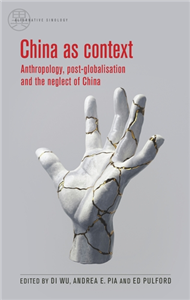
China as context
Anthropology, post-globalisation and the neglect of China
by Di Wu, Andrea E. Pia, Ed Pulford
Decades-old calls to promote the significance of China for anthropological theory and the social sciences more generally ring more urgently today given China's importance to social, political and economic life globally. Yet Chinese-grounded ideas remain marginal to the discipline, and scholarly discussions retain a sense of China as an 'Other' apart from the 'real' world, and thus unsuitable or generating widely applicable theoretical ideas. Inspired by East Asian postcolonial scholarship, this volume tackles this unsettling situation head-on, arguing that without taking China seriously as a powerful agent, a locus of knowledge production, and a new discursive topos of an emerging post-global imaginary, anthropologists and other social scientists may fail to adequately analyse the global present and make sense of both the material and immaterial forces that animate it, wherever and however they work. Amid the end of Western globalisation and shifting anthropological understandings of relations between ethnography and theory, we show how 'China' must be understood as the ordinary 'context' for anthropological research practices worldwide.

