
Spicy Fish Cultural Production Ltd.
Established in 2006 by publishing Fleurs des lettres (字花), a literary bimonthly in Chinese, Spicy Fish is a 15 year-old literary arts non-profit organization based in Hong Kong.
View Rights Portal
Established in 2006 by publishing Fleurs des lettres (字花), a literary bimonthly in Chinese, Spicy Fish is a 15 year-old literary arts non-profit organization based in Hong Kong.
View Rights Portal
Cultural Relics Press was established in 1957, and is the only press dedicated to publishing archeology related books. It is committed to salvaging and protecting China’s cultural heritage and publicizing the content and artistic charm of traditional Chinese culture. Over the past 60 years, it has published about 7000 kinds of books on culture and archeology”. Its publications on traditional Chinese culture are well received across the world. It is the first press to engage in cultural exchange abroad and cooperate with counterparts in Europe, the United States, Hong Kong and Taiwan. It has collaborated with partners in UK, USA, Italy, Japan, former Yugoslavia, Taiwan. More than 300 awards has been received at home and abroad, including, among others, National Book Award, China Book Award, and “Most Beautiful Books in the World” (Leipzig).
View Rights Portal
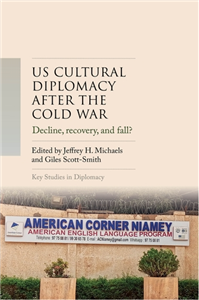
In the decades following the USSR's collapse, the US has gone from unrivalled hegemon to a position of relative decline. With America 'triumphant' after 1991, its culture, like its diplomatic, military and economic power, remained unmatched. Such favourable circumstances seemed to undercut the need for cultural diplomacy. Why should the US government sell a product that was already selling so well? After 9/11, however, it was apparent the US image was less popular than previously assumed. To reverse this negative image, cultural diplomacy was revived. Despite being beset by internal and external challenges, US officials supported various cultural initiatives and partnerships to promote the American brand globally. Along the way, cultural diplomacy has made use of new forms of expression to promote American culture and build positive foreign relations. The arrival of the second Trump administration in 2025 has clearly signalled an end to using cultural diplomacy to further causes of empowerment and diversity, making the future uncertain for this field of activity.
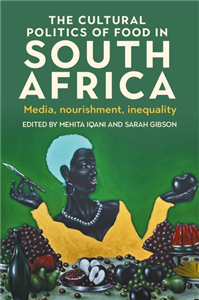
Food is both a material system of nourishment, necessary for human survival, and a communicative system that signifies multiple meanings across human cultures. This book explores the cultural politics of food in the South African context, bringing together a range of disciplinary perspectives on the links between media, nourishment, and inequality. The chapters all highlight the multiplicity of meanings that food has in South African society. These include historical perspectives on the impact of colonialism, migration and apartheid had on food and foodways in South Africa; sociological interventions on food and society; aesthetic practices in relation to food; and mediated food cultures in South Africa. Taken together, the book critically explores the multiple ways in which food is never just food, and always linked to complex and shifting modalities of meaning and knowledge in the South African context.
 Trusted Partner

Exhibiting the empire considers how a whole range of cultural products - from paintings, prints, photographs, panoramas and 'popular' texts to ephemera, newspapers and the press, theatre and music, exhibitions, institutions and architecture - were used to record, celebrate and question the development of the British Empire. It represents a significant and original contribution to our understanding of the relationship between culture and empire. Written by leading scholars from a range of disciplinary backgrounds, individual chapters bring fresh perspectives to the interpretation of media, material culture and display, and their interaction with history. Taken together, this collection suggests that the history of empire needs to be, in part at least, a history of display and of reception. This book will be essential reading for scholars and students interested in British history, the history of empire, art history and the history of museums and collecting.
Trusted Partner

Brazil has one of the most significant and productive film industries in Latin America. This ground-breaking study provides an entertaining insight into the Brazilian films that have most captured the imagination of domestic audiences over the years. The recent international success of films such as Central Station and City of God, has stimulated widespread interest in Brazilian film, but studies written in English focus on the 'auteur' cinema of the 1960s. This book focuses on individual films in their socio-historical context, drawing on extensive fieldwork in Brazil and Latin America. It argues that Brazilian cinema has almost always been grounded in intrinsically home-grown cultural forms, dating back to the nineteenth century, such as the Brazilian music-hall, the travelling circus, radio shows, carnival, and, later, comedy television. Combining a chronological structure with groundbreaking research and a lively approach, Popular cinema in Brazil is the ideal introduction to Brazilian cinema.
Trusted Partner
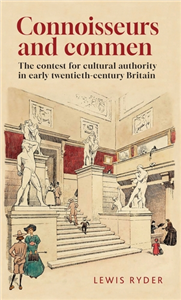
This book examines John Hilditch (1872-1930), a notorious collector of Chinese art who lied, hoaxed and manipulated in his struggle against museum experts to become a cultural authority. Previously overlooked as a pest with a dubious collection, this book uses Hilditch to interrogate how far the monumental social, cultural and political changes of the early twentieth century unsettled social and cultural hierarchies and how these hierarchies were remade. It shows how the cultural elites were forced to engage with the public and re-draw the boundaries of citizenship, expertise and high and low culture in response to unprecedented social mobility, the democratisation of culture and politics, as well as the effects of British imperialism which brought ordinary Britons access to antiquities as well as confidence to claim expertise over foreign cultures. The book will interest social and cultural historians of Modern Britain, museum scholars and art historians.
Trusted Partner
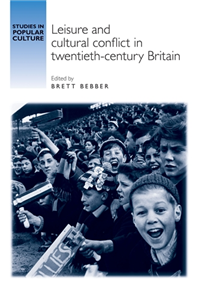
This collection of essays addresses research trends in the history of British leisure while also presenting a wide range of articles on cultural conflict and leisure in the twentieth century. It includes innovative research on a number of topics, including television, cinema, the circus, women's leisure, dance, football and drug culture. It provides an excellent entry to leisure studies and history, while addressing the contributions of other disciplines and exploring key historiographical trends. Three broad topics structure the collection; cultural contestation and social conflict in leisure; regulation and standardisation; and national identity embodied in leisure and popular culture. The book will be useful to students and educators of twentieth-century and British history, as it offers accessible and topical studies that pique historical curiosity. In addition, historians, sociologists and cultural analysts of the twentieth century will find it essential for understanding pleasure and recreation in twentieth-century British society. ;
Trusted Partner
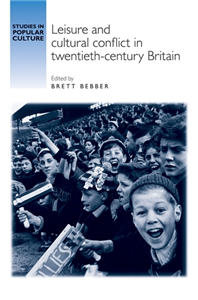
This collection of essays addresses research trends in the history of British leisure while also presenting a wide range of articles on cultural conflict and leisure in the twentieth century. It includes innovative research on a number of topics, including television, cinema, the circus, women's leisure, dance, football and drug culture. It provides an excellent entry to leisure studies and history, while addressing the contributions of other disciplines and exploring key historiographical trends. Three broad topics structure the collection; cultural contestation and social conflict in leisure; regulation and standardisation; and national identity embodied in leisure and popular culture. The book will be useful to students and educators of twentieth-century and British history, as it offers accessible and topical studies that pique historical curiosity. In addition, historians, sociologists and cultural analysts of the twentieth century will find it essential for understanding pleasure and recreation in twentieth-century British society.
Trusted Partner
 Trusted Partner

This book brings together studies of cultural institutions in Manchester from 1850 to the present day, giving an unprecedented account of the city's cultural evolution. These bring to light the remarkable range of Manchester's contribution to modern cultural life, including the role of art education, popular theatre, religion, pleasure gardens, clubs and societies. The chapters show the resilience and creativity of Manchester's cultural institutions since 1850, challenging any simple narrative of urban decline following the erosion of Lancashire's industrial base, at the same time illustrating the range of activities across the social classes. This book will appeal to everyone interested in the cultural life of the city of Manchester, including cultural historians, sociologists and urban geographers, as well as general readers with interests in the city. It is written by leading international authorities, including Viv Gardner, Stephen Milner, Mike Savage, Bill Williams and Janet Wolff.
Trusted Partner
 Trusted Partner

British culture after Empire is the first collection of its kind to explore the intertwined social, cultural and political aftermath of empire in Britain from 1945 up to and beyond the Brexit referendum of 2016, combining approaches from the fields of history, English and cultural studies. Against those who would deny, downplay or attempt to forget Britain's imperial legacy, the various contributions expose and explore how the British Empire and the consequences of its end continue to shape Britain at the local, national and international level. As an important and urgent intervention in a field of increasing relevance within and beyond the academy, the book offers fresh perspectives on the colonial hangovers in post-colonial Britain from up-and-coming as well as established scholars.
Trusted Partner
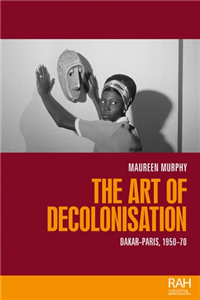
The art of decolonisation examines how artists challenged colonial legacies and reconfigured power through transnational networks of art and diplomacy. Adopting a global and transhistorical perspective, it explores artistic, political, and institutional relations between France and Senegal during decolonisation and the Cold War. From the emergence of a national modern art in Senegal to contested cultural policies and high-profile exhibitions-such as those featuring Picasso and Soulages in Dakar, or contemporary Senegalese art in Paris-this book traces the circulation of artworks, ideas, and influence across borders. It reveals how visual artists and filmmakers shaped a new artistic geopolitics between 1950 and 1970. Reconsidering the accepted chronology of the 'global turn', The art of decolonisation shows that the roots of global art discourse run deeper than the 1990s, and were already forming during the era of independence struggles.
Trusted Partner

This book is the first to explore three visual media in contemporary Spain: cinema, television and the internet. It also examines cultural products in each of these media in terms of three vital themes: emotion, location and nostalgia. The first two chapters focus on emotion. They analyze the 'emotional imperative' in a recent Almodóvar feature film and in Spanish television's top-rated period drama, and investigate the politics of affect in TV drama in the last decade. The next pair of chapters deal with location. They use cultural geography to re-read contradictory accounts of the movida (the post-Franco cultural boom) and examine an attempt to anchor a US-derived genre (the youth movie) in the urban landscape of Madrid. The fifth and sixth chapters introduce the theme of location into nostalgia. They treat the unique cases of a successful Spanish heritage movie and a contemporary Spanish thriller remade in Hollywood. The peunultimate chapter investigates electronic artists and the virtual universe, and the book ends with a look at the implications of Hispano-Mexican co-productions and the interconnectedness of economic and aesthetic cultural forms. ;
Trusted Partner

The fall and rise of the English upper class explores the role traditionalist worldviews, articulated by members of the historic upper-class, have played in British society in the shadow of her imperial and economic decline in the twentieth century. Situating these traditionalist visions alongside Britain's post-Brexit fantasies of global economic resurgence and a socio-cultural return to a green and pleasant land, Smith examines Britain's Establishment institutions, the estates of her landed gentry and aristocracy, through to an appetite for nostalgic products represented with pastoral or pre-modern symbolism. It is demonstrated that these institutions and pursuits play a central role in situating social, cultural and political belonging. Crucially these institutions and pursuits rely upon a form of membership which is grounded in a kinship idiom centred upon inheritance and descent: who inherits the houses of privilege, inherits England.
Trusted Partner


Culture and diversity are both challenge and opportunity. This volume looks at what psychologists are and can be doing to help society meet the challenges and grasp the opportunities in education, at work, and in clinical practice. The increasingly international and globalized nature of modern societies means that psychologists in particular face new challenges and have new opportunities in all areas of practice and research. The contributions from leading European experts cover relevant intercultural issues and topics in areas as diverse as personality, education and training, work and organizational psychology, clinical and counselling psychology, migration and international youth exchanges. As well as looking at the new challenges and opportunities that psychologists face in dealing with people from increasingly varied cultural backgrounds, perhaps more importantly they also explain and discuss how psychologists can deepen and acquire the intercultural competencies that are now needed in our professional lives. Target Group: psychotherapists / clinical psychologists / mental health professionals
Trusted Partner
 Trusted Partner
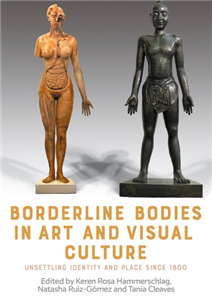
Borderline bodies offers original interpretations of visual representations of human bodies as bounded and unbounded, fortified and permeable, mobile and static-subject to borders and able to traverse and challenge them. It also takes as its focus images and objects that might be considered 'borderline' because they sit at the intersection of disciplines or sit outside accepted notions of what constitutes serious 'art.' By mapping the ways human bodies traverse borders and straddle-even dismantle-categories, this volume's essays approach afresh the relationship of bodies to traditional modes of representation, especially in art and medicine, and encourage us to think anew about how we understand the relationship between human corporeality, identity and place. Critical transdisciplinary and transnational analyses of objects and images from a range of geographies shed new light on the themes of: bodies and identity; typologies of the body; racialised bodies; 'normal' and 'abnormal' bodies; encounters between bodies; bodies in transition; bodies and mobility; and the bounded and unbounded human body. The outcome is a fresh approach to depictions of the human body produced for the purposes of artistic and medical education, aesthetic edification, and scientific and professional advancement, which disrupts assumptions about the normative human body perpetuated through Western image-making traditions.
Trusted Partner
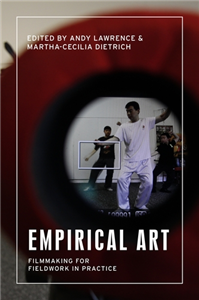
Empirical art: Filmmaking for fieldwork in practice is an insightful exploration of what the craft of filmmaking brings to social science research. Providing creative avenues on how to narrate encounters, relationships, and experiences during fieldwork, this comprehensive volume offers a rich tapestry of theoretical explorations and explorative methodologies. Skilfully connecting the worlds of ethnography, art and cinema, the contributors in this book act as a compass for filmmakers and researchers venturing to use a camera and microphone to relate and narrate their research collaborations and fieldsites. Drawing from the authors' extensive experience in disciplines like social anthropology, environmental humanities, and political science, "Empirical Art" breaks down the intricate process of crafting ethnographic films that departs from the researcher's subjectivity. Covering aspects of filmmaking from conceptualisation to production and distribution, readers are equipped with a treasure trove of collaborative techniques, innovative approaches, and ethical considerations necessary to generate and examine storytelling practices in contemporary fields of study. The authors discuss the significance of the multiple roles that technologies of filmmaking play in reflecting on cultural practices, social dynamics, and (beyond) human storytelling and their transformative potentials. Whether a seasoned filmmaker, an aspiring ethnographer, or an academic seeking new dimensions for their research, Empirical Art serves as a guide to integrating visual storytelling, cinema craft and empirical research.
Trusted Partner
Trusted Partner
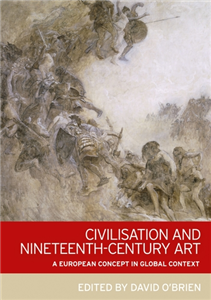
Over the course of the long nineteenth century, Civilisation was the subject of some of the most prominent public mural paintings and sculptures in Europe and the United States, especially those that speculated on the direction of history. It also underpinned Western depictions of non-Western societies and evaluations of social progress and artistic excellence. The essays in this volume explore the ways in which the idea of Civilisation acted as a lens through which Europeans and Americans represented themselves and others, how this concept reshaped understandings of historical and artistic development, and also how it changed and was put to new uses as the century progressed. This collection will prove invaluable to students and academics in both history and art history.


