Your Search Results

      • Residenz Verlag GmbH

        Residenz Verlag, founded in 1956 and located in Salzburg and Vienna, is one of the most renowned publishers in Austria. Residenz Verlag stands for an ambitious literature program and dedicated non-fiction books. In the area of non-fiction, Residenz Verlag publishes on the topics of politics, sustainability, contemporary history, and arts as well as biographies.In fiction, the focus is on new discoveries from the German-speaking world, the continuous support of renowned Austrian writers’ oeuvre, and selected translations from (South-)Eastern and Northern European languages as well as from English. The authors’ list includes Thomas Bernhard, Peter Henisch, Walter Kappacher, Christine Nöstlinger, Alek Popov, Clemens Setz, Tanja Maljartschuk.

        View Rights Portal
      • Cultural Relics Press

        Cultural Relics Press was established in 1957, and is the only press dedicated to publishing archeology related books. It is committed to salvaging and protecting China’s cultural heritage and publicizing the content and artistic charm of traditional Chinese culture. Over the past 60 years, it has published about 7000 kinds of books on culture and archeology”. Its publications on traditional Chinese culture are well received across the world. It is the first press to engage in cultural exchange abroad and cooperate with counterparts in Europe, the United States, Hong Kong and Taiwan. It has collaborated with partners in UK, USA, Italy, Japan, former Yugoslavia, Taiwan. More than 300 awards has been received at home and abroad, including, among others, National Book Award, China Book Award, and “Most Beautiful Books in the World” (Leipzig).

        View Rights Portal
      • Trusted Partner
        The Arts
        July 2024

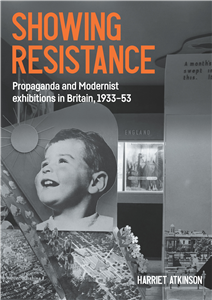
        Showing resistance

        Propaganda and Modernist exhibitions in Britain, 1933–53

        by Harriet Atkinson

        This is the first book-length analysis of exhibitions used for propaganda and political interventions in Britain during the two decades from 1933. It analyses how exhibitions were mounted in public places - from station concourses to workers' canteens, empty shops and bombsites - becoming a key tool for public communication. Richly illustrated, the book extends our existing knowledge of the work of a range of prominent artists, architects and designers active in Britain, including Edith Tudor-Hart, Edward McKnight-Kauffer, Paul Nash, F. H. K. Henrion, Misha Black, John Heartfield, Oskar Kokoschka and Erno Goldfinger.

      • Trusted Partner
      • Trusted Partner
        Humanities & Social Sciences
        April 2020

        Anarchism, 1914–18

        Internationalism, anti-militarism and war

        by Ruth Kinna, Matthew S. Adams

        Anarchism 1914-18 is the first systematic analysis of anarchist responses to the First World War. It examines the interventionist debate between Peter Kropotkin and Errico Malatesta which split the anarchist movement in 1914 and provides a historical and conceptual analysis of debates conducted in European and American movements about class, nationalism, internationalism, militarism, pacifism and cultural resistance. Contributions discuss the justness of war, non-violence and pacifism, anti-colonialism, pro-feminist perspectives on war and the potency of myths about the war and revolution for the reframing of radical politics in the 1920s and beyond. Divisions about the war and the experience of being caught on the wrong side of the Bolshevik Revolution encouraged anarchists to reaffirm their deeply-held rejection of vanguard socialism and develop new strategies that drew on a plethora of anti-war activities.

      • Trusted Partner
        Literature & Literary Studies
        January 2013

        Popular protest in late-medieval Europe

        Italy, France and Flanders

        by Samuel Kline Cohn

        The documents in this stimulating volume span from 1245 to 1424 but focus on the 'contagion of rebellion' from 1355 to 1382 that followed in the wake of the plague. They comprise a diversity of sources and cover a variety of forms of popular protest in different social, political and economic settings. Their authors range across a wide political and intellectual horizon and include revolutionaries, the artistocracy, merchants and representatives from the church. They tell gripping and often gruesome stories of personal and collective violence, anguish, anger, terror, bravery, and foolishness. Of over 200 documents presented here, most have been translated into English for the first time, providing students and scholars with a new opportunity to compare social movements across Europe over two centuries, allowing a re-evaluation of pre-industrial revolts, the Black Death and its consequences for political culture and action. This book will be essential reading for those seeking to better understand popular attitudes and protest in medieval Europe.

      • Trusted Partner
      • Trusted Partner
        Humanities & Social Sciences
        September 2020

        I Refuse to Condemn

        by Asim Qureshi

      • Trusted Partner
        Humanities & Social Sciences
        May 2021

        Black resistance to British policing

        by Adam Elliott-Cooper

      • Trusted Partner
        Humanities & Social Sciences
        March 2024

        A savage song

        Racist violence and armed resistance in the early twentieth-century U.S.–Mexico Borderlands

        by Margarita Aragon

        This book examines key moments in which collective and state violence invigorated racialized social boundaries around Mexican and African Americans in the United States, and in which they violently contested them. Bringing anti-Mexican violence into a common analytical framework with anti-black violence, A savage song examines several focal points in this oft-ignored history, including the 1915 rebellion of ethnic Mexicans in South Texas, and its brutal repression by the Texas Rangers and the 1917 mutiny of black soldiers of the 24th Infantry Regiment in Houston, Texas, in response to police brutality. Aragon considers both the continuities and stark contrasts across these different moments: how were racialized constructions of masculinity differently employed? How did African and Mexican American men, including those in uniform, respond to the violence of racism? And how was their resistance, including their claims to manhood and nation, understood by law enforcement, politicians, and the press? Building on extensive archival research, the book examines how African and Mexican American men have been constructed as 'racial problems', investigating, in particular, their relationship with law enforcement and ideas about black and Mexican criminality.

      • Trusted Partner
        Humanities & Social Sciences
        July 2026

        Unruly subjects

        Migration, solidarity and resistance in Greece

        by Ludek Stavinoha

        Unruly Subjects takes readers to the epicentre of Europe's intensifying border struggles-the Aegean islands in Greece, where thousands of 'undesirable' migrants have been warehoused and violently abandoned in EU-funded refugee camps. Drawing on nearly a decade of research, Ludek Stavinoha reveals the subterranean corners in which resistance brews and solidarity takes hold, tracing migrants' everyday struggles for dignity and their rights, alongside grassroots volunteers who have built vital infrastructures of support. At the heart of the book are the creative, if precarious and ambivalent, solidarities forged between volunteers and refugees, citizens and non-citizens, as they unsettle racialised boundaries and logics of control, in defiance of state-sanctioned violence, criminalisation, and neglect. Urgent and compelling, Unruly Subjects illuminates how people navigate and subvert Europe's increasingly hostile border regime, and the alternative imaginaries of more just futures their struggles embody.

      • Trusted Partner
        Humanities & Social Sciences
        March 2026

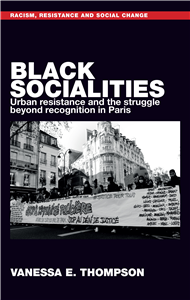
        Black socialities

        Urban resistance and the struggle beyond recognition in Paris

        by Vanessa Eileen Thompson

        From author: This is a cutting-edge exploration of black urban politics in Parisian racialized working class and working poor districts, the formation of abolition geography, and the possibilities of new forms of political blackness. In Black Socialities. Urban resistance and the struggle beyond recognition in Paris, Vanessa E. Thompson argues that black urban politics in the French banlieues are multi-racial and spatially grounded towards abolition. Based on a close engagement with urban black activist practices against racial imagery in the city, policing and state racism, and housing insecurity, she shows how radical anti-racism goes beyond struggles for recognition and unfolds alongside new formations of political blackness that is based on urban conviviality. This form of black politics has much to teach us in this current conjuncture of liberal anti-racism and state recognition politics.

      • Trusted Partner
        Business, Economics & Law
        January 2026

        Latin America and international investment law

        A mosaic of resistance

        by Sufyan Droubi, Cecilia Juliana Flores Elizondo

        Latin America has been a complex laboratory for the development of international investment law. While some governments and non-state actors have remained true to the Latin American tradition of resistance towards the international investment law regime, other governments and actors have sought to accommodate said regime in the region. Consequently, a profusion of theories and doctrines, too often embedded in clashing narratives, has emerged. In Latin America, the practice of international investment law is the vivid amalgamation of the practice of governments sometimes resisting and sometimes welcoming mainstream approaches; the practice of lawyers assisting foreign investors from outside and within the region; and the practice of civil society, indigenous peoples and other actors in their struggle for human rights and sustainable development. Latin America and international investment law describes the complex roles that governments have played vis-à-vis foreign investors and investments; the refreshing but clashing forces that international organizations, corporations, civil society, and indigenous peoples have brought to the field; and the contribution that Latin America has made to the development of the theory and practice of international investment law, notably in fields in which the Latin American experience has been traumatic: human rights and sustainable development. Latin American scholars have been contributing to the theory of international investment law for over a century; resting on the shoulders of true giants, this volume aims at pushing this contribution a little further.

      • Trusted Partner
        Humanities & Social Sciences
        March 2017

        Air power and colonial control

        by David Omissi

        Air policing was used in many colonial possessions, but its most effective incidence occurred in the crescent of territory from north-eastern Africa, through South-West Arabia, to North West Frontier of India. This book talks about air policing and its role in offering a cheaper means of 'pacification' in the inter-war years. It illuminates the potentialities and limitations of the new aerial technology, and makes important contributions to the history of colonial resistance and its suppression. Air policing was employed in the campaign against Mohammed bin Abdulla Hassan and his Dervish following in Somaliland in early 1920. The book discusses the relationships between air control and the survival of Royal Air Force in Iraq and between air power and indirect imperialism in the Hashemite kingdoms. It discusses Hugh Trenchard's plans to substitute air for naval or coastal forces, and assesses the extent to which barriers of climate and geography continued to limit the exercise of air power. Indigenous responses include being terrified at the mere sight of aircraft to the successful adaptation to air power, which was hardly foreseen by either the opponents or the supporters of air policing. The book examines the ethical debates which were a continuous undercurrent to the stream of argument about repressive air power methods from a political and operational perspective. It compares air policing as practised by other European powers by highlighting the Rif war in Morocco, the Druze revolt in Syria, and Italy's war of reconquest in Libya.

      • Trusted Partner
        The Arts
        December 2009

        Songs of protest, songs of love

        Popular ballads in eighteenth-century Britain

        by Robin Ganev, Jeffrey Richards

        Songs of Protest, Songs of Love shows how songs can bring back voices from the past in a new way. The focus of the book is on rural Britain in a time of crisis. As the traditional rights of peasants were being jettisoned to enforce a new system of enclosure, rural labourers chanted out their concerns in songs of protest. These songs became increasingly strident and popular after the 1770s as rural life became even more precarious with fluctuating grain prices and uncertain employment opportunities. Many ballads in the eighteenth century were love songs. But these are also rich in social meaning. Many of these love songs celebrated the free and easy sexuality of rural workers, especially milkmaids and ploughmen, which was contrasted with the tepid and flaccid sex life attributed to urban aristocrats. The book will be of interest to scholars, advanced students and readers with an interest in cultural history and popular ballads. ;

      • Trusted Partner
        Humanities & Social Sciences
        January 2023

        Democracy and dissent in the Irish Free State

        by Jason Knirck

      • Trusted Partner
      • Trusted Partner
        Humanities & Social Sciences
        February 2021

        Knowledge resistance

        by Mikael Klintman

      • Trusted Partner
        Humanities & Social Sciences
        March 2026

        US cultural diplomacy after the Cold War

        Decline, recovery, and fall

        by Jeffrey H. Michaels, Giles Scott-Smith

        In the decades following the USSR's collapse, the US has gone from unrivalled hegemon to a position of relative decline. With America 'triumphant' after 1991, its culture, like its diplomatic, military and economic power, remained unmatched. Such favourable circumstances seemed to undercut the need for cultural diplomacy. Why should the US government sell a product that was already selling so well? After 9/11, however, it was apparent the US image was less popular than previously assumed. To reverse this negative image, cultural diplomacy was revived. Despite being beset by internal and external challenges, US officials supported various cultural initiatives and partnerships to promote the American brand globally. Along the way, cultural diplomacy has made use of new forms of expression to promote American culture and build positive foreign relations. The arrival of the second Trump administration in 2025 has clearly signalled an end to using cultural diplomacy to further causes of empowerment and diversity, making the future uncertain for this field of activity.

      • Trusted Partner

      Subscribe to our

      newsletter