Your Search Results

      • Al-Kamel Verlag / Manshourat Al Jama

        Manshurat Al Jamal was founded in 1983 by Khalid Al Maaly in Cologne ,in 2008 based in Beirut and a further branch in Bagdad .The program focus on :- Classic ,Modern Arab literature- Fiction short stories poems - Philosophy- Sociology Manshurat Al-Jamal is the publisher of a lot of authors: G.Grass O. Pamuk J. Habermas Robert Musil H.Qureishi G. Sinoue P. Celan W. Gombrowicz J. Derrida M. Horkheimer T. Adorno A. Kristof

        View Rights Portal
      • Trusted Partner
        Biography & True Stories
        May 2026

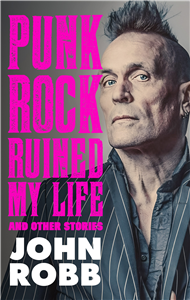
        Punk rock ruined my life

        And other stories

        by John Robb

        The irresistible story of a one-man cultural phenomenon. Minister for the Counterculture, Mancunian mainstay and alternative national treasure John Robb has lived a life in music. In this book he charts his adventures on the cultural frontline, chronicling the making of a DIY icon. Robb's quest began in his hometown of Blackpool - where punk was a battle against the odds - and went international when he toured the world with his band. The first person to interview Nirvana, he also discovered The Stone Roses for weekly newspaper Sounds and did early interviews with The Jesus and Mary Chain and The Manics, before moving on to legends such as Mark E. Smith, Nick Cave and Patti Smith. Along the way, he became an on-screen commentator and author of bestselling books. Robb's memoir tells of deep friendships with figures from Poly Styrene to Chris Packham. Packed with riotous stories, it provides an alternative account of British musical and cultural history and a triumphant blueprint for a punk rock life.

      • Trusted Partner
        Humanities & Social Sciences
        March 2017

        Reporting the Raj

        The British Press and India, c.1880–1922

        by Chandrika Kaul

        This book is the first analysis of the dynamics of British press reporting of India and the attempts made by the British Government to manipulate press coverage as part of a strategy of imperial control. The press was an important forum for debate over the future of India and was used by significant groups within the political elite to advance their agendas. Focuses on a period which represented a critical transitional phase in the history of the Raj, witnessing the impact of the First World War, major constitutional reform initiatives, the tragedy of the Amritsar massacre, and the launching of Gandhi's mass movement. Asserts that the War was a watershed in official media manipulation and in the aftermath of the conflict the Government's previously informal and ad hoc attempts to shape press reporting were placed on a more formal basis.

      • Trusted Partner
        Humanities & Social Sciences
        March 2017

        The language of empire

        Myths and metaphors of popular imperialism, 1880-1918

        by Robert Macdonald

        The debate about the Empire dealt in idealism and morality, and both sides employed the language of feeling, and frequently argued their case in dramatic terms. This book opposes two sides of the Empire, first, as it was presented to the public in Britain, and second, as it was experienced or imagined by its subjects abroad. British imperialism was nurtured by such upper middle-class institutions as the public schools, the wardrooms and officers' messes, and the conservative press. The attitudes of 1916 can best be recovered through a reconstruction of a poetics of popular imperialism. The case-study of Rhodesia demonstrates the almost instant application of myth and sign to a contemporary imperial crisis. Rudyard Kipling was acknowledged throughout the English-speaking world not only as a wonderful teller of stories but as the 'singer of Greater Britain', or, as 'the Laureate of Empire'. In the last two decades of the nineteenth century, the Empire gained a beachhead in the classroom, particularly in the coupling of geography and history. The Island Story underlined that stories of heroic soldiers and 'fights for the flag' were easier for teachers to present to children than lessons in morality, or abstractions about liberty and responsible government. The Education Act of 1870 had created a need for standard readers in schools; readers designed to teach boys and girls to be useful citizens. The Indian Mutiny was the supreme test of the imperial conscience, a measure of the morality of the 'master-nation'.


      • Trusted Partner
        Humanities & Social Sciences
        April 2020

        The British political elite and Europe, 1959-1984

        A higher loyalty

        by Bob Nicholls

        This book offers an original interpretation of Britain's relationship with Europe over a 25 year period: 1959-84 and advances the argument that the current problems over EU membership resulted from much earlier political machinations. This evidence based account of the seminal period analyses the applications for EEC membership, the 1975 referendum, and the role of the press. Was the British public misled over the true aims of the European project? How significant was the role of the press in changing public opinion from anti, to pro Common Market membership? Why, after over 40 years since Britain became a member of the European community, does the issue continue to deeply divide not only the political elite, but also the British public? These, and other pertinent questions are answered in this timely book on a subject that remains topical and highly controversial.

      • Trusted Partner
        Humanities & Social Sciences
        December 2024

        British culture after empire

        Race, decolonisation and migration since 1945

        by Josh Doble, Liam Liburd, Emma Parker

        British culture after Empire is the first collection of its kind to explore the intertwined social, cultural and political aftermath of empire in Britain from 1945 up to and beyond the Brexit referendum of 2016, combining approaches from the fields of history, English and cultural studies. Against those who would deny, downplay or attempt to forget Britain's imperial legacy, the various contributions expose and explore how the British Empire and the consequences of its end continue to shape Britain at the local, national and international level. As an important and urgent intervention in a field of increasing relevance within and beyond the academy, the book offers fresh perspectives on the colonial hangovers in post-colonial Britain from up-and-coming as well as established scholars.

      • Trusted Partner
      • Trusted Partner
      • Trusted Partner
      • Trusted Partner
      • Trusted Partner
      • Trusted Partner
      • Trusted Partner
      • Trusted Partner
      • Trusted Partner
        Humanities & Social Sciences
        January 2026

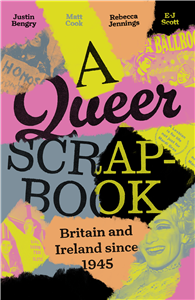
        A queer scrapbook

        Britain and Ireland since 1945

        by Justin Bengry, Matt Cook, Rebecca Jennings, E-J Scott

        A beautifully illustrated compendium of LGBTIQ+ life. A queer scrapbook offers a treasure trove of LGBTIQ+ histories from across Britain and Ireland. Packed with materials, from interviews and newspaper articles to photographs and flyers, the book explores urban, rural and regional queer life since 1945. Commentaries and short essays introduce a changing queer landscape, spotlighting four broad themes: home and family, sex and socialising, arts and culture and politics and activism. The book delves into the meaning and experiences of domesticity and parenting and explores the sometimes unexpected places LGBTIQ+ people met to have fun. It examines the importance of creative work in forming community and identity and shows how people fought injustice and advocated for equal rights. Collecting has been a way for the marginalised to explore and assert identity and community. A queer scrapbook vividly illustrates the diversity of queer and trans lives across the British and Irish isles since the Second World War.

      • Trusted Partner
        Humanities & Social Sciences
        July 2023

        A culture of curiosity

        by Leonie Hannan

      • Trusted Partner
      • Trusted Partner
        The Arts
        September 2025

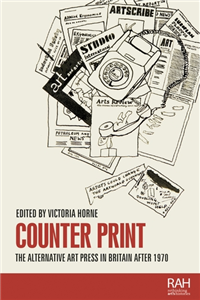
        Counter print

        The alternative art press in Britain after 1970

        by Victoria Horne

        The history of contemporary art is also a history of its newsletters, manifestos, magazines, pamphlets, and journals. Those periodical publications do not simply communicate or record ideas but have worked in exciting ways to shape art's practices, histories and communities. As a new generation of artists, activists and scholars seek to uncover the histories of alternative publishing and artistic networks, this book gathers original archival discoveries while offering methodologies for studying and thinking with those artefacts. As the first essay collection to focus on the periodical art press and the ways we study it, Counter print offers readers an alternative route into the past fifty years of contemporary art, one that is defiantly collaborative, border crossing and disruptive.

      • Trusted Partner
        The Arts
        November 2006

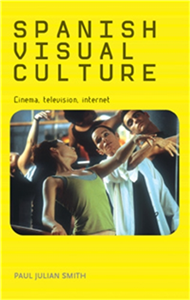
        Spanish visual culture

        Cinema, television, internet

        by Paul Julian Smith, Susan Williams

        This book is the first to explore three visual media in contemporary Spain: cinema, television and the internet. It also examines cultural products in each of these media in terms of three vital themes: emotion, location and nostalgia. The first two chapters focus on emotion. They analyze the 'emotional imperative' in a recent Almodóvar feature film and in Spanish television's top-rated period drama, and investigate the politics of affect in TV drama in the last decade. The next pair of chapters deal with location. They use cultural geography to re-read contradictory accounts of the movida (the post-Franco cultural boom) and examine an attempt to anchor a US-derived genre (the youth movie) in the urban landscape of Madrid. The fifth and sixth chapters introduce the theme of location into nostalgia. They treat the unique cases of a successful Spanish heritage movie and a contemporary Spanish thriller remade in Hollywood. The peunultimate chapter investigates electronic artists and the virtual universe, and the book ends with a look at the implications of Hispano-Mexican co-productions and the interconnectedness of economic and aesthetic cultural forms. ;

      Subscribe to our

      newsletter