
Daniel Goleman - Foreign Audio
Please contact anaban@gmail.com for information
View Rights Portal


Horizontal together tells the story of 1960s art and queer culture in New York through the overlapping circles of Andy Warhol, underground filmmaker Jack Smith and experimental dance star Fred Herko. Taking a pioneering approach to this intersecting cultural milieu, the book uses a unique methodology that draws on queer theory, dance studies and the analysis of movement, deportment and gesture to look anew at familiar artists and artworks, but also to bring to light queer artistic figures' key cultural contributions to the 1960s New York art world. Illustrated with rarely published images and written in clear and fluid prose, Horizontal together will appeal to specialists and general readers interested in the study of modern and contemporary art, dance and queer history.
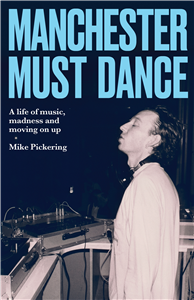
From Manchester's backstreets to global dancefloors - the untold story of a musical pioneer. Beginning on the night in November 1963 when his mum took him to see the Beatles live at Manchester's ABC Cinema, Mike Pickering takes the reader through sixty years of clubs, clothes, gigs, record labels, football matches and politics. Pickering has lived through decades of rapid change in popular music. As an influential DJ he introduced house music into the legendary Haçienda. He signed Happy Mondays and James to Factory Records before working with Kasabian, Gossip and Calvin Harris at Sony. His Mercury Prize-winning, multi-million-selling group M People transformed the music industry's attitude to dance music. As he tells his remarkable story he introduces an array of friends and collaborators, many of whom would become important - and sometimes notorious - figures in music history. Manchester must dance is a revelatory insider's account that moves from the cramped back streets of 1950s north Manchester on a journey deep into music, the city and the wider world. It features forewords from some of those Pickering inspired: Martin Fry, Johnny Marr, Noel Gallagher and Calvin Harris.
 Trusted Partner
Trusted Partner
Trusted Partner
Trusted Partner
Trusted Partner

This book offers insights into some of the digital innovations, structural adaptations and analogue solutions that enabled live performance in the UK to survive through the COVID-19 pandemic. It provides evidence of values-led policies and practices that have improved the wellbeing of the creative workforce and have increased access to live performance. Through sections that address digital innovations, workforce resilience and programming live performances outdoors and in community settings, this book provides practical insights into the challenges live performance faced during the pandemic. It shows how, in order to survive, individuals and companies within the sector drew on the creativity and resourcefulness of its workforce, and on new and existing networks. In these accounts, the pandemic functioned as catalyst for technological innovations, stock-taking regarding exploitative industry structures, and a re-valuing of the role of live performance for community-building.
Trusted Partner
Trusted Partner
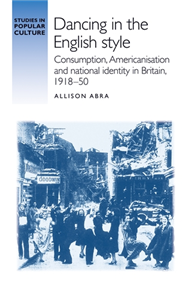
Dancing in the English style explores the development, experience, and cultural representation of popular dance in Britain from the end of the First World War to the early 1950s. It describes the rise of modern ballroom dancing as Britain's predominant popular style, as well as the opening of hundreds of affordable dancing schools and purpose-built dance halls. It focuses in particular on the relationship between the dance profession and dance hall industry and the consumers who formed the dancing public. Together these groups negotiated the creation of a 'national' dancing style, which constructed, circulated, and commodified ideas about national identity. At the same time, the book emphasizes the global, exploring the impact of international cultural products on national identity construction, the complexities of Americanisation, and Britain's place in a transnational system of production and consumption that forged the dances of the Jazz Age.
Trusted Partner
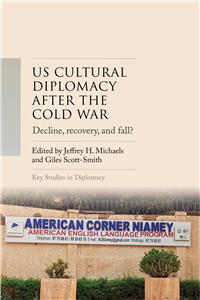
In the decades following the USSR's collapse, the US has gone from unrivalled hegemon to a position of relative decline. With America 'triumphant' after 1991, its culture, like its diplomatic, military and economic power, remained unmatched. Such favourable circumstances seemed to undercut the need for cultural diplomacy. Why should the US government sell a product that was already selling so well? After 9/11, however, it was apparent the US image was less popular than previously assumed. To reverse this negative image, cultural diplomacy was revived. Despite being beset by internal and external challenges, US officials supported various cultural initiatives and partnerships to promote the American brand globally. Along the way, cultural diplomacy has made use of new forms of expression to promote American culture and build positive foreign relations. The arrival of the second Trump administration in 2025 has clearly signalled an end to using cultural diplomacy to further causes of empowerment and diversity, making the future uncertain for this field of activity.
Trusted Partner
Trusted Partner


Aus dem Englischen von Paula Telge
Trusted Partner

 Trusted Partner
Trusted Partner
Trusted Partner


Where do bees get the wax for their honeycombs from? What does the bee dance mean? Why are bees important for us humans? General knowledge for primary school children! Who will be quiz king? The life of the little honeybee and its environment is full of surprises. Do you know your way around the native animal world? Discover their secrets, research how animals live and what distinguishes them. One quiz question – three possible answers. Plus all sorts of fascinating facts on the reverse page. For one or more players aged 6+.
Trusted Partner
Trusted Partner
Trusted Partner
Trusted Partner

In the first monograph to fully examine the intersecting networks of Jacobites and travellers to the continent, Filet considers how small states used official diplomacy and deployed soft power - embodied by educational academies - to achieve foreign policy goals. This work uses little-known archival materials to explain how and why certain small states secretly supported the Jacobite cause during the crucial years surrounding the 1715 rising, while others stayed out of Jacobite affairs.At the same time, the book demonstrates how early modern small states sought to cultivate good relations with Britain by attracting travellers as part of a wider trend of ensuring connections with future diplomats or politicians in case a Stuart restoration never came.This publication therefore brings together a study of Britain, small states, Jacobitism, and educational travel, in its nexus at continental academies.
Trusted Partner

Art, medicine and health have many points of contact and a long tradition. Even in Greek mythology, Apollo was the god of the arts. Artistic approaches to therapy (including visual and performing arts, music, dance and literature) have been used for many centuries and are still offered in some medical institutions today. Despite this long practical experience, there is little scientific evidence of its effectiveness. Basic research provides an important basis for art therapy with interesting new approaches for investigating possible mechanisms of action. In addition, the overall social signifi- cance of art for health is an important topic, especially with regard to preventive effects for the population. The book provides a comprehensive overview of how art can be used as a health-promoting resource and highlights various research approaches. In addition, a brief review of the historical development of art in medicine is given. For the first time, the influence of music, painting, dance, literature and architecture on people’s state of health and the healing effect they can have is shown. Target group: Art therapists, artists, psychotherapists, child and adolescent psychologists, psychoanalysts and psychologists, health professionals, music and dance therapists, art and music educators, community musicians
Trusted Partner
In the late eighteenth-century, elite British women had an unprecedented opportunity to travel. Taking travel home uncovers the souvenir culture these women developed around the texts and objects they brought back with them to realise their ambitions in the arenas of connoisseurship, friendship and science. Key characters include forty-three-year-old Hester Piozzi (Thrale), who honeymooned in Italy; thirty-one-year-old Anna Miller, who accompanied her husband on a Grand Tour; Dorothy Richardson, who undertook various tours of England from the ages of twelve to fifty-two; and the sisters Katherine and Martha Wilmot, who travelled to Russia in their late twenties. The supreme tourist of the book, the political salon hostess Lady Elizabeth Holland, travelled to many countries with her husband, including Paris, where she met Napoleon, and Spain during the Peninsular War. Using a methodology informed by literary and design theory, art history, material culture studies and tourism studies, the book examines a wide range of objects, from painted fans "of the ruins of Rome for a sequin apiece" and the Pope's "bless'd beads", to lava from Vesuvius and pieces of Stonehenge. It argues that the rise of the souvenir is representative of female agency, as women used their souvenirs to form spaces in which they could create and control their own travel narratives.
Trusted Partner
In 'Digging up stories', James Thompson explores the problems of theatre practice in communities affected by war and exclusion. Each chapter or 'story' is written in a lively and accessible style and draws on a range of contemporary performance theories. The chapters discuss: - participatory theatre in refugee camps - theatre workshop and stories of a massacre - traditional dance-dramas in an insurgent controlled village - 'Forum' theatre with the Mahabharata - ethical issues - the struggle to teach the author to dance 'Digging up stories' documents a range of theatre practice and includes project reports, ethnographic accounts, performance analysis and diary-style reflection. Taken from Thompson's research and practice in Sri Lanka, these diverse examples question the link between applied theatre, traditional performance and performances in everyday life. The book blurs lines between research and travel writing to create rich and provocative accounts of applying theatre in a troubled setting. ;



