
Daniel Goleman - Foreign Audio
Please contact anaban@gmail.com for information
View Rights Portal

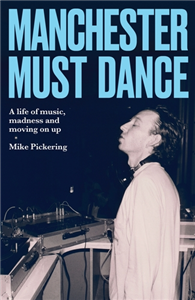
From Manchester's backstreets to global dancefloors - the untold story of a musical pioneer. Beginning on the night in November 1963 when his mum took him to see the Beatles live at Manchester's ABC Cinema, Mike Pickering takes the reader through sixty years of clubs, clothes, gigs, record labels, football matches and politics. Pickering has lived through decades of rapid change in popular music. As an influential DJ he introduced house music into the legendary Haçienda. He signed Happy Mondays and James to Factory Records before working with Kasabian, Gossip and Calvin Harris at Sony. His Mercury Prize-winning, multi-million-selling group M People transformed the music industry's attitude to dance music. As he tells his remarkable story he introduces an array of friends and collaborators, many of whom would become important - and sometimes notorious - figures in music history. Manchester must dance is a revelatory insider's account that moves from the cramped back streets of 1950s north Manchester on a journey deep into music, the city and the wider world. It features forewords from some of those Pickering inspired: Martin Fry, Johnny Marr, Noel Gallagher and Calvin Harris.

Horizontal together tells the story of 1960s art and queer culture in New York through the overlapping circles of Andy Warhol, underground filmmaker Jack Smith and experimental dance star Fred Herko. Taking a pioneering approach to this intersecting cultural milieu, the book uses a unique methodology that draws on queer theory, dance studies and the analysis of movement, deportment and gesture to look anew at familiar artists and artworks, but also to bring to light queer artistic figures' key cultural contributions to the 1960s New York art world. Illustrated with rarely published images and written in clear and fluid prose, Horizontal together will appeal to specialists and general readers interested in the study of modern and contemporary art, dance and queer history.
 Trusted Partner
Music hall reflected the lifestyles and preoccupations of working people in a way that only television in the modern era has done since. While London dominated the wider British music hall, Glasgow was the centre of a vigorous Scottish performing culture developed in a Presbyterian society with a very different experience of industrial urbanisation. This book explores all aspects of the Scottish music hall industry, from the lives and professional culture of performers and impresarios to the place of music hall in Scottish life. It explores issues of national identity in terms of Scottish audiences' responses to the promotion of imperial themes in songs and performing material, and in the version of Scottish identity projected by Lauder and other kilted acts at home and abroad. ;
Trusted Partner
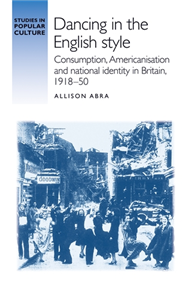
Dancing in the English style explores the development, experience, and cultural representation of popular dance in Britain from the end of the First World War to the early 1950s. It describes the rise of modern ballroom dancing as Britain's predominant popular style, as well as the opening of hundreds of affordable dancing schools and purpose-built dance halls. It focuses in particular on the relationship between the dance profession and dance hall industry and the consumers who formed the dancing public. Together these groups negotiated the creation of a 'national' dancing style, which constructed, circulated, and commodified ideas about national identity. At the same time, the book emphasizes the global, exploring the impact of international cultural products on national identity construction, the complexities of Americanisation, and Britain's place in a transnational system of production and consumption that forged the dances of the Jazz Age.


Samuel Hall Young, a Presbyterian clergyman, met John Muir when the great naturalist's steamboat docked at Fort Wrangell, in southeastern Alaska, where Young was a missionary to the Stickeen Indians. In "Alaska Days With John Muir" he describes this 1879 meeting: "A hearty grip of the hand and we seemed to coalesce in a friendship which, to me at least, has been one of the very best things in a life full of blessings." This book, first published in 1915, describes two journeys of discovery taken in company with Muir in 1879 and 1880. Despite the pleas of his missionary colleagues that he not risk life and limb with "that wild Muir," Young accompanied Muir in the exploration of Glacier Bay. Upon Muir's return to Alaska in 1880, they traveled together and mapped the inside route to Sitka. Young describes Muir's ability to "slide" up glaciers, the broad Scotch he used when he was enjoying himself, and his natural affinity for Indian wisdom and theistic religion. From the gripping account of their near-disastrous ascent of Glenora Peak to Young's perspective on Muir's famous dog story "Stickeen," Alaska Days is an engaging record of a friendship grounded in the shared wonders of Alaska's wild landscapes.
Trusted Partner

This book presents a wide range of previously unpublished works by Radclyffe Hall. These new materials significantly broaden and complicate critical views of Hall's writings. They demonstrate the stylistic and thematic range of her work and cover diverse topics, including 'outsiderism', gender, sexuality, race, class, religion, the supernatural and the First World War. Together, these texts shed a new light on unrecognised or misunderstood aspects of Hall's intellectual world. The volume also contains a substantial introduction, which situates Hall's unpublished writings in the broader context of her life and work. Overall, the book invites a critical reassessment of Hall's place in early twentieth-century literature and culture and offers rich possibilities for teaching and future research. It will be of interest to scholars and undergraduate and postgraduate students in the fields of English literature, modernism, women's writing, and gender and sexuality studies, and to general readers. ;
Trusted Partner
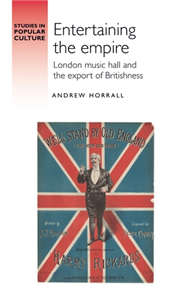
The stage entertainments known as music hall emerged in mid-Victorian London just as the British began colonising large parts of the world.Settlers recreated this metropolitan popular culture throughout the empire and in places under foreign control. They erected music halls resembling those at home, imported songs and sketches, performed inamateur shows and watched touring professionals. London originals were rewritten as commentaries on local conditions. This activity transformed music hall into a marker of an exclusionary British identity overseas and made colonies look and sound more like Britain. The result was that settlers separated by vast distances were linked by a shared popular culture. The touring circuits and cultural affinities the Victorians created endure to this day.
Trusted Partner
 Trusted Partner
Trusted Partner
Trusted Partner
In the late eighteenth-century, elite British women had an unprecedented opportunity to travel. Taking travel home uncovers the souvenir culture these women developed around the texts and objects they brought back with them to realise their ambitions in the arenas of connoisseurship, friendship and science. Key characters include forty-three-year-old Hester Piozzi (Thrale), who honeymooned in Italy; thirty-one-year-old Anna Miller, who accompanied her husband on a Grand Tour; Dorothy Richardson, who undertook various tours of England from the ages of twelve to fifty-two; and the sisters Katherine and Martha Wilmot, who travelled to Russia in their late twenties. The supreme tourist of the book, the political salon hostess Lady Elizabeth Holland, travelled to many countries with her husband, including Paris, where she met Napoleon, and Spain during the Peninsular War. Using a methodology informed by literary and design theory, art history, material culture studies and tourism studies, the book examines a wide range of objects, from painted fans "of the ruins of Rome for a sequin apiece" and the Pope's "bless'd beads", to lava from Vesuvius and pieces of Stonehenge. It argues that the rise of the souvenir is representative of female agency, as women used their souvenirs to form spaces in which they could create and control their own travel narratives.
Trusted Partner

This book offers insights into some of the digital innovations, structural adaptations and analogue solutions that enabled live performance in the UK to survive through the COVID-19 pandemic. It provides evidence of values-led policies and practices that have improved the wellbeing of the creative workforce and have increased access to live performance. Through sections that address digital innovations, workforce resilience and programming live performances outdoors and in community settings, this book provides practical insights into the challenges live performance faced during the pandemic. It shows how, in order to survive, individuals and companies within the sector drew on the creativity and resourcefulness of its workforce, and on new and existing networks. In these accounts, the pandemic functioned as catalyst for technological innovations, stock-taking regarding exploitative industry structures, and a re-valuing of the role of live performance for community-building.
Trusted Partner
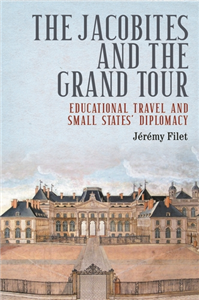
In the first monograph to fully examine the intersecting networks of Jacobites and travellers to the continent, Filet considers how small states used official diplomacy and deployed soft power - embodied by educational academies - to achieve foreign policy goals. This work uses little-known archival materials to explain how and why certain small states secretly supported the Jacobite cause during the crucial years surrounding the 1715 rising, while others stayed out of Jacobite affairs.At the same time, the book demonstrates how early modern small states sought to cultivate good relations with Britain by attracting travellers as part of a wider trend of ensuring connections with future diplomats or politicians in case a Stuart restoration never came.This publication therefore brings together a study of Britain, small states, Jacobitism, and educational travel, in its nexus at continental academies.
Trusted Partner
Trusted Partner
Imperialist discourse interacted with regional and class discourses. Imperialism's incorporation of Welsh, Scots and Irish identities, was both necessary to its own success and one of its most powerful functions in terms of the control of British society. Most cultures have a place for the concept of heroism, and for the heroic figure in narrative fiction; stage heroes are part of the drama's definition of self, the exploration and understanding of personal identity. Theatrical and quasi-theatrical presentations, whether in music hall, clubroom, Shakespeare Memorial Theatre or the streets and ceremonial spaces of the capital, contributed to that much-discussed national mood. This book examines the theatre as the locus for nineteenth century discourses of power and the use of stereotype in productions of the Shakespearean history canon. It discusses the development of the working class and naval hero myth of Jack Tar, the portrayal of Ireland and the Irish, and the portrayal of British India on the spectacular exhibition stage. The racial implications of the ubiquitous black-face minstrelsy are focused upon. The ideology cluster which made up the imperial mindset had the capacity to re-arrange and re-interpret history and to influence the portrayal of the tragic or comic potential of personal dilemmas. Though the British may have prided themselves on having preceded America in the abolition of slavery and thus outpacing Brother Jonathan in humanitarian philanthropy, abnegation of hierarchisation and the acceptance of equality of status between black and white ethnic groups was not part of that achievement.
Trusted Partner
Trusted Partner

 Trusted Partner


Where do bees get the wax for their honeycombs from? What does the bee dance mean? Why are bees important for us humans? General knowledge for primary school children! Who will be quiz king? The life of the little honeybee and its environment is full of surprises. Do you know your way around the native animal world? Discover their secrets, research how animals live and what distinguishes them. One quiz question – three possible answers. Plus all sorts of fascinating facts on the reverse page. For one or more players aged 6+.
Trusted Partner

An incidental pleasure of watching a film is what it tells us about the society in which it is made. Using a sociological model, The British working class in postwar film looks at how working-class people were portrayed in British feature films in the decade after the Second World War. Though some of the films examined are well known, others have been forgotten and deserve reassessment. Original statistical data is used to assess the popularity of the films with audiences. With its interdisciplinary approach and the avoidance of jargon, this book seeks to broaden the approach to film studies. Students of media and cultural studies are introduced to the skills of other disciplines, while sociologists and historians are encouraged to consider the value of film evidence in their own fields. This work should appeal to all readers interested in social history and in how cinema and society works.
Trusted Partner


Flaschenpost an die Zukunft! In diesem postum veröffentlichten Buch über das verhängnisvolle Dreieck von Rasse, Ethnie und Nation zeichnet der große Soziologe und Begründer der Cultural Studies, Stuart Hall, nach, wie alte Hierarchien in unseren Gesellschaften aufgebrochen wurden und unterdrückte Minderheiten neue Repräsentationsformen von kultureller Identität durchzusetzen begannen – und wie sich dagegen immer wieder Widerstand formierte. Von der Renaissance bis zur Aufklärung und darüber hinaus diente der Begriff »Rasse« dazu, soziale Unterschiede aufgrund von Hautfarbe als natürlich und unwandelbar darzustellen. Auch heute findet die rassistische Fundierung von ethnischer und politischer Zugehörigkeit im Zeichen der Identitätspolitik wieder verstärkt Zuspruch. Die Neudefinitionen, die im 20. Jahrhundert von der schwarzen Bürgerrechtsbewegung und von Migrantinnen und Migranten in westlichen Gesellschaften durchgesetzt wurden, zeigen für Hall jedoch, wie Identitäten und Vorurteile im Medium der Sprache transformiert werden können. Sie geben Grund zur Hoffnung, dass in der migrantischen Diaspora immer wieder neue Anstöße entstehen, um den Bedrohungen des Fundamentalismus und des Nationalismus zu begegnen. Ein Vermächtnis von brennender Aktualität.
Trusted Partner
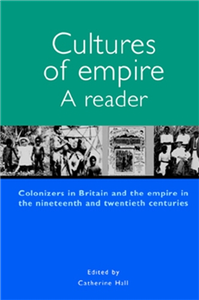
Collects together the best articles by key historians, literary critics, and anthropologists on the cultures of colonialism in the British Empire in the nineteenth and twentieth centuries.. A substantial introduction by the distinguished historian, Professor Catherine Hall, discusses new approaches to the history of empire and establishes a narrative frame through which to read the essays which follow.. The volume is clearly divided into three sections: theoretical, emphasising concepts and approaches; the colonisers 'at home', focusing on how empire was lived in Britain; and 'away' - the attempt to construct new cultures through which the colonisers defined themselves and others in varied colonial sites. A useful guide to recent scholarship on the culture of imperialism. ;



