
Daniel Goleman - Foreign Audio
Please contact anaban@gmail.com for information
View Rights Portal


Praktische Philosophie ist wesentlich Rekonstruktion von vortheoretischen moralischen Intuitionen und daher angewiesen auf ein grundsätzliches Vertrauen in die Gültigkeit des von ihr zu Rekonstruierenden. In kaum einem Teil der Welt wurde nun das Vertrauen in diese vortheoretischen moralischen Intuitionen derart tiefgehend und nachhaltig erschüttert, ja gebrochen, wie das in Deutschland durch den Nationalsozialismus geschah. Dieses Faktum bedeutet für die Moralphilosophie in Deutschland sowohl Chance wie auch Gefährdung. Es ist zugleich ein wichtiger Schlüssel für das Verständnis sowohl der besonderen Spannungen zwischen den verschiedenen Positionen der praktischen Philosophie innerhalb Deutschlands wie auch der Sonderstellung der praktischen Philosophie aus Deutschland gegenüber entsprechenden Bemühungen aus anderen westlichen Demokratien, die aus der ambivalenten Befangenheit der deutschen Philosophen resultiert.
 Trusted Partner
Trusted Partner
Trusted Partner
Trusted Partner
Trusted Partner
Trusted Partner
Trusted Partner

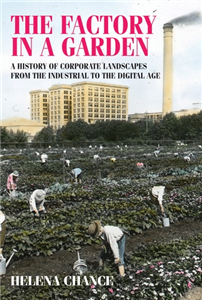
When we think about Victorian factories, 'Dark Satanic Mills' might spring to mind - images of blackened buildings and exhausted, exploited workers struggling in unhealthy and ungodly conditions. But for some employees this image was far from the truth, and this is the subject of 'The Factory in a Garden' which traces the history of a factory gardens movement from its late-eighteenth century beginnings in Britain to its twenty-first century equivalent in Google's vegetable gardens at their headquarters in California. The book is the first study of its kind examining the development of parks, gardens, and outdoor leisure facilities for factories in Britain and America as a model for the reshaping of the corporate environment in the twenty-first century. This is also the first book to give a comprehensive account of the contribution of gardens, gardening and recreation to the history of responsible capitalism and ethical working practices.
Trusted Partner
Trusted Partner

 Trusted Partner
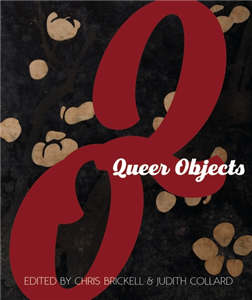
Queer lives give rise to a vast array of objects: the things we fill our houses with, the gifts we share with our friends, the commodities we consume at work and at play, the clothes and accessories we wear, and the analogue and digital technologies we use to communicate with one another. But what makes an object queer? The sixty-three chapters in Queer Objects consider this question in relation to lesbian, gay and transgender communities across time, cultures and space. In this unique international collaboration, well-known and newer writers traverse world history to write about items ranging from ancient Egyptian tomb paintings and Roman artefacts to political placards, snapshots, sex toys and the smartphone. Fabulous, captivating, transgressive.
Trusted Partner

With the emergence of neo-liberalism in the 1980s as the dominant domestic and international political-economic orthodoxy, labour as both a social category and political movement tended to be written off or ignored by academics, politicians and commentators. However, at a time when the world's working class is growing faster than at any previous time in history and neo-liberalism is widely challenged, this orthodoxy is clearly inadequate. The spread of global production means that to ignore labour, its organisations, interests and politics, is to ignore one of the key components of that process. Labour organisations have not gone away and neither has the state: their relationship remains as significant as ever. The strategic relationship between trade unions and social movements, nationally and internationally, has also developed markedly, especially in the south. New patterns of resistance are emerging to challenge global capital and those who assert that globalisation is irresistible. ;
Trusted Partner
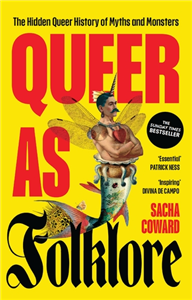
A celebration of queer history like you've never seen it before. Queer as folklore travels across centuries and continents to reveal the unsung heroes and villains of storytelling, magic and fantasy. Featuring images from archives, galleries and museums around the world, each chapter investigates the queer history of different mythic and folkloric characters, both old and new. Leaving no headstone unturned, Sacha Coward takes you on a wild ride through the night from ancient Greece to the main stage of RuPaul's Drag Race, visiting cross-dressing pirates, radical fairies and the graves of the 'queerly departed' along the way. Queer communities have often sought refuge in the shadows and created safe spaces in underworlds. But these forgotten narratives tell stories of resilience that deserve to be heard. Join any Pride march and you will see a glorious display of papier-mâché unicorn heads, drag queens in mermaid tails and more fairy wings than you can shake a trident at. These are not just accessories: they are queer symbols with historic roots. To truly understand who queer people are today, we must confront the twisted tales of the past.
Trusted Partner
Trusted Partner
Intentionalität gilt nicht wenigen zeitgenössischen Philosophen als das grundlegende geistige Phänomen, weshalb sie sich von seiner Analyse sogar eine »Lösung« großer metaphysischer Probleme erhoffen, wie zum Beispiel des Leib-Seele-Problems oder des ursemantischen Problems, woher Laute und Zeichen eine Bedeutung erlangen. Es könnte scheinen, als hätte eine Theorie der Intentionalität gegenwärtig nur wegen der Künstliche-Intelligenz-Forschung Konjunktur. Eher stellt sie indes eine philosophische Herausforderung für die kommunikationstheoretischen und transzendentalpragmatischen Ansätze in der Semantik dar. Denn diese sehen in Intentionalität nur ein Sekundärphänomen, weil ihnen zufolge alles dafür spricht, dass intersubjektiv identische Bedeutung, Vorverständnis und Verstehen die Primärphänomene darstellen.
Trusted Partner

De-centering queer theory seeks to reorient queer theory to a different conception of bodies and sexuality derived from Eastern European Marxism. The book articulates a contrast between the concept of the productive body, which draws its epistemology from Soviet and avant-garde theorists, and Cold War gender, which is defined as the social construction of the body. The first part of the book concentrates on the theoretical and visual production of Eastern European Marxism, which proposed an alternative version of sexuality to that of western liberalism. In doing so it offers a historical angle to understand the emergence not only of an alternative epistemology, but also of queer theory's vocabulary. The second part of the book provides a Marxist, anti-capitalist archive for queer studies, which often neglects to engage critically with its liberal and Cold War underpinnings.
Trusted Partner

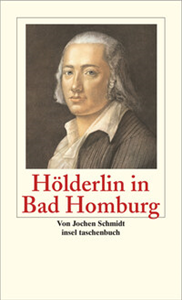
Zweimal zwei Jahre verbrachte Hölderlin in Bad Homburg. In jener Zeit entstanden einige seiner wichtigsten Werke, u.a. Hyperion und Der Tod des Empedokles sowie bedeutende Gedichte. Der vorliegende Band berichtet über Hölderlins Lebensgeschichte bis zum Ausbruch des Wahnsinns und bietet einen Überblick über seine geistige Welt, insbesondere seinen Philosophenkosmos und die literarischen Leitfiguren. Er zeigt auch sein politisch-revolutionäres Engagement in einer vom Spätabsolutismus bestimmten Zeit. Der Leser erhält eine bisher so nicht vorhandene, konzentrierte Darstellung zu Hölderlins Dichtung aus der Feder eines führenden Hölderlin-Forschers. Eine Auswahl von Gedichten und Bildern rundet diesen Begleiter zu Hölderlin ab.
Trusted Partner
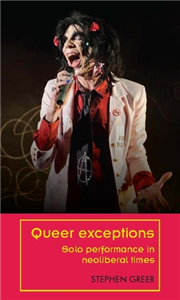
Queer exceptions is a study of contemporary solo performance in the UK and Western Europe that explores the contentious relationship between identity, individuality and neoliberalism. With diverse case studies featuring the work of La Ribot, David Hoyle, Oreet Ashery, Bridget Christie, Tanja Ostojic, Adrian Howells and Nassim Soleimanpour, the book examines the role of singular or 'exceptional' subjects in constructing and challenging assumed notions of communal sociability and togetherness, while drawing fresh insight from the fields of sociology, gender studies and political philosophy to reconsider theatre's attachment to singular lives and experiences. Framed by a detailed exploration of arts festivals as encapsulating the material, entrepreneurial circumstances of contemporary performance-making, this is the first major critical study of solo work since the millennium.
Trusted Partner
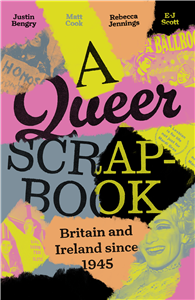
A beautifully illustrated compendium of LGBTIQ+ life. A queer scrapbook offers a treasure trove of LGBTIQ+ histories from across Britain and Ireland. Packed with materials, from interviews and newspaper articles to photographs and flyers, the book explores urban, rural and regional queer life since 1945. Commentaries and short essays introduce a changing queer landscape, spotlighting four broad themes: home and family, sex and socialising, arts and culture and politics and activism. The book delves into the meaning and experiences of domesticity and parenting and explores the sometimes unexpected places LGBTIQ+ people met to have fun. It examines the importance of creative work in forming community and identity and shows how people fought injustice and advocated for equal rights. Collecting has been a way for the marginalised to explore and assert identity and community. A queer scrapbook vividly illustrates the diversity of queer and trans lives across the British and Irish isles since the Second World War.
Trusted Partner
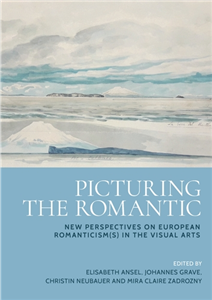
European Romanticism in the visual arts has always been defined by transnational transfer processes. It is surprising that international aspects of Romantic movements have been, in contrast to literary studies, a gap in art historical research. Picturing the Romantic addresses this issue and reveals new perspectives on European Romanticism(s) in the visual arts by reconsidering the phenomenon's traditional canon, geographical dimensions and terminology and analysing various examples of the complex and heterogeneous works of Romantic painting. In sixteen original essays, renowned and early career researchers examine the question of whether to speak of several independently considered Romanticisms or one European Romanticism. They adopt a transnational perspective on Romantic art in and beyond Europe, focusing on the interconnections between the countries.
Trusted Partner


Become an explorer! Go with Lias on an exciting mission and solve the puzzles that will lead you to your goal. Eventually you must decide: how will the adventure continue? 3 paths – 3 adventures – which of them is for YOU? Join Lias, Mojo and Cookie on a mission to the Himalayas: together they must find out what has happened to Lias’s father. He disappeared six months ago and the only thing he left behind was his expedition diary, which is full of strange clues and puzzles. The reader will be able to move onto the next stage only if you can decipher them. A great adventure awaits you! And you decide In the end, you must decide: How should the adventure continue for you and the Explorer Team? Hunt with Lias through the forgotten world. Go with Tashi to discover the eternal ice or follow Cookie and Mojo through fire and lava. You will have to choose which of the Explorers you want to accompany on the next adventure.
Trusted Partner


Lena is having a hard time adjusting to ordinary life. How can she forget Dante, the boy whose eyes are different colours? But she soon has much bigger worries. On a school trip she realises that her pursuers haven’t given up after all. At the last minute, Lena manages to pass the chronometer she uses to travel through time to her friend Bobbie. A fateful mistake. Fleeing, Bobbie stumbles into the past and becomes trapped in the year 1900. While she fights her way as a papergirl, Lena breaks her promise and returns to the invisible city to look for help – and Dante. Soon all three of them are on a mission to prevent their enemies from constructing chronometers to travel through time themselves. But they’re always a step ahead and the whole invisible world is in danger… 12+ years The first volume of an enthralling new fantasy trilogy with two headstrong time-travellers English sample translation available!



