
Your Search Results
-

-

Kia Persia Literary Agency
KIA Literary Agency was founded in 2002 in Tehran with the aim of promoting and supporting fine literary works in all forms throughout the world. It brings about opportunities for authors, illustrators, publishers, translators, and those involved in this field to meet their counterparts. And at the same time, it introduces them to the world and will inform them of all the related events which take place in the world of art and literature.
View Rights Portal
-
Promoted Content

 Humanities & Social SciencesApril 2026
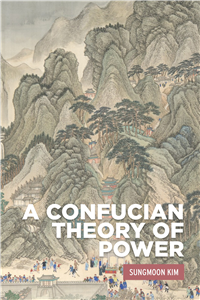
A Confucian theory of power
by Sungmoon Kim
In the book's lead essay, Sungmoon Kim offers a comprehensive analysis of Confucian power. Through a blend of philosophical, political, and historical analysis, Kim challenges the dominant idea that Confucianism is primarily centred on virtue ethics. Instead, he argues that Confucianism perceives power through the prism of responsibility. Kim not only traces this perspective throughout history but also demonstrates its relevance to contemporary society. He contrasts this Confucian perspective with Western political theory's view of power as control. Political theorists and philosophers will offer essay responses to Sungmoon Kim's provocation, offering a dialogue approach to provide a comprehensive analysis of the Confucian conception of power.
-
Promoted Content

 July 2021
Patchwork Power!
So wird die Sache mit der Bonusfamilie zum echten Bonus
by Marita Strubelt
"Patchwork Power!" von Marita Strubelt ist ein wegweisender Ratgeber für Eltern in Patchworkfamilien, der praktische Lösungen und Strategien für den Umgang mit den Herausforderungen des Patchwork-Lebens bietet. Strubelt, selbst eine erfahrene Patchwork-Familien-Expertin, teilt ihr umfassendes Wissen und persönliche Erfahrungen, um Leserinnen und Lesern zu helfen, die Dynamiken ihrer eigenen Patchworkfamilien besser zu verstehen und positiv zu gestalten. Das Buch legt einen starken Fokus auf die Selbstfürsorge, den Perspektivwechsel und die Wertschätzung aller Familienmitglieder. Es leitet dazu an, aus Problemen Kraft zu schöpfen und die einzigartige Struktur einer Patchworkfamilie als echten Bonus zu begreifen. Durch seine enge Anbindung an das Magazin "Leben & erziehen" und eine aktive Facebook-Gruppe bietet es eine kontinuierliche Unterstützung und Gemeinschaft für Leserinnen und Leser. "Patchwork Power!" richtet sich an Patchwork-Eltern, die nach einem modernen, empathischen und praxisnahen Ansatz suchen, um ihr Familienleben zu bereichern und zu harmonisieren. Modern und praxisnah: Bietet einen zeitgemäßen Ratgeber, der auf den neuesten Erkenntnissen und realen Erfahrungen basiert. Lösungsorientierte Ansätze: Stellt konkrete, umsetzbare Strategien zur Verfügung, die aus dem Alltag einer Patchwork-Coachin stammen. Fokus auf Selbstfürsorge und Empathie: Betont die Bedeutung von Selbstfürsorge und einem empathischen Umgang innerhalb der Familie. Unterstützung durch eine aktive Community: Zugang zu einer hilfreichen Facebook-Gruppe und der Expertise einer Patchwork-Familien-Expertin. Vielseitig einsetzbar: Bietet wertvolle Einsichten und Tipps, die über die Patchwork-Thematik hinaus in vielen Lebensbereichen anwendbar sind. Empathische und wertschätzende Sprache: Spricht Leserinnen und Leser auf eine persönliche und respektvolle Weise an. Bewältigung spezifischer Herausforderungen: Geht gezielt auf typische Fallstricke und Lösungswege in Patchworkfamilien ein. Für verschiedene Familienmodelle geeignet: Das Buch bietet einen soliden Grundstock an Rat und Unterstützung für viele Konstellationen innerhalb der Patchwork-Dynamik.
-
 Trusted Partner
 Humanities & Social SciencesMarch 2017
Unfit for heroes
Reconstruction and soldier settlement in the empire between the wars
by Kent Fedorowich
Research on soldier settlement has to be set within the wider history of emigration and immigration. This book examines two parallel but complementary themes: the settlement of British soldiers in the overseas or 'white' dominions, Australia, Canada, New Zealand and South Africa, between 1915 and 1930. One must place soldier settlement within the larger context of imperial migration prior to 1914 in order to elicit the changes in attitude and policy which occurred after the armistice. The book discusses the changes to Anglo-dominion relations that were consequent upon the incorporation of British ex-service personnel into several overseas soldier settlement programmes, and unravels the responses of the dominion governments to such programmes. For instance, Canadians and Australians complained about the number of ex-imperials who arrived physically unfit and unable to undertake employment of any kind. The First World War made the British government to commit itself to a free passage scheme for its ex-service personnel between 1914 and 1922. The efforts of men such as L. S. Amery who attempted to establish a landed imperial yeomanry overseas is described. Anglicisation was revived in South Africa after the second Anglo-Boer War, and politicisation of the country's soldier settlement was an integral part of the larger debate on British immigration to South Africa. The Australian experience of resettling ex-servicemen on the land after World War I came at a great social and financial cost, and New Zealand's disappointing results demonstrated the nation's vulnerability to outside economic factors.
-
Trusted Partner
 Humanities & Social SciencesJanuary 2025
The four dimensions of power
Understanding domination, empowerment and democracy
by Mark Haugaard
In this accessible and sophisticated exploration of the nature and workings of social and political power, Haugaard examines the interrelation between domination and empowerment. Building upon the perspectives of Steven Lukes, Michel Foucault, Amy Allen, Hannah Arendt, Anthony Giddens, Pierre Bourdieu and others, he offers a clear theoretical framework, delineating power in four interrelated dimensions. The first and second dimensions of power entail two different types of social conflict. The third dimension concerns tacit knowledge, uses of truth and reification. Drawing upon genealogical theory and accounts of slavery as social death, the fourth dimension of power concerns the power to create social subjects. The book concludes with an original normative pragmatist power-based account of democracy. Offering lucid and entertaining illustrations of complex theoretical perspectives, this book is essential reading for scholars and activists.
-
Trusted Partner
 Humanities & Social SciencesDecember 2025
Criminality, political power and conflict
Critical perspectives
by José Antonio Gutiérrez Danton, Francisco Gutiérrez Sanín
In the aftermath of the greed vs. grievance debate and the new wars paradigm, the focus of conflict studies shifted decisively to understanding "predatory" behaviours as the raison d'etre of contemporary conflict. Conflict was viewed as a continuum in which the more you engage in criminal behaviour, the less political you are.This approach has been robustly criticised over the past 15 years; however, in the process, we have been left with unsuitable concepts to handle the complex interactions between civil war, political power and criminality. The departure point here is the understanding of politics and criminality as two historically differentiated domains of human activity. Different, but interrelated, often co-constitutive and overlapping. Here, we empirically and theoretically explore their interactions, connections, and convergences, not focusing solely on irregular actors, thus bringing back the State and elites into this debate.
-
Trusted Partner
 Humanities & Social SciencesSeptember 2025
Writing power
Intellectuals, legitimacy, and the making of knowledge
by Sarah Victoria Alexandra Burton
Writing power radically rethinks the place of the canon and canonicity as objects and concepts in contemporary academia and the everyday intellectual practices of academics. It is distinctive in its demonstration of how academics' engagements with canons shape their writing practices but also how scholars' writing practices, spaces, proclivities, and desires shape the canon and changing ideas of value in canonicity. The book thinks through frequently discussed problems of legitimacy and knowledge production from fresh perspectives of lived experience and the everyday to offer new insights into the politics of knowledge in contemporary social sciences.
-
Trusted Partner
 Humanities & Social SciencesAugust 2022
The power of citizens and professionals in welfare encounters
The influence of bureaucracy, market and psychology
by Nanna Mik-Meyer
This book is about power in welfare encounters. Present-day citizens are no longer the passive clients of the bureaucracy and welfare workers are no longer automatically the powerful party of the encounter. Instead, citizens are expected to engage in active, responsible and coproducing relationships with welfare workers. However, other factors impact these interactions; factors which often pull in different directions. Welfare encounters are thus influenced by bureaucratic principles and market values as well. Consequently, this book engages with both Weberian (bureaucracy) and Foucauldian (market values/NPM) studies when investigating the powerful welfare encounter. The book is targeted Academics, post-graduates, and undergraduates within sociology, anthropology and political science.
-
Trusted Partner

 Humanities & Social SciencesJuly 2020
The Dark Triad of Personality in Personnel Selection
by Schwarzinger, Dominik
How to use the dark triad in personnel selection • Presents the latest research and theories • Highlights the gains and risks of these traits• Concrete recommendations for use in selection process• Summarizes legal and professional guidelines Learn how people high in narcissism, Machiavellianism, and subclinical psychopathy can experience individual career success and show adaptive performance as well as present severe risks to others in the workplace with abusive and destructive leadership and counterproductive behavior. This practical book also summarizes the legal and professional guidelines when assessing the dark personality characteristics of job applicants, examines the acceptance and social validity of such assessments, evaluates the available instruments, and makes recommendations for practical applications and further research. For:• psychotherapists• clinical psychologists• counselors• work, organizational, and business psychologists
-
Trusted Partner
 Humanities & Social SciencesSeptember 2020
Defense of the West
by Stanley R. Sloan, Lawrence Freedman
-
Trusted Partner
 Humanities & Social SciencesMarch 2020
Defense policies of East-Central European countries after 1989
by James W. Peterson, Jacek Lubecki
-
Trusted Partner
 Business, Economics & LawJune 2026
Power plants
Bioenergy, vegetal labour and the politics of productivity
by James Palmer
Power Plants offers an unflinching assessment of society's underappreciated but growing addiction to the industrial burning of crops and trees for energy. As vehicles increasingly run on fuels made from sugarcane and oil-palm, wood pellets replace coal, and scientists rush to engineer crops to produce renewable jet fuel, this book blows apart bioenergy's reputation as a simple, benign substitute for fossil fuels. Scrutinising modern bioenergy systems in the UK, Europe and United States, Power Plants shows how vegetal lifeforms are being enrolled to reinforce energy cultures centred around logics of efficiency, productivity and economic growth at all costs. Nonetheless, the book insists that a closer attention to plants could yet provoke a rethink of the social and economic purposes of all kinds of energy, with radical implications for ideas about growth, waste, prosperity and even pleasure.
-
Trusted Partner
 Teaching, Language & ReferenceMay 2025
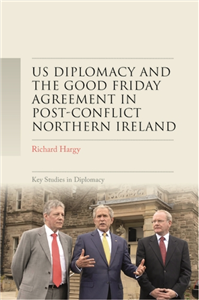
US diplomacy and the Good Friday Agreement in post-conflict Northern Ireland
by Richard Hargy
Richard Haass and Mitchell Reiss, as autonomous diplomats in the George W. Bush State Department, were able to alter US intervention in Northern Ireland and play critical roles in the post-1998 peace process. Their contributions have not been fully appreciated or understood. The restoration of Northern Ireland's power-sharing government in 2007 was made possible by State Department-led intervention in the peace process. There are few references to Northern Ireland in work examining the foreign policy legacy of the George W. Bush presidency. Moreover, the ability to control US foreign policy towards the region brought one of George W. Bush's Northern Ireland special envoys into direct diplomatic conflict with the most senior actors inside the British government. This book will uncover the extent of this fall-out and provide original accounts on how diplomatic relations between these old allies became so fraught.
-
Trusted Partner

 September 2014
Dein Crack ist in der Post
Wie das Internet die Welt der Drogen revolutioniert
by Power, Mike
-
Trusted Partner
 Humanities & Social SciencesMay 2022
The anthropology of power, agency and morality
by Victor de Munck, Elisa J. Sobo
-
Trusted Partner
 Humanities & Social SciencesJune 2023
Soft power and the future of US foreign policy
by Hendrik W. Ohnesorge
-
Trusted Partner
 Humanities & Social SciencesMarch 2020
Toleration, power and the right to justification
by Rainer Forst, Bert van den Brink, Anthony Laden, Peter Niesen, David Owen
-
Trusted Partner
 Humanities & Social SciencesApril 2022
Russian grand strategy in the era of global power competition
by Andrew Monaghan, Richard Connolly
-
Trusted Partner
-
Trusted Partner
 Humanities & Social SciencesMarch 2026
The dilemma of Authority
by Allyn Fives
The moral problem of authority is the challenge of reconciling legitimate authority (the right to rule) with the demands of freedom and rationality. In this book, I argue that authority can have legitimacy, but when it does it generates a moral dilemma, where the obligation to obey comes at some cost to freedom and reason. Hence, not only do I depart from the views of those who insist that authority can never have legitimacy, but also those who maintain that insofar as authority is legitimate it simply satisfies the demands of freedom or rationality. My focus here will be on both what it is that justifies authority (in particular focusing on membership, and the goods of membership) as well what type of reason an authoritative directive is, how it can come into conflict with others reasons, and how those conflicts are resolved.
-
Trusted Partner
 Geography & the EnvironmentJuly 2026
Environments of power
Vibrant terrain and landscapes of resistance
by Holly Randell-Moon
Environments of power provides unique case studies of environmental inclusion and exclusion across the Americas, Africa, Japan, India, and the South-Pacific. Using more-than-human and Indigenist approaches, chapters focus on Indigenous environmental resistance, marginalisation across social and physical environments, ecology as art, and how local communities are caught up in and resist development and infrastructure projects. The book demonstrates how environments influence which bodies and other matter belong (or not) in certain places.


