Your Search Results

      • Kawmiah distributing company

        The National Company for Distribution (Kawmiah distributing company) is one of the national press institutions working in the field of publishing, distribution, printing and journalism, and it has many cultural and intellectual publications through Dar Al Shaab and Dar Al Taawon, and it is of great importance in the paper book market in Egypt and the Arab world with its capabilities in the fields of publishing, distribution and printing And from promising cadres capable of presenting the best publications in various cultural and intellectual fields.

        View Rights Portal
      • Hudhud Publishing & Distribution

        Founded on the steadfast belief that a good book has a positive and lasting impact on the development of children, families and socities, Al Hudhud is a pioneering Emirati publishing and distribution

        View Rights Portal
      • Trusted Partner
        Humanities & Social Sciences
        January 2023

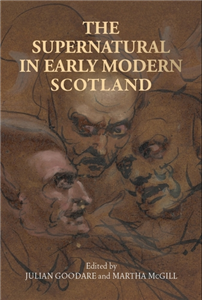
        The supernatural in early modern Scotland

        by Julian Goodare, Martha McGill

        This book is about other worlds and the supernatural beings, from angels to fairies, that inhabited them. It is about divination, prophecy, visions and trances. And it is about the cultural, religious, political and social uses to which people in Scotland put these supernatural themes between 1500 and 1800. The supernatural consistently provided Scots with a way of understanding topics such as the natural environment, physical and emotional wellbeing, political events and visions of past and future. In exploring the early modern supernatural, the book has much to reveal about how men and women in this period thought about, debated and experienced the world around them. Comprising twelve chapters by an international range of scholars, The supernatural in early modern Scotland discusses both popular and elite understandings of the supernatural.

      • Trusted Partner
        Humanities & Social Sciences
        May 2021

        Disciplined agency

        Neoliberal precarity, generational dispossession and call centre labour in Portugal

        by Patrícia Alves de Matos

        Since the mid-2000s, the harsh reality of call centre employment for a generation of young workers in Portugal has been impossible to ignore. With its endless rows of small cubicles, where human agents endure repetitive telephone conversations with abusive clients under invasive modes of technological surveillance, discipline and control, call centre work remains a striking symbol of labour precarity, a condition particularly associated with the neoliberal generational disenchantment that 'each generation does better than its predecessor'. This book describes the emergence of a regime of disciplined agency in the Portuguese call centre sector. Examining the ascendancy of call centres as icons of precarity in contemporary Portugal, this book argues that call centre labour constitutes a new form of commodification of the labouring subject. De Matos argues that call centres represent an advanced system of non-manual labour power exploitation, due to the underestimation of human creativity that lies at the centre of the regimented structures of call centre labour. Call centres can only guarantee profit maintenance, de Matos argues, through the commodification of the human agency arising from the operators' moral, relational and social embedded agentive linguistic interventions of creative improvisation, decision-making, problem-solving and ethical evaluation.


      • Trusted Partner
      • Trusted Partner
        Teaching, Language & Reference
        February 2013

        Ramon J. Sender's 'Cronica del alba'

        by Catherine Davies, Anthony Trippett

        Crónica del alba is a novel by Sender with a Civil War background, like the popular Réquiem por un campesino español, also in this series. The author evokes his childhood in rural Aragón at the beginning of the twentieth century in a book which has a charm and something of the character of The Adventures of Tom Sawyer. The young Pepe fights to believe in himself as a hero in the face of a world, and a father bent on putting him down. He is supported by his girlfriend, Valentina, who believes in him implicitly and often ends up in as much trouble as him. But there is something more here than scrapes and mischief-making. It is written by an older and disillusioned Pepe who has known real heroism and is now detained in a prison camp for Spanish Civil War refugees in southern France. The novel raises challenging questions about the loss of hope, how people cope with disillusionment, and the place of writing in that process. Moreover, since the novel reflects Sender's own childhood it sheds light on the complex relationship of fact and fiction in autobiographical novels. ;

      • Trusted Partner
        Humanities & Social Sciences
        July 2007

        Martha Gellhorn: The war writer in the field and in the text

        by Kate McLoughlin, Martin Hargreaves

        Martha Gellhorn was the doyenne of twentieth century war correspondence. Opinionated, honest and unafraid, she covered conflicts from the Spanish Civil War to Reagan's wars in Central America in the 1980s. Martha Gellhorn: the war writer in the field and in the text is the first critical study of her Second World War fiction and journalism. Often overlooked in accounts of war literature is the writer's precise position in relation to battle and his or her resultant standing in the text. Kate McLoughlin traces Gellhorn's daring attempts to access the war zone and her constructions of the woman war correspondent in her despatches, novels, short stories and play. Drawing on unpublished letters, close attention is given to Gellhorn's rivalry with Ernest Hemingway (the two were married from 1940 to 1945) over reaching the Normandy beaches on D-Day and its textual outcome in the pages of Collier's magazine. McLoughlin goes on to examine Gellhorn's increasingly negative portrayals of the glamorous female war reporter and to suggests why such disillusionment might have set in. ;

      • Trusted Partner
        The Arts
        July 2010

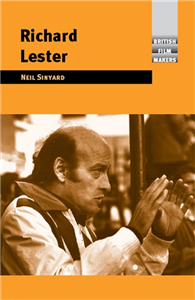
        Richard Lester

        by Neil Sinyard, Brian McFarlane, Neil Sinyard

        Richard Lester is of the most significant yet misunderstood directors of the post-war era. Indelibly associated with the Beatles and the 'swinging Sixties' because of his direction of A Hard Day's Night and Help and his joyous sex comedy The Knack, Lester has tended to be categorised as a modish director whose heyday passed when that decade's optimism slid into disillusionment and violence. This book offers a critical appreciation and reappraisal of his work, arguing that it had much greater depth and variety than he has been given credit for. His versatility encompasses the Brechtian anti-heroics of How I Won the War; the surreal nuclear comedy of The Bed-Sitting Room and the swashbuckling adventure of The Musketeers films. He has even, in his instinctively iconoclastic manner, cut Superman down to size. The book should win new admirers for a director with a gift of making movies whose visual wit and imaginative imagery reveal an intelligent and enquiring scepticism about heroes and society. Including comments from Lester himself and illustrations from his own private collection, the book is a must for film scholars and enthusiasts alike. ;

      • Trusted Partner
        September 2023

        Being Able to Stop

        Against the delusion of permanent growth

        by Edited by Jean-Pierre Wils

        We moderns were the inhabitants of an age of impetuous forward movement and voracious discontent. Our main virtue was to increase our reach. Increasing our having and accelerating our being were the signposts towards the future. We just could not get enough. Using the blinkers of ignorance and self-anaesthesia, however, we managed to forget the tremendous costs incurred by this intoxication. Now disillusionment has set in. We look to the future with anxiety. We know that we have long since crossed a line and that a revision of our lifestyle is imminent. We have a bad feeling, and doubts about progress often give way to anger and rebellion. Which stocks of the modern narrative should we defend; which would we do better to let go? How will we even "be able to stop"? The path to a different society needs an attractive goal, because without the prospect of a different, better life, we will not move forward. We should start practising immediately. There is no time to lose.

      • Trusted Partner
        The Arts
        November 2017

        Vivien Leigh

        Actress and icon

        by Kate Dorney, Maggie B. Gale

        This edited volume provides new readings of the life and career of iconic actress Vivien Leigh (1913-67), written by experts from theatre and film studies and curators from the Victoria & Albert Museum, London. The collection uses newly accessible family archives to explore the intensely complex relationship between Vivien Leigh's approach to the craft of acting for stage and screen, and how she shaped, developed and projected her public persona as one of the most talked about and photographed actresses of her era. With key contributors from the UK, France and the US, chapters range from analyses of her work on stage and screen to her collaborations with designers and photographers, an analysis of her fan base, her interior designs and the 'public ownership' of Leigh's celebrity status during her lifetime and beyond.

      Subscribe to our

      newsletter