Your Search Results

      • Sharjah Documentation and Archives Authority

        Sharjah Documentation and Archives Authority, earlier Sharjah Centre for Documentation and Research, was established by resolution no. (4) of 2010, issued by His Highness Sheikh Dr. Sultan Bin Muhammad AL Qassimi, member of the Supreme Council, the Ruler of Sharjah. In 2016, H.H. Ruler of Sharjah issued resolution no. (4) of 2016, on the establishment of Sharjah Documentation and Archives Authority. The objectives were set to collecting and preserving documents related to the emirate, as well as the development of the documentation and archive system. Furthermore, the Authority shall oversee the management of current documents and mediate documents with concerned parties. The Authority represents the local body concerned with all matters of documents and archiving and it abides by the best international standards for preserving and maintaining documents. The Authority works to strengthen cultural and historical awareness and encourage scientific researches and intellectual creativity.

        View Rights Portal
      • Bach Doctor Press

        Darin Dance started his own publishing and photography business in 2014: The Bach Doctor Press after researching and taking photographs for many book projects while working collaboratively with fellow Ngāi Tahu writers.  He firmly believes that with the retrenchment of the main publishing houses back to Australia, America and Europe, our remarkable “Kiwi” voices and stories will be lost and unheard unless new publishing ventures are prepared to fill this void.  This has become his mission to promote our unique kōrero and pakiwaitara (stories and legends).

        View Rights Portal
      • Trusted Partner
        The Arts
        January 2019

        Medieval film

        by Anke Bernau, Bettina Bildhauer

        Medieval film explores theoretical questions about the ideological, artistic, emotional and financial investments inhering in cinematic renditions of the medieval period. What does it mean to create and watch a 'medieval film'? What is a medieval film and why are they successful? This is the first work that attempts to answer these questions, drawing, for instance, on film theory, postcolonial theory, cultural studies and the growing body of work on medievalism. Contributors investigate British, German, Italian, Australian, French, Swedish and American film, exploring topics such translation, temporality, film noir, framing and period film - and find the medieval lurking in unexpected corners. In addition it provides in-depth studies of individual films from different countries including The Birth of a Nation to Nosferatu, and Robin Hood: Prince of Thieves. Medieval film will be of interest to medievalists working in disciplines including literature, history, art history, to scholars working on film and in cultural studies. It will also be of interest to undergraduates, postgraduates and to an informed enthusiast in film or/and medieval culture.

      • Trusted Partner
        The Arts
        January 2019

        European Film Noir

        by Andrew Spicer

        European Film Noir is the first book to bring together specialist discussions of film noir in specific European national cinemas. Written by leading scholars, this groundbreaking study provides an authoritative understanding of an important aspect of European cinema and of film noir itself, for too long considered as a solely American form. The Introduction reviews the problems of defining film noir, its key characteristics and discusses its significance to the development of European film, the relationship of specific national films noirs to each other, to American noir and to historical and social change. Eight chapters then discuss film noir in France, Germany, Britain and Spain, analysing both earlier developments and the evolution of neo-noir through to the present. A further chapter explores film noir in Italian cinema where its presence is not so well defined. Each piece provides a critical overview of the most significant films in relation to their industrial and social contexts. European Film Noir is an important contribution to the study of European cinema that will have a broad appeal to undergraduates, cinéastes, film teachers and researchers.

      • Trusted Partner
        The Arts
        January 2019

        Realist film theory and cinema

        The nineteenth-century Lukácsian and intuitionist realist traditions

        by Ian Aitken

        'Realist film theory and cinema' embraces studies of cinematic realism and 19th century tradition, the realist film theories of Lukács, Grierson, Bazin and Kracauer, and the relationship of realist film theory to the general field of film theory and philosophy. This is the first book to attempt a rigorous and systematic application of realist film theory to the analysis of particular films. The book suggests new ways forward for a new series of studies in cinematic realism, and for a new form of film theory based on realism. It stresses the importance of the question of realism both in film studies and in contemporary life. Aitken's work will be of interest to scholars and advanced students of film studies, literary studies, media studies, cultural studies and philosophy.

      • Trusted Partner
        The Arts
        June 2021

        Lukácsian film theory and cinema

        A study of Georg Lukács' writing on film 1913–1971

        by Ian Aitken

        Lukácsian film theory and cinema explores Georg Lukács' writings on film. The Hungarian Marxist critic Georg Lukács is primarily known as a literary theorist, but he also wrote extensively on the cinema. These writings have remained little known in the English-speaking world because the great majority of them have never actually been translated into English - until now. Aitken has gathered together the most important essays and the translations appear here, often for the first time. This book thus makes a decisive contribution to understandings of Lukács within the field of film studies, and, in doing so, also challenges many existing preconceptions concerning his theoretical position. For example, whilst Lukács' literary theory is well known for its repudiation of naturalism, in his writings on film Lukács appears to advance a theory and practice of film that can best be described as naturalist. Lukácsian film theory and cinema is divided into two parts. In part one, Lukács' writings on film are explored, and placed within relevant historical and intellectual contexts, whilst part two consists of the essays themselves. This book will be of considerable interest to scholars and students working within the fields of film studies, literary studies, intellectual history, media and cultural studies. It is also intended to be the final volume in a trilogy of works on cinematic realism, which includes the author's earlier European film theory and cinema (2001), and Realist film theory and cinema (2006).

      • Trusted Partner
        Business, Economics & Law
        June 2024

        The labour movement in Lebanon

        Power on hold

        by Lea Bou Khater

        The labour movement in Lebanon: Power on hold narrates the history of the Lebanese labour movement from the early twentieth century to today. Bou Khater demonstrates that trade unionism in the country has largely been a failure, for reasons including state interference, tactical co-optation, and the strategic use of sectarianism by an oligarchic elite, together with the structural weakness of a service-based laissez-faire economy. Drawing on a vast body of Arabic-language primary sources and difficult-to-access archives, the book's conclusions are significant not only for trade unionism, but also for new forms of workers' organisations and social movements in Lebanon and beyond. The Lebanese case study presented here holds significant implications for the wider Arab world and for comparative studies of labour. This authoritative history of the labour movement in Lebanon is vital reading for scholars of trade unionism, Lebanese politics, and political economy.

      • Trusted Partner
        Humanities & Social Sciences
        July 2022

        The looking machine

        Essays on cinema, anthropology and documentary filmmaking

        by David MacDougall

        This new collection of essays presents the latest thoughts of one of the world's leading ethnographic filmmakers and writers on cinema. It will provide essential reading for students in cinema studies, filmmaking, and visual anthropology. The dozen wide-ranging essays give unique insights into the history of documentary, how films evoke space, time and physical sensations, and the intellectual and emotional links between filmmakers and their subjects. In an era of reality television, historical re-enactments, and designer packaging, MacDougall defends the principles that inspired the earliest practitioners of documentary cinema. He urges us to consider how the form can more accurately reflect the realities of our everyday lives. Building on his own practice in filmmaking, he argues that this means resisting the pressures for self-censorship and the inherent ethnocentrism of our own society and those we film.

      • Trusted Partner
        The Arts
        February 2005

        New challenges for documentary

        Second edition

        by Alan Rosenthal, John Corner, Martin Hargreaves

        The first edition of New challenges for documentary provided a major stimulus for teaching about documentary film and television and fresh encouragement for critical thinking about practice. This second edition brings together many new contributions both from academics and filmmakers, reflecting shifts both in documentary production itself, and in ways of discussing it. Once again, the emphasis has been on clear and provocative writing, sympathetic to the practical challenges of documentary film-making but making connections with a range of work in media and communications analysis. With its wide range of contributors and the international scope of its agenda, New challenges for documentary will be essential reading for general filmmakers and documentary students both of academic and practical inclinations. ;

      • Trusted Partner
        Humanities & Social Sciences
        August 2014

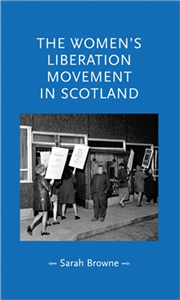
        The women's liberation movement in Scotland

        by Sarah Browne, Pamela Sharpe, Penny Summerfield, Lynn Abrams, Cordelia Beattie

        This is the first book-length account of the women's liberation movement in Scotland, which, using documentary evidence and oral testimony, charts the origins and development of this important social movement of the post-1945 period. In doing so, it reveals the inventiveness and fearlessness of feminist activism, while also pointing towards the importance of considering the movement from the local and grassroots perspectives, presenting a more optimistic account of the enduring legacy of women's liberation. Not only does this book uncover the reach of the WLM but it also considers what case studies of women's liberation can tell us about the ways in which the development of the movement has been portrayed. Previous accounts have tended to equate the fragmentation of the movement with weakness and decline. This book challenges this conclusion, arguing that fragmentation led to a diffusion of feminist ideas into wider society. In the Scottish context, it led to a lively and flourishing feminist culture where activists highlighted important issues such as abortion and violence against women. ;

      • Trusted Partner
      • Trusted Partner
        The Arts
        January 2019

        The British working class in postwar film

        by Philip Gillett

        An incidental pleasure of watching a film is what it tells us about the society in which it is made. Using a sociological model, The British working class in postwar film looks at how working-class people were portrayed in British feature films in the decade after the Second World War. Though some of the films examined are well known, others have been forgotten and deserve reassessment. Original statistical data is used to assess the popularity of the films with audiences. With its interdisciplinary approach and the avoidance of jargon, this book seeks to broaden the approach to film studies. Students of media and cultural studies are introduced to the skills of other disciplines, while sociologists and historians are encouraged to consider the value of film evidence in their own fields. This work should appeal to all readers interested in social history and in how cinema and society works.

      • Trusted Partner
        Humanities & Social Sciences
        March 2007

        The naval war film

        Genre, history and national cinema

        by Jonathan Rayner

        This book undertakes a unique, coherent and comprehensive consideration of the depiction of naval warfare in the cinema. The films under discussion encompass all areas of naval operations in war, and highlight varying institutional and aesthetic responses to navies and the sea in popular culture. The examination of these films centres on their similarities to and differences from the conventions of the war genre and seeks to determine whether the distinctive characteristics of naval film narratives justify their categorisation as a separate genre or sub-genre in popular cinema. The explicit factual bases and drama-documentary style of many key naval films, such as In Which We Serve, They Were Expendable and Das Boot, also requires the consideration of these films as texts for popular historical transmission. Their frequent reinforcement of establishment views of the past, which derives from their conservative ideological position towards national and naval culture, makes these films key texts for the consideration of national cinemas as purveyors of contemporary history as popularly conceived by filmmakers and received by audiences. ;

      • Trusted Partner
      • Trusted Partner
      • Trusted Partner
      • Trusted Partner
      • Trusted Partner
        The Arts
        October 2013

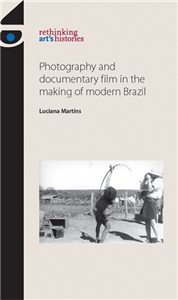
        Photography and documentary film in the making of modern Brazil

        by Luciana Martins, Amelia Jones, Marsha Meskimmon

        Photography and documentary film in the making of modern Brazil provides a major contribution to the field of visual culture through a study of still and moving images of Brazil in the first four decades of the twentieth century, when the camera played a key role in making Brazilian peoples and places visible to a variety of audiences. The book explores what is distinctive about the visual representation of Brazil in an era of modernisation, also attending to the significance of the different technical properties of film and photography for the writing of new histories of visual technologies. It offers new insights into the work of key writers, photographers, anthropologists and filmmakers, including Claude Lévi-Strauss, Mário de Andrade, Silvino Santos and Aloha Baker. Unearthing a wealth of materials from archives in the USA, Britain, and Brazil, the book seeks to contribute to the postcolonial theoretical project of pinpointing locally distinctive histories of visual technologies and practices. ;

      • Trusted Partner
        Business, Economics & Law
        February 2022

        The labour movement in Lebanon

        by Lea Bou Khater, Simon Mabon

      • Trusted Partner

      Subscribe to our

      newsletter