
All Things Women
Find your focus and strengths in times of crisis.
View Rights Portal

Founded in 1999, Shanghai Century Publishing (Group) Co., Ltd. was the first publishing group in China as well as one of the first pilot units for the reform of the national cultural system. The Group is a comprehensive large-scale publishing media group integrating publication of books and journals, digital publishing, copyright trade, import and export of books, printing, art business, and so on. The Group has been taking a statewide leading position in national key publishing projects, becoming one of the enterprises generating most influential publishing culture and providing most influential content in China.
View Rights Portal
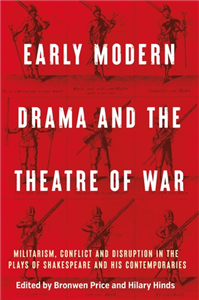
This volume explores the disruptive effects of militarism, war and social unrest in early modern drama. Engaging with Simon Barker's seminal work on dramatic representations of war and militarism, contributors highlight what often lies hidden beneath the surface of martial narratives, treating them as formative interventions in contemporary discourses, whether in justifying war, excluding dissident voices or shaping cultural identities. Discussions include new examinations of militarism, the figure of the soldier and early modern theories of war in Shakespearean tragedy, history and comedy, alongside antimasque and dramatic satire by lesser-known playwrights. The essays investigate how ideas of war underpin emerging concepts of gender, leadership, marriage and the family, as well as the continuing mobilisation of Shakespearean drama in the context of modern armed conflict. Together, they offer rich new contributions to the current lively critical debates on this topic.
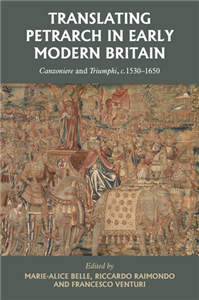
Translating Petrarch in early modern Britain gathers twelve essays by international scholars focusing on the translation of Petrarch's vernacular verse (Canzoniere and Triumphi) into English, from the Tudor age to the mid-seventeenth century (and beyond). Approaching translation as an interpretive process, but also a mode of literary emulation and cultural engagement with Petrarch's prestigious precedent, the collection explores the complex and interconnected trajectories of both poetic works in English and Scottish literary milieux. While situating each translation in its distinct historical, material, and literary context, the essays trace the reception of Petrarch's works in early modern Britain through the combined processes of linguistic and metric innovation, literary imitation, musical adaptation and cultural and material 'domestication'. The collection sheds light on the origins and development of early modern English Petrarchism as part of wider transnational - and indeed, translational-European literary culture.
 Trusted Partner

This volume questions and qualifies commonly accepted assumptions about the early modern English sonnet: that it was a strictly codified form, most often organised in sequences, which only emerged at the very end of the sixteenth century and declined as fast as it had bloomed, and that minor poets merely participated in the sonnet fashion by replicating established conventions. Drawing from book history and relying on close reading and textual criticism, this collection offers a more nuanced account of the history of the sonnet. It discusses how sonnets were written, published and received in England as compared to mainland Europe, and explores the works of major (Shakespeare, Sidney, Spenser) and minor (Barnes, Harvey) poets alike. Reflecting on current editorial practices, it also provides the first modern edition of an early seventeenth-century Elizabethan miscellany including sonnets presumably by Sidney and Spenser.
Trusted Partner
 Trusted Partner
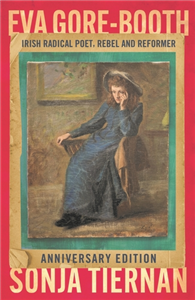
An acclaimed biography of poet, pacifist and political firebrand Eva Gore-Booth. The Irish poet and activist Eva Gore-Booth (1870-1926) led a life defiantly at odds with her aristocratic origins. Choosing to live and work among the poor of Manchester, she campaigned on behalf of barmaids, circus performers, flower sellers and pit-brow lasses, her partner, Esther Roper, at her side. Gore-Booth was tireless in her pursuit of justice. She was a militant pacifist during the First World War, a champion of Irish independence and a pioneering thinker on gender and sexuality. She was also a prolific author, publishing nineteen volumes of poetry and prose that reflect the full force of her radical convictions. Featuring a new preface that situates Gore-Booth's life and work in the context of our current political climate, this biography reclaims her place as a significant figure of Anglo-Irish letters and an unsung hero of LGBT+ history.
Trusted Partner

At once pervasive and marginal, appealing and repellent, exemplary and atypical, the women of the Bible provoke an assortment of readings across early modern literature. Biblical women in early modern literary culture, 1550-1700 draws attention to the complex ways in which biblical women's narratives could be reimagined for a variety of rhetorical and religious purposes. Considering a confessionally diverse range of writers, working across a variety of genres, this volume reveals how women from the Old and New Testaments exhibit an ideological power that frequently exceeds, both in scope and substance, their associated scriptural records. The essays explore how the Bible's women are fluidly negotiated and diversely redeployed to offer (conflicting) comment on issues including female authority, speech and sexuality, and in discussions of doctrine, confessional politics, exploration and grief. As it explores the rich ideological currency of the Bible's women in early modern culture, this volume demonstrates that the Bible's women are persistently difficult to evade. ;
Trusted Partner

With its fantasy of magical travel and inexhaustible riches, Thomas Dekker's Old Fortunatus is the quintessential early modern journeying play. The adventures of Fortunatus and his sons, aided by a magical purse and wishing-hat, offers the period's most overt celebration of the pleasures of travel, as well as a sustained critique of the dangers of intemperance and prodigality. Written following a period of financial difficulty for Dekker, the play is also notable for its fascination with the symbolic, mercantile and ethical uses of gold. This Revels Plays edition is the first fully annotated, single-volume critical edition of Old Fortunatus. It offers scholarly discussion of the play's performance and textual history, including attention to the German version printed and performed in the early seventeenth century. It provides a long overdue critical reappraisal of this unjustly neglected play.
Trusted Partner
 Trusted Partner
 Trusted Partner
Trusted Partner
Trusted Partner

This collection of essays addresses research trends in the history of British leisure while also presenting a wide range of articles on cultural conflict and leisure in the twentieth century. It includes innovative research on a number of topics, including television, cinema, the circus, women's leisure, dance, football and drug culture. It provides an excellent entry to leisure studies and history, while addressing the contributions of other disciplines and exploring key historiographical trends. Three broad topics structure the collection; cultural contestation and social conflict in leisure; regulation and standardisation; and national identity embodied in leisure and popular culture. The book will be useful to students and educators of twentieth-century and British history, as it offers accessible and topical studies that pique historical curiosity. In addition, historians, sociologists and cultural analysts of the twentieth century will find it essential for understanding pleasure and recreation in twentieth-century British society. ;
Trusted Partner

This collection of essays addresses research trends in the history of British leisure while also presenting a wide range of articles on cultural conflict and leisure in the twentieth century. It includes innovative research on a number of topics, including television, cinema, the circus, women's leisure, dance, football and drug culture. It provides an excellent entry to leisure studies and history, while addressing the contributions of other disciplines and exploring key historiographical trends. Three broad topics structure the collection; cultural contestation and social conflict in leisure; regulation and standardisation; and national identity embodied in leisure and popular culture. The book will be useful to students and educators of twentieth-century and British history, as it offers accessible and topical studies that pique historical curiosity. In addition, historians, sociologists and cultural analysts of the twentieth century will find it essential for understanding pleasure and recreation in twentieth-century British society.
Trusted Partner
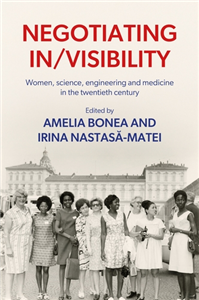
This volume brings together scholars from different disciplinary backgrounds to discuss how women contributed to the making, pedagogy, institutionalisation and communication of scientific knowledge in the twentieth century, and to reflect on the theoretical and methodological challenges of documenting such hidden contributions. Featuring examples from China, former Czechoslovakia, Greece, Hungary, India, Japan, Romania, the United Kingdom and the United States, the contributors discuss women's engagement with science across different institutional and non-institutional sites, ranging from the laboratory and the school to the clinic, the home and the media. The volume moves beyond the professional scientist model to enlarge our understanding of women's participation in twentieth-century science and document the complex combination of factors that rendered such contributions (in)visible to contemporaries and future generations.
Trusted Partner
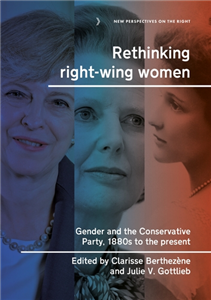
Rethinking Right-Wing Women explores the institutional structures for and the representations, mobilisation, and the political careers of women in the British Conservative Party since the late 19th century. From the Primrose League (est.1883) to Women2Win (est.2005), the party has exploited women's political commitment and their social power from the grass-roots to the heights of the establishment. Yet, although it is the party that extended the equal franchise, had the first woman MP to sit Parliament, and produced the first two women Prime Ministers, the UK Conservative Party has developed political roles for women that jar with feminist and progressive agendas. Conservative women have tended to be more concerned about the fulfilment of women's duties than the realisation of women's rights. This book tackles the ambivalences between women's politicisation and women's emancipation in the history of Britain's most electorally successful and hegemonic political party.
Trusted Partner
 Trusted Partner
 Trusted Partner
 Trusted Partner
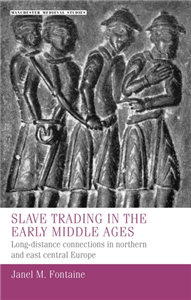
This book examines slave trading in northern and eastern central Europe from the seventh century through the eleventh century, tracing its growth, climax, and decline. Demand from the Islamic world in the ninth and tenth centuries prompted changes in warfare, trade logistics, and administrative responses to slavery in the slaving zones centred on the British Isles and the Czech lands. This study establishes slave trading as a core driver of connectivity and presents a model for this practice in politically fragmented areas of Europe.
Trusted Partner
Whether for reasons of family, food, shopping or religion, it's hard to imagine a British winter without Christmas, or to think of a more traditional national festival. But how and when did Christmas cards, pantomimes and advertising become part of that tradition? This book looks at how people in the nineteenth and early twentieth centuries experienced Christmas and how today's priorities and rituals began and endured. It explores the origins of our deeply held notions around Christmas traditions and demonstrates how those ideas were in fact shaped by the fast-paced modernisation of English life. A fascinating account of the development of many things we now take for granted, the book touches on the history of childhood and the family, philanthropy and work, and the beginnings of consumerism that shaped the Christmas we know today.
Trusted Partner

'Early modern women's manuscript poetry' is an anthology of texts by fourteen women poets writing between 1589 and 1706. It is the only currently available anthology of early modern women's writing which focuses exclusively on manuscript material. Authors include Mary Sidney, Lucy Hutchinson and Katherine Philips; central figures in the emerging canon of early modern women writers, but whose work appears in a fresh and very different light in the manuscript context emphasised by this anthology. The volume also includes substantial excerpts from a recently discovered verse paraphrase of Genesis, thought to be by the previously unknown seventeenth-century writer Mary Roper, as well as selections from the unjustly neglected poet, Hester Pulter. The mix of canonical and non-canonical writers makes this book ideal for use on undergraduate and early postgraduate courses, while specialists will be particularly interested in the sophisticated and varied material taken from less familiar sources. ;

