
educational books
for learning new
View Rights Portal

Inhabit Education Books' mandate is to provide readers with educational resources that are infused with authentic Northern perspectives, ways of life, and imagery. Our publishing initiative always considers stories and information in an educational context. All of our publications are developed by a team of Northern educators and language experts. These titles incorporate concepts that students are familiar with—counting, animals, family, traditional stories, and so on—within a Northern context. Our books are designed to support students in their literacy development while teaching them about the people, traditions, and environment of the Arctic. Wherever you are, we hope you enjoy sharing these stories of fun, adventure, history, and nature with your young readers!
View Rights Portal
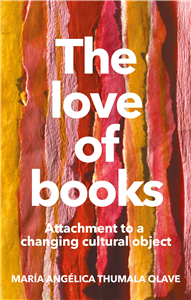
The Love of Books examines the affective bond between people and books in the UK. In the context of the unprecedented abundance of media offering information, storytelling and entertainment, it investigates the attachment to print and digital books amongst readers from a range of backgrounds who read for pleasure, wish to be surrounded by print copies of books, and have trouble discarding books. Unlike existing research, which focuses on prestige, social status, and cultural capital, this study centres on meaning, materiality and emotion. Drawing on interviews and archive material, it shows how attachment emerges from the practical fusion of three elements that have so far been examined separately: the material, surface properties of books, the act of reading, and books' symbolic power.
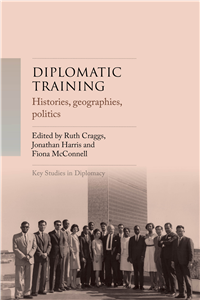
Despite the essential role diplomatic training plays in the everyday workings of international relations, international law and in the various multilateral organisations, this practice has received little critical attention in the humanities, social and political sciences. Bringing together detailed accounts of the histories, development and contemporary practices of diplomatic training with insights from key practitioners, this edited collection places training centrally within our understanding of international relations. It argues that diplomatic training both reflects and reproduces hegemonic power relations, whilst at the same time offering opportunities to contest them, and imagine alternative futures. The book includes a substantive introduction, nine full-length chapters from a range of disciplinary and regional perspectives drawing on archival research, oral history, interviews, and ethnographic methods, and four 'interventions': reflection pieces from trainers and directors of training programmes. It offers a globe-spanning, interdisciplinary account of the politics of diplomatic training and appeals to both scholarly and practitioner audiences.
 Trusted Partner
Universities have a key role to play in contributing to environmental development and combating climate change. The chapters within this volume detail the challenges faced by higher education institutions in considering environmental sustainability, and provide both a broad view of university engagement and a detailed examination of various projects. As part of this series in association with the Place and Social Capital and Learning (PASCAL) International Observatory, the three key PASCAL themes of place management, lifelong learning and the development of social capital are considered throughout the book. While universities have historically generated knowledge outside of specific local contexts, this book argues that it is particularly important for them to engage with the local community and to consider diverse perspectives and assets when looking at issues within an ecological context. The chapters in this volume provide new perspectives and frames of reference for transforming universities by engaging in the development of resilient communities.
Trusted Partner
 Trusted Partner

This book focuses on current policy discourse in Higher Education, with special reference to Europe. It discusses globalisation, Lifelong Learning, the EU's Higher Education discourse, this discourse's regional ramifications and alternative practices in Higher Education from both the minority and majority worlds with their different learning traditions and epistemologies. It argues that these alternative practices could well provide the germs for the shape of a public good oriented Higher Education for the future. It theoretically expounds on important elements to consider when engaging Higher Education and communities, discussing the nature of the term 'community' itself. Special reference is accorded to the difference that lies at the core of these ever-changing communities. It then provides an analysis of an 'on the ground project' in University community engagement, before suggesting signposts for further action at the level of policy and provision. This book is relevant to United Nations Sustainable Development Goal 4, Quality education
Trusted Partner
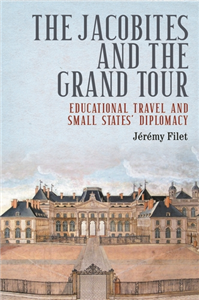
In the first monograph to fully examine the intersecting networks of Jacobites and travellers to the continent, Filet considers how small states used official diplomacy and deployed soft power - embodied by educational academies - to achieve foreign policy goals. This work uses little-known archival materials to explain how and why certain small states secretly supported the Jacobite cause during the crucial years surrounding the 1715 rising, while others stayed out of Jacobite affairs.At the same time, the book demonstrates how early modern small states sought to cultivate good relations with Britain by attracting travellers as part of a wider trend of ensuring connections with future diplomats or politicians in case a Stuart restoration never came.This publication therefore brings together a study of Britain, small states, Jacobitism, and educational travel, in its nexus at continental academies.
Trusted Partner
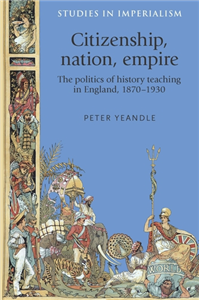
Citizenship, nation, empire investigates the extent to which popular imperialism influenced the teaching of history between 1870 and 1930. It is the first book-length study to trace the substantial impact of educational psychology on the teaching of history, probing its impact on textbooks, literacy primers and teacher-training manuals. Educationists identified 'enlightened patriotism' to be the core objective of historical education. This was neither tub-thumping jingoism, nor state-prescribed national-identity teaching, but rather a carefully crafted curriculum for all children which fused civic as well as imperial ambitions. The book will be of interest to those studying or researching aspects of English domestic imperial culture, especially those concerned with questions of childhood and schooling, citizenship, educational publishing and anglo-British relations. Given that vitriolic debates about the politics of history teaching have endured into the twenty-first century, Citizenship, nation, empire is a timely study of the formative influences that shaped the history curriculum in English schools
Trusted Partner
Trusted Partner


Scenes from the life of a pharmaceutical technician in her everyday life in a shared flat and the pharmacy are the gimmicks (and cliffhangers) in this book on pharmaceutical technician training. These develop into their connections to everyday life in a pharmacy and to the pharmaceutical knowledge that is conveyed at pharmaceutical technician school classes. The work combines different media forms and learning types as “Connecticum”. Podcasts, videos, and worksheets that can be accessed via QR code, as well as references to literature and information sources, supplement the content and make learning more varied and interesting. This innovative workbook for pharmaceutical technician training – each school year is accompanied by its own volume - is the ideal partner for subject-oriented and interdisciplinary teaching. It is also suitable for practically-oriented, independent work and a review of the entire training content – with a guaranteed fun factor!
Trusted Partner

Popular culture is invariably a vehicle for the dominant ideas of its age. Never was this truer than in the late-nineteenth and early twentieth centuries, when it reflected the nationalist and imperialist ideologies current throughout Europe. It both reflects popular attitudes, ideas and preconceptions and it generates support for selected views and opinions. This book examines the various media through which nationalist ideas were conveyed in late-Victorian and Edwardian times: in the theatre, "ethnic" shows, juvenile literature, education and the iconography of popular art. It seeks to examine in detail the articulation and diffusion of imperialism in the field of juvenile literature by stressing its pervasiveness across boundaries of class, nation and gender. It analyses the production, distribution and marketing of imperially-charged juvenile fiction, stressing the significance of the Victorians' discovery of adolescence, technological advance and educational reforms as the context of the great expansion of such literature. An overview of the phenomenon of Robinson Crusoe follows, tracing the process of its transformation into a classic text of imperialism and imperial masculinity for boys. The imperial commitment took to the air in the form of the heroic airmen of inter-war fiction. The book highlights that athleticism, imperialism and militarism become enmeshed at the public schools. It also explores the promotion of imperialism and imperialist role models in fiction for girls, particularly Girl Guide stories.
Trusted Partner
Trusted Partner
Trusted Partner
Trusted Partner
Trusted Partner
Trusted Partner
Trusted Partner
Trusted Partner
Trusted Partner
Trusted Partner
Sexually transgressive, politically astute and determined to claim educational and employment rights equal to those enjoyed by men, the new woman took centre stage in the cultural landscape of late-Victorian Britain. By comparing the fictional representations with the lived experience of the new woman, Ledger's book makes a major contribution to an understanding of the 'woman question' at the fin de siecle. She alights on such disparate figures as Eleanor Marx, Gertrude Dix, Dracula, Oscar Wilde, Olive Schreiner and Radclyffe Hall. Focusing mainly on the last two decades of the nineteenth century, the book's later chapters project forward into the twentieth century, considering the relationship between new woman fiction and early modernism as well as the socio-sexual inheritance of the 'second generation' new woman writers. ;



