Your Search Results


-
Promoted Content

 PsychologyApril 2018
What is “Good” Dementia Care?
by Christoph Held
People with dementia experience their condition as a big change in which, for example, new events are not linked to existing experiences and wishes, thoughts, and actions can no longer be connected to each other. This kind of experience of the self, due to the intergative function of the brainbeing temporarily or permanently lost, is called dissociative self-experience. Based on this understanding of dementia, the author develops an approach to effectively understand and support people with dementia in everyday activities. Typical everyday situations and behaviours are presented and reflected on in a practical context.
-
Promoted Content

 Humanities & Social SciencesOctober 2008
The social context of economic change in Britain
Between policy and performance
by Terrence Casey
This important book, newly available in paperback, examines a period of dramatic economic change in Britain during the Thatcher era. The Conservatives' free market policies generally improved the performance of the economy in Britain, but some parts of the country still did poorly (for example northern England). Casey argues that this was as a result of variations in social contexts - a combination of institutions, interests and economic culture. Southern England, possessing a more individualistic culture and higher levels of entrepreneurialism, has a 'market responsive' social context that can prosper under free market policies. Social context is thus a crucial intervening variable between the policies selected by decision-makers and the performance of economies, the key for enhancing prosperity is the proper match between economic policies and the context in which they are implemented. The social context of economic change in Britain provides an original theoretical framework linking economic growth and civil society and offers a unique insight into the Thatcher era. This book will be of interest to students of British politics and comparative political economy, public policy and political history. ;
-
 Trusted Partner
 Political structure & processesMay 2007
Devolution and constitutional change in Northern Ireland
by Edited by Paul Carmichael, Colin Knox and Robert Osborne
This edited book, written by a collection of scholars with an interest in Northern Ireland, tracks its uneasy experience with devolution following the optimistic political period associated with the 1998 Belfast (Good Friday) Agreement. The volume brings together researchers from the Economic and Social Research Council's (ESRC) 'Devolution and Constitutional Change' Programme and other experts to record four key perspectives on Northern Ireland. First, it considers the inextricable link between devolution and constitutional developments. Second, it examines how the main political parties responded to devolution and the major challenges faced by society in moving beyond conflict (such as political symbolism, the role of women, equality and human rights issues). Third, it attempts to assess some of the workings of devolved government in its short-lived form or those seeded in devolution and carried on by direct rule ministers. Finally, Northern Irelands devolved government and associated institutions are located within the wider relationships with Westminster, the Republic of Ireland and Europe. This edited volume will be of interest to students of Irish politics and public policy, but more generally, from a comparative perspective, those with an interest in devolution and constitutional change. It may even assist politicians in Northern Ireland to reflect on the real potential to restore its devolved institutions and draw back from the brink of permanently copper-fastening 'direct rule' from Westminster.
-
Trusted Partner
 Humanities & Social SciencesJanuary 2025
Crisis and change in European Union foreign policy
by Nikki Ikani
-
Trusted Partner
 Teaching, Language & ReferenceOctober 2025
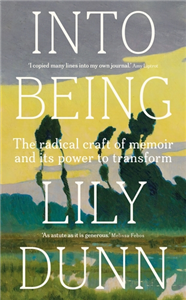
Into being
The radical craft of memoir and its power to transform
by Lily Dunn
The acclaimed author of Sins of My Father shares the secrets of writing a new, transformative kind of memoir. Into being is an essential guide to writing memoir in a radical and empowering way. Drawing on her experience as a memoirist and a teacher of creative writing, Lily Dunn presents the ground-breaking idea that the craft of memoir itself can offer a form of transformation. Dunn demystifies the memoirist's art, helping readers to find meaning in raw experience and elevate the personal to the universal. She considers intriguing questions, from why our memories give greater significance to certain events to how we can write honestly without intruding too far into the lives of our loved ones. She also explores how writers are extending the memoir form to create something hybrid, playful and subversive. In an age of social media, filled with confessions, re-inventions and distortions of the self, the question of what it means to be an individual is more urgent than ever. Into being shows readers how to turn writing memoir into a journey of discovery - one that can be shared with the whole world.
-
Trusted Partner
-
Trusted Partner
 August 2014
Risky change?
Vulnerability and adaptation between climate change and transformation dynamics in Can Tho City, Vietnam
by Garschagen, Matthias
-
Trusted Partner
 Humanities & Social SciencesJuly 2021
Northern Ireland a generation after Good Friday
by Colin Coulter, Niall Gilmartin, Katy Hayward, Peter Shirlow
-
Trusted Partner

 Children's & YA
Climate Change. What We Can Do Now
by Ruth Omphalius/ Monika Azakli
“There is no Planet B!” More and more young people are worried about the future of Planet Earth. Climate change is heating not only the planet but also people’s emotions. But what exactly is climate? And why are the changes threatening the lives of both polar bears and us humans. In simple language but with solid science, the authors explain the most important aspects of climate, from the greenhouse effect to the Gulf Stream. Current developments are described as well, and the scientific background is supplemented by gripping reports. The book also offers a glimpse of the future: what will happen if we go on in the same way as now? How can climate change be halted? This makes for riveting reading – and not just for young activists.
-
Trusted Partner
 Psychiatry
Character Strength Interventions
A Field Guide for Practitioners
by Ryan M. Niemiec
This unique guide brings together the vast experience of the author with the science and the practice of positive psychology in such a way that both new and experienced practitioners will benefit. New practitioners will learn about the core concepts of character and signature strengths and how to fine-tune their approach and troubleshoot. Experienced practitioners will deepen their knowledge about advanced topics such as strengths overuse and collisions, hot button issues, morality, and integrating strengths with savoring, flow, and mindfulness. Hands-on practitioner tips throughout the book provide valuable hints on how to take a truly strengths-based approach. The 24 summary sheets spotlighting each of the universal character strengths are an indispensable resource for client sessions, succinctly summarizing the core features of and research on each strength. 70 evidence-based step-by-step activity handouts can be given to clients to help them develop character strengths awareness and use, increase resilience, set and meet goals, develop positive relationships, and find meaning and engagement in their daily lives. Working with client’s (and our own) character strengths boosts well-being, fosters resilience, improves relationships, and creates strong, supportive cultures in our practices, classrooms, and organizations. Target Group: psychotherapists / clinical psychologists / counselors/ teachers
-
Trusted Partner
-
Trusted Partner

 2019
2019Good Evening, Good Night
The cultural history of sleep
by Karoline Walter
What we associate with sleep is shaped by the culture we live in. Whereas the God of the Bible never sleeps, the sinful human falls asleep every night and is thus marked as an inferior being. In the Age of Enlightenment, (too much) sleep was considered a waste of strength, which could otherwise be used to change the world. These days, sleep seems to be subject to the same tenets of usefulness as everything else and is seen to assist with the optimization of one’s self. However, culture and technology also influence how we sleep: for example, the constant availability of light, the modern conditions of work and all sorts of distractions have meant that we no longer follow our natural rhythm – a first sleep before midnight and a second sleep after a longer period of wakefulness, during which we may be active. In “Good Evening, Good Night”, Karoline Walter uses numerous examples from history, literature and research to illustrate how sleep and sleeping have changed across cultures and eras – an entertaining read, certainly nothing to put you to sleep.
-
Trusted Partner
 Humanities & Social SciencesMay 2012
Racism and social change in the Republic of Ireland
Second edition
by Bryan Fanning
Now in its second edition, Racism and Social Change in the Republic of Ireland provides an original and challenging account of racism in twenty-first century Irish society and locates this in its historical, political, sociological and policy contexts. It includes specific case studies of the experiences of racism in twenty-first century Ireland alongside a number of historical case studies that examine how modern Ireland came to marginalize ethnic minorities. Various chapters examine responses by the Irish state to Jewish refugees before, during and after the Holocaust, asylum seekers and Travellers. Other chapters examine policy responses to and academic debates on racism in Ireland. A key focus of the various case studies is upon the mechanics of exclusion experienced by black and ethnic minorities within institutional processes and of the linked challenge of taking racism seriously in twenty-first century Ireland. ;
-
Trusted Partner
 2025
2025Looking the Other Way
How Germany is failing in the fight against child abuse
by Miriam Hesse
A wave of anger, bewilderment, the call for ‘Never again!’: Whenever sexual abuse of children becomes known, there is a loud outcry and assurances that something needs to be improved. However, actual changes and the rectification of structural errors in child protection have yet to materialise. When cases of child abuse end up in court and the manifold failures of the authorities become clear in the course of the trial, people are stunned. But what is being done to eliminate this misery? And what needs to be done to turn ‘Never again!’ into a realistic promise? Miriam Hesse's political book provides a harrowing report on the structural problems in child protection that repeatedly lead to tragedies. At the same time, she shows what changes could bring about real improvements - for the children already affected and to prevent further cases effectively.
-
Trusted Partner
 Humanities & Social SciencesJanuary 2022
How to Promote Motivation to Change
by Hötzel, Katrin; von Brachel, Ruth
Promoting motivation to change is one of the most important treatment components in psychotherapeutic practice across disorders. Working through ambivalence and ultimatelyincreasing motivation to choose recovery with all its consequences is one of the main goals in treatment. This book presents the current state of knowledge anddescribes practical interventions to promote motivation to change. When dealing with ambivalent issues, an open, therapeutic attitude is recommended, as well as certainstrategies for conducting conversations to avoid reactance and resistance. The main focus of the book is therefore on therapeutic conversation and concrete interventions to clarify and increase motivation to change. For:• medical and psychological psychotherapists• child and adolescent psychotherapists• specialists working in psychiatry, psychotherapy,or psychosomatic medicine• clinical psychologists• psychological counselors• students and teachers in psychotherapeutic training,further training, and continuing education
-
Trusted Partner
 Humanities & Social SciencesJanuary 2019
Mega-events and social change
by Maurice Roche, John Horne
-
Trusted Partner
-
Trusted Partner
 Teaching, Language & ReferenceMay 2025
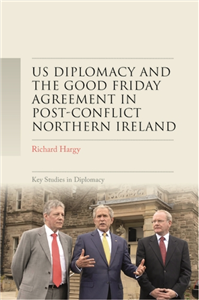
US diplomacy and the Good Friday Agreement in post-conflict Northern Ireland
by Richard Hargy
Richard Haass and Mitchell Reiss, as autonomous diplomats in the George W. Bush State Department, were able to alter US intervention in Northern Ireland and play critical roles in the post-1998 peace process. Their contributions have not been fully appreciated or understood. The restoration of Northern Ireland's power-sharing government in 2007 was made possible by State Department-led intervention in the peace process. There are few references to Northern Ireland in work examining the foreign policy legacy of the George W. Bush presidency. Moreover, the ability to control US foreign policy towards the region brought one of George W. Bush's Northern Ireland special envoys into direct diplomatic conflict with the most senior actors inside the British government. This book will uncover the extent of this fall-out and provide original accounts on how diplomatic relations between these old allies became so fraught.
-
Trusted Partner
 Humanities & Social SciencesNovember 2025
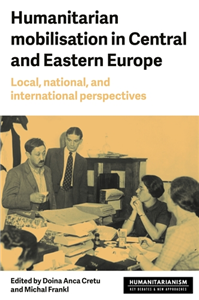
Humanitarian mobilisation in Central and Eastern Europe
Local, national, and international perspectives
by Doina Anca Cretu, Michal Frankl
By focusing on aid Central and Eastern Europe, the volume adds to the existent scholarly explorations of modern humanitarianism, its actors and practices. In the twentieth century, aid workers assisted victims of war and earthquakes, delivered food, supported health care, provided childcare, or sheltered refugees. The contributors not only reconstruct these diverse histories and their protagonists, but also bring international, national, and local actors together: from grassroots activists to private associations to state-driven "socialist humanitarians" to large Western aid organizations. In doing so, they challenge the often unidirectional, from West-to-East, and asymmetrical perspective on donor-recipient relationships in humanitarian processes.
-
Trusted Partner