
Your Search Results
-

-

Crimson Dragon Publishing
Crimson Dragon Publishing carries books that encourage readers of all ages by sparking the imagination. While we focus on the fantasy and science fiction genres, we also carry illustrated books for young readers that focus on social-emotional skills development and fictionalized non-fiction.
View Rights Portal
-
Promoted Content
-
Promoted Content

 Literature & Literary StudiesJanuary 2013
The world of El Cid
Chronicles of the Spanish Reconquest
by Simon Barton, Richard Fletcher
Makes available, for the first time in English translation, four of the principal narrative sources for the history of the Spanish kingdom of León-Castile during the eleventh and twelfth centuries. Three chronicles focus primarily upon the activities of the kings of León-Castile as leaders of the Reconquest of Spain from the forces of Islam, and especially upon Fernando I (1037-65), his son Alfonso VI (1065-1109) and the latter's grandson Alfonso VII (1126-57). The fourth chronicle is a biography of the hero Rodrigo Díaz, better remembered as El Cid, and is the main source of information about his extraordinary career as a mercenary soldier who fought for Christian and Muslim alike. Covers the fascinating interaction of the Muslim and Christian worlds, each at the height of their power. Each text is prefaced by its own introduction and accompanied by explanatory notes.
-
 Trusted Partner
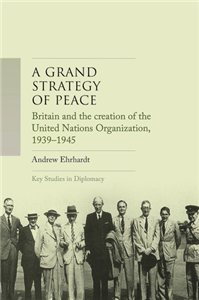 Humanities & Social SciencesJuly 2025
A grand strategy of peace
Britain and the creation of the United Nations Organization, 1939-1945
by Andrew Ehrhardt
A grand strategy of peace is the first detailed account of Britain's role in the creation of the United Nations Organization during the Second World War. As a work of traditional diplomatic history that brings in elements of intellectual history, the book describes how British officials, diplomats, politicians, and writers - previously seen to be secondary actors to the United States in this period - thought about, planned for, and helped to establish a future international order. While in the present day, many scholars and analysts have returned to the origins of the post- 1945 international system, this book offers an exhaustive account of how the statesmen and more importantly, the officials working below the statesmen, actually conceived of and worked to establish a post-war world order.
-
Trusted Partner
 Humanities & Social SciencesJanuary 2020
(B)ordering Britain
Law, race and empire
by Nadine El-Enany
(B)ordering Britain argues that Britain is the spoils of empire, its immigration law is colonial violence and irregular immigration is anti-colonial resistance. In announcing itself as postcolonial through immigration and nationality laws passed in the 60s, 70s and 80s, Britain cut itself off symbolically and physically from its colonies and the Commonwealth, taking with it what it had plundered. This imperial vanishing act cast Britain's colonial history into the shadows. The British Empire, about which Britons know little, can be remembered fondly as a moment of past glory, as a gift once given to the world. Meanwhile immigration laws are justified on the basis that they keep the undeserving hordes out. In fact, immigration laws are acts of colonial seizure and violence. They obstruct the vast majority of racialised people from accessing colonial wealth amassed in the course of colonial conquest. Regardless of what the law, media and political discourse dictate, people with personal, ancestral or geographical links to colonialism, or those existing under the weight of its legacy of race and racism, have every right to come to Britain and take back what is theirs.
-
Trusted Partner
-
Trusted Partner
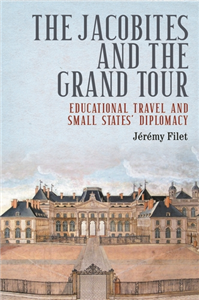 Humanities & Social SciencesApril 2025
The Jacobites and the Grand Tour
Educational travel and small-states' diplomacy
by Jérémy Filet
In the first monograph to fully examine the intersecting networks of Jacobites and travellers to the continent, Filet considers how small states used official diplomacy and deployed soft power - embodied by educational academies - to achieve foreign policy goals. This work uses little-known archival materials to explain how and why certain small states secretly supported the Jacobite cause during the crucial years surrounding the 1715 rising, while others stayed out of Jacobite affairs.At the same time, the book demonstrates how early modern small states sought to cultivate good relations with Britain by attracting travellers as part of a wider trend of ensuring connections with future diplomats or politicians in case a Stuart restoration never came.This publication therefore brings together a study of Britain, small states, Jacobitism, and educational travel, in its nexus at continental academies.
-
Trusted Partner
 Literature & Literary StudiesApril 2008
El laberinto de la soledad by Octavio Paz
by Catherine Davies, Anthony Stanton
If one had to identify one central, defining text from modern Mexican culture, it would be Octavio Paz´s famous essay, El laberinto de la soledad. This fully annotated edition includes the complete text in Spanish (with the author's final revisions), and notes and additional material in English. The editor's introduction contextualizes the essay and discusses central features: autobiographical and textual origins, intellectual sources, reception and canonization, generic ambiguity, structure, and governing symbols. The intellectual sources identified range from Marx, Nietzsche and Freud to the more contemporary ones of the French College of Sociology (Caillois), the Surrealist movement, the ideas of D. H. Lawrence, previous essays from writers in Mexico (such as Samuel Ramos) and Latin America. Several lines of interpretation are examined to show how the work can be read as a psycho-historical essay, an autobiographical construct or a modern literary myth. Transdisciplinary by nature, this literary essay is both an imaginative construction of personal and national identity, and also a critical deconstruction of dominant stereotypes. It seeks to redefine the complex relationships that exist between psychology, myth, history and Mexican culture. This edition also includes excerpts of the author's opinions on his essay, a time-line of Mexican history, a selected vocabulary, and themes for discussion and debate. Paz's first full-length prose work remains his most well-known and widely read text, and this edition will appeal to sixth-form and university students, teachers, researchers and general readers with a knowledge of Spanish. ;
-
Trusted Partner

 November 2021
Die Hydra des Dschihadismus
Entstehung, Ausbreitung und Abwehr einer globalen Gefahr
by Asiem El Difraoui
Nachdem der »IS« in Trümmern lag und »Kalif« al-Baghdadi im Oktober 2019 von US-Truppen getötet wurde, schien der »Krieg gegen den Terror« einmal mehr beendet. Aber der Dschihadismus ist längst eine globale Bewegung geworden, der Dutzende von Organisationen angehören – und mit Gewalt allein ist ihr nicht beizukommen.Seit drei Jahrzehnten verfolgt Asiem El Difraoui als Filmemacher, Journalist und Wissenschaftler diese Entwicklung. Er traf Kampfgefährten bin Ladens in Khartum und PR-Strategen, die in Berlin-Charlottenburg Propagandavideos produzierten. In Kriegsgebieten wie Bosnien, dem Irak oder in Afghanistan hat er selbst den Terror gegen die Bevölkerung miterlebt. Und immer wieder kam der Terror auch zu ihm, wie in Gestalt der Anschläge 1995 und 2015 in Paris, die sich in seiner unmittelbaren Nachbarschaft ereigneten. Kenntnisreich und anschaulich schildert Difraoui, wie der Dschihadismus entstanden ist, wie seine Denkmuster und PR-Strategien sich gewandelt haben und woraus die Hydra ihre Kraft bezieht. Was macht die todbringende Ideologie gerade auch für junge Menschen in Europa attraktiv? Welchen Anteil hat der Westen, haben die Medien an ihrem Erfolg? Und wie kann es gelingen, ihre Macht zu brechen? Ein aufrüttelnder Appell, sich einer der größten Gefahren der Gegenwart zu stellen.
-
Trusted Partner
 Literature & Literary StudiesNovember 2015
El castigo sin venganza
Lope de Vega Carpio
by Jonathan Thacker, Catherine Davies, Jonathan Thacker
El castigo sin venganza (1631) is Lope de Vega's greatest tragedy. The play dramatises the story of the adulterous relationship between the beautiful Casandra, Duchess of Ferrara, and her step-son, Federico, and the reaction of her husband, the Duke, himself a flawed and ambiguous figure. The dramatist, at the height of his powers, re-works an earlier Italian short story to explore the complexities of human desire and the grim consequences of giving in to temptation. Aimed principally at undergraduates who are new to Spanish Golden Age drama, this edition includes a substantial commentary on the text, explanatory footnotes and a selected vocabulary. The introduction sets the play in its contexts - historical and dramatic - and focuses too on elements of the genre with which new readers might be unfamiliar: performance norms, the poetry of the play and the linguistic differences in Golden Age Spanish. It is informed by up-to-date scholarship on the play from Spain and the Anglophone world. ;
-
Trusted Partner
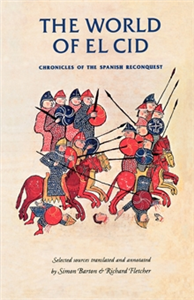 Literature & Literary StudiesNovember 2000
The world of El Cid
Chronicles of the Spanish Reconquest
by Rosemary Horrox, Simon Maclean
Makes available, for the first time in English translation, four of the principal narrative sources for the history of the Spanish kingdom of León-Castile during the eleventh and twelfth centuries. Three chronicles focus primarily upon the activities of the kings of León-Castile as leaders of the Reconquest of Spain from the forces of Islam, and especially upon Fernando I (1037-65), his son Alfonso VI (1065-1109) and the latter's grandson Alfonso VII (1126-57). The fourth chronicle is a biography of the hero Rodrigo Díaz, better remembered as El Cid, and is the main source of information about his extraordinary career as a mercenary soldier who fought for Christian and Muslim alike. Covers the fasincating interaction of the Muslim and Christian worlds, each at the height of their power. Each text is prefaced by its own introduction and accompanied by explanatory notes. ;
-
Trusted Partner
 Literature & Literary StudiesJune 1981
El coronel no tiene quien le escriba
by Gabriel Garcia Marquez, Giovanni Pontiero
Gabriel García Márquez has been described as the greatest writer in Spanish since Cervantes, and El coronel no tiene quien le escriba is considered to be one of his best works. This reflective and atmospheric novel is set in a small Colombian town where the frustrated and stubborn Colonel, a veteran of the 'War of a Thousand Days', is still, after thirty years, waiting for the letter authorising payment of his war pension. The old soldier and his wife mourn the brutal killing of their only son, and the story of their struggle against poverty and sickness culminates in the Colonel's defiant refusal to part with his cherished fighting cock, however serious the consequences. The moving narrative pays tribute to the resilience of human nature and man's will to survive in the face of heavy odds. The novel also throws light on the turbulent religious and political troubles in Latin America. Now revised to include an updated chronology and bibliography, Giovanni Pontiero's acclaimed critical edition provides English-speaking students with an introduction to, and notes on the text, and a selected vocabulary. ;
-
Trusted Partner
 Teaching, Language & ReferenceNovember 2010
El Camino by Miguel Delibes
by Catherine Davies, Jeremy Squires
Upon entering the Royal Spanish Academy in 1975, Miguel Delibes delivered an address which reclaimed El camino (1950) for the emerging Green movement. With a blend of hilarity, satire, pathos and tragedy, Delibes artfully explores the process of crossing boundaries in pursuit of maturity and social advancement, whilst also implying that real education is the unfolding of the human heart among friends and sweethearts within a shared social and natural space. This new annotated version of the text comprises an introductory essay discussing green issues, attitudes towards the Spanish peasantry under Franco, and the function of the novel's subtly orchestrated comedy. It also contains explanatory notes on the text, discussion topics and an extensive Spanish-English glossary. This edition is intended primarily for English-speaking students of Spanish literature and culture at school and university. ;
-
Trusted Partner
 Literature & Literary StudiesOctober 2006
El Caballero de Olmedo by Lope de Vega Carpio
by Catherine Davies, Anthony Lappin
El Caballero de Olmedo is a history play, a retelling of a folk talk, a celebrated piece of Golden Age drama, and also an intense mediation upon the power of desire, the deceits of eroticism and literary convention, the injustice of a world obsessed with appearance, and the tragic potential inherent in the courting of beautiful women. The introduction sets this play within the context of Baroque eroticism and sexual mores as well as dramatic practice. The text is presented with glosses to words unfamiliar to undergraduate students; the notes comprise summaries of acts and scenes from a dramatic point of view, and in-depth notes to problematic passages in the text, written with an undergraduate readership in mind. ;
-
Trusted Partner
 Humanities & Social SciencesApril 2022
Russian grand strategy in the era of global power competition
by Andrew Monaghan, Richard Connolly
-
Trusted Partner
-
Trusted Partner
-
Trusted Partner

 March 2022
Plundering the Planet
Things We Must Do Now
by Franz Alt, Ernst Ulrich von Weizsäcker
“The Limits to Growth” was published by the Club of Rome in 1972 when the term “eco” was more defamatory than a real trend. That never worried Franz Alt and Ernst Ulrich von Weizsäcker, a long-standing co-chairman of the Club of Rome. The two committed and renowned environmental experts have campaigned for decades for a change of heart in how we treat our planet. Their book delivers a stark diagnosis about the state of the Earth – though without giving up hope. They search from various angles for a way out of the global crisis: what is the blueprint for a democracy that addresses humanity’s needs and for a sustainable economy? Are we ready to learn from nature and to make not just human beings, but all living creatures our priority? Alt and von Weizsäcker offer courage, and their numerous examples set out a vision for the future that respects the planet’s eco-systems.
-
Trusted Partner
 Literature & Literary StudiesApril 2009
The female sublime from Milton to Swinburne
Bearing blindness
by Catherine Maxwell
This innovative study of vision, gender and poetry traces Milton's mark on Shelley, Tennyson, Browning and Swinburne to show how the lyric male poet achieves vision at the cost of symbolic blindness and feminisation. Drawing together a wide range of concerns including the use of myth, the gender of the sublime, the lyric fragment, and the relation of pain to creativity, this book is a major re-evaluation of the male poet and the making of the English poetic tradition. The female sublime from Milton to Swinburne examines the feminisation of the post-Miltonic male poet, not through cultural history, but through a series of mythic or classical figures which include Philomela, Orpheus and Sappho. It recovers a disfiguring sublime imagined as an aggressive female force which feminises the male poet in an act that simultaneously deprives and energises him. This book will be required reading for anyone with a serious interest in the English poetic tradition and Victorian poetry. ;
-
Trusted Partner
-
Trusted Partner





