
Your Search Results

-
Promoted Content

 Humanities & Social SciencesNovember 2009
Has devolution worked?
The verdict from policy-makers and the public
by John Curtice, Bed Seyd
Devolution to Scotland and Wales represented the most fundamental reform of the British state for almost a century. Ten years on, how successful has the reform been? Drawing on the views of citizens, elected representatives and interest groups in Scotland and Wales, this book provides an answer. The book is based on a wide ranging programme of research, involving dedicated surveys and interviews across Scotland, Wales and England. The results provide important new evidence on how devolution has been seen to have performed. What are its perceived achievements? What are its shortcomings? Is the new devolution 'settlement' stable, or is there a demand for further reform? By bringing together perspectives from the public, members of the devolved legislatures and representatives of civil society, the book establishes a unique picture of where devolution in Britain stands today. The book is accessibly written, and contains a wide range of useful primary data. It is ideal for undergraduate and postgraduate students studying devolution in Britain, as well as for general readers with an interest in constitutional reform and territorial politics. ;
-
Promoted Content
 Humanities & Social SciencesAugust 2002
The rise of the Nazis
by Conan Fischer, Mark Greengrass
How and why did the Nazis seize power in Germany? Nearly seventy years on, the question remains heated and important discoveries continue to challenge long standing assumptions. Beginmning with an overview of the historical context within which Nazism grew, looking at the foreign relations, politics and society of Weimar and in particular at the role of the elites in the rise of Nazism. The book questions the anatomy of Nazism itself: What lent Nazi ideology its coherence and credibility? What distinguished the Nazi's programme from their competitors' and how did they project it so effectively? How was Hitler able to put together and fund an organisation so quickly and effectively that it could launch a sustained assault on Weimar? Who supported the Nazis and what were their motives? Where, precisely, does Nazism belong in the history of Europe?. Since the publication of the first edition, important new works have appeared and this new scholarship has been incorporated into the text. ;
-
 Trusted Partner
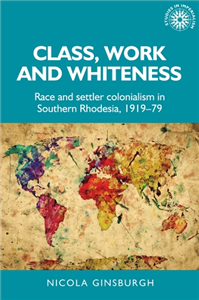 Humanities & Social SciencesDecember 2022
Class, work and whiteness
Race and settler colonialism in Southern Rhodesia, 1919–79
by Nicola Ginsburgh
This book offers the first comprehensive history of white workers from the end of the First World War to Zimbabwean independence in 1980. It reveals how white worker identity was constituted, examines the white labouring class as an ethnically and nationally heterogeneous formation comprised of both men and women, and emphasises the active participation of white workers in the ongoing and contested production of race. White wage labourers' experiences, both as exploited workers and as part of the privileged white minority, offer insight into how race and class co-produced one another and how boundaries fundamental to settler colonialism were regulated and policed. Based on original research conducted in Zimbabwe, South Africa and the UK, this book offers a unique theoretical synthesis of work on gender, whiteness studies, labour histories, settler colonialism, Marxism, emotions and the New African Economic History.
-
Trusted Partner
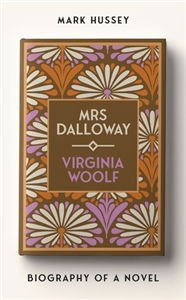 Biography & True StoriesMay 2025
Mrs Dalloway
Biography of a novel
by Mark Hussey
A compelling biography of one of the most celebrated novels in the English language. The fourth and best-known of Virginia Woolf's novels, Mrs Dalloway is a modernist masterpiece that has remained popular since its publication in 1925. Its dual narratives follow a day in the life of wealthy housewife Clarissa Dalloway and shell-shocked war veteran Septimus Warren Smith, capturing their inner worlds with a vividness that has rarely been equalled. Mrs Dalloway: Biography of a novel offers new readers a lively introduction to this enduring classic, while providing Woolf lovers with a wealth of information about the novel's writing, publication and reception. It follows Woolf's process from the first stirrings in her diary through her struggles to create what was quickly recognised as a major advance in prose fiction. It then traces the novel's remarkable legacy to the present day. Woolf wrote in her diary that she wanted her novel 'to give life & death, sanity & insanity. to criticise the social system, & to show it at work, at its most intense.' Mrs Dalloway: Biography of a novel reveals how she achieved this ambition, creating a book that will be read by generations to come.
-
Trusted Partner
 Humanities & Social SciencesSeptember 2020
Class, work and whiteness
by Nicola Ginsburgh, Alan Lester
-
Trusted Partner
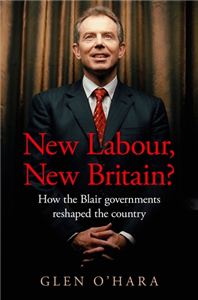 Humanities & Social SciencesFebruary 2026
New Labour, new Britain
How the Blair governments reshaped the country
by Glen O’Hara
A bold and balanced re-appraisal of New Labour in power. Rewriting the story of New Labour, Glen O'Hara challenges the prevailing narrative to present a more balanced and positive assessment. New Labour, new Britain is the first book to examine both the intentions behind New Labour's domestic policies and their real-world effects, moving beyond the entrenched left-right debates that have dominated the party's legacy. The period from 1997 to 2007 marked a pivotal moment in modern British history, as New Labour sought to reshape Britain into a more cohesive and forward-thinking society. It saw the rise of socially liberal attitudes and flourishing public services under a government committed to rebuilding and investing in them. Yet New Labour's track record was far from flawless and its legacy remains complicated and contested. Through interviews with key players and rigorous archival research, O'Hara offers a new perspective on Tony Blair's years in power. Painting a fuller picture of New Labour's successes and challenges, he highlights its lasting impact on Britain and offers a thoughtful reassessment of its place in history.
-
Trusted Partner

 Self-help & personal development
Do Whatever You Want to Do!
How a Flatworm Demonstrates the Way to Satisfaction and Freedom
by M. Storch
Many people don't know what they want. In this book, a little worm shows the reader how to live life the best way possible. It shows, how often decisions or even entire lifestyles are determined by what is “intimated” by parents, friends, the media, or even the latest fad. Ultimately, the worm shows the reader, that it is only possible to be happy and free, if one knows what one wants and actually actively pursue this. Target Group: For people who want to improve their lives, psychologists, and therapists.
-
Trusted Partner
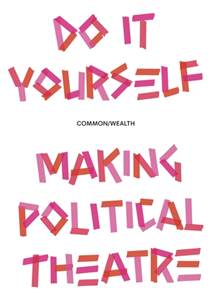 The ArtsSeptember 2025
Do It Yourself
Making political theatre
by Common Wealth
A unique guide to creating political theatre, produced by one of the UK's most exciting companies. Do It Yourself is a vital resource for anyone interested in exploring theatre culture grounded in and produced by working-class, multi-racial communities. Designed for artists, activists and community organisers, the book offers a step-by-step guide to creating political theatre that is relevant, impactful and rooted in the lives of everyday people. Common Wealth have spent fifteen years working at the cutting edge of political theatre. In Do It Yourself, they share their experimental and activist approach to performance-making, based on DIY principles and the belief that ground-breaking theatre can be made with anyone, anywhere, in ways that truly resonate with the communities it serves. Do It Yourself introduces Common Wealth's artistic and political ethos, provides unique insights into their most significant performances and offers practical exercises for creating your own work. But this is not just a manual. It is a celebration of culture as a collective endeavour, one that can challenge the status quo and inspire change.
-
Trusted Partner
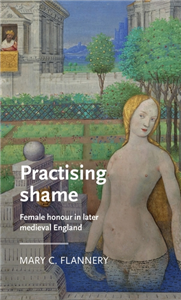 Literature & Literary StudiesNovember 2021
Practising shame
Female honour in later medieval England
by Mary C. Flannery, Anke Bernau, David Matthews
Practicing shame investigates how the literature of medieval England encouraged women to safeguard their honour by cultivating hypervigilance against the possibility of sexual shame. A combination of inward reflection and outward comportment, this practice of 'shamefastness' was believed to reinforce women's chastity of mind and body, and to communicate that chastity to others by means of conventional gestures. The book uncovers the paradoxes and complications that emerged from these emotional practices, as well as the ways in which they were satirised and reappropriated by male authors. Working at the intersection of literary studies, gender studies and the history of emotions, it transforms our understanding of the ethical construction of femininity in the past and provides a new framework for thinking about honourable womanhood now and in the years to come.
-
Trusted Partner
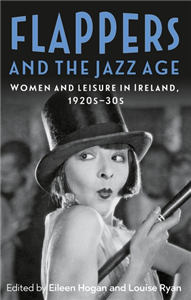 Humanities & Social SciencesJuly 2026
Flappers and the Jazz Age
Women and leisure in Ireland, 1920s–30s
by Eileen Hogan, Louise Ryan
People's ordinary, everyday lives - and more specifically, their leisure activities - are often obscured within existing academic research on 1920s-30s Ireland. This book seeks to redress that neglect by exploring the relationship between identity, recreation, and culture both North and South of the border, with particular attention to women's lived experiences. Leisurely pursuits during this period were commonly overshadowed by religious influence and the nation-building projects in post-partition Ireland. Nevertheless, there existed alternative spaces, where people enjoyed dancing, singing, listening to music, shopping, glamour, reading magazines, swimming, travelling, and going to the cinema. Such activities reflected international trends beyond national borders. This book documents those activities and spaces through a feminist lens and intersectional analysis of gender, class, religion and rural/urban identities. It brings together multi-disciplinary perspectives including cultural studies, architecture, geography, fashion, and musicology. In so doing, we present new insights and advance understanding of this under-researched aspect of Irish history.
-
Trusted Partner
-
Trusted Partner

 November 2010
Die Pariser Weltausstellung 1889
Bilder von der Globalisierung
by Beat Wyss
Die gelungenste Weltausstellung aller Zeiten war die Exposition Universelle de Paris von 1889. Weit über 32 Millionen Menschen besuchten das gigantische Spektakel mit knapp 62.000 Ausstellern aus 54 Nationen und 17 französischen Kolonien. Das Wahrzeichen der Schau, der Eiffelturm, blieb Paris bis heute erhalten. Einen legendären Ruf erwarb sich auch das offizielle, wöchentlich erscheinende Journal der Weltausstellung. Auf großformatigen, mit Stahlstichen üppig illustrierten Seiten berichtete es von den Sensationen vor Ort, von dreirädrigen selbstfahrenden Karren und ethnologischen Dörfern, in denen es Kamelreiten für die Kinder und Bauchtänze für die Herren gab. Der Schweizer Kunsthistoriker Beat Wyss hat die hundert originellsten Abbildungen ausgewählt. Sie illustrieren, wie die Expo den Erdball auf ein »Weltdorf« zwischen Trocadéro und Champ de Mars schrumpfen lässt, wie räumliche Distanzen abgebaut und dabei kulturelle Differenzen freigelegt werden. Das späte 20. Jahrhundert wird dafür den Begriff der Globalisierung prägen. Beat Wyss zeigt, wie die Gesellschaften seit dem 19. Jahrhundert mit diesem Prozeß umgehen und mit der Verwestlichung der Welt eine Orientalisierung des Westens einhergeht. Dem Leser als Flaneur über die Bühne der Weltausstellung wird klar: Die Expo 1889 belegt nicht nur den aktuellen Zustand einer Zeit, sondern bietet über die spektakuläre Anordnung ihrer Exponate den Vorschein einer gesellschaftlichen Utopie.
-
Trusted Partner
 MedicineDecember 2020
African nurses and everyday work in twentieth-century Zimbabwe
by Clement Masakure, Jane Schultz
-
Trusted Partner

 2022
2022Phytotherapy in Equine Practice
Pocket guide
by Dr. Herbert Konrad
Lemon balm tea for competition anxiety, cottonwood bark for myositis, devil’s claw root for laminitis – yes, herbal preparations promote healing in horses too! An experienced veterinarian has gathered together the skills of his holistic treatment - Profiles of herbal drugs: Therapy-relevant characteristics of the medicinal plants - Veterinary practice: Examination, repertorisation (finding the suitable remedy), treatment plan, calculation of the dose for a horse, including examples of equine patients - Indications: Proven phytotherapeutic agents for the most common diseases This book shows that even chronic cases or those refractory to conventional medicine can be successfully treated with the healing power of plants.
-
Trusted Partner
 Health & Personal DevelopmentMay 2016
How to Deal with Anxiety and Panic
by Michael Rufer, Heike Alsleben, Angela Weiss
Are you or a loved one suffering from anxiety and panic and you are wondering what you can do? To whom you can turn? What the options for treatment are? And how relatives can help? This self-help book gives affected people and their relatives: • clear and comprehensive information based on up-to-date research findings • concrete self-help strategies and exercises with worksheets • descriptions of recognized treatment methods • instructions on coping with stress and using relaxation techniques • detailed answers to frequently asked questions • a helpful list of useful contacts and websites • an idea of how mindfulness can be incorporated. The authors have first-hand knowledge of these problems from their extensive experience of counseling and treating people with anxiety disorders and their relatives. This book summarizes their knowledge in clear and comprehensible form. It is ideal both for self-help and to complement ongoing treatment. Target Group: affected people and their relatives and friends; psychologists, therapists, doctors, counseling centers.
-
Trusted Partner
 Humanities & Social SciencesDecember 2023
Transitional justice in process
Plans and politics in Tunisia
by Mariam Salehi
After the fall of the Ben Ali regime in 2011, Tunisia swiftly began dealing with its authoritarian past and initiated a comprehensive transitional justice process, with the Truth and Dignity Commission as its central institution. However, instead of bringing about peace and justice, transitional justice soon became an arena of contention. Through a process lens, the book explores why and how the process evolved, and explains how it relates to the country's political transition. Based on extensive field research in Tunisia and the US, and interviews with a broad range of international stakeholders and decision-makers, this is the first book to comprehensively study the Tunisian transitional justice process. It provides an in-depth analysis of a crucial period, examining the role of justice professionals in different stages, as well as the alliances and frictions between different actor groups that cut across the often-assumed local-international divide.
-
Trusted Partner
 Medicine
Manual Trigger Point Therapy and Dry Needling for Chronic Pain
Myofascial medicine as an approach to an unresolved challenge
by Beat Dejung
Medicine for the relief of pain has made little progress in the last 50 years. 16% of our population claim to suffer from chronic pain, for which no lasting help can be found, despite years of treatment by different doctors. Trigger point therapy experts have integrated myofascial techniques into their everyday therapy in recent decades and through this they have achieved good results even with complex and chronic problems. In this book, instructors from the Interest Group for Myofascial Trigger Point Therapy (IMTT) in Switzerland present 33 complex cases of patients with chronic pain, whose pain they were able to relieve permanently with manual trigger point therapy and dry needling. Using these case studies, doublepage spreads with an educational, uniform layout clearly present the diagnosis, pathophysiology and chronifcation of myofascial pain syndromes and, in conclusion, describe encouraging and surprising successes despite previous therapy resistance.
-

 Business, Economics & LawApril 1905
Creating Capital
Money-making as an aim in business
by Fredrick L. Lipman
The object of this paper is to discuss money-making; to examine its prevalence as an aim among people generally and the moral standards which obtain among those who consciously seek to make money.
-
Trusted Partner
Humanities & Social SciencesJune 1999
The rise and fall of world orders
by Torbjorn Knutsen
Drawing in lessons from 400 years of Great-Power politics, this volume challenges both the "declinist" arguments and the overstretched hypothesis of Paul Kennedy to develop an alternative approach to the debate on the rise and fall of the Great Powers. The first half of the book compares the Spanish, Dutch and the First and Second British world orders. It identifies their common features in order to find the most salient causes for their rise as world powers, and the most probable reasons for their decline. The second half of the book addresses the American world order in the 20th century, from Pax Americana to the End of US Hegemony. The author sees the dissolution of the Soviet Union and the resurgence of the US as evidence of the role played by normative dimensions, commonly underestimated in International Relations analysis. Theoretically challenging, Knutsen's volume provides a fresh approach to debates in international relations aimed at both students and scholars.
-

 Business, Economics & LawMarch 1905
The Path of the Law
by Oliver Wendell Holmes Jr.
In The Path of the Law, Holmes discusses his personal philosophy on legal practice. The Common Law is a series of lectures that established Holmes's reputation as a witty and articulate writer.


