Your Search Results

      • Epistola d.o.o.

        Epistola publishing house is a family-owned company founded in 2009. We seek to provide quality reading with variety of themes to enrich the lives of young readers. Our books have distinctively educational purpose, inspiring discussion with parents, teachers or other children. In order to provide the best possible reading and achieve quality, we collaborate with renowned domestic and foreign authors.

        View Rights Portal
      • Epigram Books

        Singapore's largest independent publisher of fiction and non-fiction for all ages. Check out our latest catalogue here: July – December 2018 (PDF.)

        View Rights Portal
      • Trusted Partner
      • Trusted Partner
        Medicine
        April 2021

        Leprosy and identity in the Middle Ages

        From England to the Mediterranean

        by Elma Brenner, François-Olivier Touati

        For the first time, this volume explores the identities of leprosy sufferers and other people affected by the disease in medieval Europe. The chapters, including contributions by leading voices such as Luke Demaitre, Carole Rawcliffe and Charlotte Roberts, challenge the view that people with leprosy were uniformly excluded and stigmatised. Instead, they reveal the complexity of responses to this disease and the fine line between segregation and integration. Ranging across disciplines, from history to bioarchaeology, Leprosy and identity in the Middle Ages encompasses post-medieval perspectives as well as the attitudes and responses of contemporaries. Subjects include hospital care, diet, sanctity, miraculous healing, diagnosis, iconography and public health regulation. This richly illustrated collection presents previously unpublished archival and material sources from England to the Mediterranean.

      • Trusted Partner
        2021

        Haemophilia

        Guidelines for pharmacists

        by Dr. Carmen Escuriola Ettingshausen and Nico Kraft

        With the introduction of emicizumab (Hemlibra®) onto the market in February 2018, the advising of patients with blood clotting disorders entered the realm of the pharmacy. After the German law for greater safety in the supply of medicines (GSAV) came into force in August 2020, all drugs for the specific treatment of blood clotting disorders associated with haemophilia – i.e., also products containing clotting factors – are distributed through pharmacies. This change in the law represents an opportunity and at the same time a challenge for pharmacies. A physician and a pharmacist answer questions about the fundamentals of the disease and how to handle its treatment: ■ What causes haemophilia and how is it manifested in patients? ■ Which drugs are used and how is treatment given? ■ What needs to be observed when supplying patients via the pharmacy? Patient, Haemophilia Centre, Pharmacy – seize the opportunity as a pharmacy and establish your position as a competent and reliable partner in this relationship.

      • Trusted Partner
        Humanities & Social Sciences
        February 2026

        AIDS in Soviet Russia

        A story of deception, despair and hope

        by Rustam Alexander

        The first book to tell the shocking story of the AIDS crisis in Soviet Russia. Throughout the 1980s, as the world was grappling with the escalating crisis of AIDS, Soviet Russia continued to deny there was a problem. Arguing that the disease was limited to foreigners and 'immoral' groups, the government failed to take meaningful action, long past the point other countries had begun to recognise the full scale of the threat. In this ground-breaking book, Rustam Alexander tells the story of AIDS in Soviet Russia. Fixated on disinformation, censorship and the persecution of marginalised communities, the Soviet authorities wasted precious time, allowing the epidemic to strike at the very heart of the nation: its children. Yet, despite the government's failure, a number of brave journalists, doctors and nascent gay groups decided to take matters into their own hands and engage in full-fledged AIDS activism. Tracing the political and social response to AIDS in the final years of the Soviet era, Alexander sheds light on the devastating consequences of government inaction. He draws on personal stories, media reports and archival materials to provide a riveting account of the Russian people's fight against AIDS amid the tumultuous transformations of Gorbachev's perestroika.

      • Trusted Partner
        Medicine
        February 2025

        Implementing a global health programme

        Smallpox and Nepal

        by Susan Heydon

        Worldwide eradication of the devastating viral disease of smallpox was devised as a distant global policy, but success depended on implementing a global vaccination programme within nation states. How this was achieved remains relevant and topical for responding to today's global communicable disease challenges. The small and poor Himalayan kingdom of Nepal faced enormous geographical and infrastructure challenges if it was going to succeed in a nationwide vaccination programme. This book acknowledges the key role of the WHO but disrupts the top-down, centre-led standard narrative. Against a background of widespread internal political and social change, Nepal's programme was expanded, effectively decentralised and a vaccination strategy introduced that aligned with people's beliefs. Few foreign personnel were involved.

      • Trusted Partner
        2022

        Coping Better with Cancer Therapy

        Improved quality of life with the right vitamins and minerals

        by Uwe Gröber and Prof. Dr. Klaus Kisters

        Cancer patients often suffer from malnutrition. Not only do they lack energy-providing macronutrients such as protein, fats and carbohydrates, they particularly lack the micronutrients that regulate the metabolism. Micronutrients such as vitamin D, selenium, L-carnitine, omega-3 fatty acids and vitamin C significantly contribute to supporting the immune system of cancer patients, reducing inflammatory processes, alleviating the side effects of cancer therapy, and improving their quality of life. This patient guide provides information about the relationship between cancer, malnutrition, micronutrient deficiencies, the influence of cancer therapeutics on micronutrient balance, and how cancer patients can support their therapy and improve their quality of life with a controlled intake of micronutrient

      • Trusted Partner
        Science & Mathematics
        February 2025

        Assemblages of cancer

        Experiences and contexts of breast cancer in the UK, France and Italy

        by Cinzia Greco

        Assemblages of cancer illustrates the tensions in the experiences and context of breast cancer in Western Europe. Breast cancer is presented as a success story in oncology, especially in countries with advanced, universal healthcare systems. At the same time, individual experiences are shaped by uncertainty, local variability of healthcare provisions, and the need for patients to assemble information about the treatments, knowledge on healthcare systems navigation, and different processes of meaning-making to manage the uncertainty and variability characterising individual outcomes. The book explores both how individual bodies and experiences are transformed by different local medical practices, institutions and discourses of breast cancer and how patients need to find their own way in these contexts. Assemblages of cancer is based on ten years of ethnographic work with patients and medical professionals in the UK, France and Italy.

      • Trusted Partner
        Humanities & Social Sciences
        March 2017

        Imperial medicine and indigenous societies

        by David Arnold

      • Trusted Partner
        Humanities & Social Sciences
        April 2024

        Murky waters

        British spas in eighteenth-century medicine and literature

        by Sophie Vasset

        Murky waters challenges the refined image of spa towns in eighteenth-century Britain by unveiling darker and more ambivalent contemporary representations. It reasserts the centrality of health in British spas by looking at disease, the representation of treatment and the social networks of care woven into spa towns. The book explores the great variety of medical and literary discourses on the numerous British spas in the long eighteenth century and offers a rare look at spas beyond Bath. Following the thread of 'murkiness', it explores the underwater culture of spas, from the gender fluidity of users to the local and national political dimensions, as well as the financial risks taken by gamblers and investors. It thus brings a fresh look at mineral waters and a pinch of salt to health-related discourses.

      • Trusted Partner
        2020

        The Cancer Patient in the Pharmacy

        Advisory knowledge for pharmacy practice

        by Edited by Dr. Dorothee Dartsch

        The decision for cancer treatment has been taken and now a difficult time begins for the cancer patient: complex treatment regimens, side effects, fear. As a trusted confidant and competent point of contact in primary care, the pharmacist is called upon to play a key role. This collection of up-to-date articles provides support in the management of side effects from nausea to cardiotoxicity, gives assistance in interpreting warning signs of complications and highlights particular groups of patients such as pregnant women, geriatric, cachectic or palliative patients.

      • Trusted Partner
        History of medicine
        May 2017

        Leprosy and colonialism

        Suriname under Dutch rule, 1750–1950

        by Stephen Snelders. Series edited by Professor Keir Waddington

        Leprosy and colonialism investigates the history of leprosy in Suriname within the context of Dutch colonial power and racial conflict, from the plantation economy and the age of slavery to its legacy in the modern colonial state. It explores the relationship between the modern stigmatization and exclusion of people affected with leprosy, and the political tensions and racial fears originating in colonial slave society, exerting their influence until after the decolonization up to the present day. In the book colonial sources are read from shifting perspectives, of the colonial rulers and, 'from below', the ruled. Though leprosy is today a neglected tropical disease, recognizing influences of our colonial heritage in our global management of health and disease, and exploring the perspectives of other cultures are essential in a time in which migration movements make the permeability of boundaries, and transmission of diseases, more common then perhaps ever before.

      • Trusted Partner
        Humanities & Social Sciences
        March 2025

        Emotional contagion

        The Aristotelian compassio in medieval medicine and philosophy

        by Béatrice Delaurenti, Graham Robert Edwards

        Yawning makes one yawn, crying makes one cry. In the same way, a shiver, appetite, sexual desire and confidence are transmitted from one person to another. These examples capture the contagion-like dimension of emotion, spreading rapidly among people with tangible behavioural manifestations. Emotional contagion still challenges scientific explanation, and philosophical, scientific and anthropological topics converge around this issue. In Medieval Latin, there is a specific name for this contagion: compassio ('compassion'). Etymologically, 'compassion' means the co-experience of a 'passion', involving an involuntary reaction of the soul or the body imitating the reactions of others. The book investigates how these topics were treated in medieval learned texts, and illuminates the twofold enigma, that of the trajectory of the term compassio, and that of explaining the phenomenon it denoted.

      • Trusted Partner
        Humanities & Social Sciences
        December 2003

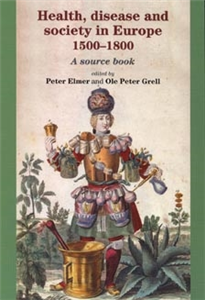
        Health, disease and society in Europe, 1500–1800

        A source book

        by Isobel McLean

        Considers how the body was viewed by the medical profession from the Renaissance to the Enlightenment, and challenges established ideas in the field of medical history. Examines the provision of medical care in context and how it was shaped by the social, religious, political and cultural concerns of the age. Arranged thematically and with brief but scholarly introductions, the selection of documents includes contemporary sources, recent research in the field and classical writings. Written in an accessible style by an Open University lecturer. Companion volume to The Healing Arts: Health, Disease and Society in Europe 1500-1800. ;

      • Trusted Partner
        April 2022

        Silent Killers

        How Big Food Risks Our Health

        by Wilfried Bommert, Christina Sartori

        Addiction from the supermarket The most powerful drug cartel of the 21st century sells pizzas, chocolate bars and mixed sweets. The promise: a quick and happy snack at low cost. The truth: this “food” isn’t nutritious, but is addictive and fattening, while bringing bumper profits for the investors. “Big Food” is becoming more powerful, but the costs due to the consequences of obesity now risk overwhelming global healthcare services. Obesity ranks as a killer before smoking or high blood pressure. A direct analysis of a man-made epidemic that is dominated by a few large companies and kept going by multiple profiteers. Their motto: “Teach the world to snack.”

      • Trusted Partner
        Humanities & Social Sciences
        May 2004

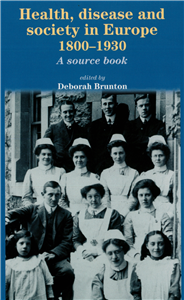
        Health, disease and society in Europe, 1800–1930

        A source book

        by Deborah Brunton, Isobel McLean

        During the nineteenth century, the provision of medical care underwent a radical transformation. In 1800, the body was still understood in terms of humours and fluids, and treatment was provided by a wide range of individuals, some of whom had little or no formal training. Institutions were marginal to the medical enterprise, and governments took almost no part in providing medical services. By 1930, however, a recognisably modern medicine had begun to emerge across Europe. New understandings of human physiology had resulted in the new science of surgical therapy; hospitals had become centres for care, research and training; and the newly organised medical professions increasingly sought to regulate medical practice. In most countries, the state had accepted responsibility for public health and the provision of basic welfare services. This volume provides readers with unrivalled access to a comprehensive range of sources on these major themes. Extracts from contemporary writings vividly illustrate key aspects of medical thought and practice, while a selection of classic historical research and up-to-date work in the field helps further our understanding of medical history. Thematically arranged, these sources are assembled to complement the essays in the companion volume, Medicine Transformed: Health, Disease and Society in Europe, 1800-1930. In addition, brief scholarly introductions make the sources accessible to both the specialist and the general reader. ;

      • Trusted Partner
        September 2021

        Imagine Being a Jew for One Hour

        Stories against anti-Semitism

        by Kurt Oesterle

        Hatred of Jews is long-standing, widespread and powerful. After Auschwitz, the lesson used to be: “Never again!” However, anti-Semitic resentment, like an epidemic, still grips the bourgeois middle-class in our society. In his book “A Jew for One Hour”, Kurt Oesterle convincingly demonstrates how hatred of Jews functions in aesthetic and emotional terms with no empathy whatsoever. He also shows that for the past 200 years of German literature a line of tradition can be acknowledged “in defence of Jewishness”. Kurt Oesterle accounts for this in his book of stories with an impressive depth of knowledge, with a generous heart and mind and incredible commitment. A truly significant book.

      • Trusted Partner
        The Arts
        March 2026

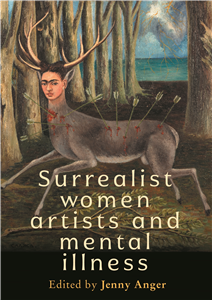
        Surrealist women artists and mental illness

        by Jenny Anger

        Female mental illness has been a prominent and complicated theme in surrealist cultural traditions, including the idealization of women with mental illness in works such as André Breton's Nadja (1928). Art historians have examined this tendency before, but to date there has been no comprehensive study of the lived reality of women surrealist artists with mental illness. How did women's experience and their work intersect with this romanticized vision? Was the masculine dream of feminized, "mad" genius prohibitive or productive for these women artists? After establishing the ideological field within which these women worked, the book turns to case studies of well-known and some lesser-known artists, including Ángeles Santos, Leonora Carrington, Dora Maar, Claude Cahun, Frida Kahlo, Meret Oppenheim, Sonja Sekula, and Unica Zürn. This collection of essays contains a wide range of responses, revealing surrealism's generative as well as restrictive force.

      • Trusted Partner
        Literary theory
        July 2014

        Degeneration, decadence and disease in the Russian fin de siècle

        Neurasthenia in the life and work of Leonid Andreev

        by Frederick H. White

        Early in the twentieth century, Russia was experiencing a decadent period of cultural degeneration just as science was developing ways to identify medical conditions which supposedly reflected the health of the entire nation. Leonid Andreev, the leading literary figure of his time, stepped into the breach of this scientific discourse with literary works about degenerates. The spirited social debates on mental illness, morality and sexual deviance which resulted from these works became part of the ongoing battle over the definition and depiction of the irrational, complicated by Andreev's own publicised bouts with neurasthenia. This book examines the concept of pathology in Russia, the influence of European medical discourse, the development of Russian psychiatry, and the role that it had in popular culture, by investigating the life and works of Andreev. It engages the emergence of psychiatry and the role that art played in the development of this objective science.

      Subscribe to our

      newsletter