Ethir Veliyeedu
Contemporary Authors In Tamil Literature
View Rights Portal
 Trusted Partner

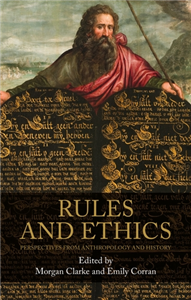
This book investigates the pronounced enthusiasm that many traditions display for codes of ethics characterised by a multitude of rules. Recent anthropological interest in ethics and historical explorations of 'self-fashioning' have led to extensive study of the virtuous self, but existing scholarship tends to pass over the kind of morality that involves legalistic reasoning. Rules and ethics corrects that omission by demonstrating the importance of rules in everyday moral life in a variety of contexts. In a nutshell, it argues that legalistic moral rules are not necessarily an obstruction to a rounded ethical self, but can be an integral part of it. An extended introduction first sets out the theoretical basis for studies of ethical systems that are characterised by detailed rules. This is followed by a series of empirical studies of rule-oriented moral traditions in a comparative perspective.
Trusted Partner

Air policing was used in many colonial possessions, but its most effective incidence occurred in the crescent of territory from north-eastern Africa, through South-West Arabia, to North West Frontier of India. This book talks about air policing and its role in offering a cheaper means of 'pacification' in the inter-war years. It illuminates the potentialities and limitations of the new aerial technology, and makes important contributions to the history of colonial resistance and its suppression. Air policing was employed in the campaign against Mohammed bin Abdulla Hassan and his Dervish following in Somaliland in early 1920. The book discusses the relationships between air control and the survival of Royal Air Force in Iraq and between air power and indirect imperialism in the Hashemite kingdoms. It discusses Hugh Trenchard's plans to substitute air for naval or coastal forces, and assesses the extent to which barriers of climate and geography continued to limit the exercise of air power. Indigenous responses include being terrified at the mere sight of aircraft to the successful adaptation to air power, which was hardly foreseen by either the opponents or the supporters of air policing. The book examines the ethical debates which were a continuous undercurrent to the stream of argument about repressive air power methods from a political and operational perspective. It compares air policing as practised by other European powers by highlighting the Rif war in Morocco, the Druze revolt in Syria, and Italy's war of reconquest in Libya.
Trusted Partner


— By the expert in ethical business — Once you have finished this, you will never fall for green financial lies again — Global Ethic Institute (Weltethos- Institut) network And suddenly every bank is sustainable. This truly necessary "debate book" explains in a wellfounded way what green-washing means in the financial sector, and why banks, insurance companies, asset managers, stockbrokers and other financial players clothe themselves in their allegedly so green-and-friendly cloak. It provides an easy-to-understand explanation of the various forms of greenwashing, how we can recognise the different "varieties" and – above all – how we can avoid them. This is also important because the entire financial and capital system is an important part of a sustainable future – and this can only succeed if it is honest, transparent and impact-orientated.
Trusted Partner


Although the importance of ethics is often stressed, it remains sidelined in training. Marianne Rabe makes ethics and ethical reflection the focus of nursing practice and training. Her study - presents the theoretical principles of formative learning and explores how it can be put into practice - puts forward practical curriculum suggestions for incorporating ethics into nurse training - shows how to address the ethical principles of dignity, autonomy, care, justice, responsibility, and dialogue within the framework of a teaching concept - presents Rabe’s own model of ethical reflection based on her personal experience. Target Group: Nursing trainers, lecturers
Trusted Partner

This book is a powerful addition to a developing literature informed by arts and humanities research carried out during the COVID-19 pandemic. Investigating the impacts of crisis governance and decision-making on people and populations, the book brings together microbial organisms and humans, children and data, decision-making and infection prevention, publics and process, global vaccine distribution and citizens' juries. Through its eight chapters, the book stimulates broadly-drawn discussions about exceptional executive powers in an emergency, the role of trust, and the importance of the principles of good governance - such as selflessness, ethics, integrity, accountability and honesty in leadership. The lessons drawn out in this book will support future decision-makers in both ordinary times and extra-ordinary emergencies.
Trusted Partner
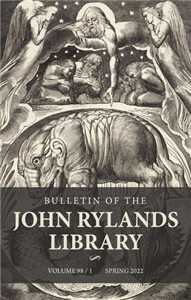
This special issue of the Bulletin of the John Rylands Library is devoted to William Blake. It explores the British and European reception of Blake's work from the late nineteenth century to the present day, with a particular focus on the counterculture. Opening with two articles by the late Michael Horovitz, an important figure in the 'Blake Renaissance' of the 1960s, the issue goes on to investigate the ideological struggle over Blake in the early part of the twentieth century, with particular reference to W. B. Yeats. This is followed by articles on the artistic avant-garde and underground of the 1960s and on Blake's significance for science fiction authors of the 1970s. The issue closes with an article on the contemporary Belgian art collective maelstrÖm reEvolution.
Trusted Partner

An introduction to the ethical and legal dilemmas in nursing practice, this text is designed to provoke the nurse to reflect on the nature of his or her professional obligations and future practice. The authors firstly familiarise the reader with the basic principles of ethical debate and the overall structure of the legal system as it effects nurses. They then address the fundamental dilemmas of nursing practice, such as whether or not paternalism can ever be justified, if patients have the right to die, and what a nurse's response should be to poor professional practice by colleagues. The book aims to enhance the reader's understanding of the issues, and to educate nurses to develop their own skills of reasoning and judgement. ;
Trusted Partner
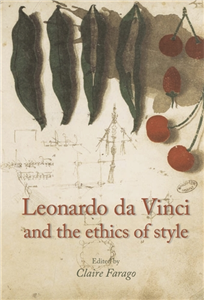
Leonardo da Vinci and the ethics of style brings together a distinguished group of experts on Leonardo and the Renaissance, examining the ethical underpinnings of art history. The seven essays articulate the complexity of ways in which style involved ethical considerations during the early modern period, and still involves us in its conundrums. Looking at individual works and concepts, this fascinating collection covers subjects such as Leonardo's understanding of his role as a painter as that of a natural philosopher, his interests in visual perception and the understanding of visual sensations by the mind, how and why Leonardo's ideas on painting are at the core of art theory, how Leonardo addresses style in gendered terms, and 'style' as the historian's projection. This volume will be of great interest to all those studying or with an enthusiasm for Renaissance art history, art theory, cultural studies and philosophy. ;
Trusted Partner

Guidance for psychologists on ethical dilemmas that mattertoday• New updated edition• Based on the Meta-code of Ethics of the EuropeanFederation of Psychologists’ Associations (EFPA)• Full of practical examplesThe understanding of and adherence to professional ethicsis fundamental in navigating the moral encounters and dilemmasthat all psychologists face in their daily work, whetherin research or professional practice. Core values and principlesremain stable. However, as more complex andconflicting societal contexts come into play, the individualpsychologist and the professional community need supportin upholding a solid moral integrity. The volume is a welcomeresource for any psychologist or student wanting to foresee,prevent, and professionally manage, in an ethically responsibleway, the moral challenges that arise.
Trusted Partner
Trusted Partner
Trusted Partner
 Trusted Partner
Trusted Partner
Trusted Partner
Trusted Partner
Trusted Partner
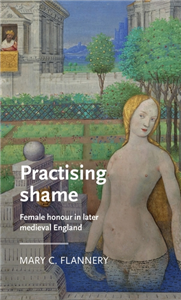
Practicing shame investigates how the literature of medieval England encouraged women to safeguard their honour by cultivating hypervigilance against the possibility of sexual shame. A combination of inward reflection and outward comportment, this practice of 'shamefastness' was believed to reinforce women's chastity of mind and body, and to communicate that chastity to others by means of conventional gestures. The book uncovers the paradoxes and complications that emerged from these emotional practices, as well as the ways in which they were satirised and reappropriated by male authors. Working at the intersection of literary studies, gender studies and the history of emotions, it transforms our understanding of the ethical construction of femininity in the past and provides a new framework for thinking about honourable womanhood now and in the years to come.
Trusted Partner


Honoré de Balzac, der berühmte Autor der Comédie humaine, war auch ein zu seiner Zeit berühmter Schuldner. Noch vor seinen literarischen Erfolgen habe er nach gewagten Spekulationen als Verleger und Druckereiunternehmer Insolvenz anmelden müssen und wurde Zeit seines Lebens von Gläubigern verfolgt. Er selbst soll mit Vorliebe darüber gesprochen haben - und dies mit einer unverwüstlichen, ansteckenden Munterkeit. »Die Kunst, seine Schulden zu zahlen und seine Gläubiger zu befriedigen, ohne auch nur einen Sou selbst aus der Tasche zu nehmen« ist also aus der Erfahrung gewonnen: eine nicht ganz ernst zu nehmende Anleitung, mit dem Geld auszukommen, das man nicht hat. Humorvoll beleuchtet Balzac das Phänomen von allen erdenklichen Seiten - ironischerweise unter dem Deckmäntelchen eines rechtschaffenen Herausgebers, der lediglich die Aufzeichnungen eines Onkels, des schwarzen Schafes der Familie, nach dessen Tod der Öffentlichkeit zu präsentieren vorgibt.
Trusted Partner

Honoré de Balzac wurde am 20. Mai 1799 in Tours geboren. 1816 begann er ein Jurastudium an der École de Droit in Paris auf und besuchte daneben Vorlesungen an der Faculté des lettres und am Collège de France, was ihn dazu veranlaßte, neben seinem Jurastudium philosophische Überlegungen niederzuschreiben. Schließlich brach er das Studium ab, um sich ausschließlich dem Schreiben zu widmen. Sein Vater finanzierte ihm die ersten zwei Jahre, die Balzac schreibend in einer Mansarde verbrachte. Das Ergebnis war allerlei Feuilletonistisches und Lyrisches, Fragmente eines Opernlibrettos und einer Tragödie. 1823 verdiente er sein Geld vor allem mit Beiträgen für das Feuilleton littéraire. Den erhofften Durchbruch als Romanautor schaffte er erst 1829 mit dem historischen Roman Le dernier Chouan , ou La Bretagne en 1800. In den folgenden Jahren schrieb Balzac wie besessen. Die Comédie Humaine sollte Balzacs Lebenswerk werden, das er jedoch nicht mehr vollenden konnte. 91 der geplanten 137 Romane und Erzählungen wurden fertiggestellt. Ab 1843 bekam Balzac aufgrund seiner ständigen Überanstrengung und seines exzessiven Kaffeeverbrauchs ernsthafte gesundheitliche Probleme, von denen er sich nicht mehr erholte. Er starb am 18. August 1850 in Paris.
Trusted Partner

Honoré de Balzac wurde am 20. Mai 1799 in Tours geboren. 1816 begann er ein Jurastudium an der École de Droit in Paris auf und besuchte daneben Vorlesungen an der Faculté des lettres und am Collège de France, was ihn dazu veranlaßte, neben seinem Jurastudium philosophische Überlegungen niederzuschreiben. Schließlich brach er das Studium ab, um sich ausschließlich dem Schreiben zu widmen. Sein Vater finanzierte ihm die ersten zwei Jahre, die Balzac schreibend in einer Mansarde verbrachte. Das Ergebnis war allerlei Feuilletonistisches und Lyrisches, Fragmente eines Opernlibrettos und einer Tragödie. 1823 verdiente er sein Geld vor allem mit Beiträgen für das Feuilleton littéraire. Den erhofften Durchbruch als Romanautor schaffte er erst 1829 mit dem historischen Roman Le dernier Chouan , ou La Bretagne en 1800. In den folgenden Jahren schrieb Balzac wie besessen. Die Comédie Humaine sollte Balzacs Lebenswerk werden, das er jedoch nicht mehr vollenden konnte. 91 der geplanten 137 Romane und Erzählungen wurden fertiggestellt. Ab 1843 bekam Balzac aufgrund seiner ständigen Überanstrengung und seines exzessiven Kaffeeverbrauchs ernsthafte gesundheitliche Probleme, von denen er sich nicht mehr erholte. Er starb am 18. August 1850 in Paris.