
Ethir Veliyeedu
Contemporary Authors In Tamil Literature
View Rights Portal

Wolters Kluwer Law & Business delivers expert content and solutions in the areas of law, corporate compliance, health compliance, reimbursement, and legal education.
View Rights Portal
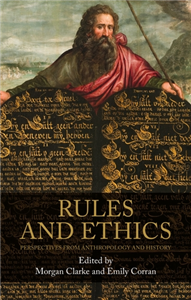
This book investigates the pronounced enthusiasm that many traditions display for codes of ethics characterised by a multitude of rules. Recent anthropological interest in ethics and historical explorations of 'self-fashioning' have led to extensive study of the virtuous self, but existing scholarship tends to pass over the kind of morality that involves legalistic reasoning. Rules and ethics corrects that omission by demonstrating the importance of rules in everyday moral life in a variety of contexts. In a nutshell, it argues that legalistic moral rules are not necessarily an obstruction to a rounded ethical self, but can be an integral part of it. An extended introduction first sets out the theoretical basis for studies of ethical systems that are characterised by detailed rules. This is followed by a series of empirical studies of rule-oriented moral traditions in a comparative perspective.
 Trusted Partner

This book provides an analysis of European Union pharmaceutical regulation from a policy-making perspective. The focus is on how the often conflicting agendas of the pharmaceutical industry, the EU member states, the European Commission, and consumer interests are reconciled within the context of regulatory outcomes having to serve public health, healthcare and industrial policy needs within the single market. Breaking with more traditional approaches which stress the economic determinants of pharmaceutical policy, different strands of public policy analysis, regulatory and European integration and policy-making theories are invoked in developing a new conceptual approach to frame the analysis. In-depth case-studies in three key policy areas: patent protection, market authorisation, and pricing and reimbursement, provide substantive support. In providing a unique perspective on how and why EU pharmaceutical policy is made, the book will be of interest to academics, students and policy-practitioners interested in EU policy-making, regulation and public policy analysis. ;
Trusted Partner

This book is a powerful addition to a developing literature informed by arts and humanities research carried out during the COVID-19 pandemic. Investigating the impacts of crisis governance and decision-making on people and populations, the book brings together microbial organisms and humans, children and data, decision-making and infection prevention, publics and process, global vaccine distribution and citizens' juries. Through its eight chapters, the book stimulates broadly-drawn discussions about exceptional executive powers in an emergency, the role of trust, and the importance of the principles of good governance - such as selflessness, ethics, integrity, accountability and honesty in leadership. The lessons drawn out in this book will support future decision-makers in both ordinary times and extra-ordinary emergencies.
Trusted Partner

National broadcasting and press regulation is undergoing a process of convergence in Europe. This book, newly available in paperback, explains how this process has been shaped by the actions of the European Union (EU) institutions. Alison Harcourt observes that whilst communications is one of the EU's most successful policy areas, European decision-making is eroding the national capacity to regulate for the public interest. European-level efforts to protect public interest goals have been constrained by the European Treaties. The author argues that increased European coordination in public interest regulation could be more conducive to growth and competitiveness than the dismantling of existing national laws. This, however, would require changes to the political composition of the European Union. This book assesses the potential EU media regulation provides for market growth and the protection of media pluralism, the citizen and ultimately democracy itself. These opportunities are presented in the coming decade with the developing European Constitution, EU enlargement, and the implementation and revision of European regulation.
Trusted Partner
 Trusted Partner
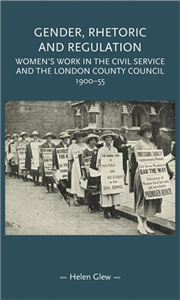
The Civil Service and the London County Council employed tens of thousands of women in Britain in the early twentieth century. As public employers these institutions influenced both each other and private organisations, thereby serving as a barometer or benchmark for the conditions of women's white-collar employment. Drawing on a wide range of archival sources - including policy documents, trade union records, women's movement campaign literature and employees' personal testimony - this is the first book-length study of women's public service employment in this period. It examines three aspects of their working lives - inequality of pay, the marriage bar and inequality of opportunity - and demonstrates how far wider cultural assumptions about womanhood shaped policies towards women's employment and experiences. Scholars and students with interests in gender, British social and cultural history and labour history will find this an invaluable text.
Trusted Partner


— By the expert in ethical business — Once you have finished this, you will never fall for green financial lies again — Global Ethic Institute (Weltethos- Institut) network And suddenly every bank is sustainable. This truly necessary "debate book" explains in a wellfounded way what green-washing means in the financial sector, and why banks, insurance companies, asset managers, stockbrokers and other financial players clothe themselves in their allegedly so green-and-friendly cloak. It provides an easy-to-understand explanation of the various forms of greenwashing, how we can recognise the different "varieties" and – above all – how we can avoid them. This is also important because the entire financial and capital system is an important part of a sustainable future – and this can only succeed if it is honest, transparent and impact-orientated.
Trusted Partner
Trusted Partner

An introduction to the ethical and legal dilemmas in nursing practice, this text is designed to provoke the nurse to reflect on the nature of his or her professional obligations and future practice. The authors firstly familiarise the reader with the basic principles of ethical debate and the overall structure of the legal system as it effects nurses. They then address the fundamental dilemmas of nursing practice, such as whether or not paternalism can ever be justified, if patients have the right to die, and what a nurse's response should be to poor professional practice by colleagues. The book aims to enhance the reader's understanding of the issues, and to educate nurses to develop their own skills of reasoning and judgement. ;
Trusted Partner


Although the importance of ethics is often stressed, it remains sidelined in training. Marianne Rabe makes ethics and ethical reflection the focus of nursing practice and training. Her study - presents the theoretical principles of formative learning and explores how it can be put into practice - puts forward practical curriculum suggestions for incorporating ethics into nurse training - shows how to address the ethical principles of dignity, autonomy, care, justice, responsibility, and dialogue within the framework of a teaching concept - presents Rabe’s own model of ethical reflection based on her personal experience. Target Group: Nursing trainers, lecturers
Trusted Partner
 Trusted Partner
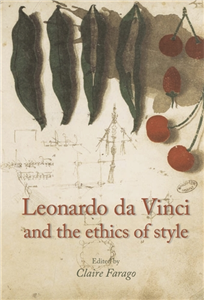
Leonardo da Vinci and the ethics of style brings together a distinguished group of experts on Leonardo and the Renaissance, examining the ethical underpinnings of art history. The seven essays articulate the complexity of ways in which style involved ethical considerations during the early modern period, and still involves us in its conundrums. Looking at individual works and concepts, this fascinating collection covers subjects such as Leonardo's understanding of his role as a painter as that of a natural philosopher, his interests in visual perception and the understanding of visual sensations by the mind, how and why Leonardo's ideas on painting are at the core of art theory, how Leonardo addresses style in gendered terms, and 'style' as the historian's projection. This volume will be of great interest to all those studying or with an enthusiasm for Renaissance art history, art theory, cultural studies and philosophy. ;
Trusted Partner
Trusted Partner
 Trusted Partner
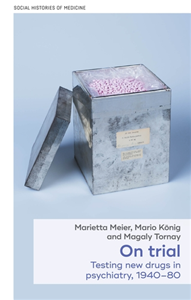
The heroic story of the invention of antidepressants is a key part of the psychopharmaceutical turn. On Trial revolves around one of its pioneers, psychiatrist Roland Kuhn, who practiced in Münsterlingen, a state-run psychiatric hospital in Switzerland. Kuhn became famous for the 'discovery' of the first antidepressant, Tofranil, and more recently notorious for his numerous trials on often unsuspecting patients. Largely based on the extensive and previously inaccessible sources of Kuhn's private archive, the book delves into the early days of industry-sponsored clinical research in psychiatry. It examines how the clinic, patients, doctors, nursing staff, corporations, and authorities interacted in the trials. Conducted from the 1940s to 1980s, the Münsterlingen drug trials are historicised and situated in the period's evolving landscape of experimentation.
Trusted Partner
The heroic story of the invention of antidepressants is a key part of the psychopharmaceutical turn. On Trial revolves around one of its pioneers, psychiatrist Roland Kuhn, who practiced in Münsterlingen, a state-run psychiatric hospital in Switzerland. Kuhn became famous for the 'discovery' of the first antidepressant, Tofranil, and more recently notorious for his numerous trials on often unsuspecting patients. Largely based on the extensive and previously inaccessible sources of Kuhn's private archive, the book delves into the early days of industry-sponsored clinical research in psychiatry. It examines how the clinic, patients, doctors, nursing staff, corporations, and authorities interacted in the trials. Conducted from the 1940s to 1980s, the Münsterlingen drug trials are historicised and situated in the period's evolving landscape of experimentation.
Trusted Partner

Guidance for psychologists on ethical dilemmas that mattertoday• New updated edition• Based on the Meta-code of Ethics of the EuropeanFederation of Psychologists’ Associations (EFPA)• Full of practical examplesThe understanding of and adherence to professional ethicsis fundamental in navigating the moral encounters and dilemmasthat all psychologists face in their daily work, whetherin research or professional practice. Core values and principlesremain stable. However, as more complex andconflicting societal contexts come into play, the individualpsychologist and the professional community need supportin upholding a solid moral integrity. The volume is a welcomeresource for any psychologist or student wanting to foresee,prevent, and professionally manage, in an ethically responsibleway, the moral challenges that arise.
Trusted Partner
Trusted Partner



