Ethir Veliyeedu
Contemporary Authors In Tamil Literature
View Rights Portal

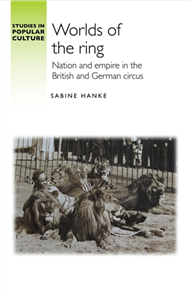
Worlds of the Ring is a groundbreaking exploration of the interwar European circus scene, focusing on the German Sarrasani and British Bertram W. Mills' circuses. This study illuminates the correlation between the circus's evolution and imperialism/nationalism, revealing how these enterprises shaped national identities for popular audiences. Examining the years 1918-45, the book takes a transnational perspective, uncovering the interplay of international and national forces that influenced the modern circus. Through case studies, it delves into the lives of individuals in the industry, using diverse sources like newspapers, legal documents, and performer archives. The book introduces the concept of Orientalism to analyse how circuses depicted foreign worlds, and provides a fresh perspective on interwar popular culture, globalising forces, and the circus's ties to European imperialism in the early 20th century.

African research played a major role in transforming the discipline of anthropology in the twentieth century. Ethnographic studies, in turn, had significant effects on the way imperial powers in Africa approached subject peoples. Ordering Africa provides the first comparative history of these processes. With essays exploring metropolitan research institutes, Africans as ethnographers, the transnational features of knowledge production, and the relationship between anthropology and colonial administration, this volume both consolidates and extends a range of new research questions focusing on the politics of imperial knowledge. Specific chapters examine French West Africa, the Belgian and French Congo, the Anglo-Egyptian Sudan, Italian Northeast Africa, Kenya, and Equatorial Africa (Gabon) as well as developments in Britain, France, Germany, Italy, and Switzerland. A major collection of essays that will be welcomed by scholars interested in imperial history and the history of Africa.
 Trusted Partner
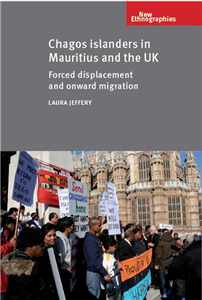
The Chagos islanders were forcibly uprooted from the Chagos Archipelago in the Indian Ocean between 1965 and 1973. This is the first book to compare the experiences of displaced Chagos islanders in Mauritius with the experiences of those Chagossians who have moved to the UK since 2002. It thus provides a unique ethnographic comparative study of forced displacement and onward migration within the living memory of one community. Based on in-depth ethnographic fieldwork in Mauritius and Crawley (West Sussex), the six chapters explore Chagossians' challenging lives in Mauritius, the mobilisation of the community, reformulations of the homeland, the politics of culture in exile, onward migration to Crawley, and attempts to make a home in successive locations. Jeffery illuminates how displaced people romanticise their homeland through an exploration of changing representations of the Chagos Archipelago in song lyrics. Offering further ethnographic insights into the politics of culture, she shows how Chagossians in exile engage with contrasting conceptions of culture ranging from expectations of continuity and authenticity to enactments of change, loss and revival. The book will appeal particularly to social scientists specialising in the fields of migration studies, the anthropology of displacement, political and legal anthropology, African studies, Indian Ocean studies, and the anthropology of Britain, as well as to readers interested in the Chagossian case study. ;
Trusted Partner

This book is a collection of articles by anthropologists and social scientists concerned with gendered labour, care, intimacy and sexuality, in relation to mobility and the hardening of borders in Europe. Interrogating the relation between physical, geopolitical borders and ideological, conceptual boundaries, it offers a range of vivid and original ethnographic case studies that will capture the imagination of anyone interested in gendered migration, policies of inclusion and exclusion, and regulation of reproduction and intimacy. The book presents ethnographic and phenomenological discussions of people's changing lives as they cross borders, how people transgress and reshape moral boundaries of proper gender and kinship behaviour, and moral economies of intimacy and sexuality. It also focuses on migrants' navigation of social and financial services in their destination countries, putting questions about rights and limitations on citizenship at the core.
Trusted Partner
Trusted Partner
 Trusted Partner
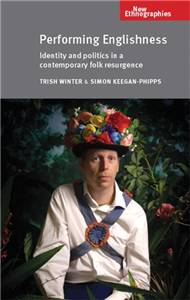
Now available in paperback, Performing Englishness examines the growth in popularity and profile of the English folk arts in the first decade of the twenty-first century. In the only study of its kind, the authors explore how the folk resurgence speaks to a broader explosion of interest in the subject of English national and cultural identity. Combining approaches from British cultural studies and ethnomusicology, the book draws on ethnographic fieldwork, interviews with central figures of the resurgence and close analysis of music and dance as well as visual and discursive sources. Its presentation of the English case study calls for a rethinking of concepts such as revival and indigeneity. It will be of interest to students and scholars in cultural studies, ethnomusicology and related disciplines. ;
Trusted Partner
In Brexit Britain, talk of 'the economy' dominates; however, we know surprisingly little about how people understand this term. In the aftermath of the 2008 crash and decades of neoliberalism, how are understandings of 'the economy' changing, and is it the case that Remain supporters care more about 'the economy' than Leave supporters? This timely and insightful book argues that people with similar experiences of the economy share an understanding of the term, regardless of whether they supported Leave or Remain. Through extensive ethnographic research in a city on the South coast of England, Anna Killick explores what people from a range of backgrounds understand about key aspects of 'the economy', including employment, austerity, trade and the economic effects of migration.
Trusted Partner

The absurdity of bureaucracy offers a humorous ethnographic account of policy implementation set in contemporary Danish bureaucracy. Taking the reader deep into the hallways of governmental administration and municipal caseworkers' offices, the book sets out to explore what characterizes policy implementation as a mode of human agency. Using the notions of absurdity and sense-making as lenses through which to explore the dynamic relationship between a policy and its effects, the book reclaims 'implementation studies' for the qualitative sciences and emphasizes the existential dilemma that any policymaker and implementer must confront. Following step-by-step the planning and implementation of the randomized controlled trial, Active - Back Sooner, the book sets out to show that 'going wrong' is not a question of implementation failure but is in fact the only way in which implementation may happen.
Trusted Partner
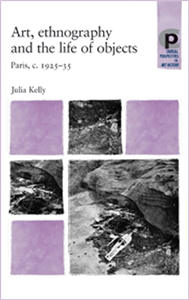
In the 1920s and 1930s, anthropology and ethnography provided new and striking ways of rethinking what art could be and the forms which it could take. This book examines the impact of these emergent disciplines on the artistic avant-garde in Paris. The reception by European artists of objects arriving from colonial territories in the first half of the twentieth century is generally understood through the artistic appropriation of the forms of African or Oceanic sculpture. The author reveals how anthropological approaches to this intriguing material began to affect the ways in which artists, theorists, critics and curators thought about three-dimensional objects and their changing status as 'art', 'artefacts' or 'ethnographic evidence'. This book analyses texts, photographs and art works that cross disciplinary boundaries, through case studies including the Dakar to Djibouti expedition of 1931-33, the Trocadéro Ethnographic Museum, and the two art periodicals Documents and Minotaure. Through its interdisciplinary and contextual approach, it provides an important corrective to histories of modern art and the European avant-garde. ;
Trusted Partner
Trusted Partner

A fresh anthropological look at a central but neglected topic: the profound changes in rural life throughout Western Europe today. As locals leave for jobs in cities they are replaced by neo-hippies, lifestyle-seekers, eco-activists, and labour migrants from beyond the EU. With detailed ethnographic examples, contributors analyse new modes of living rurally and emerging forms of social organisation. As incomers' dreams come up against residents' realities, they detail the clashes and the cooperations between old and new residents. They make us rethink the rural/urban divide, investigate regionalists' politicisation of rural life and heritage, and reveal how locals use EU monies to prop up or challenge existing hierarchies. They expose the consequences of and reactions to grand EU-restructuring policies, which at times threaten to turn the countryside into a manicured playground for escapee urbanites. This book will appeal to anyone seriously interested in the realities of rural life today.
Trusted Partner
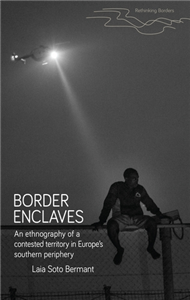
Border enclaves examines the Spanish enclave of Melilla as a prism for understanding Europe's contemporary dislocations. Based on over a decade of ethnographic research, it explores how borders are enforced, contested and inhabited in a city suspended between Africa and Europe, colonial legacies and modern regimes. Through a polyphonic narrative following smugglers, migrants, teachers and politicians, it reveals how everyday practices and symbolic performances shape life in the enclave. Selective visibility-who is seen or erased-structures authority and exclusion. Situating Melilla within broader processes like Spain's colonial history and Europe's border restructuring, the book argues that its fragmented sovereignties and external dependencies make it a paradigmatic site for grasping Europe's precarious margins. It calls for an ethnographic lens attuned to dislocation as both lived experience and analytic tool.
Trusted Partner
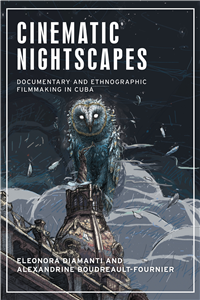
Cinematic Nightscapes explores how the darkness of night in contemporary Cuba becomes a powerful site for political expression, cultural imagination and artistic experimentation. As the rhythms of the day give way to night, a different Cuba emerges, one where protests take shape, marginalized voices reclaim space, and filmmakers reimagine ethnographic and documentary storytelling. This book offers a sensorial and creative journey through Cuban documentary films that engage with the night not just as backdrop, but as a central character-shaping emotions, aesthetics and socio-political discourse. Blending theory with rich visual analysis, Cinematic Nightscapes asks: How does the night alter ethnographic practice? How do Cuban filmmakers use the night to imagine new futures? Through a reflexive, multimodal approach, the book invites readers to experience the complexities of nocturnal life in Cuba, where darkness illuminates new possibilities.
Trusted Partner
Who are expatriates? How do they differ from other migrants? And why should we care about such distinctions? Expatriate interrogates the contested category of 'the expatriate' to explore its history and politics, its making and lived experience. Drawing on ethnographic and archival research, the book offers a critical reading of International Human Resource Management literature, explores the work and history of the Expatriate Archive Centre in The Hague, and studies the usage and significance of the category in Kenyan history and present-day 'expat Nairobi'. Doing so, the book traces the figure of the expatriate from the mid-twentieth-century era of decolonisation to today's heated debates about migration.
Trusted Partner

The battles between Athenian anarchists and the Greek state have received a high degree of media attention recently. But away from the intensity of street protests militants implement anarchist practices whose outcomes are far less visible. They feed the hungry and poor, protect migrants from fascist beatings and try to carve out an autonomous political, social and cultural space. Activists within the movement share politics centred on hostility to the capitalist state and all forms of domination, hierarchy and discrimination. Based on extensive ethnographic fieldwork among Athenian anarchists and anti-authoritarians, Anarchy in Athens unravels the internal complexities within this milieu and provides a better understanding of the forces that give the space its shape.
Trusted Partner

Seeking to explore what it means to grow older in contemporary Britain from the perspective of older people themselves, this richly detailed ethnographic study engages in debates over selfhood and people's relationships with time. Based on research conducted in a former coal mining village in South Yorkshire, England, Cathrine Degnen explores how the category of 'old age' comes to be assigned and experienced in everyday life through multiple registers of interaction, including that of social memory, in a postindustrial context of great social transformation. Degnen argues that the complex interplay of social, cultural and physical attributes of ageing means that older people can come to have a different position in relation to time and to the self than younger people, unseating normative conventions about narrative and temporality.
Trusted Partner

This new collection of essays presents the latest thoughts of one of the world's leading ethnographic filmmakers and writers on cinema. It will provide essential reading for students in cinema studies, filmmaking, and visual anthropology. The dozen wide-ranging essays give unique insights into the history of documentary, how films evoke space, time and physical sensations, and the intellectual and emotional links between filmmakers and their subjects. In an era of reality television, historical re-enactments, and designer packaging, MacDougall defends the principles that inspired the earliest practitioners of documentary cinema. He urges us to consider how the form can more accurately reflect the realities of our everyday lives. Building on his own practice in filmmaking, he argues that this means resisting the pressures for self-censorship and the inherent ethnocentrism of our own society and those we film.
Trusted Partner

Bordering social reproduction explores what happens when migrants subject to policies that seek to deny them the means of life nonetheless endeavour to make and sustain meaningful lives. Developing innovative theorisations of welfare bordering, the volume provides rich ethnographic insights into the everyday lives of destitute mothers and children who are denied mainstream welfare support in the United Kingdom due to their immigration status. This book shows how enforced destitution and debt work alongside detention and deportation as part of a tripartite of exclusionary technologies of the racial state. It advances the novel concept of weathering to comprehend mother's and children's life-making practices under duress - arguing that these are neither acts of heroic resilience nor solely symptomatic of lives rendered disposable, but indications of the fragilities of repressive migration regimes and, on occasion, refusals to accept their terms of existence.
Trusted Partner
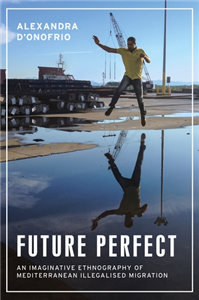
The present volume emerges from a practice-based research that focuses on experiences of migration and border crossing during what are perceived as existential 'turning points' by the protagonists themselves. It recognizes the fundamental role that imagination plays in people's perceptions of reality, in their decisions and actions, and finally in the way they narrate their experiences. As a consequence, it makes a stance for ethnographic practice to include more creative and collaborative methodologies in order to explore such intangible and unstructured realms of existence. In particular, this ethnography developed theoretically and methodologically in close collaboration with a group of Egyptian men who crossed the Mediterranean Sea in search of better living opportunities in Italy, by engaging them through a range of the co-creative processes such as theatre improvisations, storytelling practices, collaborative filmmaking and participatory animation.