Your Search Results

      • Families International

        It began when I left Ghana to study in Marburg, Germany. I entered a classroom of children with developmental concerns and instantly fell in love with them–the passion continues. I’m an indie professional author-publisher of Christian, academic and children’s books. Founder of Families International, Ottawa, Canada. An organization for all families, especially those who have children with developmental concerns. Our vision is to empower these families to believe in and help themselves, and their children. Be passionate partners of their children’s educational systems and working resiliently with special pedagogic and medical teams to support their children to achieve their full potential. We value every child and believe disabilities don’t mean inabilities. These children have educational assets exemplified by my newly released children’s books–Mommie, Snoopy Mr. Crab and Jumbolino The Dancing Clown. Inspired and created from my international work with these children and their families.

        View Rights Portal

      • Trusted Partner
        January 1994

        Diabolisch

        by Calde, Mark A

      • Trusted Partner
      • Trusted Partner
      • Trusted Partner
      • Trusted Partner
      • Trusted Partner
      • Trusted Partner
        Humanities & Social Sciences
        July 2021

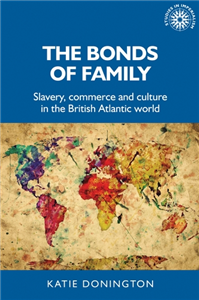
        The bonds of family

        Slavery, commerce and culture in the British Atlantic world

        by Katie Donington

        Moving between Britain and Jamaica The bonds of family reconstructs the world of commerce, consumption and cultivation sustained through an extended engagement with the business of slavery. Transatlantic slavery was both shaping of and shaped by the dynamic networks of family that established Britain's Caribbean empire. Tracing the activities of a single extended family - the Hibberts - this book explores how slavery impacted on the social, cultural, economic and political landscape of Britain. It is a history of trade, colonisation, enrichment and the tangled web of relations that gave meaning to the transatlantic world. The Hibberts's trans-generational story imbricates the personal and the political, the private and the public, the local and the global. It is both the intimate narrative of a family and an analytical frame through which to explore Britain's history and legacies of slavery.

      • Trusted Partner
        Humanities & Social Sciences
        November 2019

        The bonds of family

        by Katie Donington, Alan Lester, Andrew Thompson

      • Trusted Partner
        Family & health

        A Family with Autism

        When Autism is the Rule, not the Exception

        by Joyce van Maaren

        Four out of your five children have autism, and your husband too! This is what happened to Joyce van Maaren. Over the years four of her children and her husband are diagnosed with an autism spectrum disorder. In A Family With Autism she talks openly about how her life gets turned upside down over and over again, and how the family had to regain their balance. In this inspiring and lovable book, Joyce van Maaren takes the reader on a journey – one with many ups and downs. Readers can find support in her story and discover what autism means for daily life. But most of all, they will be inspired to make the most of every day, even if they or their family has to deal with autism (or other psychological disorders). Target Group: people with autism and their relatives, families of which some members have autism.

      • Trusted Partner
        Literature & Literary Studies
        July 2021

        Making home

        Orphanhood, kinship and cultural memory in contemporary American novels

        by Maria Holmgren Troy, Elizabeth Kella, Helena Wahlstrom, Maria Holmgren Troy

        Making home explores the figure of the orphan child in a broad selection of contemporary US novels by popular and critically acclaimed authors Barbara Kingsolver, Linda Hogan, Leslie Marmon Silko, Marilynne Robinson, Michael Cunningham, Jonathan Safran Foer, John Irving, Kaye Gibbons, Octavia Butler, Jewelle Gomez and Toni Morrison. The orphan child is a continuous presence in US literature, not only in children's books and nineteenth-century texts, but also in a variety of genres of contemporary fiction for adults. Making home examines the meanings of this figure in the contexts of American literary history, social history and ideologies of family, race and nation. It argues that contemporary orphan characters function as links to literary history and national mythologies, even as they may also serve to critique the limits of literary history, as well as the limits of familial and national belonging.

      • Trusted Partner
        Biography & True Stories
        November 2024

        Family Romance

        by Jean Strouse

      • Trusted Partner
        Humanities & Social Sciences
        January 2013

        Tyrants of Sicily by Hugo Falcandus

        by Graham Loud, Thomas Wiedemann

        This book is our principal source for the history of the Kingdom of Sicily in the troubled years between the death of its founder, King Roger, in February 1154 and the spring of 1169. It covers the reign of Roger's son, King William I, known to later centuries as 'the Bad', and the minority of the latter's son, William II 'the Good'. The book illustrates the revival of classical learning during the twelfth-century renaissance. It presents a vivid and compelling picture of royal tyranny, rebellion and factional dispute at court. Sicily had historically been ruled by tyrants, and that the rule of the new Norman kings could be seen, for a variety of reasons, as a revival of that classical tyranny. A more balanced view of Sicilian history of the period 1153-1169 has been provided as an appendix to the translation in the section of the contemporary world chronicle ascribed to Archbishop Romuald II of Salerno, who died in April 1181. In particular the chronicle of Romuald enables us to see how the papal schism of 1159 and the simultaneous dispute between the German Emperor Frederick Barbarossa and the north Italian cities affected the destiny of the kingdom of Sicily. In contrast to the shadowy figure of Hugo Falcandus, the putative author of the principal narrative of mid-twelfth-century Sicilian history, Romuald II, Archbishop of Salerno 1153-1181, is well-documented.

      • Trusted Partner
        Humanities & Social Sciences
        August 2026

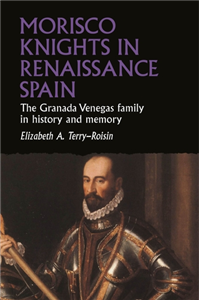
        Morisco knights in Renaissance Spain

        The Granada Venegas family in history and memory

        by Elizabeth Terry-Roisin

        How does a Morisco enter the Spanish nobility? This book reveals the cultural strategies through which a family of converts from Islam to Christianity overcame limpieza de sangre laws, rose in social status, avoided King Philip III's Morisco expulsions of 1609-14, and achieved a noble title. Drawing on archival sources from both Spain and Italy to re-create the original family archive, this book follows the Granada Venegas family from Granada, to Madrid, to the dusty Andalucían town of Campotéjar, of which they became Marquises, and finally to Italy. Their descendants would serve as Doges of Genoa in the eighteenth century.

      • Trusted Partner
        Sociology: family & relationships
        July 2016

        Changing gender roles and attitudes to family formation in Ireland

        by Series edited by Rob Kitchin, Margret Fine-Davis

        Recent decades have witnessed major changes in gender roles and family patterns, as well as a falling birth rate in Ireland and the rest of Europe. While the traditional family is now being replaced in many cases by new family forms, we do not know the reasons why people are making the choices they are and whether or not these choices are leading to greater well-being. While demographic research has attempted to explain the new trends in family formation and fertility, there has been little research on people's attitudes to family formation and having children. This book presents the results of the first major study to examine people's attitudes to family formation and childbearing in Ireland. Based on a nationwide representative sample of 1,404 men and women in the childbearing age group, the study was carried out against a backdrop of changing gender role attitudes and behaviour as well as significant demographic change.

      • Trusted Partner
        Humanities & Social Sciences
        June 2020

        Debates on Stalinism

        by Mark Edele, Roger Richardson

      • Trusted Partner
        Humanities & Social Sciences
        October 2024

        Egypt and the rise of fluid authoritarianism

        Political ecology, power and the crisis of legitimacy

        by Maria Gloria Polimeno

        Egypt and the rise of fluid authoritarianism focuses on the struggle of the post-2013 political authorities for internal political legitimacy after the crisis following the 2013 coup d'état. It explores the microstructural and macro-systemic dynamics of leadership, power, protests and the authority-making process in political systems. These cannot simply be defined as structural, political, social and economic projections of the authoritarianism of the past, but rather as a rupture with that past. The book offers a complex, ground-breaking socio-political and economic analysis into how the forging of an internal political legitimacy claim has eventually modified the regime in Egypt along the authoritarian spectrum, turning into a fluid autocracy closer to a non-exclusivist personalist regime. This shift had implications that resonated both politically and economically.

      • Trusted Partner
      • Trusted Partner
        Humanities & Social Sciences
        February 2022

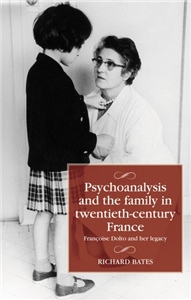
        Psychoanalysis and the family in twentieth-century France

        Françoise Dolto and her legacy

        by Richard Bates, David Hopkin, Maire Cross, Jennifer Sessions

        In the last quarter of the twentieth century, if French people had a parenting problem or dilemma there was one person they consulted above all: Françoise Dolto (1908-88). But who was Dolto? How did she achieve a position of such influence? What ideas did she communicate to the French public? This book connects the story of Dolto's rise to two broader histories: the dramatic growth of psychoanalysis in postwar France and the long-running debate over the family and the proper role of women in society. It shows that Dolto's continued reputation in France as a liberal and enlightened educational thinker is at best only partially deserved and that conservative and anti-feminist ideas often underpinned her prominent public interventions. While Dolto retains the status of a national treasure, her career has had far-reaching and sometimes harmful repercussions for French society, particularly in the treatment of autism.

      Subscribe to our

      newsletter