Lunar Leaves literary agency
Francesca Ferrua (literary agent, editor, bookseller)
View Rights Portal
Francesca Ferrua (literary agent, editor, bookseller)
View Rights Portal
Learnetic is an innovative educational digital publisher, content developer and eLearning technology provider. We are a technology-based company with over 20 years of experience operating in international educational publishing business. We offer a complete suite of advanced software applications supporting all stages of ePublishing, providing our partners with professional Authoring Tools, eLearning Platforms and ready-made interactive learning content.
View Rights Portal

The Arctic region has been the subject of much popular writing. This book considers nineteenth-century representations of the Arctic, and draws upon an extensive range of evidence that will allow the 'widest connections' to emerge from a 'cross-disciplinary analysis' using different methodologies and subject matter. It positions the Arctic alongside more thoroughly investigated theatres of Victorian enterprise. In the nineteenth century, most images were in the form of paintings, travel narratives, lectures given by the explorers themselves and photographs. The book explores key themes in Arctic images which impacted on subsequent representations through text, painting and photography. For much of the nineteenth century, national and regional geographical societies promoted exploration, and rewarded heroic endeavor. The book discusses images of the Arctic which originated in the activities of the geographical societies. The Times provided very low-key reporting of Arctic expeditions, as evidenced by its coverage of the missions of Sir John Franklin and James Clark Ross. However, the illustrated weekly became one of the main sources of popular representations of the Arctic. The book looks at the exhibitions of Arctic peoples, Arctic exploration and Arctic fauna in Britain. Late nineteenth-century exhibitions which featured the Arctic were essentially nostalgic in tone. The Golliwogg's Polar Adventures, published in 1900, drew on adult representations of the Arctic and will have confirmed and reinforced children's perceptions of the region. Text books, board games and novels helped to keep the subject alive among the young.


— The accompanying book to the Kassel exhibition "Trost" ("Comfort") in spring 2023 — A book to counter desolation in these challenging times — What comfort is and why people need it "Comfort" is one of those words that has a somewhat tarnished reputation: cold comfort, false comfort, consolation prize, someone is not to be comforted ... "Action instead of comfort" is the maxim; "therapy instead of resignation" the variant. There is something old-fashioned about comfort. And still we long for it; people have always looked for "sources of comfort". In the midst of the climate and global political upheavals of our time, in the middle of a Ukraine war, a play recently celebrated at the Salzburg Festival is called, "Crazy for Consolation". People seek comfort because just helping is no longer helping; they are at the end of their abilities. "Comfort" would appear to be a gift in both senses of the word. But "comfort" is a mystery. Jean-Pierre Wils attempts to solve it in this essay.
 Trusted Partner
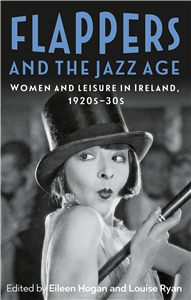
People's ordinary, everyday lives - and more specifically, their leisure activities - are often obscured within existing academic research on 1920s-30s Ireland. This book seeks to redress that neglect by exploring the relationship between identity, recreation, and culture both North and South of the border, with particular attention to women's lived experiences. Leisurely pursuits during this period were commonly overshadowed by religious influence and the nation-building projects in post-partition Ireland. Nevertheless, there existed alternative spaces, where people enjoyed dancing, singing, listening to music, shopping, glamour, reading magazines, swimming, travelling, and going to the cinema. Such activities reflected international trends beyond national borders. This book documents those activities and spaces through a feminist lens and intersectional analysis of gender, class, religion and rural/urban identities. It brings together multi-disciplinary perspectives including cultural studies, architecture, geography, fashion, and musicology. In so doing, we present new insights and advance understanding of this under-researched aspect of Irish history.
Trusted Partner
Trusted Partner


A hospital somewhere in remote South Sudan. A place where peoples’ lives are marked by extreme poverty, war, violence, the climate crisis and the daily struggle for survival. How does it feel to be human under these conditions? What moves someone to voluntarily go where nobody would want to? Andreas Lutz takes you on a journey to a project run by the humanitarian aid organization Médecins Sans Frontières in the northeast of South Sudan. Impressed by encounters with people who live under the precarious conditions of this crisis zone, he writes about his experiences as a caregiver and, among other things, about how healthcare provision works with very limited resources.
Trusted Partner
Trusted Partner
Trusted Partner

— True crime stories from the morgue — Famous deaths and autopsy stories resolved, such as Antarctic explorer Sir Ernest Shackleton and the case of Anne Greene, who survived her execution by hanging The post-mortem examination. A glimpse inside the interior of the human being. Many find the idea fascinating; for others it is creepy or even repugnant. There are still numerous myths and horror stories surrounding the autopsy, many of them associated with primal human fears such as that of being buried alive, which have existed since Antiquity. It is precisely for this reason that it is important to carry out the post-mortem examination with the utmost conscientiousness. Pathologist Roland Sedivy provides an exciting insight into his profession. Profound and with tremendous humour, he tells us about the early days of the autopsy, and shares with us some macabre and some mysterious cases.
Trusted Partner

For the uninitiated, the Irish District Court is a place of incomprehensible, organised chaos. This comprehensive account of the court's criminal proceedings, based on an original study which involved observing hundreds of cases, aims to demystify the mayhem and provide the reader with descriptions of language, participant discourse and procedure in the typical criminal case. In addition, the book captures a recent and important change in the District Court: the advent of the immigrant or the Limited-English-proficient (LEP) defendant. It traces the rise of these defendants and explores the issues involved in ensuring access to justice across languages. It also provides an original description of LEP defendants and interpreters in District Court proceedings, ultimately considering how they have altered the institution and how the characteristics of the District Court affect how limited English proficient defendants access justice at this level of the Irish courts system.
Trusted Partner

Borders and conflict in South Asia is the first full-length study of the 1947 drawing of the Indo-Pakistani boundary in Punjab. Using the Radcliffe commission as a window onto the decolonization and independence of India and Pakistan, and examining the competing interests, both internal and international, that influenced the actions of the various major players, it highlights British efforts to maintain a grip on India even as the decolonization process spun out of control. Drawing on extensive archival research in India, Pakistan, and Britain, combined with innovative use of cartographic sources, the book paints a vivid picture of both the partition process and the Radcliffe line's impact on Punjab. This book will be vital reading for scholars and students of colonialism, decolonization, partition, and borderlands studies, while providing anyone interested in South Asia's independence with a highly readable account of one of its most controversial episodes.
Trusted Partner
Trusted Partner
This volume, newly available in paperback, examines the role of the European Union in creating a system of governance involving the countries and regions of its new 'neighbourhood'. Enlargement has functioned as one of the EU's most effective foreign policy tools, yet the EU is rapidly approaching the limits of its capacity to accept new member states. It therefore must develop ways of extending and preserving the European zone of peace and stability that do not rely on the prospect of membership as a means of influencing the behaviour of non-member countries. A major step in this direction is the EU's new European Neighbourhood Policy (ENP). The ENP aims to create a ring of 'well-governed and friendly' countries along the EU's eastern, southeastern, and southern peripheries. This volume situates this policy in a broad, analytically-coherent framework, supported by a full range of ENP case studies, to explain whether the ENP represents a truly new approach to regional governance.
Trusted Partner
Trusted Partner
Trusted Partner

With an eye to recovering the experiences of those in frontier zones of contact, Savage Worlds maps a wide range of different encounters between Germans and non-European indigenous peoples in the age of high imperialism. Examining outbreaks of radical violence as well as instances of mutual co-operation, it examines the differing goals and experiences of German explorers, settlers, travellers, merchants, and academics, and how the variety of projects they undertook shaped their relationship with the indigenous peoples they encountered. Examining the multifaceted nature of German interactions with indigenous populations, this volume offers historians and anthropologists clear evidence of the complexity of the colonial frontier and frontier zone encounters. It poses the question of how far Germans were able to overcome their initial belief that, in leaving Europe, they were entering 'savage worlds'.
Trusted Partner
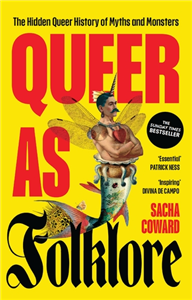
A celebration of queer history like you've never seen it before. Queer as folklore travels across centuries and continents to reveal the unsung heroes and villains of storytelling, magic and fantasy. Featuring images from archives, galleries and museums around the world, each chapter investigates the queer history of different mythic and folkloric characters, both old and new. Leaving no headstone unturned, Sacha Coward takes you on a wild ride through the night from ancient Greece to the main stage of RuPaul's Drag Race, visiting cross-dressing pirates, radical fairies and the graves of the 'queerly departed' along the way. Queer communities have often sought refuge in the shadows and created safe spaces in underworlds. But these forgotten narratives tell stories of resilience that deserve to be heard. Join any Pride march and you will see a glorious display of papier-mâché unicorn heads, drag queens in mermaid tails and more fairy wings than you can shake a trident at. These are not just accessories: they are queer symbols with historic roots. To truly understand who queer people are today, we must confront the twisted tales of the past.
Trusted Partner
Trusted Partner

This title is the first interdisciplinary book about geography and health that takes scientific methods and questions into account making it a great manual of international health geography research. The topics include: • spatial statistical analysis • mobility analysis in health research • GIS and mapping tools • cartographic visualization • health mapping • cancer epidemiology • morbidity • climate change and health – the example of Germany • global change and infectious diseases Target Group: Health scientists, geographers, doctors (epidemiologists)
Trusted Partner


Der kleine Diego ist gar nicht gerne im Waldkindergarten. Er möchte einfach nur nach Hause. Aber die 4 WWH haben eine fantastische Idee, wie sie ihm die Zeit im Wald schmackhaft machen können. Sie befüllen für Diego einen "Waldkalender" - für jede halbe Stunde, die er durchhält, bekommt er ein kleines waldiges Geschenk. Wie schnell da die Zeit vergeht!
Trusted Partner
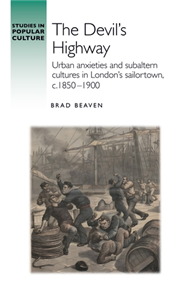
Between 1850 and 1900, Ratcliffe Highway was the pulse of maritime London. Sailors from every corner of the globe found solace, and sometimes trouble, in this bustling district. However, for social investigators, it was a place of fascination and fear as it harboured chaotic and dangerous 'exotic' communities. Sailortowns were transient, cosmopolitan and working class in character and provide us with an insight into class, race and gendered relations. They were contact zones of heightened interaction where multi-ethnic subaltern cultures met, sometimes negotiated and at other times clashed with one another. The book argues that despite these challenges sailortown was a distinctive and functional working-class community that was self-regulating and self-moderating. The book uncovers a robust sailortown community in which an urban-maritime culture shaped a sense of themselves and the traditions and conventions that governed subaltern behaviour in the district.