
Wilfrid Laurier University Press
Wilfrid Laurier University Press is a scholarly press based in Waterloo, Ontario.
View Rights Portal
Wilfrid Laurier University Press is a scholarly press based in Waterloo, Ontario.
View Rights Portal

Coline Serreau became famous in 1985 when her third film, Trois hommes et un couffin (Three Men and a Baby), the most successful French film of the 1980s. She was already known in France for her major contribution to feminist documentaries with the acclaimed Mais qu'est-ce qu'elles veulent?, a series of interviews with French women made between 1975 and 1977. She is now a key figure in French cinema and drama, with international hits including Romuald et Juliette (1989) and La Crise (1992). This appraisal of her work situates her films within the social, cultural and political context of France since May 1968, and assesses th emajor impact of the women's movement on French society and culture. Politics and sexual politics, two key aspects of Serreau's films and plays, are thoroughly examined. This book also considers the cultural influences of her work, and provides an overview of her films and filmic skills. Special attention is given to comedy, the cinematographic genre favoured by Serreau and the French audience, which is apprehended from a historical and gendered perspective. The clarity of the style and the wide-ranging analysis of Serreau's films and filming techniques make this book relevant both to students of film and film enthusiasts.
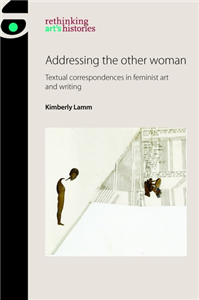
This book analyses how three artists - Adrian Piper, Nancy Spero and Mary Kelly - worked with the visual dimensions of language in the 1960s and 1970s. These artists used text and images of writing to challenge female stereotypes, addressing viewers and asking them to participate in the project of imagining women beyond familiar words and images of subordination. The book explores this dimension of their work through the concept of 'the other woman', a utopian wish to reach women and correspond with them across similarities and differences. To make the artwork's aspirations more concrete, it places the artists in correspondence with three writers - Angela Davis, Valerie Solanas, and Laura Mulvey - who also addressed the limited range of images through which women are allowed to become visible.
 Trusted Partner

Tears of laughter' examines the interactions of comedy and drama in three vital thematic strands of British cinema during the 1990s: comedies exploring issues of class, culture and community in British society, 'ethnic' comedy-dramas engaging with complex issues of identity and allegiance in modern Britain, and romantic comedies featuring characters searching (somewhat desperately or frantically) for a suitable and desirable long-term or short-term partner. Films to be discussed in detail include 'Brassed Off' (1996), 'The Full Monty' (1997), 'East is East' (1999), 'Four Weddings and a Funeral' (1994), 'Notting Hill' (1999) and a post-1990s romantic comedy, 'Love Actually' (2003). The study discusses these specific films and a range of other 1990s British comedy-drama films within the context of community-orientated Ealing comedy classics, contentious situation comedies treating race relations as both a laughing matter and a site of conflict ('Till Death Us Do Part' and 'Love Thy Neighbour'), and romantic comedies set and produced in Britain. It is aimed at film studies academics, students and film enthusiasts.
Trusted Partner
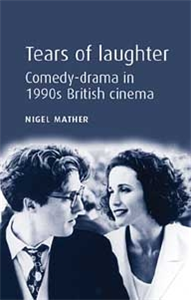
'Tears of laughter' examines the interactions of comedy and drama in three vital thematic strands of British cinema during the 1990s: comedies exploring issues of class, culture and community in British society, 'ethnic' comedy-dramas engaging with complex issues of identity and allegiance in modern Britain, and romantic comedies featuring characters searching (somewhat desperately or frantically) for a suitable and desirable long-term or short-term partner. Films to be discussed in detail include 'Brassed Off' (1996), 'The Full Monty' (1997), 'East is East' (1999), 'Four Weddings and a Funeral' (1994), 'Notting Hill' (1999) and a post-1990s romantic comedy, 'Love Actually' (2003). The study discusses these specific films and a range of other 1990s British comedy-drama films within the context of community-orientated Ealing comedy classics, contentious situation comedies treating race relations as both a laughing matter and a site of conflict ('Till Death Us Do Part' and 'Love Thy Neighbour'), and romantic comedies set and produced in Britain. It is aimed at film studies academics, students and film enthusiasts. ;
Trusted Partner
This innovative study of vision, gender and poetry traces Milton's mark on Shelley, Tennyson, Browning and Swinburne to show how the lyric male poet achieves vision at the cost of symbolic blindness and feminisation. Drawing together a wide range of concerns including the use of myth, the gender of the sublime, the lyric fragment, and the relation of pain to creativity, this book is a major re-evaluation of the male poet and the making of the English poetic tradition. The female sublime from Milton to Swinburne examines the feminisation of the post-Miltonic male poet, not through cultural history, but through a series of mythic or classical figures which include Philomela, Orpheus and Sappho. It recovers a disfiguring sublime imagined as an aggressive female force which feminises the male poet in an act that simultaneously deprives and energises him. This book will be required reading for anyone with a serious interest in the English poetic tradition and Victorian poetry. ;
Trusted Partner

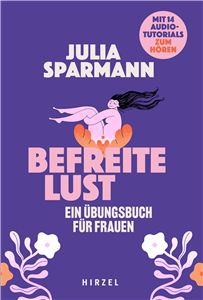
Far too often, everyday stress, pressure to perform or inner blockages spoil our enjoyment of the most beautiful thing in the world: our female sexuality. How can we free ourselves from firmly internalized taboos? What little tricks can we use to get our sex life back on track and keep the imagination in our head running successfully?Experienced sex therapist Julia Sparmann not only offers surprising solutions to typical problems such as loss of libido, communication difficulties or orgasm problems. She also encourages women to deal confidently with their sexuality and develop a positive body image.
Trusted Partner
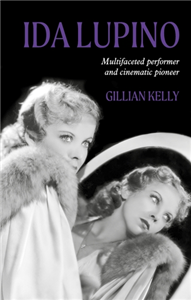
This book contributes to a welcome new wave focusing on the importance of female filmmakers, providing a reappraisal of Ida Lupino, a cinematic figure of significant importance. Given her ability to move between popular and independent cinemas and her status as both a Hollywood star and director/writer/producer of socially relevant films overlooked by the mainstream, Lupino is a particularly interesting case study. Employing a range of critical approaches, including feminist theory, auteur theory and critical theory, this book investigates key themes and motifs that developed across Lupino's unusual and unique career as one of the most significant female players in film history. Investigating her oeuvre as actress, director, writer and producer, it discusses Lupino as a complex and important filmmaker whose career, on both sides of the camera, requires substantially more critical attention than it has been awarded thus far.
Trusted Partner

Lust, a mortal sin? These times are over. In today's public perception, it is more likely for a boring sex life to be categorised as that. In statistical terms, people have never had as little sex with each other as they do today. And yet tips for a good sex life are to be found on every (digital) corner. Sex has mutated into a lifestyle product, and terms like 'fuckability' and 'MILF' trip lightly off our tongues. Henriette Hell takes a closer look at the thing about sex. She traces the history and genesis of 'sexual liberation', and sheds light on the 'cheating gene' and the #metoo debate. The author asks (and answers) the question of whether sex is becoming more and more antisocial and what actually still turns us on today. In doing so, she focuses on the former mortal sin of lust, which is inseparably linked to the systematic suppression of female lust (and its liberation).
Trusted Partner

This volume examines the films of Hispanic and Lusophone women filmmakers from the 1930s to the present day. It establishes productive connections between film practices across these geographical areas by identifying common areas of concern on the part of these female filmmakers. Focusing on aesthetic, theoretical and socio-historical analyses, it questions the manifest or latent gender and sexual politics that inform and structure the emerging cinematic productions by women filmmakers in Portugal, Spain, Latin America and the US. With a combination of scholars from the UK, the US, Spain and Latin America, the volume documents and interprets a fascinating corpus of films made by Hispanic and Lusophone women and proposes research strategies and methodologies that can expand our understanding of socio-cultural and psychic constructions of gender and sexual politics. An essential resource to rethink notions of gender identity and subjectivity, it is a unique contribution to Spanish and Latin American Film Studies and Film Studies.
Trusted Partner

This book marks an important new intervention into a vibrant area of scholarship, creating a dialogue between the histories of imperialism and of women and gender. By engaging critically with both traditional British imperial history and colonial discourse analysis, the essays demonstrate how feminist historians can play a central role in creating new histories of British imperialism. Chronologically, the focus is on the late eighteenth to early twentieth centuries, while geographically the essays range from the Caribbean to Australia and span India, Africa, Ireland and Britain itself. Topics explored include the question of female agency in imperial contexts, the relationships between feminism and nationalism, and questions of sexuality, masculinity and imperial power.
Trusted Partner


The book portrays men between the ages of 23 and 65, who work in caring professions in different areas, such as nursing homes, acute care clinics, home care, outpatient care and psychiatry, providing readers with an insight into their biographies. The protagonists recount in a candid way what motivated their career choice. Did they become aware of it through their environment or through personal experience? Which barriers did they have to overcome in the process of choosing a career? What do they think of their role as an exotic species in female-dominated teams? At which point did they begin to question the prevailing norms of gender identities?And what did that do for their own idea of masculinity? These portraits are enriched by five personal essays written by representatives from the Swiss healthcare sector who have been in the caring profession for a long time.
Trusted Partner
Epicene is now one of the most widely-studied of Johnson's plays. Brilliantly exploiting the Jacobean convention whereby boys played female roles, it satirises the newly fashionable and sexually ambiguous world of the West End of London, where courtly wit rubs shoulders with commercial values. This authoritative new edition, now in paperback, is based on a thorough re-examination of the earliest texts. The introduction analyses the play as originally written for the newly formed Children of the Queen's Revels, and performed at the little-known Whitefriars Theatre. Dutton discusses the composition of the play, which took place during a critical period in Jonson's life and career, when he was established as the principal writer of entertainments at the court. His relationships at this time, with ambitious wits such as John Donne, Sir Edward Herbert and the actor Nathan Field, are examined as models for the principal characters. This challengingly historicised text of Epicene will be essential reading for all serious students of early modern drama. ;
Trusted Partner
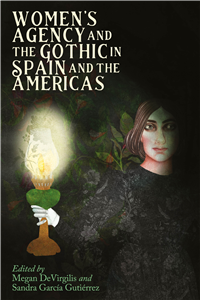
This volume has emerged to fulfill two main purposes: Primarily, to constitute the first collaborative work that traces the relationship between the Gothic and Women in Spain and the Americas, but also, to surpass the term 'Female Gothic,' coined by Ellen Moers, by transferring the focus towards women and their agency as writers, readers and characters. This volume functions as a manifesto per se to open new avenues into understanding how women have interacted with the Gothic between the nineteenth and twenty-first centuries in Spain and the Americas. The question, we determine, is not simply about identity, but rather about agency. We define women's agency as the total capacity of characters, authors and readers to act freely within a social framework in relation to gothic texts. In our exploration of authorship, we reject the claim that the Gothic is a simplistic literary genre, instead sustaining that the plasticity of the Gothic has enabled it to survive for centuries; by shifting from a genre to a mode, it has surpassed literary forms and invaded all kinds of media: from film to music and merchandise such as clothing and pop culture collectables, fostering an authentic goth fandom.
Trusted Partner

Popular culture is invariably a vehicle for the dominant ideas of its age. Never was this truer than in the late-nineteenth and early twentieth centuries, when it reflected the nationalist and imperialist ideologies current throughout Europe. It both reflects popular attitudes, ideas and preconceptions and it generates support for selected views and opinions. This book examines the various media through which nationalist ideas were conveyed in late-Victorian and Edwardian times: in the theatre, "ethnic" shows, juvenile literature, education and the iconography of popular art. It seeks to examine in detail the articulation and diffusion of imperialism in the field of juvenile literature by stressing its pervasiveness across boundaries of class, nation and gender. It analyses the production, distribution and marketing of imperially-charged juvenile fiction, stressing the significance of the Victorians' discovery of adolescence, technological advance and educational reforms as the context of the great expansion of such literature. An overview of the phenomenon of Robinson Crusoe follows, tracing the process of its transformation into a classic text of imperialism and imperial masculinity for boys. The imperial commitment took to the air in the form of the heroic airmen of inter-war fiction. The book highlights that athleticism, imperialism and militarism become enmeshed at the public schools. It also explores the promotion of imperialism and imperialist role models in fiction for girls, particularly Girl Guide stories.
Trusted Partner
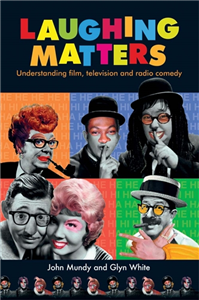
Laughing Matters takes an analytic approach to film, television and radio comedy and provides an accessible overview of its forms and contexts. The introduction explains the value of studying comedy, concisely outlines the approach taken and summarises the relevant theories. The subsequent chapters are divided into two parts. The first part examines the specific forms comedy has taken as a constant and key element in film and broadcast comedy from their origins to the present. The second part shows how the genre gravitates towards contentious issues in British and American culture as it finds humour in the boundaries of class, gender, sexuality, race and logic. The authors cover silent cinema comedy including Chaplin, Lloyd and Keaton, sound film comedies including the Marx Brothers and Laurel and Hardy, Romantic film comedy, radio, television situation and sketch comedy, comedy and genre (including parody and spoof), animations from cartoons to CGI, issues of gender and sexuality from drag comedy to queer reading, issues of taste and humour from Carry On to contemporary 'gross-out' , and issues of race and ethnicity including a case study of African-American screen comedy. Numerous opportunities for following up are highlighted and advice on further reading, writing academically about comedy and an extensive bibliography add to the value of this textbook. ;
Trusted Partner
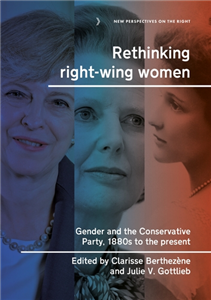
Rethinking Right-Wing Women explores the institutional structures for and the representations, mobilisation, and the political careers of women in the British Conservative Party since the late 19th century. From the Primrose League (est.1883) to Women2Win (est.2005), the party has exploited women's political commitment and their social power from the grass-roots to the heights of the establishment. Yet, although it is the party that extended the equal franchise, had the first woman MP to sit Parliament, and produced the first two women Prime Ministers, the UK Conservative Party has developed political roles for women that jar with feminist and progressive agendas. Conservative women have tended to be more concerned about the fulfilment of women's duties than the realisation of women's rights. This book tackles the ambivalences between women's politicisation and women's emancipation in the history of Britain's most electorally successful and hegemonic political party.
Trusted Partner
Trusted Partner
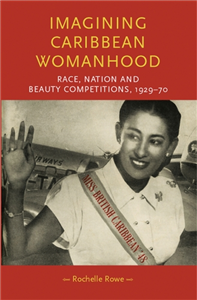
Over fifty years after Jamaican and Trinidadian independence, Imagining Caribbean womanhood examines the links between beauty and politics in the Anglophone Caribbean, providing a first cultural history of Caribbean beauty competitions, spanning from Kingston to London. It traces the origins and transformation of female beauty contests in the British Caribbean from 1929 to 1970, through the development of cultural nationalism, race-conscious politics and decolonisation. The beauty contest, a seemingly marginal phenomenon, is used to illuminate the persistence of racial supremacy, the advance of consumer culture and the negotiation of race and nation through the idealised performance of cultured, modern beauty. Modern Caribbean femininity was intended to be politically functional but also commercially viable and subtly eroticised.
Trusted Partner
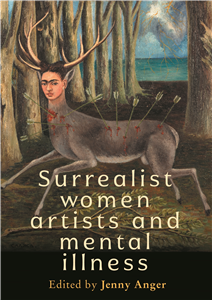
Female mental illness has been a prominent and complicated theme in surrealist cultural traditions, including the idealization of women with mental illness in works such as André Breton's Nadja (1928). Art historians have examined this tendency before, but to date there has been no comprehensive study of the lived reality of women surrealist artists with mental illness. How did women's experience and their work intersect with this romanticized vision? Was the masculine dream of feminized, "mad" genius prohibitive or productive for these women artists? After establishing the ideological field within which these women worked, the book turns to case studies of well-known and some lesser-known artists, including Ángeles Santos, Leonora Carrington, Dora Maar, Claude Cahun, Frida Kahlo, Meret Oppenheim, Sonja Sekula, and Unica Zürn. This collection of essays contains a wide range of responses, revealing surrealism's generative as well as restrictive force.
Trusted Partner

Gothic television is the first full length study of the Gothic released on British and US television. An historical account, the book combines detailed archival research with analyses of key programmes, from Mystery and Imagination and Dark Shadows, to The Woman in White and Twin Peaks, and uncovers an aspect of television drama history which has, until now, remained critically unexplored. While some have seen television as too literal or homely a medium to successfully present Gothic fictions, Gothic television argues that the genre, in its many guises, is, and has always been, well-suited to television as a domestic medium, given the genre's obsessions with haunted houses and troubled families. This book will be of interest to lecturers and students across a number of disciplines including television studies, Gothic studies, and adaptation studies, as well as to the general reader with an interest in the Gothic, and in the history of television drama.


