Your Search Results

      • Trusted Partner
        The Arts
        December 2024

        Addressing the other woman

        Textual correspondences in feminist art and writing

        by Kimberly Lamm

        This book analyses how three artists - Adrian Piper, Nancy Spero and Mary Kelly - worked with the visual dimensions of language in the 1960s and 1970s. These artists used text and images of writing to challenge female stereotypes, addressing viewers and asking them to participate in the project of imagining women beyond familiar words and images of subordination. The book explores this dimension of their work through the concept of 'the other woman', a utopian wish to reach women and correspond with them across similarities and differences. To make the artwork's aspirations more concrete, it places the artists in correspondence with three writers - Angela Davis, Valerie Solanas, and Laura Mulvey - who also addressed the limited range of images through which women are allowed to become visible.

      • Trusted Partner
        September 2022

        Lust

        Fuckability, orgasm gap and #metoo

        by Henriette Hell

        Lust, a mortal sin? These times are over. In today's public perception, it is more likely for a boring sex life to be categorised as that. In statistical terms, people have never had as little sex with each other as they do today. And yet tips for a good sex life are to be found on every (digital) corner. Sex has mutated into a lifestyle product, and terms like 'fuckability' and 'MILF' trip lightly off our tongues. Henriette Hell takes a closer look at the thing about sex. She traces the history and genesis of 'sexual liberation', and sheds light on the 'cheating gene' and the #metoo debate. The author asks (and answers) the question of whether sex is becoming more and more antisocial and what actually still turns us on today. In doing so, she focuses on the former mortal sin of lust, which is inseparably linked to the systematic suppression of female lust (and its liberation).

      • Trusted Partner
        The Arts
        January 2019

        Hispanic and Lusophone women filmmakers

        Theory, practice and difference

        by Parvati Nair, Julian Gutierrez-Albilla

        This volume examines the films of Hispanic and Lusophone women filmmakers from the 1930s to the present day. It establishes productive connections between film practices across these geographical areas by identifying common areas of concern on the part of these female filmmakers. Focusing on aesthetic, theoretical and socio-historical analyses, it questions the manifest or latent gender and sexual politics that inform and structure the emerging cinematic productions by women filmmakers in Portugal, Spain, Latin America and the US. With a combination of scholars from the UK, the US, Spain and Latin America, the volume documents and interprets a fascinating corpus of films made by Hispanic and Lusophone women and proposes research strategies and methodologies that can expand our understanding of socio-cultural and psychic constructions of gender and sexual politics. An essential resource to rethink notions of gender identity and subjectivity, it is a unique contribution to Spanish and Latin American Film Studies and Film Studies.

      • Trusted Partner
        Literature & Literary Studies
        April 2009

        The female sublime from Milton to Swinburne

        Bearing blindness

        by Catherine Maxwell

        This innovative study of vision, gender and poetry traces Milton's mark on Shelley, Tennyson, Browning and Swinburne to show how the lyric male poet achieves vision at the cost of symbolic blindness and feminisation. Drawing together a wide range of concerns including the use of myth, the gender of the sublime, the lyric fragment, and the relation of pain to creativity, this book is a major re-evaluation of the male poet and the making of the English poetic tradition. The female sublime from Milton to Swinburne examines the feminisation of the post-Miltonic male poet, not through cultural history, but through a series of mythic or classical figures which include Philomela, Orpheus and Sappho. It recovers a disfiguring sublime imagined as an aggressive female force which feminises the male poet in an act that simultaneously deprives and energises him. This book will be required reading for anyone with a serious interest in the English poetic tradition and Victorian poetry. ;

      • Trusted Partner
        The Arts
        July 2025

        Ida Lupino

        Multifaceted performer and cinematic pioneer

        by Gillian Kelly

        This book contributes to a welcome new wave focusing on the importance of female filmmakers, providing a reappraisal of Ida Lupino, a cinematic figure of significant importance. Given her ability to move between popular and independent cinemas and her status as both a Hollywood star and director/writer/producer of socially relevant films overlooked by the mainstream, Lupino is a particularly interesting case study. Employing a range of critical approaches, including feminist theory, auteur theory and critical theory, this book investigates key themes and motifs that developed across Lupino's unusual and unique career as one of the most significant female players in film history. Investigating her oeuvre as actress, director, writer and producer, it discusses Lupino as a complex and important filmmaker whose career, on both sides of the camera, requires substantially more critical attention than it has been awarded thus far.

      • Trusted Partner
        Literature & Literary Studies
        October 2017

        Botany, sexuality and women's writing, 1760–1830

        From modest shoot to forward plant

        by Sam George

        In this fascinating study, Samantha George explores the cultivation of the female mind and the feminised discourse of botanical literature in eighteenth-century Britain. In particular, she discusses British women's engagement with the Swedish botanist, Carl Linnaeus, and his unsettling discovery of plant sexuality. Previously ignored primary texts of an extraordinary nature are rescued from obscurity and assigned a proper place in the histories of science, eighteenth-century literature, and women's writing. The result is groundbreaking: the author explores nationality and sexuality debates in relation to botany and charts the appearance of a new literary stereotype, the sexually precocious female botanist. She uncovers an anonymous poem on Linnaean botany, handwritten in the eighteenth century, and subsequently traces the development of a new genre of women's writing - the botanical poem with scientific notes. The book is indispensable reading for all scholars of the eighteenth century, especially those interested in Romantic women's writing, or the relationship between literature and science.

      • Trusted Partner
        2018

        Rediscovering Sex

        From pressure to pleasure in bed - an excersise book for men

        by Michael Sztenc

        Penises are clever guys, sensitive and touchy. At least that’s what Michael Sztenc says. And as a sex and couples’ therapist who has worked on male sexuality for over 25 years, he should know. With practical exercises that have been tried and tested for years, he helps the men who come to him with their problems to develop a sense for their bodies and their own eroticism.

      • Trusted Partner
        Humanities & Social Sciences
        March 2017

        Engendering whiteness

        White women and colonialism in Barbados and North Carolina, 1627–1865

        by Cecily Jones

        Engendering whiteness represents a comparative analysis of the complex interweaving of race, gender, social class and sexuality in defining the contours of white women's lives in Barbados and North Carolina during the era of slavery. Despite their gendered subordination, their social location within the dominant white group afforded all white women a range of privileges. Hence, their whiteness, as much as their gender, shaped these women's social identities and material realities. Crucially, as the biological reproducers of whiteness, and hence the symbolic and literal embodiment and bearers of the state of freedom, they were critical to the maintenance and reproduction of the cultural boundaries of 'whiteness', and consequently the subjects of patriarchal measures to limit and control their social and sexual freedoms. Engendering whiteness draws on a wide variety of sources including property deeds, wills, court transcripts, and interrogates the ways in which white women could be simultaneously socially positioned within plantation societies as both agents and as victims. It also reveals the strategies deployed by elite and poor white women in these societies to resist their gendered subordination, to challenge the ideological and social constraints that sought to restrict their lives to the private domestic sphere, to protect the limited rights afforded to them, to secure independent livelihoods, and to create meaningful existences. A fascinating study that with be welcomed by historians of imperialism as well as scholars of gender history and women's studies.

      • Trusted Partner
        The Arts
        January 2019

        From Perversion to Purity

        The stardom of Catherine Deneuve

        by Lisa Downing, Sue Harris

        Catherine Deneuve is indisputably one of the world's most celebrated actresses, both in her native France and throughout the world. Her career has spanned five decades during which she has worked with the most significant of French auteurs, as well as forging partnerships with international directors such as Bunuel and Polanski. The Deneuve star persona has attained such iconic status that it can now symbolise the very essence of French womanhood and civic identity. In this wide-ranging and authoritative collection of essays by a selection of international film academics and writers, the Deneuve persona is scrutinised and illuminated. Beyond the glamorous iconographic status of Yves Saint Laurent's muse, and the epitome of sexual inviolability, Deneuve's status as actress is foregrounded. The book will be essential reading for students and lecturers in star studies.

      • Trusted Partner
        Literature & Literary Studies
        September 2008

        Epicene, or The Silent Woman

        by Ben Jonson

        by Richard Dutton

        Epicene is now one of the most widely-studied of Johnson's plays. Brilliantly exploiting the Jacobean convention whereby boys played female roles, it satirises the newly fashionable and sexually ambiguous world of the West End of London, where courtly wit rubs shoulders with commercial values. This authoritative new edition, now in paperback, is based on a thorough re-examination of the earliest texts. The introduction analyses the play as originally written for the newly formed Children of the Queen's Revels, and performed at the little-known Whitefriars Theatre. Dutton discusses the composition of the play, which took place during a critical period in Jonson's life and career, when he was established as the principal writer of entertainments at the court. His relationships at this time, with ambitious wits such as John Donne, Sir Edward Herbert and the actor Nathan Field, are examined as models for the principal characters. This challengingly historicised text of Epicene will be essential reading for all serious students of early modern drama. ;

      • Trusted Partner
        Humanities & Social Sciences
        June 2025

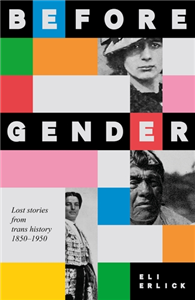
        Before Gender

        Lost stories from trans history 1850-1950

        by Eli Erlick

        Discover the trailblazing lives of thirty trans people who will radically change everything you've been told about transgender history. Highlighting influential individuals from 1850 to 1950 who are all but unknown today, Eli Erlick shares thirty remarkable stories from romance to rebellion and mystery to murder. These narratives chronicle the grit, joy and survival of trans people long before gender became an everyday term. Organised into four parts, paralleling today's controversies over gender identity - kids, activists, workers and athletes - Before Gender introduces figures whose forgotten stories transform the discussion. These ground-breaking histories include two of the first teens to access gender-affirming medical treatment, a countess who instigated an LGBTQ+ riot forty years before Stonewall and the greatest female billiards player of the 1910s. Bold and visionary, Erlick's debut uncovers these lost stories from the depths of the archives to narrate trans lives in a way that has never been attempted before.

      • Trusted Partner
        Literature & Literary Studies
        March 2017

        Imperialism and juvenile literature

        by Jeffrey Richards

        Popular culture is invariably a vehicle for the dominant ideas of its age. Never was this truer than in the late-nineteenth and early twentieth centuries, when it reflected the nationalist and imperialist ideologies current throughout Europe. It both reflects popular attitudes, ideas and preconceptions and it generates support for selected views and opinions. This book examines the various media through which nationalist ideas were conveyed in late-Victorian and Edwardian times: in the theatre, "ethnic" shows, juvenile literature, education and the iconography of popular art. It seeks to examine in detail the articulation and diffusion of imperialism in the field of juvenile literature by stressing its pervasiveness across boundaries of class, nation and gender. It analyses the production, distribution and marketing of imperially-charged juvenile fiction, stressing the significance of the Victorians' discovery of adolescence, technological advance and educational reforms as the context of the great expansion of such literature. An overview of the phenomenon of Robinson Crusoe follows, tracing the process of its transformation into a classic text of imperialism and imperial masculinity for boys. The imperial commitment took to the air in the form of the heroic airmen of inter-war fiction. The book highlights that athleticism, imperialism and militarism become enmeshed at the public schools. It also explores the promotion of imperialism and imperialist role models in fiction for girls, particularly Girl Guide stories.

      • Trusted Partner
        Humanities & Social Sciences
        May 2020

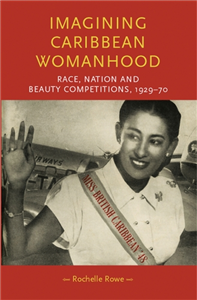
        Imagining Caribbean womanhood

        Race, nation and beauty competitions, 1929–70

        by Pamela Sharpe, Rochelle Rowe, Penny Summerfield, Lynn Abrams, Cordelia Beattie

        Over fifty years after Jamaican and Trinidadian independence, Imagining Caribbean womanhood examines the links between beauty and politics in the Anglophone Caribbean, providing a first cultural history of Caribbean beauty competitions, spanning from Kingston to London. It traces the origins and transformation of female beauty contests in the British Caribbean from 1929 to 1970, through the development of cultural nationalism, race-conscious politics and decolonisation. The beauty contest, a seemingly marginal phenomenon, is used to illuminate the persistence of racial supremacy, the advance of consumer culture and the negotiation of race and nation through the idealised performance of cultured, modern beauty. Modern Caribbean femininity was intended to be politically functional but also commercially viable and subtly eroticised.

      • Trusted Partner
        Humanities & Social Sciences
        March 2025

        Straight nation

        Heteronormativity and other exigencies of postcolonial nationalism

        by Pavan Mano

        In Straight Nation, Pavan Mano reveals the logic of straightness that sits at the heart of postcolonial nationalism in Singapore. Mano rejects the romantic notion of the nation as a haven of belonging, showing it to be a relentless force that is allied with heteronormativity to create a host of minoritized and xenologized figures. Through meticulous exploration and close reading of a swathe of texts, Mano unveils the instrumental role of sexuality in structuring the national imaginary. The book adroitly demonstrates how queerness is rendered foreign in postcolonial Singapore and functions alongside technologies of "race", gender, and class. A provocative critique of narrow contemporary identity politics and its concomitant stymying of a more ambitious political critique, Straight Nation sets out an argument that moves beyond the negativity of traditional critique into a space of (re)thinking, (re)building and (re)imagining.

      • Trusted Partner
        Nursing

        On Female Territory

        Portraits of Male Care Workers

        by Sabine Meisel / Edita Truninger

        The book portrays men between the ages of 23 and 65, who work in caring professions in different areas, such as nursing homes, acute care clinics, home care, outpatient care and psychiatry, providing readers with an insight into their biographies. The protagonists recount in a candid way what motivated their career choice. Did they become aware of it through their environment or through personal experience? Which barriers did they have to overcome in the process of choosing a career? What do they think of their role as an exotic species in female-dominated teams? At which point did they begin to question the prevailing norms of gender identities?And what did that do for their own idea of masculinity? These portraits are enriched by five personal essays written by representatives from the Swiss healthcare sector who have been in the caring profession for a long time.

      • Trusted Partner
      • Trusted Partner
        Humanities & Social Sciences
        January 1998

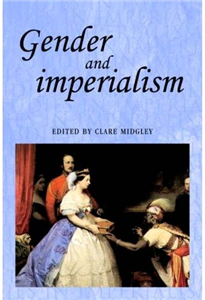
        Gender and imperialism

        by Clare Midgley, Andrew Thompson, John Mackenzie

        This book marks an important new intervention into a vibrant area of scholarship, creating a dialogue between the histories of imperialism and of women and gender. By engaging critically with both traditional British imperial history and colonial discourse analysis, the essays demonstrate how feminist historians can play a central role in creating new histories of British imperialism. Chronologically, the focus is on the late eighteenth to early twentieth centuries, while geographically the essays range from the Caribbean to Australia and span India, Africa, Ireland and Britain itself. Topics explored include the question of female agency in imperial contexts, the relationships between feminism and nationalism, and questions of sexuality, masculinity and imperial power. ;

      • Trusted Partner
        The Arts
        May 2024

        The Family of Love

        By Lording Barry

        by Sophie Tomlinson

        The Family of Love charts a successful love intrigue between the cash-strapped Gerardine, and Maria, the sequestered niece of the mercenary Doctor Glister. Their romance unfolds against the dissection of two citizen marriages, the Glisters' and the Purges'. Mistress Purge attends Familist meetings independently, arousing her husband's suspicions about her marital fidelity. Two libertines, Lipsalve and Gudgeon, go in search of sex and solubility (freedom from constipation), receiving more than they bargain for in respect of the latter. This scholarly edition of Family of Love marks the first occasion on which the comedy is attributed to Lording Barry in print. It brings together literary and historical discussion with a thorough analysis of the play's disputed authorship. Tomlinson highlights Barry's rich vein of burlesque humour in a comedy that combines magic, a trunk, and a mock-court session with vigorous colloquial language.

      Subscribe to our

      newsletter