
EDGE Science Fiction and Fantasy Publishing
Livres Canada Books
View Rights Portal
 Trusted Partner

Chile is Guest of Honour at Frankfurter Buchmesse 2027. At the Chilean organiser’s invitation, an open call was conducted among Chilean publishers to find out which titles they would recommend for translation. This is the result. The Chilean Ministry of Foreign Affairs supports the translation and production of Chilean books through the programmeTranslating Chile. Next call for all languages 2026-2027: November 2025 More information:https://www.dirac.gob.cl/open-call-2026-for-translating-chilean-literature
View Rights Portal

Provides an introduction to the products and context of the new Australian film industry which arose toward the end of the 1960s. Traces the development of Australian film, in terms of prominent directors and stars, consistent themes, styles and evolving genres. The evolution of the film genres peculiar to Australia, and the adaptation of conventional Hollywood forms (such as the musical and the road movie) are examined in detail through textual readings of landmark films. Films and trends discussed include: the period film and Picnic at Hanging Rock; the Gothic film and the Mad Max trilogy; camp and kitsch comedy and the Adventures of Pricilla, Queen of the Desert. The key issue of the revival (the definition, representation and propagation of a national image) is woven through analysis of the new Australian cinema.

This volume is the first to examine, in either French or English, the films of Jean-Jacques Beineix, often seen as the best example of the 1980s cinéma du look, with cult films, such as Diva and Betty Blue (37º 2 le matin) .. After an introduction which places Beineix in the context of the 1980s and the arguments centering on a postmodern cinema, the volume devotes a chapter to each of Beineix's feature films, including the film which marked his return to feature film making after a break of a decade, Mortel Transfert (2001). Prefaced by an excellent foreword by the director himself, which includes a broad condemnation of French critics. Includes many illustrations direct from the director's own collection, complementing the interviews Powrie made with him and his collaborators.
Trusted Partner

Claire Denis is one of France's most acclaimed and original filmmakers. Since her remarkable debut success with 'Chocolat' (1986), she has produced an impressive series of features which have been intriguing, visually striking, and often highly controversial (including 'Beau Travail' (2000) and 'Trouble Every Day' (2001)). Beugnet provides a thematic and stylistic framework within which to consider Denis' work, as well as a comprehensive analysis of individual films. She highlights the resonance of Denis' films in relation to ongoing debates about French national identity and culture, and issues of postcolonial identity, alienation and transgression, as well as examining their exploration of the interface between sexuality, desire and sensuality. This is an essential introduction to Denis, and a sophisticated and illuminating study of her work to date.
Trusted Partner

This fascinating collection looks at the career and films of Luc Besson, one of the most acclaimed figures in international cinema. Contributions have been assembled from all over the world, and their different approaches reflect this geographical diversity. Films covered range from Besson's first feature, La Dernier Combat, to the international blockbusters The Fifth Element and Joan of Arc. The essays range from looking at costume design to musical scores, and the final chapter offers a transcript of a previously unpublished interview with the man himself. He is the only French director to have crossed over successfully during the 1990s into the blockbuster spectacular we associate with Hollywood cinema and yet this is only the second book in English on this major international director. The films of Luc Besson will make fascinating reading for anyone interested in the career and films of the 'master of spectacle'.
Trusted Partner

This volume is the first English-language collection exclusively dedicated to the study of genre in relation to Spanish cinema. Providing a variety of critical perspectives, the collection gives the reader a thorough account of the relationship between Spanish cinema and genre, drawing on case studies of several of the most remarkable Spanish films in recent years. The book analyses the significant changes in the aesthetics, production and reception of Spanish film from 1990 onwards. It brings together European and North American scholars to establish a critical dialogue on the topics under discussion, while providing multiple perspectives on the concepts of national cinemas and genre theory. In recent years film scholarship has attempted to negotiate the tension between the nationally specific and the internationally ubiquitous, discussing how globalisation has influenced film making and surrounding cultural practice. These broader social concerns have prompted scholars to emphasise a redefinition of national cinemas beyond strict national boundaries and to pay attention to the transnational character of any national site of film production and reception. This collection provides a thorough investigation of contemporary Spanish cinema within a transnational framework, by positing cinematic genres as the meeting spaces between a variety of diverse forces that necessarily operate within but also across territorial spaces. Paying close attention to the specifics of the Spanish cinematic and social panorama, the essays investigate the transnational economic, cultural and aesthetic forces at play in shaping Spanish film genres today.
Trusted Partner

This volume is the first English-language collection exclusively dedicated to the study of genre in relation to Spanish cinema. Providing a variety of critical perspectives, the collection gives the reader a thorough account of the relationship between Spanish cinema and genre, drawing on case studies of several of the most remarkable Spanish films in recent years. The book analyses the significant changes in the aesthetics, production and reception of Spanish film from 1990 onwards. It brings together European and North American scholars to establish a critical dialogue on the topics under discussion, while providing multiple perspectives on the concepts of national cinemas and genre theory. In recent years film scholarship has attempted to negotiate the tension between the nationally specific and the internationally ubiquitous, discussing how globalisation has influenced film making and surrounding cultural practice. These broader social concerns have prompted scholars to emphasise a redefinition of national cinemas beyond strict national boundaries and to pay attention to the transnational character of any national site of film production and reception. This collection provides a thorough investigation of contemporary Spanish cinema within a transnational framework, by positing cinematic genres as the meeting spaces between a variety of diverse forces that necessarily operate within but also across territorial spaces. Paying close attention to the specifics of the Spanish cinematic and social panorama, the essays investigate the transnational economic, cultural and aesthetic forces at play in shaping Spanish film genres today.
Trusted Partner

An incidental pleasure of watching a film is what it tells us about the society in which it is made. Using a sociological model, The British working class in postwar film looks at how working-class people were portrayed in British feature films in the decade after the Second World War. Though some of the films examined are well known, others have been forgotten and deserve reassessment. Original statistical data is used to assess the popularity of the films with audiences. With its interdisciplinary approach and the avoidance of jargon, this book seeks to broaden the approach to film studies. Students of media and cultural studies are introduced to the skills of other disciplines, while sociologists and historians are encouraged to consider the value of film evidence in their own fields. This work should appeal to all readers interested in social history and in how cinema and society works.
Trusted Partner

Alain Resnais, director of 'Hiroshima mon amour' (1959) and 'L'Annee derniere a Marienbad' (1961), has transformed the representation of memory, fantasy and desire in modern cinema. This illuminating introduction to his work, extending from his earliest documentaries to the musical films of the last decade, traces the evolving patterns of his filmmaking, its changing reflections on mortality, guilt, chance and human doubt. Exploring questions of the time-image, of trauma, of the senses, this volume sets Resnais' films in the context of important current debates in film theory, and provides a concise account of critical discussions of his work in France and beyond. Yet it also offers a highly personal and detailed engagement with individual images and scenes in Resnais' films. A passionate and partial defence of Resnais' work, old and new, this volume stands apart in its attention to the more tangible and moving pleasures of his films, their pathos, rigour and visual beauty.
Trusted Partner

Medieval film explores theoretical questions about the ideological, artistic, emotional and financial investments inhering in cinematic renditions of the medieval period. What does it mean to create and watch a 'medieval film'? What is a medieval film and why are they successful? This is the first work that attempts to answer these questions, drawing, for instance, on film theory, postcolonial theory, cultural studies and the growing body of work on medievalism. Contributors investigate British, German, Italian, Australian, French, Swedish and American film, exploring topics such translation, temporality, film noir, framing and period film - and find the medieval lurking in inexpected corners. In addition it provides in-depth studies of individual films from different countries including The Birth of a Nation to Nosferatu, and Robin Hood: Prince of Thieves. Medieval Film will be of interest to medievalists working in disciplines including literature, history, to scholars working on film and in cultural studies. It will also be of interest to undergraduates, postgraduates and to an informed enthusiast in film or/and medieval culture.
Trusted Partner

Medieval film explores theoretical questions about the ideological, artistic, emotional and financial investments inhering in cinematic renditions of the medieval period. What does it mean to create and watch a 'medieval film'? What is a medieval film and why are they successful? This is the first work that attempts to answer these questions, drawing, for instance, on film theory, postcolonial theory, cultural studies and the growing body of work on medievalism. Contributors investigate British, German, Italian, Australian, French, Swedish and American film, exploring topics such translation, temporality, film noir, framing and period film - and find the medieval lurking in unexpected corners. In addition it provides in-depth studies of individual films from different countries including The Birth of a Nation to Nosferatu, and Robin Hood: Prince of Thieves. Medieval film will be of interest to medievalists working in disciplines including literature, history, art history, to scholars working on film and in cultural studies. It will also be of interest to undergraduates, postgraduates and to an informed enthusiast in film or/and medieval culture.
Trusted Partner

This collection offers a new lens through which to examine Spain's cinema production following the isolation imposed by the Franco regime. The seventeen key films analysed in the volume span a period of 35 years that have been crucial in the development of Spain, Spanish democracy and Spanish cinema. They encompass different genres (horror, thriller, melodrama, social realism, documentary), both popular (Los abrazos rotos/Broken Embraces, Vicky Cristina Barcelona) and more select art house fare (En la ciudad de Sylvia/In the City of Sylvia, El espíritu de la colmena/Spirit of the Beehive) and are made in English (as both first and second language), Basque, Castilian, Catalan and French. Offering an expanded understanding of 'national' cinemas, the volume explores key works by Guillermo del Toro and Lucrecia Martel alongside an examination of the ways in which established auteurs (Almodóvar, José Garci, Carlos Saura) and younger generations of filmmakers (Cesc Gay, Amenábar, Bollaín) have harnessed cinematic language towards a commentary on the nation-state. The result is a bold new study of the ways in which film has created new prisms that have determined how Spain is positioned in the global marketplace.
Trusted Partner

The films of Bigas Luna is the first comprehensive English-language study of the complete filmography of Spanish filmmaker Bigas Luna, spanning from Tatuaje (1976) to DiDi Hollywood (2010). Engaging with theoretical frameworks such as haptic cinema, erotic cinema, auteur theory, and studies of gender, sexuality, and national identity, the book situates close readings of Bigas Luna's films within broader discussions of production and marketing. Fouz Hernández draws on extensive archival research-including original screenplays, press materials, and interviews with industry professionals-while engaging with previous scholarship in multiple languages. Structured into five thematic chapters, the book explores key concerns in Bigas Luna's work, including genre, gender representation, Iberian and Mediterranean identities, and meta-cinematic narratives. It can be read as a cohesive study of his oeuvre or as a reference for specific films.
Trusted Partner

Contemporary French cinema is an essential introduction to popular French film of the last 35 years. It charts recent developments in all genres of French cinema with analyses of over 120 movies, from Les Valseuses to Caché. Reflecting the diversity of French film production since the New Wave, this clear and perceptive study includes chapters on the heritage film, the thriller and the war movie, alongside the 'cinéma du look', representations of sexuality, comedies, the work of women film makers and le jeune cinéma. Each chapter introduces the public reception and critical debates surrounding a given genre, interwoven with detailed accounts of relevant films. Confirmed as a major contribution to both Film Studies and French Studies, this book is a fascinating volume for students and fans of French film alike.
Trusted Partner

Contemporary French cinema is an essential introduction to popular French film of the last 35 years. It charts recent developments in all genres of French cinema with analyses of over 120 movies, from Les Valseuses to Caché. Reflecting the diversity of French film production since the New Wave, this clear and perceptive study includes chapters on the heritage film, the thriller and the war movie, alongside the 'cinéma du look', representations of sexuality, comedies, the work of women film makers and le jeune cinéma. Each chapter introduces the public reception and critical debates surrounding a given genre, interwoven with detailed accounts of relevant films. Confirmed as a major contribution to both Film Studies and French Studies, this book is a fascinating volume for students and fans of French film alike.
Trusted Partner
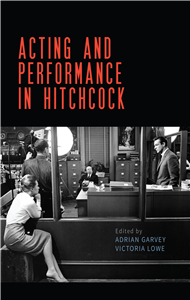
Hitchcock's professed disdain for actors is belied by the extraordinary range and depth of performances featured in his films. It might even be argued that many stars gave their richest and most complex performances in his work. Hitchcock's films are also imbued with the theme of performance, as when his fugitive men and errant women assume fragile new identities and move between roles. Actors and other performers also often feature as characters. However, the exhaustive academic literature on Hitchcock has to date produced surprisingly little work about acting and performance in his films. The collection includes contributions from a range of leading scholars on Hitchcock, performance, stardom, and British Cinema, including Charles Barr, David Greven, Mark Glancy, Lucy Bolton, Lawrence Napper and Michael Williams, and an interview with leading composers/accompanists Neil Brand and Stephen Horne on scoring performance in Silent Hitchcock.
Trusted Partner

Looking at contemporary film and television, this book explores how popular genres frame our understanding of on-screen performance. Previous studies of screen performance have tended to fix upon star actors, directors, or programme makers, or they have concentrated upon particular training and acting styles. Moving outside of these confines, this book provides a truly interdisciplinary account of performance in film and television and examines a much neglected area in our understanding of how popular genres and performance intersect on screen. Each chapter concentrates upon a particular genre or draws upon generic case studies in examining the significance of screen performance. Individual chapters examine contemporary film noir, horror, the biopic, drama-documentary, the western, science fiction, comedy performance in 'spoof news' programmes and the television 'sit com' and popular Bollywood films.
Trusted Partner

European Film Noir is the first book to bring together specialist discussions of film noir in specific European national cinemas. Written by leading scholars, this groundbreaking study provides an authoritative understanding of an important aspect of European cinema and of film noir itself, for too long considered as a solely American form. The Introduction reviews the problems of defining film noir, its key characteristics and discusses its significance to the development of European film, the relationship of specific national films noirs to each other, to American noir and to historical and social change. Eight chapters then discuss film noir in France, Germany, Britain and Spain, analysing both earlier developments and the evolution of neo-noir through to the present. A further chapter explores film noir in Italian cinema where its presence is not so well defined. Each piece provides a critical overview of the most significant films in relation to their industrial and social contexts. European Film Noir is an important contribution to the study of European cinema that will have a broad appeal to undergraduates, cinéastes, film teachers and researchers.
Trusted Partner

A journey to the Italian cinema that overturns established views and opens up new perspectives and interpretations. Its itinerary is organized in four stages. The first is an analysis of the theories of Cesare Zavattini on neorealism which overturns widely accepted positions both on Zavattini and on neorealism. The second confronts a key film of the post-war Italian cinema, Roberto Rossellini's Paisà, by examining the nature of its realism. The third is dedicated to Luchino Visconti: to questions of the use of language exemplified in his La terra trema, the use of settings, costume and light as agents of meaning in his Il Gattopardo and Vaghe stelle dell'Orsa. The final voyage of the film is to the physical and symbolic construction of heaven and earth in the work of Pasolini. Particular attention is given to the representation of the body in his last four films: the grotesque and mythical bodies in popular tradition in his Trilogia di vita and the tortured bodies destroyed by the mass media in Salò.
Trusted Partner
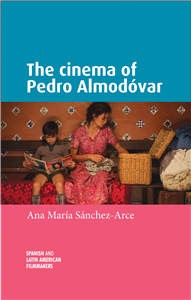
This book offers a comprehensive film-by-film analysis of Spain's most famous living director, Pedro Almodóvar. It shows how Almodóvar's films draw on various national cinemas and genres, including Spanish cinema of the dictatorship, European art cinema, Hollywood melodrama and film noir. It also argues that Almodóvar's work is a form of social critique, his films consistently engaging with and challenging stereotypes about traditional and contemporary Spain in order to address Spain's traumatic historical past and how it continues to inform the present. Drawing on scholarship in both English and Spanish, the book will be of interest to undergraduate and postgraduate students of film studies and Hispanic studies, scholars of contemporary cinema and general readers with a passion for the films of Pedro Almodóvar.
Trusted Partner

'Realist film theory and cinema' embraces studies of cinematic realism and 19th century tradition, the realist film theories of Lukács, Grierson, Bazin and Kracauer, and the relationship of realist film theory to the general field of film theory and philosophy. This is the first book to attempt a rigorous and systematic application of realist film theory to the analysis of particular films. The book suggests new ways forward for a new series of studies in cinematic realism, and for a new form of film theory based on realism. It stresses the importance of the question of realism both in film studies and in contemporary life. Aitken's work will be of interest to scholars and advanced students of film studies, literary studies, media studies, cultural studies and philosophy.

