Your Search Results

      • Sounds True

        Sounds True was founded in 1985 by Tami Simon with a clear mission: to disseminate spiritual wisdom. Since starting out as a project with one woman and her tape recorder, we have grown into a multimedia publishing company with more than 110 employees, a library of more than 3000 titles featuring some of the leading teachers and visionaries of our time, and an ever-expanding family of customers from across the world. From bestselling authors to new voices in spiritual wisdom, our products represent a variety of popular topics, including meditation, mindfulness, yoga, shamanism, psychology, health and healing, along with a line of children’s books.

        View Rights Portal
      • Trusted Partner
        September 2009

        Sozialforschung

        Methoden und Anwendungen: Ein Überblick für die BA-Studiengänge

        by Flick, Uwe

      • Trusted Partner
      • Trusted Partner
        April 2006

        Qualitative Evaluationsforschung

        Konzepte, Methoden, Umsetzung

        by Herausgegeben von Flick, Uwe

      • Trusted Partner
        January 1995

        Psychologie des Sozialen

        Repräsentationen in Wissen und Sprache

        by Herausgegeben von Flick, Uwe

      • Trusted Partner
      • Trusted Partner
        October 2000

        Qualitative Forschung

        Ein Handbuch

        by Herausgegeben von Flick, Uwe; Herausgegeben von Kardorff, Ernst von; Herausgegeben von Steinke, Ines; Beiträge von Flick, Uwe; Beiträge von Kardorff, Ernst von; Beiträge von Steinke, Ines; Beiträge von Hildenbrand, Bruno; Beiträge von Willems, Herbert; Beiträge von Bergmann, Jörg R.; Beiträge von Lindner, Rolf; Beiträge von Nadig, Maya; Beiträge von Reichmayr, Johannes; Beiträge von Wolff, Stephan; Beiträge von Lincoln, Ivonna S.; Beiträge von Hitzler, Ronald; Beiträge von Eberle, Thomas S.; Beiträge von Denzin, Norman K.; Beiträge von Soeffner, Hans-Georg; Beiträge von Marotzki, Winfried; Beiträge von Bude, Heinz; Beiträge von Honer, Anne; Beiträge von Winter, Rainer; Beiträge von Gildemeister, Regine; Beiträge von Rosenstiel, Lutz von; Beiträge von Meinefeld, Werner; Beiträge von Reichertz, Jo; Beiträge von Merkens, Hans; Beiträge von Kelle, Udo; Beiträge von Erzberger, Christian; Beiträge von Hopf, Christel; Beiträge von Hermanns, Harry; Beiträge von Bohnsack, Ralf; Beiträge von Lüders, Christian; Beiträge von Harper, Douglas; Beiträge von Kowal, Sabine; Beiträge von O'Connell, Daniel C.; Beiträge von Schmidt, Christiane; Beiträge von Rosenthal, Gabriele; Beiträge von Fischer-Rosenthal, Wolfram; Beiträge von Mayring, Philipp; Beiträge von Böhm, Andreas; Beiträge von Knoblauch, Hubert; Beiträge von Luckmann, Thomas; Beiträge von Parker, Ian; Beiträge von König, Hans-Dieter; Beiträge von Matt, Eduard; Beiträge von Bauer, Martin; Beiträge von Métraux, Alexandre; Beiträge von Ohlbrecht, Heike

      • Trusted Partner
        The Arts
        January 2019

        Medieval film

        by Anke Bernau, Bettina Bildhauer

        Medieval film explores theoretical questions about the ideological, artistic, emotional and financial investments inhering in cinematic renditions of the medieval period. What does it mean to create and watch a 'medieval film'? What is a medieval film and why are they successful? This is the first work that attempts to answer these questions, drawing, for instance, on film theory, postcolonial theory, cultural studies and the growing body of work on medievalism. Contributors investigate British, German, Italian, Australian, French, Swedish and American film, exploring topics such translation, temporality, film noir, framing and period film - and find the medieval lurking in unexpected corners. In addition it provides in-depth studies of individual films from different countries including The Birth of a Nation to Nosferatu, and Robin Hood: Prince of Thieves. Medieval film will be of interest to medievalists working in disciplines including literature, history, art history, to scholars working on film and in cultural studies. It will also be of interest to undergraduates, postgraduates and to an informed enthusiast in film or/and medieval culture.

      • Trusted Partner
        The Arts
        June 2021

        Medieval film

        by Anke Bernau, Bettina Bildhauer

        Medieval film explores theoretical questions about the ideological, artistic, emotional and financial investments inhering in cinematic renditions of the medieval period. What does it mean to create and watch a 'medieval film'? What is a medieval film and why are they successful? This is the first work that attempts to answer these questions, drawing, for instance, on film theory, postcolonial theory, cultural studies and the growing body of work on medievalism. Contributors investigate British, German, Italian, Australian, French, Swedish and American film, exploring topics such translation, temporality, film noir, framing and period film - and find the medieval lurking in inexpected corners. In addition it provides in-depth studies of individual films from different countries including The Birth of a Nation to Nosferatu, and Robin Hood: Prince of Thieves. Medieval Film will be of interest to medievalists working in disciplines including literature, history, to scholars working on film and in cultural studies. It will also be of interest to undergraduates, postgraduates and to an informed enthusiast in film or/and medieval culture.

      • Trusted Partner
        The Arts
        January 2019

        Realist film theory and cinema

        The nineteenth-century Lukácsian and intuitionist realist traditions

        by Ian Aitken

        'Realist film theory and cinema' embraces studies of cinematic realism and 19th century tradition, the realist film theories of Lukács, Grierson, Bazin and Kracauer, and the relationship of realist film theory to the general field of film theory and philosophy. This is the first book to attempt a rigorous and systematic application of realist film theory to the analysis of particular films. The book suggests new ways forward for a new series of studies in cinematic realism, and for a new form of film theory based on realism. It stresses the importance of the question of realism both in film studies and in contemporary life. Aitken's work will be of interest to scholars and advanced students of film studies, literary studies, media studies, cultural studies and philosophy.

      • Trusted Partner
        The Arts
        June 2021

        Lukácsian film theory and cinema

        A study of Georg Lukács' writing on film 1913–1971

        by Ian Aitken

        Lukácsian film theory and cinema explores Georg Lukács' writings on film. The Hungarian Marxist critic Georg Lukács is primarily known as a literary theorist, but he also wrote extensively on the cinema. These writings have remained little known in the English-speaking world because the great majority of them have never actually been translated into English - until now. Aitken has gathered together the most important essays and the translations appear here, often for the first time. This book thus makes a decisive contribution to understandings of Lukács within the field of film studies, and, in doing so, also challenges many existing preconceptions concerning his theoretical position. For example, whilst Lukács' literary theory is well known for its repudiation of naturalism, in his writings on film Lukács appears to advance a theory and practice of film that can best be described as naturalist. Lukácsian film theory and cinema is divided into two parts. In part one, Lukács' writings on film are explored, and placed within relevant historical and intellectual contexts, whilst part two consists of the essays themselves. This book will be of considerable interest to scholars and students working within the fields of film studies, literary studies, intellectual history, media and cultural studies. It is also intended to be the final volume in a trilogy of works on cinematic realism, which includes the author's earlier European film theory and cinema (2001), and Realist film theory and cinema (2006).

      • Trusted Partner
        The Arts
        June 2021

        Cinesonica

        Sounding film and video

        by Andy Birtwistle

        Cinesonica: sounding film and video explores previously neglected and under-theorised aspects of film and video sound, drawing on detailed case study analyses of Hollywood cinema, art cinema, animated cartoons, and avant-garde film and video. Adopting an interdisciplinary approach to the study of the soundtrack, and breaking away from the focus on narrative and signification that has tended to dominate the study of film sound, the book examines the way in which sound's materiality figures within audiovisual experience. Through a close examination of sound-image relations in a range of film and video forms and genres - including Warner Bros. cartoons, scratch video, and artist's film and video - Cinesonica recasts the film and video text as the meeting point of audio and visual materialities, cultural practices and perceptual activity. The interdisciplinary approach adopted by the book makes its discussion of sound of interest to those studying and working in a range of subject disciplines, including film studies, sound studies, sonic arts, cultural studies, music and art history.

      • Trusted Partner
        The Arts
        January 2019

        European Film Noir

        by Andrew Spicer

        European Film Noir is the first book to bring together specialist discussions of film noir in specific European national cinemas. Written by leading scholars, this groundbreaking study provides an authoritative understanding of an important aspect of European cinema and of film noir itself, for too long considered as a solely American form. The Introduction reviews the problems of defining film noir, its key characteristics and discusses its significance to the development of European film, the relationship of specific national films noirs to each other, to American noir and to historical and social change. Eight chapters then discuss film noir in France, Germany, Britain and Spain, analysing both earlier developments and the evolution of neo-noir through to the present. A further chapter explores film noir in Italian cinema where its presence is not so well defined. Each piece provides a critical overview of the most significant films in relation to their industrial and social contexts. European Film Noir is an important contribution to the study of European cinema that will have a broad appeal to undergraduates, cinéastes, film teachers and researchers.

      • Trusted Partner
        The Arts
        January 2019

        Contemporary French cinema

        An introduction (revised edition)

        by Guy Austin

        Contemporary French cinema is an essential introduction to popular French film of the last 35 years. It charts recent developments in all genres of French cinema with analyses of over 120 movies, from Les Valseuses to Caché. Reflecting the diversity of French film production since the New Wave, this clear and perceptive study includes chapters on the heritage film, the thriller and the war movie, alongside the 'cinéma du look', representations of sexuality, comedies, the work of women film makers and le jeune cinéma. Each chapter introduces the public reception and critical debates surrounding a given genre, interwoven with detailed accounts of relevant films. Confirmed as a major contribution to both Film Studies and French Studies, this book is a fascinating volume for students and fans of French film alike.

      • Trusted Partner
        The Arts
        June 2021

        Contemporary French cinema

        An introduction (revised edition)

        by Guy Austin

        Contemporary French cinema is an essential introduction to popular French film of the last 35 years. It charts recent developments in all genres of French cinema with analyses of over 120 movies, from Les Valseuses to Caché. Reflecting the diversity of French film production since the New Wave, this clear and perceptive study includes chapters on the heritage film, the thriller and the war movie, alongside the 'cinéma du look', representations of sexuality, comedies, the work of women film makers and le jeune cinéma. Each chapter introduces the public reception and critical debates surrounding a given genre, interwoven with detailed accounts of relevant films. Confirmed as a major contribution to both Film Studies and French Studies, this book is a fascinating volume for students and fans of French film alike.

      • Trusted Partner
        The Arts
        January 2019

        The British working class in postwar film

        by Philip Gillett

        An incidental pleasure of watching a film is what it tells us about the society in which it is made. Using a sociological model, The British working class in postwar film looks at how working-class people were portrayed in British feature films in the decade after the Second World War. Though some of the films examined are well known, others have been forgotten and deserve reassessment. Original statistical data is used to assess the popularity of the films with audiences. With its interdisciplinary approach and the avoidance of jargon, this book seeks to broaden the approach to film studies. Students of media and cultural studies are introduced to the skills of other disciplines, while sociologists and historians are encouraged to consider the value of film evidence in their own fields. This work should appeal to all readers interested in social history and in how cinema and society works.

      • Trusted Partner
      • Trusted Partner
        The Arts
        June 2021

        Genre and performance: film and television

        by Christine Cornea

        Looking at contemporary film and television, this book explores how popular genres frame our understanding of on-screen performance. Previous studies of screen performance have tended to fix upon star actors, directors, or programme makers, or they have concentrated upon particular training and acting styles. Moving outside of these confines, this book provides a truly interdisciplinary account of performance in film and television and examines a much neglected area in our understanding of how popular genres and performance intersect on screen. Each chapter concentrates upon a particular genre or draws upon generic case studies in examining the significance of screen performance. Individual chapters examine contemporary film noir, horror, the biopic, drama-documentary, the western, science fiction, comedy performance in 'spoof news' programmes and the television 'sit com' and popular Bollywood films.

      • Trusted Partner
        The Arts
        December 2022

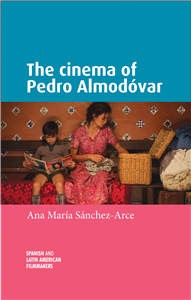
        The cinema of Pedro Almodóvar

        by Ana María Sanchez-Arce

        This book offers a comprehensive film-by-film analysis of Spain's most famous living director, Pedro Almodóvar. It shows how Almodóvar's films draw on various national cinemas and genres, including Spanish cinema of the dictatorship, European art cinema, Hollywood melodrama and film noir. It also argues that Almodóvar's work is a form of social critique, his films consistently engaging with and challenging stereotypes about traditional and contemporary Spain in order to address Spain's traumatic historical past and how it continues to inform the present. Drawing on scholarship in both English and Spanish, the book will be of interest to undergraduate and postgraduate students of film studies and Hispanic studies, scholars of contemporary cinema and general readers with a passion for the films of Pedro Almodóvar.

      Subscribe to our

      newsletter