Your Search Results

      • GAPSK Language Promotion Council Limited

        GAPSK and YLPSK are the standardized test of Chinese language for children from 3 to 15. From the world- renowned Peking University, GAPSK and YLPSK are certified and approved by the Chinese Ministry of Education as language proficiency measuring tool for children . GAPSK, YLPSK could be conducted on site or completely online. Come join over 100,000 students who taken the tests, contact us at  info@gapsk.org.  Find out more at www.ylpsk.org

        View Rights Portal
      • Peter Lang Group

        Peter Lang Group specializes in the Humanities and Social Sciences, covering the complete publication spectrum from monographs to student coursebooks.

        View Rights Portal
      • Trusted Partner
        Literature & Literary Studies
        October 2002

        The Etruscan language

        An Introduction

        by Giuliano Bonfante, Larissa Bonfante

        A revised, updated and expanded edition of the first concise introduction to the study of the Etruscan language in English. The standard historical reference and a popular textbook for students of languages, linguistics, ancient civilization and Etruscan studies. Provides the best collection of Etruscan inscriptions and texts currently in print. A substantial archeological introduction sets language and inscriptions in their historical, geographical and cultural context. The overview of Etruscan grammar, the glossary and chapters on mythological figures all incorporate the latest scholarship and innovative discoveries. ;

      • Trusted Partner
        2023

        German for Pharmaceutical Practice

        Communicate, research, present

        by Nadine Yvonne Sprecher, Annette Thomas, Annegret Lehmann and Anke Schichte. In collaboration with Christiane Schneider

        In the pharmacy, the staff communicate with customers, colleagues, the medical profession, sales representatives and nursing home staff. Pharmacy employees produce written information based on well-chosen sources and represent the pharmacy to the outside world through presentations, on social media, or with the help of flyers, posters and other promotional materials. All this presupposes the confident use of language, and is best trained in advance. Part A of this work provides assistance for the most diverse communicative requirements in the pharmacy. A short theoretical explanation is always followed by several tasks so that you can immediately put what you have learned into practice and try it out. The „Brief overview of grammar and language knowledge“ boxes point out linguistic stumbling blocks. Those who are not yet sure of the technical terms can make themselves fit in Part B. Here one learns how to conduct a good counselling interview according to the BAC guideline. Extensive lists of technical terms and their explanations suitable for everyday use – all arranged according to organ systems – contain the most important vocabulary for everyday pharmacy work. A totally practical German lesson!

      • Trusted Partner
        Humanities & Social Sciences
        March 2017

        The language of empire

        Myths and metaphors of popular imperialism, 1880-1918

        by Robert Macdonald

        The debate about the Empire dealt in idealism and morality, and both sides employed the language of feeling, and frequently argued their case in dramatic terms. This book opposes two sides of the Empire, first, as it was presented to the public in Britain, and second, as it was experienced or imagined by its subjects abroad. British imperialism was nurtured by such upper middle-class institutions as the public schools, the wardrooms and officers' messes, and the conservative press. The attitudes of 1916 can best be recovered through a reconstruction of a poetics of popular imperialism. The case-study of Rhodesia demonstrates the almost instant application of myth and sign to a contemporary imperial crisis. Rudyard Kipling was acknowledged throughout the English-speaking world not only as a wonderful teller of stories but as the 'singer of Greater Britain', or, as 'the Laureate of Empire'. In the last two decades of the nineteenth century, the Empire gained a beachhead in the classroom, particularly in the coupling of geography and history. The Island Story underlined that stories of heroic soldiers and 'fights for the flag' were easier for teachers to present to children than lessons in morality, or abstractions about liberty and responsible government. The Education Act of 1870 had created a need for standard readers in schools; readers designed to teach boys and girls to be useful citizens. The Indian Mutiny was the supreme test of the imperial conscience, a measure of the morality of the 'master-nation'.

      • Trusted Partner
        Literature & Literary Studies
        July 2022

        Nordic Gothic

        by Maria Holmgren Troy, Johan Hõglund, Yvonne Leffler, Sofia Wijkmark

        Nordic Gothic traces Gothic fiction in the Nordic region from its beginnings in the nineteenth century, with a main focus on the development of Gothic from the 1990s onwards in literature, film, TV and new media. The volume gives an overview of Nordic Gothic fiction in relation to transnational developments and provides a number of case studies and in-depth analyses of individual narratives. It creates an understanding of this under-researched cultural phenomenon by showing how the narratives make visible cultural anxieties haunting the Nordic countries, their welfare systems, identities and ideologies. Nordic Gothic examines how figures from Nordic folklore function as metaphorical expressions of Gothic themes and Nordic settings are explored from perspectives such as ecocriticism and postcolonialism. The book will be of interest to researchers and post- and- undergraduate students in various fields within the Humanities.

      • Trusted Partner
        Literature & Literary Studies
        May 2021

        Bad English

        by Rachael Gilmour

      • Trusted Partner
      • Trusted Partner
        Humanities & Social Sciences
        November 2020

        The free speech wars

        by Charlotte Lydia Riley

      • Trusted Partner
        Literature & Literary Studies
        June 2025

        Contemporary Slavic horror across media

        Cursed zones

        by Agnieszka Jezyk

        In the Western cultural production that puts individual or collective fear at its center, East/Central Europe has been portrayed as an othered space of horror - lawless, frightening zones where anything can happen. Incorporating articles on literature, film, visual arts, video games, music videos, and music festivals, Contemporary Slavic horror across media: Cursed zones is a pioneering anthology of academic essays devoted to Slavic horror fiction. The book focuses on works from the mid-20th century through the present, particularly the post-Soviet period. Assessing current trends in Czech, Polish, Russian, Slovak, Ukrainian, and East/Central European horror media, the book looks at similarities and idiosyncrasies of the genre in its Slavic variant. With this anthology we hope to tame 'the Easterner Other' and start exorcising 'monstrous' East/Central Europe.

      • Trusted Partner
        Humanities & Social Sciences
        March 2026

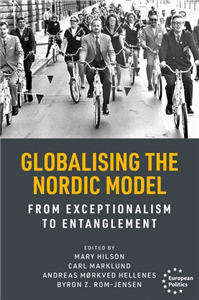
        Globalising the Nordic Model

        From exceptionalism to entanglement

        by Mary Hilson

        The five Nordic countries - Denmark, Finland, Iceland, Norway and Sweden - frequently attract attention as examples of a 'Nordic model'. The meanings of the term vary, but especially since the global financial crisis of 2008-9 the Nordic countries have often been portrayed positively, as examples of economic dynamism, innovation and social equality. Studies of these images of the Nordic countries and Nordic region and their international circulations are now a well-established field of research. This volume explores how the Nordic model has been shaped by global entanglements, in exchange not only with Western Europe and North America, but also with the Global South. Drawing on selected case studies, the volume offers new perspectives on the meanings of the Nordic model and Nordic exceptionalism in a global context during the half century since c. 1970.

      • Trusted Partner
        The Arts
        June 2011

        Alain Robbe-Grillet

        by John Phillips, Diana Holmes, Robert Ingram

        Placing Robbe-Grillet's filmic oeuvre in the related contexts of both his novelistic work and the different historical and cultural periods in which his films were made, from the early 1960s to the present, the book traces lines of influence and continuity throughout his work, which is shown to exhibit a consistent preoccupation with an identifiable body of themes, motifs and structures. Close readings of all the films are skilfully combined with a thematic approach, ranging across the entire filmic corpus. The book also contains chapters on cinematography and technique. Ultimately, this lucid, comprehensive and fascinating study shows Robbe-Grillet's contribution to the evolution of the cinematic art both in France and internationally to have been considerably more important than previously acknowledged. ;

      • Trusted Partner
        The Arts
        February 2019

        Alain Robbe-Grillet

        by John Phillips

        Placing Robbe-Grillet's filmic oeuvre in the related contexts of both his novelistic work and the different historical and cultural periods in which his films were made, from the early 1960s to the present, the book traces lines of influence and continuity throughout his work, which is shown to exhibit a consistent preoccupation with an identifiable body of themes, motifs and structures. Close readings of all the films are skilfully combined with a thematic approach, ranging across the entire filmic corpus. The book also contains chapters on cinematography and technique. Ultimately, this lucid, comprehensive and fascinating study shows Robbe-Grillet's contribution to the evolution of the cinematic art both in France and internationally to have been considerably more important than previously acknowledged.

      • Trusted Partner
        Literature & Literary Studies
        June 2026

        The politics of Middle English parables

        Fiction, theology, and social practice

        by Mary Raschko

        The politics of Middle English parables examines the dynamic intersection of fiction, theology and social practice in late-medieval England. Parables occupy a prominent place in Middle English literature, appearing in dream visions and story collections as well as in lives of Christ and devotional treatises. While most scholarship approaches the translated stories as stable vehicles of Christian teaching, this book highlights the many variations and points of conflict across Middle English renditions of the same story. In parables related to labour, social inequality, charity and penance, the book locates a creative theological discourse through which writers attempted to re-construct Christian belief and practice. Analysis of these diverse retellings reveals not what a given parable meant in a definitive sense but rather how Middle English parables inscribe the ideologies, power structures and cultural debates of late-medieval Christianity.

      • Trusted Partner
        March 2020

        The German Channel

        A Mythology from the FRG

        by Frank Uekötter

        A historic big infrastructure project in the nexus of federal government policy planning From Berlin Airport to Stuttgart 21 – public building projects seem to get out of hand with growing frequency. Frank Uekötter follows the example of the Elbe Lateral Canal, which was opened in 1976, to show that institutional failure is not a new phenomenon. The virtually forgotten story of the Elbe Lateral Canal represents an inglorious episode of German federal policy planning. The benefit of the 115 km long waterway, which connects the Mittelland Canal with the River Elbe, was completely out of proportion to the level of investment. Despite this, the project was soon unstoppable in the nexus of corporate interests, political aims and the policy for growth. A dam ruptured at Lüneburg only weeks after its opening. Uekötter argues for a social rethink based on the clear chronology of these “organized irresponsibilities”.

      • Trusted Partner
      • Trusted Partner
        Literature & Literary Studies
        July 2018

        European Erotic Romance

        by Victor Skretkowicz, J. B. Lethbridge

      • Trusted Partner
        Literature & Literary Studies
        March 2023

        Sleep and its spaces in Middle English literature

        Emotions, ethics, dreams

        by Megan Leitch

        Middle English literature is intimately concerned with sleep and the spaces in which it takes place. In the medieval English imagination, sleep is an embodied and culturally determined act. It is both performed and interpreted by characters and contemporaries, subject to a particular habitus and understood through particular hermeneutic lenses. While illuminating the intersecting medical and moral discourses by which it is shaped, sleep also sheds light on subjects in favour of which it has hitherto been overlooked: what sleep can enable (dreams and dream poetry) or what it can stand in for or supersede (desire and sex). This book argues that sleep mediates thematic concerns and questions in ways that have ethical, affective and oneiric implications. At the same time, it offers important contributions to understanding different Middle English genres: romance, dream vision, drama and fabliau.

      • Trusted Partner
      • Trusted Partner
        Literature & Literary Studies
        January 2021

        Language and imagination in the Gawain poems

        by J. Anderson

        This major new literary study offers a fresh view of the significance of the famous group of fourteenth-century poems, 'Pearl', 'Cleanness', 'Patience' and 'Sir Gawain and the Green Knight'. It is a comprehensive study which puts the poems themselves firmly at its centre, though it is always alert to relevant aspects of their literary and cultural context. John Anderson builds his discussions of the poems' ideas on an examination of the anonymous poet's superb Shakespeare-like language. He finds that the great fourteenth-century struggle, between religious and secular forces for control of men's minds, underlies all the poems. This title is the first in the new Manchester Medieval Literature series, which makes readability a priority. Accordingly, despite its wide range of reference and the radicalism of some of its leading ideas, this book is written in a jargon-free style designed to appeal to specialist, non-specialist and student readers alike.

      Subscribe to our

      newsletter