
Folklore Publishing
Livres Canada Books
View Rights Portal
 Trusted Partner

Tales of EUkraine (TEUk) will bring books to Ukrainian children refugees while helping the Ukrainian publishing sector with the support of the European Commission
View Rights Portal
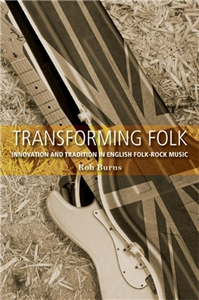
English folk-rock, a former progressive rock music style, remains a stimulus for further change in folk music and has enabled English folk-rock to become regarded as popular music by a new audience with diverse musical tastes. From musicological and historical perspectives, this book maintains that folk music performance continues to be influenced by rock and other popular music styles. From a cultural studies perspective, this book also demonstrates how the popularity of folk music presented at world music festivals has stimulated significant growth in folk music audiences since the mid-1990s and consequently the UK is experiencing a new phase of revivalism - the third folk revival. The book contains contributions from Martin Carthy (The Imagined Village), Simon Nicol (Fairport Convention), Ashley Hutchings (The Albion Band), Gerry Conway (Fairport Convention) and Rick Kemp (Steeleye Span). ;
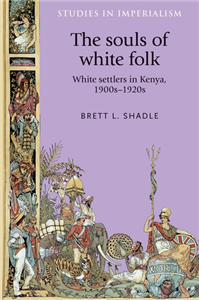
Kenya's white settlers have been alternately celebrated and condemned, painted as romantic pioneers or hedonistic bed-hoppers or crude racists. The souls of white folk examines settlers not as caricatures, but as people inhabiting a unique historical moment. It takes seriously - though not uncritically - what settlers said, how they viewed themselves and their world. It argues that the settler soul was composed of a series of interlaced ideas: settlers equated civilisation with a (hard to define) whiteness; they were emotionally enriched through claims to paternalism and trusteeship over Africans; they felt themselves constantly threatened by Africans, by the state, and by the moral failures of other settlers; and they daily enacted their claims to supremacy through rituals of prestige, deference, humiliation and violence. The souls of white folk will appeal to those interested in the histories of Africa, colonialism, and race, and can be appreciated by scholars and students alike.
Trusted Partner
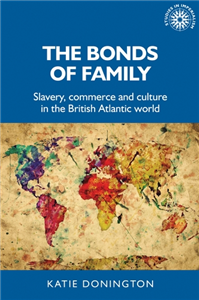
Moving between Britain and Jamaica The bonds of family reconstructs the world of commerce, consumption and cultivation sustained through an extended engagement with the business of slavery. Transatlantic slavery was both shaping of and shaped by the dynamic networks of family that established Britain's Caribbean empire. Tracing the activities of a single extended family - the Hibberts - this book explores how slavery impacted on the social, cultural, economic and political landscape of Britain. It is a history of trade, colonisation, enrichment and the tangled web of relations that gave meaning to the transatlantic world. The Hibberts's trans-generational story imbricates the personal and the political, the private and the public, the local and the global. It is both the intimate narrative of a family and an analytical frame through which to explore Britain's history and legacies of slavery.
Trusted Partner


Four out of your five children have autism, and your husband too! This is what happened to Joyce van Maaren. Over the years four of her children and her husband are diagnosed with an autism spectrum disorder. In A Family With Autism she talks openly about how her life gets turned upside down over and over again, and how the family had to regain their balance. In this inspiring and lovable book, Joyce van Maaren takes the reader on a journey – one with many ups and downs. Readers can find support in her story and discover what autism means for daily life. But most of all, they will be inspired to make the most of every day, even if they or their family has to deal with autism (or other psychological disorders). Target Group: people with autism and their relatives, families of which some members have autism.
Trusted Partner
Trusted Partner

This book offers the first examination of extremist Heathenry and occultism in the UK and how anti-racist Heathens act to counter this discourse. It explores the spectrum of Heathen practice today and the historical origins of racist Heathenry in nineteenth century Germanic romanticism and twentieth century folkish nationalism. Treating each of the three main extremist Heathen organisations, the book extends the analysis to the neo-Nazi occult organization the Order of the Nine Angles (O9A), and the wider racist Heathen cultural scene in Black Metal and Dark Folk music. The authors balance this with discussion of how inclusivist Heathens are countering this discourse, from visible protests at far-right rallies to inter-faith forums and an active presence on social media platforms. The book makes an important contribution to the intersecting fields of new religious movements, nationalist history and racist politics.
Trusted Partner
Trusted Partner
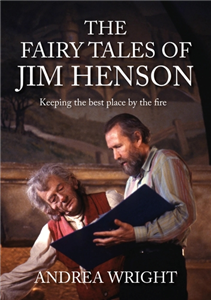
The Fairy Tales of Jim Henson: The best place by the fire is the first book to specifically consider Henson, best known for the immensely popular The Muppet Show, as an important creator of screen fairy tales. In a chronological overview of Henson's career from the late 1950s to his death in 1990, it explores key themes, artistic practices and innovations that make his contribution to the genre unique. Drawing upon a range of fairy tale scholarship, it also situates Henson's work within the wider context of the genre, specifically its conventions, themes and inherent intertextuality.
Trusted Partner
 Trusted Partner
 Trusted Partner
Trusted Partner
Trusted Partner
 Trusted Partner

This book offers an original interpretation of Britain's relationship with Europe over a 25 year period: 1959-84 and advances the argument that the current problems over EU membership resulted from much earlier political machinations. This evidence based account of the seminal period analyses the applications for EEC membership, the 1975 referendum, and the role of the press. Was the British public misled over the true aims of the European project? How significant was the role of the press in changing public opinion from anti, to pro Common Market membership? Why, after over 40 years since Britain became a member of the European community, does the issue continue to deeply divide not only the political elite, but also the British public? These, and other pertinent questions are answered in this timely book on a subject that remains topical and highly controversial.
Trusted Partner
Trusted Partner
 Trusted Partner
Trusted Partner
Trusted Partner
Trusted Partner
Trusted Partner

Making home explores the figure of the orphan child in a broad selection of contemporary US novels by popular and critically acclaimed authors Barbara Kingsolver, Linda Hogan, Leslie Marmon Silko, Marilynne Robinson, Michael Cunningham, Jonathan Safran Foer, John Irving, Kaye Gibbons, Octavia Butler, Jewelle Gomez and Toni Morrison. The orphan child is a continuous presence in US literature, not only in children's books and nineteenth-century texts, but also in a variety of genres of contemporary fiction for adults. Making home examines the meanings of this figure in the contexts of American literary history, social history and ideologies of family, race and nation. It argues that contemporary orphan characters function as links to literary history and national mythologies, even as they may also serve to critique the limits of literary history, as well as the limits of familial and national belonging.
Trusted Partner

Bene Beaver is quite certain of the following: His Mom has the coolest job in the world! At dinnertime, his mother often talks about the latest construction of a beaver den, until one evening she is quiet at dinner and seems sad. Papa Bernhard explains that Mom has lost her job. “How can you lose something like that?” asks Bene, who goes to visit the wisest animal in the forest: the moose. This book is designed to help children, whose parents are affected by unemployment, to better understand and master their situation. The story of Bene Beaver and his family addresses a number of the different challenges that occur when a parent is unemployed. For: • children of elementary school age (between 6 and 12 years of age) whose parents are affected by unemployment• parents, relatives• therapists
Trusted Partner




