Your Search Results

      • Families International

        It began when I left Ghana to study in Marburg, Germany. I entered a classroom of children with developmental concerns and instantly fell in love with them–the passion continues. I’m an indie professional author-publisher of Christian, academic and children’s books. Founder of Families International, Ottawa, Canada. An organization for all families, especially those who have children with developmental concerns. Our vision is to empower these families to believe in and help themselves, and their children. Be passionate partners of their children’s educational systems and working resiliently with special pedagogic and medical teams to support their children to achieve their full potential. We value every child and believe disabilities don’t mean inabilities. These children have educational assets exemplified by my newly released children’s books–Mommie, Snoopy Mr. Crab and Jumbolino The Dancing Clown. Inspired and created from my international work with these children and their families.

        View Rights Portal

      • Trusted Partner
        Family & health

        A Family with Autism

        When Autism is the Rule, not the Exception

        by Joyce van Maaren

        Four out of your five children have autism, and your husband too! This is what happened to Joyce van Maaren. Over the years four of her children and her husband are diagnosed with an autism spectrum disorder. In A Family With Autism she talks openly about how her life gets turned upside down over and over again, and how the family had to regain their balance. In this inspiring and lovable book, Joyce van Maaren takes the reader on a journey – one with many ups and downs. Readers can find support in her story and discover what autism means for daily life. But most of all, they will be inspired to make the most of every day, even if they or their family has to deal with autism (or other psychological disorders). Target Group: people with autism and their relatives, families of which some members have autism.

      • Trusted Partner
        Humanities & Social Sciences
        November 2019

        The bonds of family

        by Katie Donington, Alan Lester, Andrew Thompson

      • Trusted Partner
        Biography & True Stories
        November 2024

        Family Romance

        by Jean Strouse

      • Trusted Partner
        Sociology: family & relationships
        July 2016

        Changing gender roles and attitudes to family formation in Ireland

        by Series edited by Rob Kitchin, Margret Fine-Davis

        Recent decades have witnessed major changes in gender roles and family patterns, as well as a falling birth rate in Ireland and the rest of Europe. While the traditional family is now being replaced in many cases by new family forms, we do not know the reasons why people are making the choices they are and whether or not these choices are leading to greater well-being. While demographic research has attempted to explain the new trends in family formation and fertility, there has been little research on people's attitudes to family formation and having children. This book presents the results of the first major study to examine people's attitudes to family formation and childbearing in Ireland. Based on a nationwide representative sample of 1,404 men and women in the childbearing age group, the study was carried out against a backdrop of changing gender role attitudes and behaviour as well as significant demographic change.

      • Trusted Partner
        Humanities & Social Sciences
        September 2021

        Running the Family Firm

        by Laura Clancy

      • Trusted Partner
        Literature & Literary Studies
        July 2021

        Making home

        Orphanhood, kinship and cultural memory in contemporary American novels

        by Maria Holmgren Troy, Elizabeth Kella, Helena Wahlstrom, Maria Holmgren Troy

        Making home explores the figure of the orphan child in a broad selection of contemporary US novels by popular and critically acclaimed authors Barbara Kingsolver, Linda Hogan, Leslie Marmon Silko, Marilynne Robinson, Michael Cunningham, Jonathan Safran Foer, John Irving, Kaye Gibbons, Octavia Butler, Jewelle Gomez and Toni Morrison. The orphan child is a continuous presence in US literature, not only in children's books and nineteenth-century texts, but also in a variety of genres of contemporary fiction for adults. Making home examines the meanings of this figure in the contexts of American literary history, social history and ideologies of family, race and nation. It argues that contemporary orphan characters function as links to literary history and national mythologies, even as they may also serve to critique the limits of literary history, as well as the limits of familial and national belonging.

      • Trusted Partner
        Humanities & Social Sciences
        February 2022

        Psychoanalysis and the family in twentieth-century France

        Françoise Dolto and her legacy

        by Richard Bates, David Hopkin, Maire Cross, Jennifer Sessions

        In the last quarter of the twentieth century, if French people had a parenting problem or dilemma there was one person they consulted above all: Françoise Dolto (1908-88). But who was Dolto? How did she achieve a position of such influence? What ideas did she communicate to the French public? This book connects the story of Dolto's rise to two broader histories: the dramatic growth of psychoanalysis in postwar France and the long-running debate over the family and the proper role of women in society. It shows that Dolto's continued reputation in France as a liberal and enlightened educational thinker is at best only partially deserved and that conservative and anti-feminist ideas often underpinned her prominent public interventions. While Dolto retains the status of a national treasure, her career has had far-reaching and sometimes harmful repercussions for French society, particularly in the treatment of autism.

      • Trusted Partner
        Humanities & Social Sciences
        April 2022

        A new naval history

        by Quintin Colville, James Davey, Katherine Parker, Elaine Chalus, Evan Wilson, Barbara Korte, Cicely Robinson, Cindy McCreery, Ellie Miles, Mary A. Conley, Jonathan Rayner, Daniel Spence, Emma Hanna, Ulrike Zimmerman, Max Jones, Jan Rüger

        A New Naval History brings together the most significant and interdisciplinary approaches to contemporary naval history. The last few decades have witnessed a transformation in how this field is researched and understood and this volume captures the state of a field that continues to develop apace. It examines - through the prism of naval affairs - issues of nationhood and imperialism; the legacy of Nelson; the socio-cultural realities of life in ships and naval bases; and the processes of commemoration, journalism and stage-managed pageantry that plotted the interrelationship of ship and shore. This bold and original publication will be essential for undergraduate and postgraduate students of naval and maritime history. Beyond that, though, it marks an important intervention into wider historiographies that will be read by scholars from across the spectrum of social history, cultural studies and the analysis of national identity.

      • Trusted Partner
        Humanities & Social Sciences
        January 2026

        The tragedy of the border

        Asylum, destitution and homelessness

        by Mark Rainey

        Amid the global migration crisis, the UK has created and increasingly hostile policy environment for asylum seekers that has pushed many into unnecessary hardship and homelessness. This volume is an ethnographic study alongside refused asylum seekers and refugees living destitute in Manchester, UK. Based on over three years of research in emergency night shelters and on the streets of the city, it draws on the stories and experiences of those who have been driven into destitution by an antagonistic immigration system. The book not only explores how legal and temporal uncertainty shapes the daily lives of those who have had their asylum claims refused, but also attends to the experiences of volunteers and activists working on the frontline of the crisis. While the work is rich in detail, it also extends outwards and offers new insights into our understanding of borders and the need to rethink the grand notions of justice and hospitality.

      • Trusted Partner
        History of medicine
        November 2013

        Physick and the family

        by Alun Withey

      • Trusted Partner
        Humanities & Social Sciences
        August 2016

        Faith in the family

        by Alana Harris

      • Trusted Partner
        Humanities & Social Sciences
        June 2026

        Arctic state identity

        by Ingrid A. Medby

      • Trusted Partner
      • Trusted Partner
        Humanities & Social Sciences
        March 2026

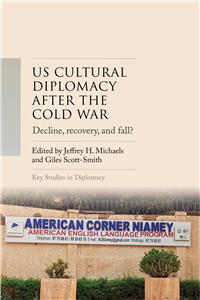
        US cultural diplomacy after the Cold War

        Decline, recovery, and fall

        by Jeffrey H. Michaels, Giles Scott-Smith

        In the decades following the USSR's collapse, the US has gone from unrivalled hegemon to a position of relative decline. With America 'triumphant' after 1991, its culture, like its diplomatic, military and economic power, remained unmatched. Such favourable circumstances seemed to undercut the need for cultural diplomacy. Why should the US government sell a product that was already selling so well? After 9/11, however, it was apparent the US image was less popular than previously assumed. To reverse this negative image, cultural diplomacy was revived. Despite being beset by internal and external challenges, US officials supported various cultural initiatives and partnerships to promote the American brand globally. Along the way, cultural diplomacy has made use of new forms of expression to promote American culture and build positive foreign relations. The arrival of the second Trump administration in 2025 has clearly signalled an end to using cultural diplomacy to further causes of empowerment and diversity, making the future uncertain for this field of activity.

      • Trusted Partner
        Humanities & Social Sciences
        March 2017

        From Jack Tar to Union Jack

        Representing naval manhood in the British Empire, 1870–1918

        by Mary A. Conley

        Jack Tar to Union Jack examines the intersection between empire, navy, and manhood in British society from 1870 to 1918. Through analysis of sources that include courts-martial cases, sailors' own writings, and the HMS Pinafore, Conley charts new depictions of naval manhood during the Age of Empire, a period which witnessed the radical transformation of the navy, the intensification of imperial competition, the democratisation of British society, and the advent of mass culture. Jack Tar to Union Jack argues that popular representations of naval men increasingly reflected and informed imperial masculine ideals in Victorian and Edwardian Britain. Conley shows how the British Bluejacket as both patriotic defender and dutiful husband and father stood in sharp contrast to the stereotypic image of the brave but bawdy tar of the Georgian navy. This book will be essential reading for students of British imperial history, naval and military history, and gender studies.

      • Trusted Partner
        Humanities & Social Sciences
        January 2013

        Women of the English Nobility and Gentry, 1066-1500

        by Jennifer Ward

        While there is increasing interest in the lives of medieval women, the documentary evidence for their activities remains little known. This book provides a collection of sources for an important and influential group of women in medieval England, and examines changes in their role and activities between 1066 and 1500. For most noble and gentry-women, early marriage led to responsibilities for family and household, and, in the absence of their husbands, for the family estates and retainers. Widowhood enabled them to take control of their affairs and to play an independent part in the local community and sometimes further afield. Although many women's lives followed a conventional pattern, great variety existed within family relationships, and individuality can also be seen in religious practices and patronage. Piety could take a number of different forms, whether a woman became a nun, a vowess or a noted philanthropist and benefactor to religious institutions. This volume provides a broad-ranging and accessible coverage of the role of noble women in medieval society. It highlights the significant role played by these women within their families, households, estates and communities.

      • Trusted Partner
      • Trusted Partner

      Subscribe to our

      newsletter