
Your Search Results


-
Promoted Content

 Literature & Literary StudiesJuly 2018
Shakespeare’s histories and counter-histories
by Dermot Cavanagh, Stuart Hampton-Reeves, Stephen Longstaffe
-
Promoted Content
 Humanities & Social SciencesOctober 2025
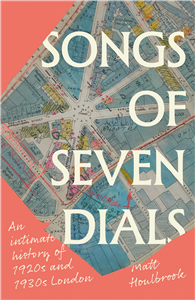
Songs of Seven Dials
An intimate history of 1920s and 1930s London
by Matt Houlbrook
The untold story of a remarkable neighbourhood and the battle to define modern London. Throughout the 1920s and 1930s, Seven Dials was one of London's most diverse neighbourhoods, home to migrant and working-class communities, bohemian clubs and cafes. But business leaders and city planners had other ideas. Beginning with a rancorous libel trial of 1927, in which a Sierra Leonean café owner and his wife confronted the racist newspaper that destroyed their business, Matt Houlbrook reveals the surprising history of this remarkable neighbourhood. He traces how tensions that simmered on the streets and finally exploded in court betrayed the politics of urban 'improvement' and the 'colour bar'. Underlying the trial was a series of troubling questions that would define Britain in the twentieth century - about race, class and the boundaries of belonging, gentrification and the kind of city London would become. Imaginative, powerful and deeply moving, Songs of Seven Dials is an important new history of London in the 1920s and 1930s.
-
 Trusted Partner
 Humanities & Social SciencesJune 2025
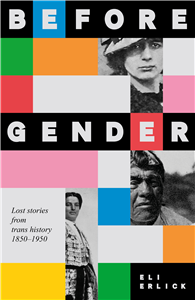
Before Gender
Lost stories from trans history 1850-1950
by Eli Erlick
Discover the trailblazing lives of thirty trans people who will radically change everything you've been told about transgender history. Highlighting influential individuals from 1850 to 1950 who are all but unknown today, Eli Erlick shares thirty remarkable stories from romance to rebellion and mystery to murder. These narratives chronicle the grit, joy and survival of trans people long before gender became an everyday term. Organised into four parts, paralleling today's controversies over gender identity - kids, activists, workers and athletes - Before Gender introduces figures whose forgotten stories transform the discussion. These ground-breaking histories include two of the first teens to access gender-affirming medical treatment, a countess who instigated an LGBTQ+ riot forty years before Stonewall and the greatest female billiards player of the 1910s. Bold and visionary, Erlick's debut uncovers these lost stories from the depths of the archives to narrate trans lives in a way that has never been attempted before.
-
Trusted Partner
-
Trusted Partner
-
Trusted Partner
-
Trusted Partner
-
Trusted Partner
 Humanities & Social SciencesDecember 2025
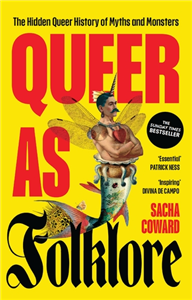
Queer as folklore
The hidden queer history of myths and monsters
by Sacha Coward
A celebration of queer history like you've never seen it before. Queer as folklore travels across centuries and continents to reveal the unsung heroes and villains of storytelling, magic and fantasy. Featuring images from archives, galleries and museums around the world, each chapter investigates the queer history of different mythic and folkloric characters, both old and new. Leaving no headstone unturned, Sacha Coward takes you on a wild ride through the night from ancient Greece to the main stage of RuPaul's Drag Race, visiting cross-dressing pirates, radical fairies and the graves of the 'queerly departed' along the way. Queer communities have often sought refuge in the shadows and created safe spaces in underworlds. But these forgotten narratives tell stories of resilience that deserve to be heard. Join any Pride march and you will see a glorious display of papier-mâché unicorn heads, drag queens in mermaid tails and more fairy wings than you can shake a trident at. These are not just accessories: they are queer symbols with historic roots. To truly understand who queer people are today, we must confront the twisted tales of the past.
-
Trusted Partner
 Literature & Literary StudiesJanuary 2011
Shakespeare’s histories and counter-histories
by Edited by Dermot Cavanagh, Stuart Hampton-Reeves andStephen Longstaffe
-
Trusted Partner
 Humanities & Social SciencesMay 2004
A history of the Ulster Unionist Party
Protest, pragmatism and pessimism
by Graham Walker
This is the first substantial history to trace the political development of the Ulster Unionist Party through the years of protest and opposition to Irish Home Rule to the half-century as a governing party within Northern Ireland, and beyond to the current attempts to bring peace to the Province. It demonstrates why the Party is so central to efforts to reach a political settlement, and explains why it has for so long been the main political voice of the pro-Union electorate in Northern Ireland. An important and scholarly work based on extensive primary source research, it brings to light forgotten historical episodes of contemporary political significance, and provides new angles on old controversies and debates. The book discusses the evolution of the Ulster Unionist Party with reference to competing ideological currents, class and social tensions within the Unionist movement, and the role of leadership figures and maverick personalities. This is a book that maps the party's historical journey from the dramatic days of Carson to the current predicaments of Trimble. ;
-
Trusted Partner
 The ArtsJanuary 2021
Victorian touring actresses
Crossing boundaries and negotiating the cultural landscape
by Janice Norwood
Victorian touring actresses brings new attention to women's experience of working in nineteenth-century theatre by focusing on a diverse group of largely forgotten 'mid-tier' performers, rather than the usual celebrity figures. It examines how actresses responded to changing political, economic and social circumstances and how the women were themselves agents of change. Their histories reveal dynamic patterns of activity within the theatrical industry and expose its relationship to wider Victorian culture. With an innovative organisation mimicking the stages of an actress's life and career, the volume draws on new archival research and plentiful illustrations to examine the challenges and opportunities facing the women as they toured both within the UK and further afield in North America and Australasia. It will appeal to students and researchers in theatre and performance history, Victorian studies, gender studies and transatlantic studies.
-
Trusted Partner
 Humanities & Social SciencesSeptember 2004
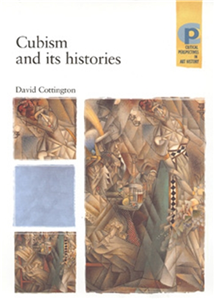
Cubism and its histories
by David Cottington, Marsha Meskimmon, Shearer West, Tim Barringer
Cubism was the most influential artistic movement that emerged in the twentieth century. The hallmarks of its style were stamped on the art, design and architecture and its aesthetic principles governed the representation of modernity across all the arts. Yet just what cubism was, or stood for, at the time of its emergence is still in dispute, while the explanations offered for its importance for twentieth-century art, and its legacy for the present, are bewildering in their variety. This fascinating book offers a way beyond this confusion: a narrative of its beginnings, consolidation and dissemination that takes into account not only what the style and the movement signified at the time of its emergence but also the principal writings through which cubism's significance for modernism has been established. Visually stunning with over 100 illustrations, this is an essential work for all students and teachers of modern art history. ;
-
Trusted Partner
 The ArtsNovember 2013
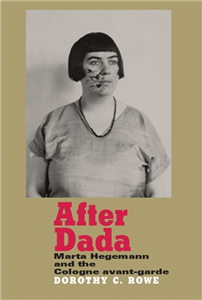
After Dada
Marta Hegemann and the Cologne avant-garde
by Dorothy Rowe
What happened in 1920s Cologne 'after Dada'? Whilst most standard accounts of Cologne Dada simply stop with Max Ernst's departure from the city for a new life as a surrealist in Paris, this book reveals the untold stories of the Cologne avant-garde that prospered after Dada but whose legacies have been largely forgotten or neglected. It focuses on the little-known Magical Realist painter Marta Hegemann (1894-1970). By re-inserting her into the histories of avant-garde modernism, a fuller picture of the gendered networks of artistic and cultural exchange within Weimar Germany can be revealed. This book embeds her activities as an artist within a gendered network of artistic exchange and influence in which Ernst continues to play a vital role amongst many others including his first wife, art critic Lou Straus-Ernst; photographers August Sander and Hannes Flach; artists Angelika Fick, Heinrich Hoerle, Willy Fick and the Cologne Progressives and visitors such as Kurt Schwitters and Katherine Dreier. The book offers a significant addition to research on Weimar visual culture and will be invaluable to students and specialists in the field. ;
-
Trusted Partner
-
Trusted Partner
 Humanities & Social SciencesOctober 2014
Writing imperial histories
by Andrew Thompson, John Mackenzie
-
Trusted Partner
 Humanities & Social SciencesMay 2016
Writing imperial histories
by Andrew Thompson, Andrew Thompson, John M. MacKenzie
-
Trusted Partner
 Humanities & Social SciencesMay 2025
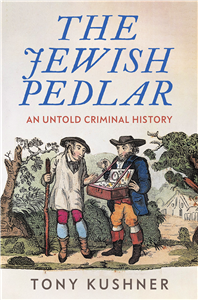
The Jewish pedlar
An untold criminal history
by Tony Kushner
An imaginative investigation into a historical crime that sheds new light on Jewish history. In 1734 a pedlar turned smuggler named Jacob Harris slit the throats of three people in a pub in Sussex. This triple-murder, for which he was hanged and gibbeted, remains the most violent crime ever committed by a British Jew. Yet today it is all but forgotten. In The Jewish pedlar, Tony Kushner goes in search of the enigmatic Harris. Digging into a remarkable range of sources, from law records and newspaper reports to ballads and folktales, he follows the traces of Harris's legend across three hundred years of British history. In doing so, he reconstructs the world of Jewish pedlars and criminals across many continents. The lives these figures eked out at the margins of society paint a picture of persistent antisemitism - but also of remarkable integration. Intellectually bold and deeply humane, The Jewish pedlar takes a new, grassroots approach to the history of Jews in the modern world, shedding light on everyday lives from the Enlightenment to the Holocaust and beyond.
-
Trusted Partner

 March 2020
The German Channel
A Mythology from the FRG
by Frank Uekötter
A historic big infrastructure project in the nexus of federal government policy planning From Berlin Airport to Stuttgart 21 – public building projects seem to get out of hand with growing frequency. Frank Uekötter follows the example of the Elbe Lateral Canal, which was opened in 1976, to show that institutional failure is not a new phenomenon. The virtually forgotten story of the Elbe Lateral Canal represents an inglorious episode of German federal policy planning. The benefit of the 115 km long waterway, which connects the Mittelland Canal with the River Elbe, was completely out of proportion to the level of investment. Despite this, the project was soon unstoppable in the nexus of corporate interests, political aims and the policy for growth. A dam ruptured at Lüneburg only weeks after its opening. Uekötter argues for a social rethink based on the clear chronology of these “organized irresponsibilities”.
-
Trusted Partner
 Humanities & Social SciencesJune 2025
Transnational solidarity
Anticolonialism in the global sixties
by Zeina Maasri, Cathy Bergin, Francesca Burke
Transnational solidarity excavates the forgotten histories of solidarity that were vital to radical political imaginaries during the 'long' 1960s. It decentres the conventional Western focus of this critical historical moment by foregrounding transnational solidarity with, and across, anticolonial and anti-imperialist liberation struggles. The book traces the ways in which solidarity was conceived, imagined and enacted in the border crossings - of nation, race and class - made by grassroots activists. This diverse collection draws links between exiled revolutionaries in Uruguay, post-colonial immigrants in Britain, and Greek communist refugees in East Germany who campaigned for their respective causes from afar while identifying and linking up with wider liberation struggles. Meanwhile, Arab immigrants in France, Pakistani volunteers and Iraqi artists found myriad ways to express solidarity with the Palestinian cause. Neglected archives also reveal Tricontinental Cuban-based genealogies of artistic militancy, as well as transnational activist networks against Portuguese colonial rule in Africa. Bringing together original research with contributions from veteran activists and artists, this interdisciplinary volume explores how transnational solidarity was expressed in and carried through the itineraries of migrants and revolutionaries, film and print cultures, art and sport, political campaigns and armed struggle. It presents a novel perspective on radical politics of the global sixties which remains crucial to understanding anti-racist solidarity today. With a foreword by Vijay Prashad.
-
Trusted Partner
 The ArtsJuly 2021
Cue and Cut
A practical approach to working in multi-camera studios
by Roger Singleton-Turner
Cue & Cut is a 'practical approach to working in television studios' for anyone who might want to work in that medium. It's full of useful information about kit, and how you would use it to create multi-camera content. Written by a multi-camera producer-director with years of drama and teaching experience, it presents both a way of handling studios and a source of information about how things have changed from the days of monochrome to HD tapeless modes - with some thoughts on 3D HDTV The book is firmly based in first-hand teaching experience and experience of producing, direction, floor managing (and so on) and on working with top flight Actors, Writers, Musicians, Designers of all disciplines and Sound and Camera crews, both at the BBC and in ITV. The book will certainly cover multi-camera aspects of Undergraduate, HND and B.Tech courses and should be useful to those on short courses, whether practical or post-graduate.



