
Marshall Cavendish
Topical, authentic and high quality books under the Marshall Cavendish Editions imprint provide general interest content that informs, entertains and engages readers.
View Rights Portal
Topical, authentic and high quality books under the Marshall Cavendish Editions imprint provide general interest content that informs, entertains and engages readers.
View Rights Portal
MMC EDIZIONI is a publishing house based in Rome.Born in 2001 as a generalist, along the time it has specialized almost exclusively in non-fiction, dedicated in particular (but not only) to the city of Rome.The main series, called "A walk with history" offers an alternative vision of the city through the historical reconnaissance and analysis of some of its urban furnishings that are not taken into consideration such as small fountains, clocks, inscriptions, sacred shrines, plaques. This series stands out for a particular graphic style and for the abundance of photographs, specially made for these books.Other series on Rome are instead dedicated to in-depth studies on specific historical and customs themes, or on the mysterious aspects of the city that also reveal its dark side.In the MMC catalogue are other non-fiction books on topics such as Music, Interculture, Anthropology and a series of stories for children encouraging solidarity, non-violence and respect for the environment
View Rights Portal
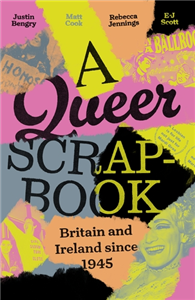
A beautifully illustrated compendium of LGBTIQ+ life. A queer scrapbook offers a treasure trove of LGBTIQ+ histories from across Britain and Ireland. Packed with materials, from interviews and newspaper articles to photographs and flyers, the book explores urban, rural and regional queer life since 1945. Commentaries and short essays introduce a changing queer landscape, spotlighting four broad themes: home and family, sex and socialising, arts and culture and politics and activism. The book delves into the meaning and experiences of domesticity and parenting and explores the sometimes unexpected places LGBTIQ+ people met to have fun. It examines the importance of creative work in forming community and identity and shows how people fought injustice and advocated for equal rights. Collecting has been a way for the marginalised to explore and assert identity and community. A queer scrapbook vividly illustrates the diversity of queer and trans lives across the British and Irish isles since the Second World War.
 Trusted Partner

In the mid-ninth century, Francia was rocked by the first royal divorce scandal of the Middle Ages: the attempt by King Lothar II of Lotharingia to rid himself of his queen, Theutberga and remarry. Even 'women in their weaving sheds' were allegedly gossiping about the lurid accusations made. Kings and bishops from neighbouring kingdoms, and several popes, were gradually drawn into a crisis affecting the fate of an entire kingdom. This is the first professionally published translation of a key source for this extraordinary episode: Archbishop Hincmar of Rheims's De divortio Lotharii regis et Theutbergae reginae. This text offers eye-opening insight both on the political wrangling of the time and on early medieval attitudes towards magic, penance, gender, the ordeal, marriage, sodomy, the role of bishops, and kingship.The translation includes a substantial introduction and annotations, putting the case into its early medieval context and explaining Hincmar's sometimes-dubious methods of argument.
Trusted Partner
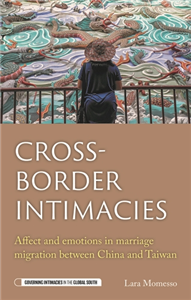
Since the early 1990s, economic exchanges between China and Taiwan have paved the way to migration across a previously closed border and to social and cultural interactions between the two populations. Despite these broader changes, the unresolved issue of Taiwan sovereignty has tainted not only the relations between the two governments but also the everyday life of those who move across the Taiwan Strait. In this politicised environment, intimate and affective practices linked to cross-border marriage and family formation are never just private. Instead, they are deeply entangled with the emotional and affective processes generated at the macro and meso level of political and social life and revolving around national interests. Tracing the intimate, emotional and affective practices linked to family creation, identity formation and integration with the local and national communities, this ethnographic study offers a subjective, dynamic, and complex picture of what it means to be a mainland spouse in Taiwan.
Trusted Partner
Trusted Partner
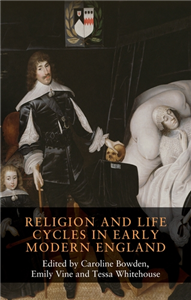
Religion and life cycles in early modern England assembles scholars working in the fields of history, English literature and art history to further our understanding of the intersection between religion and the life course in the period c. 1550-1800. Featuring chapters on Catholic, Protestant and Jewish communities, it encourages cross-confessional comparison between life stages and rites of passage that were of religious significance to all faiths in early modern England. The book considers biological processes such as birth and death, aspects of the social life cycle including schooling, coming of age and marriage and understandings of religious transition points such as spiritual awakenings and conversion. Through this inclusive and interdisciplinary approach, it seeks to show that the life cycle was not something fixed or predetermined and that early modern individuals experienced multiple, overlapping life cycles.
Trusted Partner

While there is increasing interest in the lives of medieval women, the documentary evidence for their activities remains little known. This book provides a collection of sources for an important and influential group of women in medieval England, and examines changes in their role and activities between 1066 and 1500. For most noble and gentry-women, early marriage led to responsibilities for family and household, and, in the absence of their husbands, for the family estates and retainers. Widowhood enabled them to take control of their affairs and to play an independent part in the local community and sometimes further afield. Although many women's lives followed a conventional pattern, great variety existed within family relationships, and individuality can also be seen in religious practices and patronage. Piety could take a number of different forms, whether a woman became a nun, a vowess or a noted philanthropist and benefactor to religious institutions. This volume provides a broad-ranging and accessible coverage of the role of noble women in medieval society. It highlights the significant role played by these women within their families, households, estates and communities.
Trusted Partner
Trusted Partner
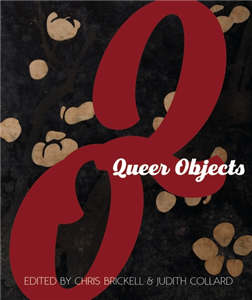
Queer lives give rise to a vast array of objects: the things we fill our houses with, the gifts we share with our friends, the commodities we consume at work and at play, the clothes and accessories we wear, and the analogue and digital technologies we use to communicate with one another. But what makes an object queer? The sixty-three chapters in Queer Objects consider this question in relation to lesbian, gay and transgender communities across time, cultures and space. In this unique international collaboration, well-known and newer writers traverse world history to write about items ranging from ancient Egyptian tomb paintings and Roman artefacts to political placards, snapshots, sex toys and the smartphone. Fabulous, captivating, transgressive.
Trusted Partner
 Trusted Partner
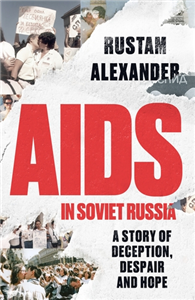
The first book to tell the shocking story of the AIDS crisis in Soviet Russia. Throughout the 1980s, as the world was grappling with the escalating crisis of AIDS, Soviet Russia continued to deny there was a problem. Arguing that the disease was limited to foreigners and 'immoral' groups, the government failed to take meaningful action, long past the point other countries had begun to recognise the full scale of the threat. In this ground-breaking book, Rustam Alexander tells the story of AIDS in Soviet Russia. Fixated on disinformation, censorship and the persecution of marginalised communities, the Soviet authorities wasted precious time, allowing the epidemic to strike at the very heart of the nation: its children. Yet, despite the government's failure, a number of brave journalists, doctors and nascent gay groups decided to take matters into their own hands and engage in full-fledged AIDS activism. Tracing the political and social response to AIDS in the final years of the Soviet era, Alexander sheds light on the devastating consequences of government inaction. He draws on personal stories, media reports and archival materials to provide a riveting account of the Russian people's fight against AIDS amid the tumultuous transformations of Gorbachev's perestroika.
Trusted Partner
Trusted Partner
 Trusted Partner


Infestation with parasites usually causes revulsion in those affected and many infections are kept secret through shame. In recent times there has also been a rise in non-native parasites, which often remain undetected. This book gives an overview of the most significant human parasites as well as their - prevalence - symptoms - treatment possibilities. The text is accompanied by illustrations that help when giving everyday advice. Practical icons show at a glance when, for example, the authorities must be notified and what special things need to be considered. Highly concentrated knowledge in an instant? That’s aporello!
Trusted Partner

Colonial governments, institutions and companies recognised that in many ways the effective operation of the Empire depended upon sexual arrangements. For example, nuclear families serving agricultural colonization, and prostitutes working for single men who powered armies and plantations, mines and bureaucracies. For this reason they devised elaborate systems of sexual governance, such as attending to marriage and the family. However, they also devoted disproportionate energy to marking and policing the sexual margins. In Sex, Politics and Empire, Richard Phillips investigates controversies surrounding prostitution, homosexuality and the age of consent in the British Empire, and revolutionises our notions about the importance of sex as a nexus of imperial power relations.
Trusted Partner

This book rigorously investigates the contemporary state of children's rights and the multifaceted challenges facing children, uncovering the complexities at their core. In 1989, the United Nations introduced the Convention on the Rights of the Child (CRC), ratified by 196 nations, promising a world where children's rights would reign supreme. In practice, however, realising these rights proves intricate and often precarious. Policies may shine on paper, but their implementation grapples with the challenges posed by global governance structures, national strategies, and local factors. Over three decades since the CRC's inception, this book scrutinises the true efficacy of international commitments, shedding light on underexplored issues and revealing shortcomings in both discourse and actions. With diverse, interdisciplinary perspectives, it recognises the profound influence of global and transnational forces in generating outcomes that impact children's rights and welfare. An electronic edition of this book is freely available under a Creative Commons (CC BY-NC-ND) licence.
Trusted Partner
This book describes how human rights have given rise to a vision of benevolent governance that, if fully realised, would be antithetical to individual freedom. It describes human rights' evolution into a grand but nebulous project, rooted in compassion, with the overarching aim of improving universal welfare by defining the conditions of human well-being and imposing obligations on the state and other actors to realise them. This gives rise to a form of managerialism, preoccupied with measuring and improving the 'human rights performance' of the state, businesses and so on. The ultimate result is the 'governmentalisation' of a pastoral form of global human rights governance, in which power is exercised for the general good, moulded by a complex regulatory sphere which shapes the field of action for the individual at every turn. This, unsurprisingly, does not appeal to rights-holders themselves.
Trusted Partner
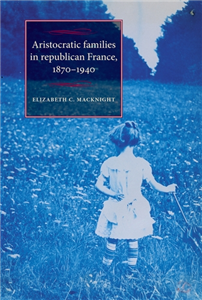
This is a study of the daily life, concerns, and dynamics of aristocratic families in the France of the Third Republic. Elizabeth Macknight draws on a vast range of material from private archives to contest assumptions about the irrelevancy of the nobility under the republican regime. Within a challenging political and economic environment nobles were determined to protect their interests and conserve the integrity of the aristocratic way of life. The convictions that underpinned nobles' responses to government initiatives emerge from the sources with freshness and clarity. Macknight interweaves male and female perspectives to provide a very full account of familial activities and decision-making with attention to all stages of the human lifecycle. Nobles' experiences of parenting and grandparenting, sibling and cousin relations, marriage, property negotiations, and interaction with servants are brought to light in a vivid and engaging narrative.
Trusted Partner
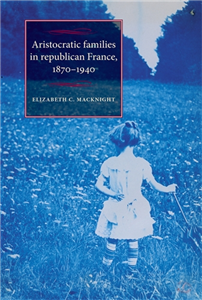
This is a study of the daily life, concerns, and dynamics of aristocratic families in the France of the Third Republic. Elizabeth Macknight draws on a vast range of material from private archives to contest assumptions about the irrelevancy of the nobility under the republican regime. Within a challenging political and economic environment nobles were determined to protect their interests and conserve the integrity of the aristocratic way of life. The convictions that underpinned nobles' responses to government initiatives emerge from the sources with freshness and clarity. Macknight interweaves male and female perspectives to provide a very full account of familial activities and decision-making with attention to all stages of the human lifecycle. Nobles' experiences of parenting and grandparenting, sibling and cousin relations, marriage, property negotiations, and interaction with servants are brought to light in a vivid and engaging narrative. ;
Trusted Partner
This book rigorously investigates the contemporary state of children's rights and the multifaceted challenges facing children, uncovering the complexities at their core. In 1989, the United Nations introduced the Convention on the Rights of the Child (CRC), ratified by 196 nations, promising a world where children's rights would reign supreme. In practice, however, realising these rights proves intricate and often precarious. Policies may shine on paper, but their implementation grapples with the challenges posed by global governance structures, national strategies, and local factors. Over three decades since the CRC's inception, this book scrutinises the true efficacy of international commitments, shedding light on underexplored issues and revealing shortcomings in both discourse and actions. With diverse, interdisciplinary perspectives, it recognises the profound influence of global and transnational forces in generating outcomes that impact children's rights and welfare.



