Your Search Results

      • China Social Sciences Press

        Established in June, 1978, China Social Sciences Press is sponsored by Chinese Academy of Social Sciences. CSSP is a national level publishing house focusing on academic publications mainly in the field of humanities and social sciences. In 1993, CSSP won the honorary title of “national outstanding press” granted by Propaganda Department of CPC and General Administration of Press and Publication.The missions and the publication targets of CSSP are: first, editing and publishing the most outstanding academic results of CASS and great achievements from the fields of social sciences and culture circle in China, including academic works, text books, reference books and popular books; second, translating Chinese versions of significant humanities and social sciences books written by western authors.

        View Rights Portal
      • Strange Days Books, Social Cooperative Enterprise

        Strange Days Books is a social cooperative publishing firm based in Crete, Greece. Since 2012 we have published almost 100 books. Every year we organize Sand Festival, an online Writers’ Workshop and - in cooperation with www.eyelands.gr literary magazine - the one and only international short story competition based in Greece, plus our International Book Awards. In 2019 SDB was the only publishing house in Greece to receive approval by the European Union’s Creative Europe translation funding program for its project "Strange Days in Europe”. Strange Days Books is an entirely independent publisher, primarily interested in showcasing the wealth of new writing voices in Greece. We work closely with our authors to create books that will appeal to booklovers, books about the present, books that strive to push the art of literature forward, books written with talent and passion, books that challenge the way we see the world, books bursting with new ideas and intriguing perspectives.

        View Rights Portal
      • Trusted Partner
        Humanities & Social Sciences
        March 2017

        Gender and imperialism

        by Clare Midgley

        This book marks an important new intervention into a vibrant area of scholarship, creating a dialogue between the histories of imperialism and of women and gender. By engaging critically with both traditional British imperial history and colonial discourse analysis, the essays demonstrate how feminist historians can play a central role in creating new histories of British imperialism. Chronologically, the focus is on the late eighteenth to early twentieth centuries, while geographically the essays range from the Caribbean to Australia and span India, Africa, Ireland and Britain itself. Topics explored include the question of female agency in imperial contexts, the relationships between feminism and nationalism, and questions of sexuality, masculinity and imperial power.

      • Trusted Partner
        Business, Economics & Law
        March 2025

        Tadeusz Kowalik and Poland’s return from socialism to capitalism

        Full circle

        by Gavin Rae

        Tadeusz Kowalik lived through ten decades and three economic and political systems in Poland. He combined his academic study of economic ideas with his socialist ideals of building a fairer and more just society. This book covers the intellectual and political work of Kowalik, within the context of modern Polish history. Kowalik was part of a Polish School of critical left-wing political economists, that included Michal Kalecki and Oskar Lange. Kowalik contributed to the body of work produced by this group, which included his interpretation of their work. Kowalik participated in some of the most momentous events in post-war Polish history, helping to organise a group of intellectuals to advise the shipyard workers at the Gdansk shipyards in 1980. He became a vehement opponent of Poland's neoliberal form of capitalism and left a body of work that illuminates our understanding of capitalism and socialism today.

      • Trusted Partner
        Humanities & Social Sciences
        June 2024

        Politicising and gendering care for older people

        Multidisciplinary perspectives from Europe

        by Anca Dohotariu, Ana Paula Gil, Lubica Volanská

        This book offers a new critical framework for understanding the processes of politicising and gendering care for older people and their manifestations in several European contexts. It interrogates how care for older adults varies across time and place while searching for an in-depth comprehension of how it becomes an arena of political struggle and the object of public policy in different countries and at various societal and political levels. It brings together multidisciplinary contributions that examine the issue of care for older people as a political concern from many angles, such as problematising care needs, long-term care policies, home care services, institutional services and family care. The contributions reveal the diversity of situations in which the processes of politicising and gendering care for older adults overlap, contradict or reinforce each other while leading to increased gender (in)equalities on different levels.

      • Trusted Partner
        Humanities & Social Sciences
        September 2017

        Gender and housing in Soviet Russia

        Private life in a public space

        by Pamela Sharpe, Lynne Attwood, Penny Summerfield, Lynn Abrams, Cordelia Beattie

        This book explores the housing problem throughout the 70 years of Soviet history, looking at changing political ideology on appropriate forms of housing under socialism, successive government policies on housing, and the meaning and experience of 'home' for Soviet citizens. Attwood examines the use of housing to alter gender relations, and the ways in which domestic space was differentially experienced by men and women. Much of Attwood's material comes from Soviet magazines and journals, which enables her to demonstrate how official ideas on housing and daily life changed during the course of the Soviet era, and were propagandised to the population. Through a series of in-depth interviews, she also draws on the memories of people with direct experience of Soviet housing and domestic life. Attwood has produced not just a history of housing, but a social history of daily life which will appeal both to scholars and those with a general interest in Soviet history.

      • Trusted Partner
        Humanities & Social Sciences
        December 2022

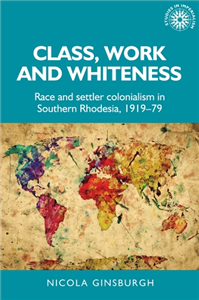
        Class, work and whiteness

        Race and settler colonialism in Southern Rhodesia, 1919–79

        by Nicola Ginsburgh

        This book offers the first comprehensive history of white workers from the end of the First World War to Zimbabwean independence in 1980. It reveals how white worker identity was constituted, examines the white labouring class as an ethnically and nationally heterogeneous formation comprised of both men and women, and emphasises the active participation of white workers in the ongoing and contested production of race. White wage labourers' experiences, both as exploited workers and as part of the privileged white minority, offer insight into how race and class co-produced one another and how boundaries fundamental to settler colonialism were regulated and policed. Based on original research conducted in Zimbabwe, South Africa and the UK, this book offers a unique theoretical synthesis of work on gender, whiteness studies, labour histories, settler colonialism, Marxism, emotions and the New African Economic History.

      • Trusted Partner
        Humanities & Social Sciences
        May 2026

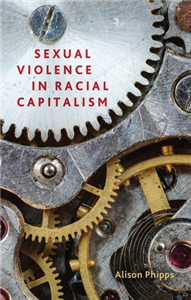
        Sexual violence in racial capitalism

        by Alison Phipps

        Most texts on sexual violence treat capitalism as backdrop or afterthought. In contrast, political economy is the core of this book. Phipps explores the centrality of sexual violence to racial capitalist processes: the enclosure of bodies, the extraction of labour, the expropriation of land and resources, and the disposal of unwanted populations. Importantly, she argues that both sexual violence and sexual fear create social control and surplus value. Through a framework called the coloniality of sexual violence, Phipps conjoins acts of sexual violence and ideas of sexual threat in an analysis of gendered and raced property relations and the split colonial/modern psyche. She argues that fantasies of sexual danger represent the infolded violence of racial capitalism, which is why fear of revolution is often fear of rape. Revolution, however, is always imminent: violence is necessary because power is incomplete.

      • Trusted Partner
        August 2025

        Wer hat Angst vor Gender?

        Eine Verteidigung und Einführung der Gender-Theorie in einem

        by Judith Butler, Katrin Harlaß, Anne Emmert

        Ein kämpferisches Buch in dunklen Zeiten, um wieder aus der Defensive zu kommen Für den globalen Rechtsruck spielt der Kampf gegen »Gender« eine zentrale Rolle. Ob in der Hinterfragung geschlechtlicher Normen nun eine Gefährdung von Kindern, die Zerstörung der Familie oder ein Angriff auf die natürliche Ordnung gesehen wird – in nichts sind sich Rechtspopulisten, religiöse Frömmler und Anti-Trans-Feministinnen so einig, nichts sonst bringen sie solche Ablehnung entgegen. Judith Butler hat unser Denken über Geschlecht revolutioniert und wurde zur globalen Ikone. Nun erklärt Butler, welche politische Funktion das Schreckgespenst »Gender« in der rechten Agenda besitzt. Dabei thematisiert Butler nicht nur, wie es ist, selbst zum Hassobjekt zu werden, sondern argumentiert zudem, dass queere Politik nur in einer breiten Koalition der Bewegungen gegen verschiedene Ungerechtigkeiten gelingen kann.

      • Trusted Partner
        Humanities & Social Sciences
        August 2003

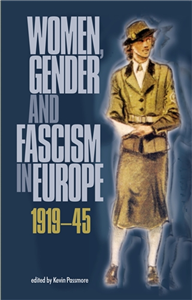
        Women, gender and fascism in Europe, 1919–45

        by Kevin Passmore

        What attracts women to far-right movements that appear to denigrate their rights? This question has vexed feminist scholars for decades and has led to many lively debates in the academy. In this context, during the 1980s, the study of women, gender, and fascism in twentieth-century Europe took off, pioneered by historians such as Claudia Koonz and Victoria de Grazia. This volume makes an exciting contribution to the evolving body of work based upon these earlier studies, bringing emerging scholarship on Central and Eastern Europe alongside that of more established Western European historiography on the topic. Women, Gender and Fascism in Europe, 1919-45 features fourteen essays covering Serbia, Croatia, Yugoslavia, Romania, Hungary, Latvia, and Poland in addition to Germany, Italy, France, Spain, and Britain, and a conclusion that pulls together a European-wide perspective. As a whole, the volume provides a compelling comparative examination of this important topic through current research, literature reviews, and dialogue with existing debates. The essays cast new light on questions such as women's responsibility for the collapse of democracy in interwar Europe, the interaction between the women's movement and the extreme right, and the relationships between conceptions of national identity and gender. ;

      • Trusted Partner
        Humanities & Social Sciences
        November 2023

        Intimacy and mobility in an era of hardening borders

        Gender, reproduction, regulation

        by Haldis Haukanes, Frances Pine

        This book is a collection of articles by anthropologists and social scientists concerned with gendered labour, care, intimacy and sexuality, in relation to mobility and the hardening of borders in Europe. Interrogating the relation between physical, geopolitical borders and ideological, conceptual boundaries, it offers a range of vivid and original ethnographic case studies that will capture the imagination of anyone interested in gendered migration, policies of inclusion and exclusion, and regulation of reproduction and intimacy. The book presents ethnographic and phenomenological discussions of people's changing lives as they cross borders, how people transgress and reshape moral boundaries of proper gender and kinship behaviour, and moral economies of intimacy and sexuality. It also focuses on migrants' navigation of social and financial services in their destination countries, putting questions about rights and limitations on citizenship at the core.

      • Trusted Partner
        2018

        Rediscovering Sex

        From pressure to pleasure in bed - an excersise book for men

        by Michael Sztenc

        Penises are clever guys, sensitive and touchy. At least that’s what Michael Sztenc says. And as a sex and couples’ therapist who has worked on male sexuality for over 25 years, he should know. With practical exercises that have been tried and tested for years, he helps the men who come to him with their problems to develop a sense for their bodies and their own eroticism.

      • Trusted Partner
        Humanities & Social Sciences
        April 2026

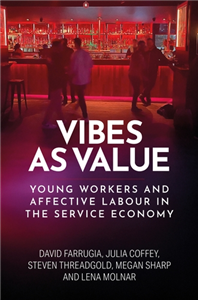
        Vibes as value

        Young workers and affective labour in the service economy

        by David Farrugia, Julia Coffey, Steven Threadgold, Megan Sharp, Lena Molnar

        Vibes as value explores the relationship between subjectivity, labour and value in the hospitality industry, and thereby how youth, gender, sexuality, race and social class are embodied and made productive in the service economy. It shows that the key product of hospitality labour is 'vibes', or moments of enjoyment and relationality co-produced through exploitative relationships amongst workers and consumers. In the process, the book theorises hospitality as a form of affective labour organised through the normative and structural relations of precarious service work. It shows how identity construction produces value within the highly unequal social terrain of the service economy, and how hospitality labour enacts hierarchies of value extending far beyond the limits of the industry itself.

      • Trusted Partner
        Sociology: family & relationships
        July 2016

        Changing gender roles and attitudes to family formation in Ireland

        by Series edited by Rob Kitchin, Margret Fine-Davis

        Recent decades have witnessed major changes in gender roles and family patterns, as well as a falling birth rate in Ireland and the rest of Europe. While the traditional family is now being replaced in many cases by new family forms, we do not know the reasons why people are making the choices they are and whether or not these choices are leading to greater well-being. While demographic research has attempted to explain the new trends in family formation and fertility, there has been little research on people's attitudes to family formation and having children. This book presents the results of the first major study to examine people's attitudes to family formation and childbearing in Ireland. Based on a nationwide representative sample of 1,404 men and women in the childbearing age group, the study was carried out against a backdrop of changing gender role attitudes and behaviour as well as significant demographic change.

      • Trusted Partner
        Humanities & Social Sciences
        October 2025

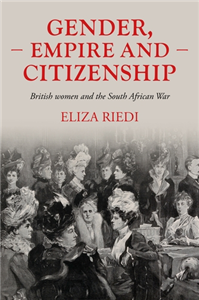
        Gender, empire and citizenship

        British women and the South African War

        by Eliza Riedi

        When the South African War broke out in 1899 British middle-class women, already well-integrated into party politics and public life, were quick to respond. Women across a wide political spectrum, from jingo imperialists to 'pro-Boers', actively engaged in public debates over the war through meetings, speeches, petitions, electioneering, and the press. From the start pacifist women made important contributions to the anti-war movement, later providing vital backing for Emily Hobhouse's campaign to reform the concentration camps. Women imperialists supported the war effort through military philanthropy and imperial propaganda. Under Millicent Garrett Fawcett the government-appointed Ladies' Committee transformed the camps, while hundreds of British women were recruited as camps teachers and nurses. Fundamentally shaped by ideologies of gender and race, women's responses to this imperial war continued to influence women's public action and discourses of citizenship into the First World War.

      • Trusted Partner
        Humanities & Social Sciences
        March 2017

        Engendering whiteness

        White women and colonialism in Barbados and North Carolina, 1627–1865

        by Cecily Jones

        Engendering whiteness represents a comparative analysis of the complex interweaving of race, gender, social class and sexuality in defining the contours of white women's lives in Barbados and North Carolina during the era of slavery. Despite their gendered subordination, their social location within the dominant white group afforded all white women a range of privileges. Hence, their whiteness, as much as their gender, shaped these women's social identities and material realities. Crucially, as the biological reproducers of whiteness, and hence the symbolic and literal embodiment and bearers of the state of freedom, they were critical to the maintenance and reproduction of the cultural boundaries of 'whiteness', and consequently the subjects of patriarchal measures to limit and control their social and sexual freedoms. Engendering whiteness draws on a wide variety of sources including property deeds, wills, court transcripts, and interrogates the ways in which white women could be simultaneously socially positioned within plantation societies as both agents and as victims. It also reveals the strategies deployed by elite and poor white women in these societies to resist their gendered subordination, to challenge the ideological and social constraints that sought to restrict their lives to the private domestic sphere, to protect the limited rights afforded to them, to secure independent livelihoods, and to create meaningful existences. A fascinating study that with be welcomed by historians of imperialism as well as scholars of gender history and women's studies.

      • Trusted Partner
        Humanities & Social Sciences
        November 2012

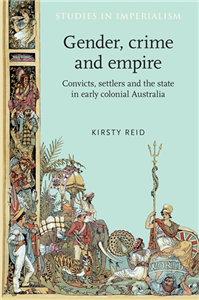
        Gender, crime and empire

        convicts, settlers and the state in early colonial Australia

        by Kirsty Reid, Andrew Thompson, John Mackenzie, Martin Hargreaves

        Between 1803 and 1853, some 80,000 convicts were transported to Van Diemen's Land. Revising established models of the colonies, which tend to depict convict women as a peculiarly oppressed group, Gender, crime and empire argues that convict men and women in fact shared much in common. Placing men and women, ideas about masculinity, femininity, sexuality and the body, in comparative perspective, this book argues that historians must take fuller account of class to understand the relationships between gender and power. The book explores the ways in which ideas about fatherhood and household order initially informed the state's model of order, and the reasons why this foundered. It considers the shifting nature of state policies towards courtship, relationships and attempts at family formation which subsequently became matters of class conflict. It goes on to explore the ways in which ideas about gender and family informed liberal and humanitarian critiques of the colonies from the 1830s and 1840s and colonial demands for abolition and self-government. ;

      • Trusted Partner
        Literature & Literary Studies
        October 2025

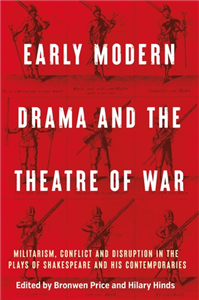
        Early modern drama and the theatre of war

        Militarism, conflict and disruption in the plays of Shakespeare and his contemporaries

        by Bronwen Price, Hilary Hinds

        This volume explores the disruptive effects of militarism, war and social unrest in early modern drama. Engaging with Simon Barker's seminal work on dramatic representations of war and militarism, contributors highlight what often lies hidden beneath the surface of martial narratives, treating them as formative interventions in contemporary discourses, whether in justifying war, excluding dissident voices or shaping cultural identities. Discussions include new examinations of militarism, the figure of the soldier and early modern theories of war in Shakespearean tragedy, history and comedy, alongside antimasque and dramatic satire by lesser-known playwrights. The essays investigate how ideas of war underpin emerging concepts of gender, leadership, marriage and the family, as well as the continuing mobilisation of Shakespearean drama in the context of modern armed conflict. Together, they offer rich new contributions to the current lively critical debates on this topic.

      • Trusted Partner
        Humanities & Social Sciences
        March 2017

        Gender, crime and empire

        Convicts, settlers and the state in early colonial Australia

        by Kirsty Reid, Andrew Thompson, John M. MacKenzie, Martin Hargreaves

        Between 1803 and 1853, some 80,000 convicts were transported to Van Diemen's Land. Revising established models of the colonies, which tend to depict convict women as a peculiarly oppressed group, Gender, crime and empire argues that convict men and women in fact shared much in common. Placing men and women, ideas about masculinity, femininity, sexuality and the body, in comparative perspective, this book argues that historians must take fuller account of class to understand the relationships between gender and power. The book explores the ways in which ideas about fatherhood and household order initially informed the state's model of order, and the reasons why this foundered. It considers the shifting nature of state policies towards courtship, relationships and attempts at family formation which subsequently became matters of class conflict. It goes on to explore the ways in which ideas about gender and family informed liberal and humanitarian critiques of the colonies from the 1830s and 1840s and colonial demands for abolition and self-government.

      • Trusted Partner
        Humanities & Social Sciences
        May 2025

        Women’s Troubles

        Gender and feminist politics in post-Agreement Northern Ireland

        by Claire Pierson

        How do feminist movements develop and organise in ethno-nationally divided societies? How does this challenge our understandings of contemporary fourth wave feminism? Women's Troubles sets out to answer these questions using rich empirical data and analysis in an examination of feminist activism after the Northern Irish peace agreement. Utilising feminist frameworks and debates on movement building, policymaking, abortion rights, gender-based violence and the UN women, peace and security agenda, Claire Pierson interrogates the opportunities and challenges in articulating a feminist voice and creating feminist spaces in the conflict transformational politics and society. Capturing the complexities of contemporary feminist movement building in a divided society, Women's Troubles contributes to ongoing analysis of contemporary global feminisms.

      Subscribe to our

      newsletter