Your Search Results

      • The Parisian Agency

        Founded in 2010, the Parisian agency is a literary agency based in Paris. We represent a selected group of international writers of literary fiction such as multi-awarded Icelandic author Gudrun Eva Minervudottir and Hungarian novelist Arpad Kun, winner of the prestigious Aegon Award. We also represent the stunning illustrated books of the British and the Bodleian Library (UK) abroad. Last, we are now open to represent new lists in literary fiction, crime fiction and non fiction. Welcome to the Parisian Agency!

        View Rights Portal
      • Trusted Partner
        Humanities & Social Sciences
        June 2024

        Politicising and gendering care for older people

        Multidisciplinary perspectives from Europe

        by Anca Dohotariu, Ana Paula Gil, Lubica Volanská

        This book offers a new critical framework for understanding the processes of politicising and gendering care for older people and their manifestations in several European contexts. It interrogates how care for older adults varies across time and place while searching for an in-depth comprehension of how it becomes an arena of political struggle and the object of public policy in different countries and at various societal and political levels. It brings together multidisciplinary contributions that examine the issue of care for older people as a political concern from many angles, such as problematising care needs, long-term care policies, home care services, institutional services and family care. The contributions reveal the diversity of situations in which the processes of politicising and gendering care for older adults overlap, contradict or reinforce each other while leading to increased gender (in)equalities on different levels.

      • Trusted Partner
        August 2025

        Wer hat Angst vor Gender?

        Eine Verteidigung und Einführung der Gender-Theorie in einem

        by Judith Butler, Katrin Harlaß, Anne Emmert

        Ein kämpferisches Buch in dunklen Zeiten, um wieder aus der Defensive zu kommen Für den globalen Rechtsruck spielt der Kampf gegen »Gender« eine zentrale Rolle. Ob in der Hinterfragung geschlechtlicher Normen nun eine Gefährdung von Kindern, die Zerstörung der Familie oder ein Angriff auf die natürliche Ordnung gesehen wird – in nichts sind sich Rechtspopulisten, religiöse Frömmler und Anti-Trans-Feministinnen so einig, nichts sonst bringen sie solche Ablehnung entgegen. Judith Butler hat unser Denken über Geschlecht revolutioniert und wurde zur globalen Ikone. Nun erklärt Butler, welche politische Funktion das Schreckgespenst »Gender« in der rechten Agenda besitzt. Dabei thematisiert Butler nicht nur, wie es ist, selbst zum Hassobjekt zu werden, sondern argumentiert zudem, dass queere Politik nur in einer breiten Koalition der Bewegungen gegen verschiedene Ungerechtigkeiten gelingen kann.

      • Trusted Partner
        2018

        Rediscovering Sex

        From pressure to pleasure in bed - an excersise book for men

        by Michael Sztenc

        Penises are clever guys, sensitive and touchy. At least that’s what Michael Sztenc says. And as a sex and couples’ therapist who has worked on male sexuality for over 25 years, he should know. With practical exercises that have been tried and tested for years, he helps the men who come to him with their problems to develop a sense for their bodies and their own eroticism.

      • Trusted Partner
        Humanities & Social Sciences
        August 2003

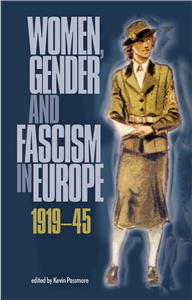
        Women, gender and fascism in Europe, 1919–45

        by Kevin Passmore

        What attracts women to far-right movements that appear to denigrate their rights? This question has vexed feminist scholars for decades and has led to many lively debates in the academy. In this context, during the 1980s, the study of women, gender, and fascism in twentieth-century Europe took off, pioneered by historians such as Claudia Koonz and Victoria de Grazia. This volume makes an exciting contribution to the evolving body of work based upon these earlier studies, bringing emerging scholarship on Central and Eastern Europe alongside that of more established Western European historiography on the topic. Women, Gender and Fascism in Europe, 1919-45 features fourteen essays covering Serbia, Croatia, Yugoslavia, Romania, Hungary, Latvia, and Poland in addition to Germany, Italy, France, Spain, and Britain, and a conclusion that pulls together a European-wide perspective. As a whole, the volume provides a compelling comparative examination of this important topic through current research, literature reviews, and dialogue with existing debates. The essays cast new light on questions such as women's responsibility for the collapse of democracy in interwar Europe, the interaction between the women's movement and the extreme right, and the relationships between conceptions of national identity and gender. ;

      • Trusted Partner
        Humanities & Social Sciences
        April 2024

        Murky waters

        British spas in eighteenth-century medicine and literature

        by Sophie Vasset

        Murky waters challenges the refined image of spa towns in eighteenth-century Britain by unveiling darker and more ambivalent contemporary representations. It reasserts the centrality of health in British spas by looking at disease, the representation of treatment and the social networks of care woven into spa towns. The book explores the great variety of medical and literary discourses on the numerous British spas in the long eighteenth century and offers a rare look at spas beyond Bath. Following the thread of 'murkiness', it explores the underwater culture of spas, from the gender fluidity of users to the local and national political dimensions, as well as the financial risks taken by gamblers and investors. It thus brings a fresh look at mineral waters and a pinch of salt to health-related discourses.

      • Trusted Partner
        Sociology: family & relationships
        July 2016

        Changing gender roles and attitudes to family formation in Ireland

        by Series edited by Rob Kitchin, Margret Fine-Davis

        Recent decades have witnessed major changes in gender roles and family patterns, as well as a falling birth rate in Ireland and the rest of Europe. While the traditional family is now being replaced in many cases by new family forms, we do not know the reasons why people are making the choices they are and whether or not these choices are leading to greater well-being. While demographic research has attempted to explain the new trends in family formation and fertility, there has been little research on people's attitudes to family formation and having children. This book presents the results of the first major study to examine people's attitudes to family formation and childbearing in Ireland. Based on a nationwide representative sample of 1,404 men and women in the childbearing age group, the study was carried out against a backdrop of changing gender role attitudes and behaviour as well as significant demographic change.

      • Trusted Partner
        Humanities & Social Sciences
        April 2026

        Vibes as value

        Young workers and affective labour in the service economy

        by David Farrugia, Julia Coffey, Steven Threadgold, Megan Sharp, Lena Molnar

        Vibes as value explores the relationship between subjectivity, labour and value in the hospitality industry, and thereby how youth, gender, sexuality, race and social class are embodied and made productive in the service economy. It shows that the key product of hospitality labour is 'vibes', or moments of enjoyment and relationality co-produced through exploitative relationships amongst workers and consumers. In the process, the book theorises hospitality as a form of affective labour organised through the normative and structural relations of precarious service work. It shows how identity construction produces value within the highly unequal social terrain of the service economy, and how hospitality labour enacts hierarchies of value extending far beyond the limits of the industry itself.

      • Trusted Partner
        Literature & Literary Studies
        March 2013

        Simone de Beauvoir's The Second Sex

        by Jeff Wallace, Ruth Evans, John Whale

        Acknowledged by many feminists as the single most important theoretical work of the twentieth century, Simone de Beauvoir's The Second Sex (1949) nevertheless occupies an anomalous place in the feminist 'canon'. Yet it has had an undeniable impact, not only on the development of critiques of sexual politics but on twentieth-century western thinking about the concept of 'woman' in general. This collection of six new essays by scholars from the disciplines of French, English literature, history, cultural criticism, feminist theory and philosophy makes a valuable contribution to the task of re-reading and reassessing this enormously influential text for a new generation of feminist readers, and also for cultural theorists, for whom the question of 'the feminine' is at the centre of key debates in philosophy and postmodernity. The contributors provide a significantly new rethinking of the place of The Second Sex in cultural history and of women and representation, the role of 'fictions' and the problem of ethical agency in the work of the leading intellectual woman of this age. ;

      • Trusted Partner
        Humanities & Social Sciences
        March 2017

        Engendering whiteness

        White women and colonialism in Barbados and North Carolina, 1627–1865

        by Cecily Jones

        Engendering whiteness represents a comparative analysis of the complex interweaving of race, gender, social class and sexuality in defining the contours of white women's lives in Barbados and North Carolina during the era of slavery. Despite their gendered subordination, their social location within the dominant white group afforded all white women a range of privileges. Hence, their whiteness, as much as their gender, shaped these women's social identities and material realities. Crucially, as the biological reproducers of whiteness, and hence the symbolic and literal embodiment and bearers of the state of freedom, they were critical to the maintenance and reproduction of the cultural boundaries of 'whiteness', and consequently the subjects of patriarchal measures to limit and control their social and sexual freedoms. Engendering whiteness draws on a wide variety of sources including property deeds, wills, court transcripts, and interrogates the ways in which white women could be simultaneously socially positioned within plantation societies as both agents and as victims. It also reveals the strategies deployed by elite and poor white women in these societies to resist their gendered subordination, to challenge the ideological and social constraints that sought to restrict their lives to the private domestic sphere, to protect the limited rights afforded to them, to secure independent livelihoods, and to create meaningful existences. A fascinating study that with be welcomed by historians of imperialism as well as scholars of gender history and women's studies.

      • Trusted Partner
        Humanities & Social Sciences
        March 2025

        Straight nation

        Heteronormativity and other exigencies of postcolonial nationalism

        by Pavan Mano

        In Straight Nation, Pavan Mano reveals the logic of straightness that sits at the heart of postcolonial nationalism in Singapore. Mano rejects the romantic notion of the nation as a haven of belonging, showing it to be a relentless force that is allied with heteronormativity to create a host of minoritized and xenologized figures. Through meticulous exploration and close reading of a swathe of texts, Mano unveils the instrumental role of sexuality in structuring the national imaginary. The book adroitly demonstrates how queerness is rendered foreign in postcolonial Singapore and functions alongside technologies of "race", gender, and class. A provocative critique of narrow contemporary identity politics and its concomitant stymying of a more ambitious political critique, Straight Nation sets out an argument that moves beyond the negativity of traditional critique into a space of (re)thinking, (re)building and (re)imagining.

      • Trusted Partner
        Humanities & Social Sciences
        March 2017

        Migrant races

        Empire,Identity and K.S. Ranjitsinhji

        by Andrew Thompson, John M. MacKenzie, Satadru Sen

        This book is a study of mobility, image and identity in colonial India and imperial Britain in the late nineteenth and early twentieth centuries. It is a model for studies of migrant figures like K.S. Ranjitsinhji who emerged during the imperial period. Ranjitsinhji is an important figure in the history of modern India and the British empire because he was recognized as a great athlete and described as such. The book focuses on four aspects of Ranjitsinhji's life as a colonial subject: race, money, loyalty and gender. It touches upon Ranjitsinhji's career as a cricketer in the race section. The issue of money gave Indian critics of Ranjitsinhji's regime the language they needed to condemn his personal and administrative priorities, and to portray him as self-indulgent. Ranjitsinhji lived his life as a player of multiple gender roles: sometimes serially, and on occasion simultaneously. His status as a "prince" - while not entirely fake - was fragile enough to be unreliable, and he worked hard to reinforce it even as he constructed his Englishness. Any Indian attempt to transcend race, culture, climate and political place by imitating an English institution and its product must be an unnatural act of insurgency. The disdain for colonial politics that was manifest in the "small rebellions" at the end of the world war converged with the colonized/Indian identity that was evident at the League of Nations. Between the war and his death, it is clear, Ranjitsinhji moved to maximize his autonomy in Nawanagar.

      • Trusted Partner
        Health & Personal Development

        Affirmative Counseling for Transgender and Gender Diverse Clients

        by lore m. dickey, Jae A. Puckett

        A how-to guide to affirmative counseling with transgender clients• Presents the best evidence-basedcare• Instructions for strategies to improveinclusivity• Illustrated with case studies• Printable tools for clinical use This volume provides fundamental and evidence-based information on working with transgender and gender diverse people in mental health services. The authors, who are experts in the field, outline the key qualities of affirming mental health services, as well as explore strategies for improving inclusivity and what evidence-based care with trans clients looks like. They also provide insight into current topics, such as working with youth, the harmful and ill-advised approach known as rapid onset gender dysphoria, and whether and how autism is a co-occurring diagnostic concern. Practitioners will find the printable resources provided invaluable for their clinical practice, including sample letters of support for trans clients who are seeking gender affirming medical care. For:• clinical psychologists• psychiatrists• psychotherapists• family practitioners• counselors• students

      • Trusted Partner
        Humanities & Social Sciences
        March 2017

        Sex, politics and empire

        A postcolonial geography

        by Richard Phillips

        Colonial governments, institutions and companies recognised that in many ways the effective operation of the Empire depended upon sexual arrangements. For example, nuclear families serving agricultural colonization, and prostitutes working for single men who powered armies and plantations, mines and bureaucracies. For this reason they devised elaborate systems of sexual governance, such as attending to marriage and the family. However, they also devoted disproportionate energy to marking and policing the sexual margins. In Sex, Politics and Empire, Richard Phillips investigates controversies surrounding prostitution, homosexuality and the age of consent in the British Empire, and revolutionises our notions about the importance of sex as a nexus of imperial power relations.

      • Trusted Partner
        Humanities & Social Sciences
        November 2012

        Gender, crime and empire

        convicts, settlers and the state in early colonial Australia

        by Kirsty Reid, Andrew Thompson, John Mackenzie, Martin Hargreaves

        Between 1803 and 1853, some 80,000 convicts were transported to Van Diemen's Land. Revising established models of the colonies, which tend to depict convict women as a peculiarly oppressed group, Gender, crime and empire argues that convict men and women in fact shared much in common. Placing men and women, ideas about masculinity, femininity, sexuality and the body, in comparative perspective, this book argues that historians must take fuller account of class to understand the relationships between gender and power. The book explores the ways in which ideas about fatherhood and household order initially informed the state's model of order, and the reasons why this foundered. It considers the shifting nature of state policies towards courtship, relationships and attempts at family formation which subsequently became matters of class conflict. It goes on to explore the ways in which ideas about gender and family informed liberal and humanitarian critiques of the colonies from the 1830s and 1840s and colonial demands for abolition and self-government. ;

      • Trusted Partner
        Humanities & Social Sciences
        March 2017

        Gender, crime and empire

        Convicts, settlers and the state in early colonial Australia

        by Kirsty Reid, Andrew Thompson, John M. MacKenzie, Martin Hargreaves

        Between 1803 and 1853, some 80,000 convicts were transported to Van Diemen's Land. Revising established models of the colonies, which tend to depict convict women as a peculiarly oppressed group, Gender, crime and empire argues that convict men and women in fact shared much in common. Placing men and women, ideas about masculinity, femininity, sexuality and the body, in comparative perspective, this book argues that historians must take fuller account of class to understand the relationships between gender and power. The book explores the ways in which ideas about fatherhood and household order initially informed the state's model of order, and the reasons why this foundered. It considers the shifting nature of state policies towards courtship, relationships and attempts at family formation which subsequently became matters of class conflict. It goes on to explore the ways in which ideas about gender and family informed liberal and humanitarian critiques of the colonies from the 1830s and 1840s and colonial demands for abolition and self-government.

      • Trusted Partner
        The Arts
        October 2013

        Gender, artWork and the global imperative

        A materialist feminist critique

        by Angela Dimitrakaki

        Is gender implicated in how art does its work in the world created by global capital? Is a global imperative exclusive to capital's planetary expansion or also witnessed in oppositional practices in art and curating? And what is new in the gendered paradigms of art after the fall of the Berlin Wall? Angela Dimitrakaki addresses these questions in an insightful and highly original analysis of travel as artistic labour, the sexualisation of migration as a relationship between Eastern and Western Europe, the rise of female collectives, masculinity and globalisation's 'bad boys', the emergence of a gendered economic subject that has dethroned postmodernism, and the need for a renewed materialist feminism. This is a theoretically astute overview of developments in art and its contexts since the 1990s and the first study to attempt a critical refocusing of feminist politics in art history in the wake of globalisation. It will be essential reading in art history, gender, feminist and globalisation studies, curatorial theory, cultural studies and beyond. ;

      • Trusted Partner
        Humanities & Social Sciences
        November 2023

        Intimacy and mobility in an era of hardening borders

        Gender, reproduction, regulation

        by Haldis Haukanes, Frances Pine

        This book is a collection of articles by anthropologists and social scientists concerned with gendered labour, care, intimacy and sexuality, in relation to mobility and the hardening of borders in Europe. Interrogating the relation between physical, geopolitical borders and ideological, conceptual boundaries, it offers a range of vivid and original ethnographic case studies that will capture the imagination of anyone interested in gendered migration, policies of inclusion and exclusion, and regulation of reproduction and intimacy. The book presents ethnographic and phenomenological discussions of people's changing lives as they cross borders, how people transgress and reshape moral boundaries of proper gender and kinship behaviour, and moral economies of intimacy and sexuality. It also focuses on migrants' navigation of social and financial services in their destination countries, putting questions about rights and limitations on citizenship at the core.

      • Trusted Partner
        The Arts
        June 2026

        What is a thoughtful life?

        by Kélina Gotman

        In fresh readings of Theodor W. Adorno, Giorgio Agamben, Hannah Arendt, Judith Butler, Barbara Cassin, Michel Foucault, Werner Hamacher, Martin Heidegger, and many more, Gotman rearticulates the foundations of broadly western philosophical thinking to carve out a shadowy space of recalcitrant thought 'in dark times'. At once indebted to the legacy of critique and enmeshed in affective and performative approaches to language, anti-theatricality, critical race theory and gender studies, she weaves a poetic mesh of intimate fragments, reflections on what it means to think and to write, as she puts it, after spectacle. Almost but not quite a straight work of philosophy, distinctly literary and performative in its anti-genre, this book twists and turns, swerves and cuts, to show the work of thinking as an intimate act - a theatre of angles and openings, adjacencies and reverberations.

      Subscribe to our

      newsletter