
Business, Economics & Law
January 2022


Seit den Anfängen der Massengesellschaft im 19. Jahrhundert ist sie nicht mehr aus der ›lyrischen‹ Produktion wegzudenken: die Stadt. Vervielfältigung wie Zerstörung menschlicher Beziehungen, Befreiung von (dörflicher) Naturbornierung und Zerstörung natürlicher Bedürfnisse, kurz: Faszination und Grauen sind die Pole dieses genuin ›modernen‹ Motivs. Seine raffiniertesten Versionen verschränken beides: entdecken die Trauer des Berauschenden großer Städte und die Faszination noch ihres Unmenschlichen. Auch Brechts Stadt-Gedichte sind, obwohl gewiß das Trostlose und Unmenschliche akzentuierend, nicht ohne eine solche dialektische Kehrseite. Denn ihre gesellschaftliche Hoffnung wie ihre didaktische Maxime ist, daß »die tiefste Verzweiflung die Bedingung für die Rettung« ist – so Franco Buono, der diese Auswahl zusammengestellt hat. Buonos Nachwort hebt das Besondere von Brechts Stadt-Gedichten hervor und skizziert die Geschichte des Stadt-Motivs in Brechts Werk.
 Trusted Partner
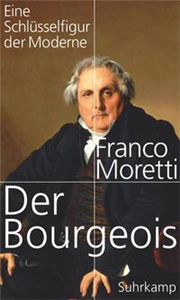
Die industrielle Revolution hat keinen Stein auf dem anderen gelassen. Sie hat alle »altehrwürdigen Vorstellungen und Anschauungen« aufgelöst, alles »Ständische und Stehende verdampft, alles Heilige« entweiht, konstatieren Marx und Engels im »Kommunistischen Manifest«. Die Protagonisten dieser Umwälzung sind die Bürger, die Kaufleute und Industriekapitäne. Die Figur des Bourgeois hat nicht nur Max Weber, Werner Sombart und Joseph Schumpeter fasziniert, sie spielt auch eine Hauptrolle in den großen Werken der Weltliteratur: bei Defoe und Goethe, Balzac und Dickens, bei Thomas Mann und Henrik Ibsen. Franco Moretti rekonstruiert die Mentalität dieser Ära durch das Fenster Literatur: Warum hört Robinson Crusoe auch dann nicht auf zu arbeiten, als sein Überleben auf der paradiesischen Insel längst gesichert ist? Was verraten Ton, Schlüsselwörter und Grammatik der großen Romane des 19. Jahrhunderts über den Geist des Kapitalismus? Und was haben uns die Stücke Ibsens heute, das heißt in unseren postbürgerlichen Zeiten, noch zu sagen, in denen die Wachstumsideologie ebenso hinterfragt wird wie die Integrität von Bankern, Beratern und Analysten?
Trusted Partner

Man könne auch als Literaturwissenschaftler durchaus über Bücher reden, ohne jemals eines gelesen zu haben – mit solch provokanten Thesen bringt Franco Moretti seit Jahren die internationale Literaturtheorie durcheinander. In seinem neuen Buch demonstriert Moretti, der ob seiner innovativen Verve bereits mit Umberto Eco verglichen wird, wie eine »abstrakte Literaturwissenschaft« aussehen könnte: Anstatt sich mit einzelnen kanonischen Texten auseinanderzusetzen, kartographiert er die Landschaft englischer Dorfgeschichten oder erprobt die Anwendbarkeit evolutionstheoretischer Konzepte auf die Entwicklung des Detektivromans.
Trusted Partner
 Trusted Partner


Guide for pharmacy interns First-hand knowledge makes preparation for the 3rd State Examination easier. Each chapter ends with tips for pharmacy interns and – if appropriate – links to the worksheets of the BAK (Federal Chamber of Pharmacists) guidelines for practical training. Requirement for continuing professional development In-depth content supports those undertaking CPD in the area of general pharmacy. Each chapter contains additional proposals, such as participation in suitable seminars organised by the Chambers of Pharmacists, topics for the practical tasks or the project work. All-round talent for routine pharmacy practice Case examples link theoretical knowledge with actual patient counselling situations. Tips for practice, drug profiles and various boxes promote rapid and easy reference. New: The 2nd edition expands the proven, practical concept by chapters such as vaccination, hyperlipidaemia or dealing with adverse drug reactions.
Trusted Partner


This bestseller on general pathology for the caring and healthcare professions explains in clear, concise and compact language how illnesses occur and appear. Explained in a vivid and wellstructured way, this compact text book helps with understanding complicated connections, so that situations can be assessed correctly, recognized and acted on appropriately in practice.
Trusted Partner
Trusted Partner
Trusted Partner

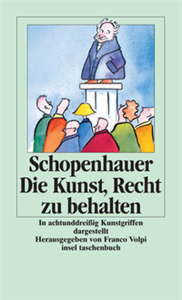
Organ der natürlichen Boshaftigkeit des Menschen, unverzichtbares Instrument, um Diskussionen erfolgreich zu führen und auf diese Weise dem Hang zur Rechthaberei nachzukommen, mithin der Wille, Recht zu behalten, gleichviel ob man im Recht ist oder nicht - dies und nichts anderes ist für Schopenhauer Dialektik.
Trusted Partner
Trusted Partner
Trusted Partner
Trusted Partner

This collection offers a new lens through which to examine Spain's cinema production following the isolation imposed by the Franco regime. The seventeen key films analysed in the volume span a period of 35 years that have been crucial in the development of Spain, Spanish democracy and Spanish cinema. They encompass different genres (horror, thriller, melodrama, social realism, documentary), both popular (Los abrazos rotos/Broken Embraces, Vicky Cristina Barcelona) and more select art house fare (En la ciudad de Sylvia/In the City of Sylvia, El espíritu de la colmena/Spirit of the Beehive) and are made in English (as both first and second language), Basque, Castilian, Catalan and French. Offering an expanded understanding of 'national' cinemas, the volume explores key works by Guillermo del Toro and Lucrecia Martel alongside an examination of the ways in which established auteurs (Almodóvar, José Garci, Carlos Saura) and younger generations of filmmakers (Cesc Gay, Amenábar, Bollaín) have harnessed cinematic language towards a commentary on the nation-state. The result is a bold new study of the ways in which film has created new prisms that have determined how Spain is positioned in the global marketplace.
Trusted Partner

The purpose of this book is to support general practitioners in finding the optimum, guideline-compliant therapy for their patients. The focus is on the clinical pictures of depression, psychosis as well as anxiety and sleep disorders and the handling of psychiatric emergencies. The reader will learn everything about the epidemiology, aetiology, diagnosis and medical treatment of these diseases, about switching therapy and about treatment in pregnancy and lactation. All the available psychotropic drugs and their pharmacological properties are described in detail – including key specific features of active substances and drug safety aspects. The table of substances in the appendix provides a clear summary of the information and simplifies the choice of the appropriate drug. The extras: - 13 factsheets with concise, summarised information to cope with tricky situations in the practice - The authors take the current treatment guidelines from Germany, Austria and Switzerland into account and name examples of proprietary medicinal products in the three countries.
Trusted Partner
Trusted Partner
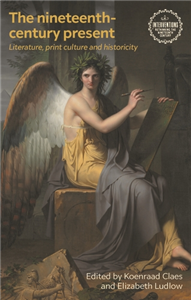
The Nineteenth-Century Present explores the multiple ways in which history was understood, structured, and reassessed in literary, theological, and political contexts across the nineteenth century. While the scope of the book is wide, ranging from the representations of geological time and ancient history to the writing of the recent past, and covering the work of writers from Walter Scott to G.K. Chesterton, each chapter reveals how present concerns intrude on and shape every view of history. Ultimately, the collection emphasises that issues raised regarding historicity in recent methodological debates were already concerns in the nineteenth century.



