
Running the Goat, Books & Broadsides
Livres Canada Books
View Rights Portal


 Trusted Partner

In 1901 most Australians were loyal, white subjects of the British Empire with direct connections to Britain. Within a hundred years, following an unparalleled immigration program, its population was one of the most diverse on earth. No other country has achieved such radical social and demographic change in so short a time. Destination Australia tells the story of this extraordinary transformation. Against the odds, this change has caused minimal social disruption and tension. While immigration has generated some political and social anxieties, Australia has maintained a stable democracy and a coherent social fabric. One of the impressive achievements of this book is in explaining why this might be so. Eric Richards recounts the experiences of many individual migrants from all over the world, examines the dramas and challenges of officials involved in this grand experiment and ends up telling a truly remarkable story. Compelling and revealing, Destination Australia is essentially the Australian story of the twentieth century. ;
Trusted Partner


Leises Mädchen – große Liebe Seit sechs Jahren sind Debbie und Jason ein Paar. In dieser liebevollen Graphic Novel erzählt Debbie von den Couple Goals ihrer Beziehung. Dabei geht es nicht nur um die großen Meilensteine wie die Jahrestage, das erste gemeinsame Haus und den romantischen Antrag, den Jason am Hochzeitstag einfach wiederholt, sondern auch um die kleinen alltäglichen Rituale: zusammen den Lieblingsfilm anschauen, einander Tee kochen, wenn jemand krank ist, oder einfach die kleinen und größeren Macken des jeweils anderen auszuhalten. Couple Goals ist ein wunderschönes Geschenkbuch für alle Verliebten und für alle Fans von Quiet Girl und Book Love.
Trusted Partner
Settlers at the end of empire traces the development of racialised migration regimes in South Africa, Rhodesia (present-day Zimbabwe) and the United Kingdom from the Second World War to the end of apartheid in 1994. While South Africa and Rhodesia, like other settler colonies, had a long history of restricting the entry of migrants of colour, in the 1960s under existential threat and after abandoning formal ties with the Commonwealth they began to actively recruit white migrants, the majority of whom were British. At the same time, with the 1962 Commonwealth Immigrants Act, the British government began to implement restrictions aimed at slowing the migration of British subjects of colour. In all three nations, these policies were aimed at the preservation of nations imagined as white, revealing the persistence of the racial ideologies of empire across the era of decolonisation.
Trusted Partner
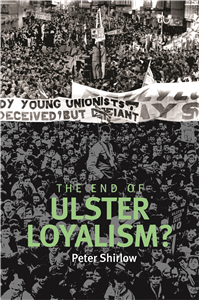
The end of Ulster loyalism? explores the dynamics and divisions within paramilitary groups since the mid-1970s. It, despite contrary public opinion, details and explains the nature of Loyalist conflict transformation. A key model of transition that is relevant to arenas beyond Northern Ireland. The book also discusses the nature and extent of loyalist violence and provides a rarely heard voice regarding State-led collusion. It locates Loyalist ideas and opinions that have been largely invisible and highlights how an extensive element of positive Loyalist renewal has been purposefully suppressed and unmentioned. It is a key text for any student of politics, criminology, human geography and conflict and conflict transformation and is particularly relevant to the scholarship of pro-State groups who are infrequently considered in academic deliberations. A book of both hope and despair that emerges from a destabilising past and a yet-to-be-decided future. ;
Trusted Partner
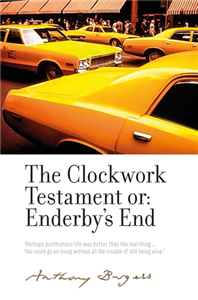
First published in 1974, this novel is a semi-autobiographical reflection on the author's experience of having been the subject of Stanley Kubrick's film adaptation of A Clockwork Orange in 1971. This is the end of Enderby, Anthony Burgess's finest comic creation. Dyspeptic and obese, this is the account of his last day as a visiting professor in New York, and his last day on Earth. The Irwell Edition of The Clockwork Testament will provide new information about the genesis of the novel, gleaned from a series of drafts and typescripts recently discovered in the archive of the International Anthony Burgess Foundation (IABF) in Manchester, as well as printing a deleted chapter for the first time in English.
Trusted Partner
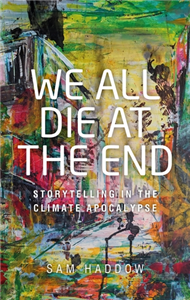
We all die at the end offers a survey of contemporary end-of-the-world fiction, spanning literature, children's fiction, video games, theatre and film. It draws on eco-critical philosophy and narrative theory to show ways in which the climate crisis is reorienting storytelling in the face of foreseeable human extinction. In the process, it argues that such stories have a role to play in helping us come to terms with the severity and scale of the crisis that we face.
Trusted Partner
Death in modern theatre offers a unique account of modern Western theatre, focusing on the ways in which dramatists and theatre-makers have explored historically informed ideas about death and dying in their work. It investigates the opportunities theatre affords to reflect on the end of life in a compelling and socially meaningful fashion. In a series of interrelated, mostly chronological, micronarratives beginning in the late nineteenth century and ending in the early twenty-first century, this book considers how and why death and dying are represented at certain historical moments using dramaturgy and aesthetics that challenge audiences' conceptions, sensibilities, and sense-making faculties. It includes a mix of well-known and lesser-known plays from an international range of dramatists and theatre-makers, and offers original interpretations through close reading and performance analysis.
Trusted Partner

Egypt and the rise of fluid authoritarianism focuses on the struggle of the post-2013 political authorities for internal political legitimacy after the crisis following the 2013 coup d'état. It explores the microstructural and macro-systemic dynamics of leadership, power, protests and the authority-making process in political systems. These cannot simply be defined as structural, political, social and economic projections of the authoritarianism of the past, but rather as a rupture with that past. The book offers a complex, ground-breaking socio-political and economic analysis into how the forging of an internal political legitimacy claim has eventually modified the regime in Egypt along the authoritarian spectrum, turning into a fluid autocracy closer to a non-exclusivist personalist regime. This shift had implications that resonated both politically and economically.
Trusted Partner
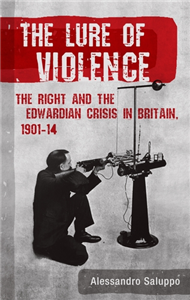
This book provides a comprehensive examination of conservative and right-wing responses to the Edwardian crisis in Britain (1901-1914). It stresses how the upsurge of right-wing extremism within and outside the Conservative party was accompanied by the crystallization of a culture of violence. The preparation, instigation or threatening of violent acts against all those who appeared to threaten the organic nature and vigour of the national community found expression in a myriad of ultra-nationalist organisations, citizen policing groups, private military associations, and paramilitary formations. The book innovatively reconstructs the belief system and the practices of those right-wing actors, which pursued the goals of military preparedness, "racial regeneration" and imperial unity, while defending the amorphous goals of authority, order and 'national efficiency' against the forces of radicalism and socialism. The book helps to cast light on the bellicose and authoritarian reflexes that traversed British conservatism in the turbulent prewar years.
Trusted Partner
Trusted Partner
Trusted Partner
Trusted Partner
Trusted Partner

 Trusted Partner
Trusted Partner
Trusted Partner
Trusted Partner
Trusted Partner
Trusted Partner
Trusted Partner



