
Your Search Results
-

-

Wolters Kluwer Legal & Regulatory U.S.
Wolters Kluwer Law & Business delivers expert content and solutions in the areas of law, corporate compliance, health compliance, reimbursement, and legal education.
View Rights Portal
-
Promoted Content

 Humanities & Social SciencesJune 2021
Critical security in the Asia-Pacific
by Anthony Burke, Matt McDonald
In the wake of 9/11, the Asian crisis and the 2004 tsunami, traditional analytical frameworks are increasingly unable to explain how individuals and communities are rendered insecure, or advance individual, global or environmental security. In the Asia-Pacific, the accepted wisdom of realism has meant that analyses rarely move beyond the statist, militarist and exclusionary assumptions that underpin traditional realpolitik. This innovative new book challenges these limitations and addresses the missing problems, people and vulnerabilities of the Asia-Pacific region. It also turns a critical eye on traditional interstate strategic dynamics. Critical security in the Asia-Pacific applies both a critical theoretical approach that interrogates the deeper assumptions underpinning security discourses, and a human-centred policy approach that focuses on the security, welfare and emancipation of individuals and communities. Leading Asia-Pacific researchers combine to apply these frameworks to the most pressing issues in the region, from the Korean peninsula to environmental change, Indonesian conflict, the 'war on terror' and the plight of refugees. The result is a sophisticated and accessible account of often-neglected realities of marginalization in the region, and a compelling argument for the empowerment and security of the most vulnerable.
-
Promoted Content
 Humanities & Social SciencesOctober 2024
Egypt and the rise of fluid authoritarianism
Political ecology, power and the crisis of legitimacy
by Maria Gloria Polimeno
Egypt and the rise of fluid authoritarianism focuses on the struggle of the post-2013 political authorities for internal political legitimacy after the crisis following the 2013 coup d'état. It explores the microstructural and macro-systemic dynamics of leadership, power, protests and the authority-making process in political systems. These cannot simply be defined as structural, political, social and economic projections of the authoritarianism of the past, but rather as a rupture with that past. The book offers a complex, ground-breaking socio-political and economic analysis into how the forging of an internal political legitimacy claim has eventually modified the regime in Egypt along the authoritarian spectrum, turning into a fluid autocracy closer to a non-exclusivist personalist regime. This shift had implications that resonated both politically and economically.
-
 Trusted Partner


Does Movement Really Make Us Smart?
by Petra Jansen, Stefanie Richter
Media reports often praise movement as a cure-all. But apart from its undisputed positive effect on health, does movement really make us smarter? Consider a national football team, for example – are these excessively sports-driven players automatically the smartest people? Should we simply replace all school subjects with sports? The authors provide a detailed summary of the latest scientific findings on the influence of movement on cognitive ability. They describe the effects of movement, on old age, embodiment, emotion, school as well as other factors that influence cognition. Target Group: teachers, lecturers, psychologists, psychiatrists, neurologists, psychotherapists, movement therapists.
-
Trusted Partner
 Humanities & Social SciencesJuly 2023
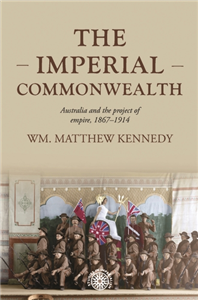
The imperial Commonwealth
Australia and the project of empire, 1867-1914
by Wm. Matthew Kennedy
From the late 1800s to the early 1900s, Australian settler colonists mobilised their unique settler experiences to develop their own vision of what 'empire' was and could be. Reinterpreting their histories and attempting to divine their futures with a much heavier concentration on racialized visions of humanity, white Australian settlers came to believe that their whiteness as well as their Britishness qualified them for an equal voice in the running of Britain's imperial project. Through asserting their case, many soon claimed that, as newly minted citizens of a progressive and exemplary Australian Commonwealth, white settlers such as themselves were actually better suited to the modern task of empire. Such a settler political cosmology with empire at its center ultimately led Australians to claim an empire of their own in the Pacific Islands, complete with its own, unique imperial governmentality.
-
Trusted Partner
 Humanities & Social SciencesApril 2004
Think tank traditions
Policy analysis across nations
by Diane Stone, Andrew Denham
As think tank numbers explode, they have become an integral part of political life. Political leaders, corporations and non-governmental organisations draw upon their expert advice to advance their causes in the battle of ideas. ;
-
Trusted Partner
 Business, Economics & LawNovember 2016
The law of international organisations
Third edition
by Iain Scobbie, Jean D'Aspremont, Dominic McGoldrick, Nigel White
This book provides a concise account of the principles and norms of international law applicable to the main-type of international organisation - the inter-governmental organisation (IGO). That law consists of principles and rules found in the founding documents of IGOs along with applicable principles and rules of international law. The book also identifies and analyses the law produced by IGOs, applied by them and, occasionally, enforced by them. There is a concentration upon the United Nations, as the paradigmatic IGO, not only upon the UN organisation headquartered in New York, but on other IGOs in the UN system (the specialised agencies such as the World Health Organisation).
-
Trusted Partner
 Humanities & Social SciencesSeptember 2021
Populism in Europe
Lessons from Umberto Bossi's Northern League
by Davide Vampa, Daniele Albertazzi
Populism in Europe offers a detailed and systematic analysis of the ideology, electoral and governmental performances, organisational model, type of leadership and member activism of the Northern League under its founder, Umberto Bossi (1991-2012). Based on a wealth of original research, the book identifies the Northern League's consistent and coherent ideology, its strong leadership and its ability to create communities of loyal partisan activists as key ingredients of its success. Through their in-depth analysis, Albertazzi and Vampa show that the League has much to teach us about how populists can achieve durability and rootedness and how parties of all kinds can still benefit from a committed and dedicated membership today.
-
Trusted Partner
 Humanities & Social SciencesAugust 2012
Justifying violence
Communicative ethics and the use of force in Kosovo
by Naomi Head, Peter Lawler, Emmanuel Pierre Guittet
When is the use of force for humanitarian purposes legitimate? The book examines this question through one of the most controversial examples of humanitarian intervention in the post Cold War period: the 1999 NATO intervention in Kosovo. Justifying Violence applies a critical theoretical approach to an interrogation of the communicative practices which underpin claims to legitimacy for the use of force by actors in international politics. Drawing on the theory of communicative ethics, the book develops an innovative conceptual framework which contributes a critical communicative dimension to the question of legitimacy that extends beyond the moral and legal approaches so often applied to the intervention in Kosovo. The empirical application of communicative ethics offers a provocative and nuanced account which contests conventional interpretations of the legitimacy of NATO's intervention. ;
-
Trusted Partner
 Humanities & Social SciencesJuly 2025
Urbicide in Syria
A postcolonial understanding of civil war
by Gabriel Garroum Pla
This book provides an exhaustive analysis of the relationship between violence, urban space, and political subjectivity in Syria. It does so through an exploration of how urbicide, the violent destruction and alteration of the urban fabric, becomes a tool for the regime's governmental and sovereign exercise of power, decisively redefining state-society dynamics and cementing political loyalty in Syria. Adopting a critical and postcolonial perspective, and through the cases of Damascus and Aleppo, the volume presents a unique perspective on the civil war by examining socio-material changes in everyday political spaces and processes, from mundane destruction to urban development and reconstruction efforts, and how these are experienced by local communities. Featuring rich data collection through interviews, archival research, and aesthetic sources, the book ultimately foregrounds Syrians' political agency and creativity despite ruination.
-
Trusted Partner
 Humanities & Social SciencesJune 2010
Beyond hegemony
Towards a new philosophy of political legitimacy
by Darrow Schecter
Since the Enlightenment, liberal democrat governments in Europe and North America have been compelled to secure the legitimacy of their authority by constructing rational states whose rationality is based on modern forms of law. The first serious challenge to liberal democratic practices of legal legitimacy comes in Marx's early writings on Rousseau and Hegel. Marx discovers the limits of formal legal equality that does not address substantive relations of inequality in the workplace and in many other spheres of social life. Beyond Hegemony investigates the authoritarianism and breakdown of those state socialist governments in Russia and elsewhere which claim to put Marx's ideas on democracy and equality into practice. The book explains that although many aspects of Marx's critique are still valid today, his ideas need to be supplemented by the contributions to social theory made by Nietzsche, Foucault, the critical theory of the Frankfurt School as well as the libertarian socialism of G.D.H. Cole. What emerges is a new theory of political legitimacy which indicates how it is possible to move beyond liberal democracy whilst avoiding the authoritarian turn of state socialism. Schecter points out the weaknesses of the many extra-legal accounts of non-formal legitimacy now on offer, such as those based on friendship and identity. He then argues that the first step beyond hegemony depends on the discovery of forms of legitimate legality and demonstrates why the conditions of legitimate law can be identified. ;
-
Trusted Partner

 August 2003
Is this real?
Die Kultur des HipHop
by Gabriele Klein, Malte Friedrich
"HipHop ist die erfolgreichste und folgenreichste Popkultur, die die globale Kulturindustrie hervorgebracht hat. In Is this real? geht es nicht um die Werke, sondern um die kulturelle Praxis des HipHop; Lebensstil und Lebensgefühl stehen im Mittelpunkt. HipHop wird als eine hybride Kultur vorgestellt, die sich im ›Dazwischen‹ von Ethnizität und Authentizität, Globalisierung und Lokalisierung, von Bild und Wirklichkeit, von Theater und Realität, von Ritualität und Profanität entfaltet. Die Frage nach der Herstellung von Wirklichkeit wird in medien-, kultur- und sozialwissenschaftlichen Debatten der spätmodernen Gesellschaften besonders diskutiert. In der HipHop-Kultur ist die Frage »Is this real?« besonders virulent, weil HipHop eine theatrale Kulturpraxis ist und als solche Wirklichkeit herstellt. Das Buch entwickelt also nicht nur eine neue Perspektive auf die HipHop-Kultur. Es macht am Beispiel dieser Popkultur auch kulturtheoretisch aktuelle Fragen anschaulich. Damit ist das Buch zugleich ein unverzichtbarer Baustein zum Verständnis von Populärkultur und alltagskulturellen Praktiken in Mediengesellschaften. "
-
Trusted Partner
 Civil service & public sectorMay 2017
The absurdity of bureaucracy
How implementation works
by Nina Holm Vohnsen. Series edited by Professor Rod Rhodes
The absurdity of bureaucracy offers a humorous ethnographic account of policy implementation set in contemporary Danish bureaucracy. Taking the reader deep into the hallways of governmental administration and municipal caseworkers' offices, the book sets out to explore what characterizes policy implementation as a mode of human agency. Using the notions of absurdity and sense-making as lenses through which to explore the dynamic relationship between a policy and its effects, the book reclaims 'implementation studies' for the qualitative sciences and emphasizes the existential dilemma that any policymaker and implementer must confront. Following step-by-step the planning and implementation of the randomized controlled trial, Active - Back Sooner, the book sets out to show that 'going wrong' is not a question of implementation failure but is in fact the only way in which implementation may happen.
-
Trusted Partner
 Humanities & Social SciencesAugust 2025
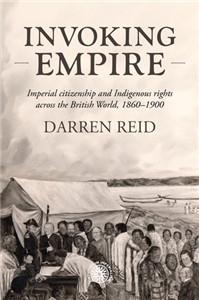
Invoking Empire
Imperial citizenship and Indigenous rights across the British World, 1860–1900
by Darren Reid
Invoking Empire examines the histories of Canada, South Africa, Australia, and New Zealand during the transitional decades between 1860-1900, when each gained some degree of self-government yet still remained within the sovereignty of the British Empire. It applies the conceptual framework of imperial citizenship to nine case studies of settlers and Indigenous peoples who lived through these decades to make two main arguments. It argues that colonial subjects adapted imperial citizenship to both support and challenge settler sovereignty, revealing the continuing importance of imperial authority in self-governing settler spaces. It also posits that imperial citizenship was rendered inoperable by a combination of factors in both Britian and the colonies, highlighting the contingency of settler colonialism on imperial governmental structures and challenging teleological assumptions that the rise of settler nation states was an inevitable result of settler self-government.
-
Trusted Partner
 Humanities & Social SciencesMay 2008
Intervention and state-building in the Pacific
The legitimacy of 'cooperative intervention'
by Peter Lawler, Greg Fry, Tarcisius Kabutaulaka, Emmanuel Pierre Guittet, Alan Rutter
State-building intervention in weak, war-torn or failing states has become a priority for the international community. However, the question of how to legitimately engage in the shaping of national governance remains, at the very least, a vexed one. This book explores this key issue through a critical examination of a new model of state-building intervention which has recently emerged in relation to the Pacific 'arc of crisis'. Initiated by the Australian Government in 2003, this 'cooperative intervention' doctrine, built on declared principles of partnership and respect for sovereignty, seems to offer a legitimate way to engage in state-building intervention. Drawing on a group of distinguished Pacific specialists, this book mounts a critique of these claims, showing how international legitimacy does not automatically translate into political legitimacy among those in the affected societies; and how the attempt to legitimise the intervention internationally may actually work against such legitimacy in the recipient state. These insights will be of value to those interested in public policy studies, international law, development studies and international relations. ;
-
Trusted Partner
-
Trusted Partner
 Humanities & Social SciencesFebruary 2017
European Empires and the People
Popular responses to imperialism in France, Britain, the Netherlands, Belgium, Germany and Italy
by John M. MacKenzie
This is the first book to survey in comparative form the transmission of imperial ideas to the public in six European countries in the nineteenth and twentieth centuries. The chapters, focusing on France, Britain, the Netherlands, Belgium, Germany and Italy, provide parallel studies of the manner in which colonial ambitions and events in the respective European empires were given wider popular visibility. The international group of contributors, who are all scholars working at the cutting edge of these fields, place their work in the context of governmental policies, the economic bases of imperial expansion, major events such as wars of conquest, the emergence of myths of heroic action in exotic contexts, religious and missionary impulses, as well as the new media which facilitated such popular dissemination. Among these media were the press, international exhibitions, popular literature, educational institutions and methods, ceremonies, church sermons and lectures, monuments, paintings and much else.
-
Trusted Partner
-
Trusted Partner
 Sociology: work & labourJuly 2015
The sociology of unemployment
by Edited by Tom Boland and Ray Griffin
The sociology of unemployment is an analysis of the experience and governance of unemployment. By considering unemployment as more than just the absence of work; the book explores unemployment as a distinctive experience created by the welfare state. Each chapter explores an aspect of the experience or governance of unemployment; beginning with how people talk about their experience of being unemployed individually and collectively, to the places of unemployment, and on to the processes, policies and forms of the social welfare system. Clear explanations of classic theories are explored and extended, all against the backdrop of new primary research. Chapter by chapter, The sociology of unemployment challenges the 'deprivation theory of unemployment' which dominates sociology, psychology and social policy, by focusing on how governmental power forms the experience of unemployment. As a result, the book is both an introductory text on the sociology of unemployment and a fresh, critical perspective.
-
Trusted Partner
 Humanities & Social SciencesJuly 2015
The sociology of unemployment
by Tom Boland, Ray Griffin
The sociology of unemployment is an analysis of the experience and governance of unemployment. By considering unemployment as more than just the absence of work; the book explores unemployment as a distinctive experience created by the welfare state. Each chapter explores an aspect of the experience or governance of unemployment; beginning with how people talk about their experience of being unemployed individually and collectively, to the places of unemployment, and on to the processes, policies and forms of the social welfare system. Clear explanations of classic theories are explored and extended, all against the backdrop of new primary research. Chapter by chapter, The sociology of unemployment challenges the 'deprivation theory of unemployment' which dominates sociology, psychology and social policy, by focusing on how governmental power forms the experience of unemployment. As a result, the book is both an introductory text on the sociology of unemployment and a fresh, critical perspective. ;
-
Trusted Partner

 October 1990
Karl Friedrich von Savigny 1814 - 1875.
Ein preußisches Diplomatenleben im Jahrhundert der Reichsgründung.
by Real, Willy



