
Highline Verlag
Highline is a young and creative and publisher specializing in high-quality children’s books. The book series „The adventures of little Charlie“ is particularly popular among dog lovers of all ages.
View Rights Portal
Highline is a young and creative and publisher specializing in high-quality children’s books. The book series „The adventures of little Charlie“ is particularly popular among dog lovers of all ages.
View Rights Portal
Highlights for Children is a multi-media brand that has nurtured children for more than 70 years. Our books and digital products - puzzles, trade and educational - are devoted to helping children around the world become their best selves.
View Rights Portal

 Trusted Partner
Trusted Partner
Trusted Partner


The image many people have of depression is devastating - a chronic condition that leaves not only the sufferer but also their loved ones at a loss. Unfortunately, psychotherapies often focus on deficits rather than individual strengths and resources. Although this makes patients feel understood, there is a risk that they will become stuck in the role of victim. But what about those who seem to be functioning normally, those who masterfully hide their depression behind a smile? High-functioning depression" is often overlooked because people affected by it have good coping strategies to deal with everyday life. In this groundbreaking book, Dr Michelle Hildebrandt, a specialist in psychiatry and psychotherapy, shows how high-functioning depression can be recognised and how resource-oriented therapy can help not only those affected, but also other people with depression and their relatives. This book broadens the picture of depression and creates a space of hope.
Trusted Partner

This book shows that Max Horkheimer's program of critical theory and his research throughout his career as a university professor and thinker are rooted in the cogency of philosophical questions and an in-depth knowledge of the historical development of philosophical problems in their close correlation with the socio-economic framework which shaped the 'bourgeois society' and the Modern Era. Indeed, his analyses of modern philosophers allows us to understand how the bourgeoisie seeks legitimisation and consolidation of its position, partly through the voices of its thinkers. In this way, in his investigation of early modern philosophy problems, and through constant dialogue with his colleagues Adorno, Marcuse, Pollock and Fromm, Horkheimer expresses a profound awareness of the critical force inherent in thought which, admittedly, is ever vulnerable to crisis and weakening, but which can always be reactivated.
Trusted Partner

The 12th revised and updated version of the History of the German language – long regarded as an indispensable standard work for German Studies, has just been published. From now on, this comprehensive textbook on the history of the language is divided into two volumes. In addition to introducing questions about historical linguistics, the first volume provides a detailed account of the prehistory and history of German right up to the present day. Based on extensive source analyses, the focus is on aspects of culture and social history; only the chapters on the Indo-Germanic and Germanic language include key information about structural history. The second part contains concise, but readily understandable accounts of Old, Middle and Early New High German in terms of phonology, graphemics, morphology and syntax. Not only are synchronous descriptions given of the particular language period, but also the development of German language construction at all structural levels is explained. The association of grammatical synchrony and structural diachrony is a particular characteristic of this second part of Schmidt’s work on the history of language.
Trusted Partner

A grand strategy of peace is the first detailed account of Britain's role in the creation of the United Nations Organization during the Second World War. As a work of traditional diplomatic history that brings in elements of intellectual history, the book describes how British officials, diplomats, politicians, and writers - previously seen to be secondary actors to the United States in this period - thought about, planned for, and helped to establish a future international order. While in the present day, many scholars and analysts have returned to the origins of the post- 1945 international system, this book offers an exhaustive account of how the statesmen and more importantly, the officials working below the statesmen, actually conceived of and worked to establish a post-war world order.
Trusted Partner
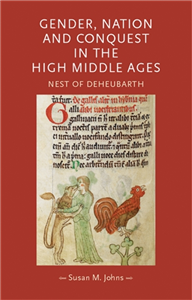
Nest of Deheubarth was one of the most notorious women of the Middle Ages, mistress of Henry I and many other men, famously beautiful and strong-willed, object of one of the most notorious abduction/elopements of the period and ancestress of one of the most famous dynasties in medieval Ireland, the Fitzgeralds. This volume sheds light on women, gender, imperialism and conquest in the Middle Ages. From it emerges a picture of a woman who, though remarkable, was not exceptional, representative not of a group of victims or pawns in the dramatic transformations of the high Middle Ages but powerful and decisive actors. The book examines beauty, love, sex and marriage and the interconnecting identities of Nest as wife/concubine/mistress, both at the time and in the centuries since her death, when for Welsh writers and other commentators she has proved a powerful symbol. ;
Trusted Partner


A historic big infrastructure project in the nexus of federal government policy planning From Berlin Airport to Stuttgart 21 – public building projects seem to get out of hand with growing frequency. Frank Uekötter follows the example of the Elbe Lateral Canal, which was opened in 1976, to show that institutional failure is not a new phenomenon. The virtually forgotten story of the Elbe Lateral Canal represents an inglorious episode of German federal policy planning. The benefit of the 115 km long waterway, which connects the Mittelland Canal with the River Elbe, was completely out of proportion to the level of investment. Despite this, the project was soon unstoppable in the nexus of corporate interests, political aims and the policy for growth. A dam ruptured at Lüneburg only weeks after its opening. Uekötter argues for a social rethink based on the clear chronology of these “organized irresponsibilities”.
Trusted Partner

In the first monograph to fully examine the intersecting networks of Jacobites and travellers to the continent, Filet considers how small states used official diplomacy and deployed soft power - embodied by educational academies - to achieve foreign policy goals. This work uses little-known archival materials to explain how and why certain small states secretly supported the Jacobite cause during the crucial years surrounding the 1715 rising, while others stayed out of Jacobite affairs.At the same time, the book demonstrates how early modern small states sought to cultivate good relations with Britain by attracting travellers as part of a wider trend of ensuring connections with future diplomats or politicians in case a Stuart restoration never came.This publication therefore brings together a study of Britain, small states, Jacobitism, and educational travel, in its nexus at continental academies.
Trusted Partner

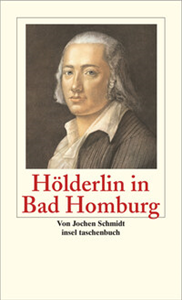
Zweimal zwei Jahre verbrachte Hölderlin in Bad Homburg. In jener Zeit entstanden einige seiner wichtigsten Werke, u.a. Hyperion und Der Tod des Empedokles sowie bedeutende Gedichte. Der vorliegende Band berichtet über Hölderlins Lebensgeschichte bis zum Ausbruch des Wahnsinns und bietet einen Überblick über seine geistige Welt, insbesondere seinen Philosophenkosmos und die literarischen Leitfiguren. Er zeigt auch sein politisch-revolutionäres Engagement in einer vom Spätabsolutismus bestimmten Zeit. Der Leser erhält eine bisher so nicht vorhandene, konzentrierte Darstellung zu Hölderlins Dichtung aus der Feder eines führenden Hölderlin-Forschers. Eine Auswahl von Gedichten und Bildern rundet diesen Begleiter zu Hölderlin ab.
Trusted Partner

Sooner or later everything is thrown away. In the consumer society, however, usable and serviceable products that may be as good as new are also thrown away. Such behaviour is the result of a long-term process that has developed over a period of one-and-a-half centuries. The change was led by the USA, and the Federal Republic of Germany followed. It started at the turn of the last century with personal hygiene: articles such as toilet paper, sanitary towels, nappies and paper handkerchiefs. After the Second World War, a large number of other disposable articles were soon added, such as paper cups and plastic dishes, nylon stockings and pens, razor blades, beverage cans and much more besides. Wolfgang König shows how business and consumers have together made throwing things away perfectly normal – and discusses how the throwaway society may be overcome.
Trusted Partner


The „Standardised risk assessment of high blood pressure“ enables every pharmacy to easily expand its range of services. This tool provides the pharmacy staff with the basis for providing such a service. It contains clear information on the development of hypertension and guideline-based drug therapy. Step by step, the user is guided through practical blood pressure measurement according to standard operating procedures through to individual advice and subsequent billing. This tool contains the following supplementary information: - Legal requirements for handling medical devices and/or blood pressure monitors - Frequently asked questions and case examples - What one should know about quality management - Work aids and forms as copy templates
Trusted Partner

This book provides scholars and students alike with a set of texts that can deepen their understanding of the culture and society of the twelfth-century German kingdom. The sources translated here bring to life the activities of five noblemen and noblewomen from Rome to the Baltic coast and from the Rhine River to the Alpine valleys of Austria. To read these five sources together is to appreciate how interconnected political, military, economic, religious and spiritual interests could be for some of the leading members of medieval German society-and for the authors who wrote about them. Whether fighting for the emperor in Italy, bringing Christianity to pagans in what is today northern Poland, or founding, reforming and governing monastic communities in the heartland of the German kingdom, the subjects of these texts call attention to some of the many ways that noble life shaped the world of central medieval Europe.
Trusted Partner

Where civil society is often seen as a driving force for equality, this book addresses a challenging topic: civil society elites. Drawing on a comprehensive study of Italy, Poland, Sweden, and the UK, this ground-breaking research investigates the often-overlooked power structures within civil society. By combining elite studies with civil society research, the book uncovers how a distinct civil society elite emerges and how it interacts with leaders in politics and business. The findings reveal a fascinating paradox. While this elite may be a powerful engine for social change, its integration into wider power circles risks reproducing the very inequalities it seeks to dismantle. By exploring how this elite can become disconnected from its grassroots, the book provides essential insights into the future of civil society and its democratic promise.
Trusted Partner
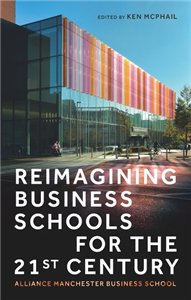
Whether it's dealing with regional economic disparities, global geopolitical upheaval, climate change, or the impact of new technologies such as artificial intelligence, we are living in pivotal times. To mark its 60th anniversary in 2025, this accessible book from Alliance Manchester Business School outlines in detail how business schools can play a significant role in confronting these huge challenges, and equip the next generation of business leaders with the skills they need to embrace them. Informing public and political debate on the role of business in both the causes and solutions to our biggest challenges the book offers a rethinking of the role of business in society. It will also discuss specific examples of how collaborations with business are leading to impact and change in society. Featuring a range of thought-provoking essays co-authored by eminent academics and business leaders, this collection will challenge the status quo and outline how business and management research is helping address grand challenges, generate economic growth, inform policy development, and define business thinking over the next generation.
Trusted Partner

This book provides an accessible collection of translated legal sources through which the exploits of criminals and developments in the English criminal justice system (c.1215-1485) can be studied. Drawing on the wealth of archival material and an array of contemporary literary texts, it guides readers towards an understanding of prevailing notions of law and justice and expectations of the law and legal institutions. Tensions are shown emerging between theoretical ideals of justice and the practical realities of administering the law during an era profoundly affected by periodic bouts of war, political in-fighting, social dislocation and economic disaster. Introductions and notes provide both the specific and wider legal, social and political contexts in addition to offering an overview of the existing secondary literature and historiographical trends. This collection affords a valuable insight into the character of medieval governance as well as revealing the complex nexus of interests, attitudes and relationships prevailing in society during the later Middle Ages.
Trusted Partner
Trusted Partner
 Trusted Partner




