
Your Search Results


-
Promoted Content

 Literature & Literary StudiesJuly 2021
Making home
Orphanhood, kinship and cultural memory in contemporary American novels
by Maria Holmgren Troy, Elizabeth Kella, Helena Wahlstrom, Maria Holmgren Troy
Making home explores the figure of the orphan child in a broad selection of contemporary US novels by popular and critically acclaimed authors Barbara Kingsolver, Linda Hogan, Leslie Marmon Silko, Marilynne Robinson, Michael Cunningham, Jonathan Safran Foer, John Irving, Kaye Gibbons, Octavia Butler, Jewelle Gomez and Toni Morrison. The orphan child is a continuous presence in US literature, not only in children's books and nineteenth-century texts, but also in a variety of genres of contemporary fiction for adults. Making home examines the meanings of this figure in the contexts of American literary history, social history and ideologies of family, race and nation. It argues that contemporary orphan characters function as links to literary history and national mythologies, even as they may also serve to critique the limits of literary history, as well as the limits of familial and national belonging.
-
Promoted Content
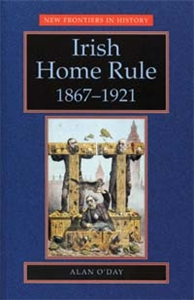 Humanities & Social SciencesAugust 1998
Irish Home Rule
by Alan O'Day, Mark Greengrass
Irish Home Rule considers the pre-eminent issue in British politics during the late nineteenth and early twentieth-centuries. It is the first account to explain the various self-government plans, to place these in context and examine the motives for putting the schemes forward. The book distinguishes between moral and material home rulers, making the point that the first appealed especially to outsiders, some Protestants and the intelligentsia, who saw in self-government a means to reconcile Ireland's antagonistic traditions. In contrast, material home rulers viewed a Dublin Parliament as a forum of Catholic interests. This account appraises the home rule movement from a fresh angle, distinguishing it from the usual division drawn between physical force and constitutional nationalists It maintains that an ideological continuity runs from Young Ireland, the Fenians, the early home rulers including Isaac Butt and Charles Stewart Parnell, to the Gaelic Revivalists to the Men of 1916. These nationalists are distinguishable from material home rulers not on the basis of methods or strategy but by a fundamental ideological cleavage. ;
-
 Trusted Partner
-
Trusted Partner
-
Trusted Partner
-
Trusted Partner
 Literature & Literary StudiesJanuary 2013
The English manor c.1200–c.1500
by Mark Bailey
Provides a comprehensive introduction and essential guide to one of the most important institutions in medieval England and to its substantial archive. This is the first book to offer a detailed explanation of the form, structure and evolution of the manor and its records. Offers translations of, and commentaries upon, each category of document to illustrate their main features. Examples of each category of record are provided in translation, followed by shorter extracts selected to illustrate interesting, commonly occurring, or complex features. A valuable source of reference for undergraduates wishing to understand the sources which underpin the majority of research on the medieval economy and society.
-
Trusted Partner
 Humanities & Social SciencesMarch 2007
Contesting home defence
by Penny Summerfield, Bertrand Taithe, Corinna Peniston-Bird, Penny Summerfield, Peter Gatrell, Max Jones, Ana Carden-Coyne
-
Trusted Partner
 Humanities & Social SciencesMarch 2007
Contesting home defence
by Penny Summerfield, Bertrand Taithe, Corinna Peniston-Bird, Penny Summerfield, Peter Gatrell, Max Jones, Ana Carden-Coyne, Rebecca Mortimer
-
Trusted Partner
 Literary studies: fiction, novelists & prose writersJanuary 2015
Making home
Orphanhood, kinship and cultural memory in contemporary American novels
by Maria Holmgren Troy, Elizabeth Kella, Helena Wahlström
Making home explores the figure of the orphan child in a broad selection of contemporary US novels by popular and critically acclaimed authors Barbara Kingsolver, Linda Hogan, Leslie Marmon Silko, Marilynne Robinson, Michael Cunningham, Jonathan Safran Foer, John Irving, Kaye Gibbons, Octavia Butler, Jewelle Gomez and Toni Morrison. The orphan child is a continuous presence in US literature, not only in children's books and nineteenth-century texts, but also in a variety of genres of contemporary fiction for adults. Making home examines the meanings of this figure in the contexts of American literary history, social history and ideologies of family, race and nation. It argues that contemporary orphan characters function as links to literary history and national mythologies, even as they may also serve to critique the limits of literary history, as well as the limits of familial and national belonging.
-
Trusted Partner
 Literature & Literary StudiesAugust 2014
Making home
Orphanhood, kinship and cultural memory in contemporary American novels
by Maria Holmgren Troy, Sharon Monteith, Elizabeth Kella, Nahem Yousaf, Helena Wahlstrom
Making home explores the figure of the orphan child in a broad selection of contemporary US novels by popular and critically acclaimed authors Barbara Kingsolver, Linda Hogan, Leslie Marmon Silko, Marilynne Robinson, Michael Cunningham, Jonathan Safran Foer, John Irving, Kaye Gibbons, Octavia Butler, Jewelle Gomez and Toni Morrison. The orphan child is a continuous presence in US literature, not only in children's books and nineteenth-century texts, but also in a variety of genres of contemporary fiction for adults. Making home examines the meanings of this figure in the contexts of American literary history, social history and ideologies of family, race and nation. It argues that contemporary orphan characters function as links to literary history and national mythologies, even as they may also serve to critique the limits of literary history, as well as the limits of familial and national belonging.
-
Trusted Partner
-
Trusted Partner
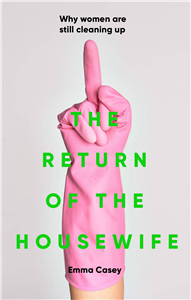 Humanities & Social SciencesApril 2025
The return of the housewife
Why women are still cleaning up
by Emma Casey
An illuminating look at the world of cleanfluencers that asks why the burden of housework still falls on women. Housework is good for you. Housework sparks joy. Housework is beautiful. Housework is glamorous. Housework is key to a happy family. Housework shows that you care. Housework is women's work. Social media is flooded with images of the perfect home. TikTok and Instagram 'cleanfluencers' produce endless photos and videos of women cleaning, tidying and putting things right. Figures such as Marie Kondo and Mrs Hinch have placed housework, with its promise of a life of love and contentment, at the centre of self-care and positive thinking. And yet housework remains one of the world's most unequal institutions. Women, especially poorer women and women of colour, do most low-paid and unpaid domestic labour. In The return of the housewife, Emma Casey asks why these inequalities matter and why they persist after a century of dramatic advances in women's rights. She offers a powerful call to challenge the prevailing myths around housework and the 'naturally competent' woman homemaker.
-
Trusted Partner
 Humanities & Social SciencesJune 2025
Taking travel home
The souvenir culture of British women tourists, 1750–1830
by Emma Gleadhill
In the late eighteenth-century, elite British women had an unprecedented opportunity to travel. Taking travel home uncovers the souvenir culture these women developed around the texts and objects they brought back with them to realise their ambitions in the arenas of connoisseurship, friendship and science. Key characters include forty-three-year-old Hester Piozzi (Thrale), who honeymooned in Italy; thirty-one-year-old Anna Miller, who accompanied her husband on a Grand Tour; Dorothy Richardson, who undertook various tours of England from the ages of twelve to fifty-two; and the sisters Katherine and Martha Wilmot, who travelled to Russia in their late twenties. The supreme tourist of the book, the political salon hostess Lady Elizabeth Holland, travelled to many countries with her husband, including Paris, where she met Napoleon, and Spain during the Peninsular War. Using a methodology informed by literary and design theory, art history, material culture studies and tourism studies, the book examines a wide range of objects, from painted fans "of the ruins of Rome for a sequin apiece" and the Pope's "bless'd beads", to lava from Vesuvius and pieces of Stonehenge. It argues that the rise of the souvenir is representative of female agency, as women used their souvenirs to form spaces in which they could create and control their own travel narratives.
-
Trusted Partner
-
Trusted Partner

 June 2009
Max Frisch. Citoyen
by Max Frisch, Matthias Gunten
»Wir riefen Gastarbeiter, und es kamen Menschen.« Mit Sätzen wie diesem griff Max Frisch immer wieder in das öffentliche Leben der Schweiz ein. Als politischer Intellektueller war er auch in anderen Ländern ein gefragter Gesprächspartner: Er diskutierte mit Henry Kissinger über den Krieg in Vietnam, war 1977 in der Nacht, in der die »Landshut« gestürmt wurde, bei Helmut Schmidt in Bonn. Dem Citoyen, dem engagierten Bürger Max Frisch hat Matthias von Gunten sein Porträt gewidmet. Zu Wort kommt, neben Kissinger und Schmidt sowie Schriftstellerkollegen wie Christa Wolf, Günter Grass und Peter Bichsel, auch der Autor Max Frisch selbst – seine Tagebucheinträge und Reden werden gelesen von Reto Hänny. »Solche Stimmen fehlen heute in der Schweiz«, sagte von Gunten dazu der Neuen Zürcher Zeitung. Man möchte ergänzen: und anderswo.
-
Trusted Partner
 March 2011
Max-Frisch-DVD-Box zum 100. Geburtstag
by Max Frisch
Zu Max Frischs 100. Geburtstag versammelt eine DVD-Box in der filmedition suhrkamp auf fünf DVDs die wichtigsten Filme von, mit und über den großen Schweizer Schriftsteller: ein Porträt des öffentlichen Intellektuellen Frisch (Matthias von Guntens Dokumentation "Max Frisch. Citoyen"), die vielfach ausgezeichnete Verfilmung "Holozän" von Heinz Bütler und Manfred Eicher, Richard Dindos "Journal I-III" (eine filmische Lektüre der Erzählung Montauk) sowie die Gespräche im Alter, die Philippe Pilliod in den Jahren 1985/1986 geführt hat. Vervollständigt wird das Paket durch ein besonderes Extra: Volker Schlöndorffs "Homo faber"-Adaption. Die Verfilmung mit internationaler Starbesetzung macht die Box zu einem Ereignis. Ein einzigartiger Zugang zu Leben und Werk des großen Autors.
-
Trusted Partner

 Family & health
A Family with Autism
When Autism is the Rule, not the Exception
by Joyce van Maaren
Four out of your five children have autism, and your husband too! This is what happened to Joyce van Maaren. Over the years four of her children and her husband are diagnosed with an autism spectrum disorder. In A Family With Autism she talks openly about how her life gets turned upside down over and over again, and how the family had to regain their balance. In this inspiring and lovable book, Joyce van Maaren takes the reader on a journey – one with many ups and downs. Readers can find support in her story and discover what autism means for daily life. But most of all, they will be inspired to make the most of every day, even if they or their family has to deal with autism (or other psychological disorders). Target Group: people with autism and their relatives, families of which some members have autism.
-
Trusted Partner
 Humanities & Social SciencesMarch 2017
Go home?
The politics of immigration controversies
by Hannah Jones, Yasmin Gunaratnam, Gargi Bhattacharyya, William Davies, Sukhwant Dhaliwal, Kirsten Forkert, Emma Jackson, Roiyah Saltus
'Go Home? The politics of Immigration Controversies is a thorough and informative publication which provides a distinctive insight into immigration policy and research debates. Operation Vaken should be considered a product of all that which has come before it, this research does well in outlining the current complexities of politics and immigration. Additionally, this book includes a complete snapshot of society with an engaging and pluralist commentary on the politics of immigration, allowing for meaningful and new conclusions to be made and new ideas to come to the forefront. Meanwhile, the book's honest exploration of the role, limitations and challenges within social research when exploring issues such as immigration will engage other researchers to evaluate and improve techniques.' Samiha Begum, Institute of Race Relations, June 2017
-
Trusted Partner
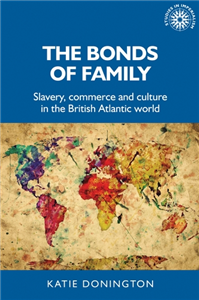 Humanities & Social SciencesJuly 2021
The bonds of family
Slavery, commerce and culture in the British Atlantic world
by Katie Donington
Moving between Britain and Jamaica The bonds of family reconstructs the world of commerce, consumption and cultivation sustained through an extended engagement with the business of slavery. Transatlantic slavery was both shaping of and shaped by the dynamic networks of family that established Britain's Caribbean empire. Tracing the activities of a single extended family - the Hibberts - this book explores how slavery impacted on the social, cultural, economic and political landscape of Britain. It is a history of trade, colonisation, enrichment and the tangled web of relations that gave meaning to the transatlantic world. The Hibberts's trans-generational story imbricates the personal and the political, the private and the public, the local and the global. It is both the intimate narrative of a family and an analytical frame through which to explore Britain's history and legacies of slavery.
-
Trusted Partner
 Medicine
Protection in In-home Care for the Elderly
Preventing and Identifying Abusive Situations – Supporting Care Recipients and Caregivers
by Barbara Baumeister, Trudi Beck (editors)
Why and how are elderly people abused when they receive care in their own homes? How can this abuse be identified and prevented? The authors explains why the elderly are abused when they receive at-home care, differentiate between various forms of abuse, and demonstrate how it can be identified. They present interventions and provide tools for preventing and identifying abuse and for supporting care recipients and caregivers. Target Group: Geriatric nurses, social workers, geriatricians



