Your Search Results

      • Edizioni Horti di Giano

        We are looking for that flame that ignites our authors’ emotions. We dream of an editorial world where those who deserve can express themselves freely and not thanks to a payment. Horti di Giano offers books with attention to the smallest detail, where Editing is the heart of a work done with passion and the publications are enriched by several hand-made illustrations, in order to give life to a book which is an artistic and complete experience. in every respect. You can find Fantasy, Sci-Fi, Horror, Thriller, Crime and Mistery, Coming-on-age novel, Poetry and Graphic Novel.

        View Rights Portal
      • Trusted Partner
        The Arts
        June 2017

        Terence Fisher

        by Peter Hutchings

        Terence Fisher is best known as the director who made most of the classic Hammer horrors - including The Curse of Frankenstein, Dracula and The Devil Rides Out. But there is more to Terence Fisher than Hammer horror. In a busy twenty-five-year career, he directed fifty films, not just horrors but also thrillers, comedies, melodramas and science-fiction. This book offers an appreciation of all of Fisher's films and also gives a sense of his place in British film history. Looking at Fisher's career as a whole not only underlines his importance as a film-maker but also casts a new, interesting light on the areas in which he worked - Gainsborough melodrama, the 1950s B film, 1960s science-fiction and, of course, Hammer, one of the most successful independent film companies in the history of British cinema.

      • Trusted Partner
        The Arts
        June 2017

        Terry Gilliam

        by Peter Marks

        Terry Gilliam presents a sustained examination of one of cinema's most challenging and lauded auteurs, proposing fresh ways of seeing Gilliam that go beyond reductive readings of him as a gifted but manic fantasist. Analysing Gilliam's work over nearly four decades, from the brilliant anarchy of his Monty Python animations through the nightmarish masterpiece Brazil to the provocative Gothic horror of Tideland, it critically examines the variety and richness of Gilliam's sometimes troubled but always provocative output. The book situates Gilliam within the competing cultural contexts of the British, European and American film industries, examining his regular struggles against aesthetic and commercial pressures. He emerges as a passionate, immensely creative director, whose work encompasses a dizzying array of material: anarchic satire, childhood and adult fantasy, dystopia, romantic comedy, surrealism, road movie, fairy tale and the Gothic. The book charts how Gilliam interweaves these genres and forms to create magical interfaces between reality and the illuminating, frightening but liberating worlds of the imagination. Scrutinising the neglected importance of literature and adaptation in Gilliam's career, this study also observes him through the lenses of auteurism, genre, performance, design and national culture, explaining how someone born in Minnesota and raised in California came to be one of British television and film's most compelling figures.

      • Trusted Partner
        The Arts
        July 2025

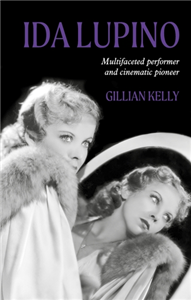
        Ida Lupino

        Multifaceted performer and cinematic pioneer

        by Gillian Kelly

        This book contributes to a welcome new wave focusing on the importance of female filmmakers, providing a reappraisal of Ida Lupino, a cinematic figure of significant importance. Given her ability to move between popular and independent cinemas and her status as both a Hollywood star and director/writer/producer of socially relevant films overlooked by the mainstream, Lupino is a particularly interesting case study. Employing a range of critical approaches, including feminist theory, auteur theory and critical theory, this book investigates key themes and motifs that developed across Lupino's unusual and unique career as one of the most significant female players in film history. Investigating her oeuvre as actress, director, writer and producer, it discusses Lupino as a complex and important filmmaker whose career, on both sides of the camera, requires substantially more critical attention than it has been awarded thus far.

      • Trusted Partner
        The Arts
        January 2019

        Five Directors

        Auteurism from Assayas to Ozon

        by Kate Ince

        Auteurism - the idea that a director of a film is its source of meaning and should retain creative control over the finished product - has been one of film studies' most important paradigms ever since the French New Wave of the late 1950s and early 1960s, and the adoption of the term auteur by Andrew Sarris. Through the popular, controversial and critically acclaimed films of Olivier Assayas, Jacques Audiard, the Dardenne borthers, Michael Haneke and Francois Ozon, this book looks into how the meaning of 'auteur' has changed over this half-century, and assesses the current state of Francophone auteur cinema. It combines French philosophical and sociological approaches with methodologies from the Anglo-American fields of gender studies, queer theory and postmodernism. This volume will be of interest to researchers and students of film studies, European cinema and French and Francophone studies, as well as to film enthusiasts.

      • Trusted Partner
        The Arts
        January 2019

        Francois Truffaut

        by Diana Holmes, Robert Ingram

        First in a series designed to situate and explain the films of French directors. A concise, accessible and original reading of Truffaut's films. A timely evaluation of the films of a popular director whose work features on most A-level French syllabuses and on the majority of University French Studies programmes both in the UK and the USA .

      • Trusted Partner
        The Arts
        June 2017

        Contemporary Australian cinema

        An introduction

        by Jonathan Rayner

        Provides an introduction to the products and context of the new Australian film industry which arose toward the end of the 1960s. Traces the development of Australian film, in terms of prominent directors and stars, consistent themes, styles and evolving genres. The evolution of the film genres peculiar to Australia, and the adaptation of conventional Hollywood forms (such as the musical and the road movie) are examined in detail through textual readings of landmark films. Films and trends discussed include: the period film and Picnic at Hanging Rock; the Gothic film and the Mad Max trilogy; camp and kitsch comedy and the Adventures of Pricilla, Queen of the Desert. The key issue of the revival (the definition, representation and propagation of a national image) is woven through analysis of the new Australian cinema.

      • Trusted Partner
        The Arts
        June 2021

        Genre and performance: film and television

        by Christine Cornea

        Looking at contemporary film and television, this book explores how popular genres frame our understanding of on-screen performance. Previous studies of screen performance have tended to fix upon star actors, directors, or programme makers, or they have concentrated upon particular training and acting styles. Moving outside of these confines, this book provides a truly interdisciplinary account of performance in film and television and examines a much neglected area in our understanding of how popular genres and performance intersect on screen. Each chapter concentrates upon a particular genre or draws upon generic case studies in examining the significance of screen performance. Individual chapters examine contemporary film noir, horror, the biopic, drama-documentary, the western, science fiction, comedy performance in 'spoof news' programmes and the television 'sit com' and popular Bollywood films.

      • Trusted Partner
        August 2008

        Five Directors

        Auteurism from Assayas to Ozon

        by Edited by Kate Ince

        Auteurism - the idea that a director of a film is its source of meaning and should retain creative control over the finished product - has been one of film studies' most important paradigms ever since the French New Wave of the late 1950s and early 1960s, and the adoption of the term auteur by Andrew Sarris. Through the popular, controversial and critically acclaimed films of Olivier Assayas, Jacques Audiard, the Dardenne borthers, Michael Haneke and Francois Ozon, this book looks into how the meaning of 'auteur' has changed over this half-century, and assesses the current state of Francophone auteur cinema. It combines French philosophical and sociological approaches with methodologies from the Anglo-American fields of gender studies, queer theory and postmodernism. This volume will be of interest to researchers and students of film studies, European cinema and French and Francophone studies, as well as to film enthusiasts.

      • Trusted Partner
        Literature & Literary Studies
        October 2018

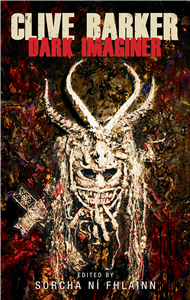
        Clive Barker

        Dark imaginer

        by Sorcha Ní Fhlainn

        Clive Barker: Dark imaginer explores the diverse literary, film and visionary creations of the polymathic and influential British artist Clive Barker. In this necessary and timely collection, innovative essays by leading scholars in the fields of literature, film and popular culture explore Barker's contribution to gothic, fantasy and horror studies, interrogating his creative legacy. The volume consists of an extensive introduction and twelve groundbreaking essays that critically reevaluate Barker's oeuvre. These include in-depth analyses of his celebrated and lesser known novels, short stories, theme park designs, screen and comic book adaptations, film direction and production, sketches and book illustrations, as well as responses to his material from critics and fan communities. Clive Barker: Dark imaginer reveals the breadth and depth of Barker's distinctive dark vision, which continues to fascinate and flourish.

      • Trusted Partner
        The Arts
        January 2026

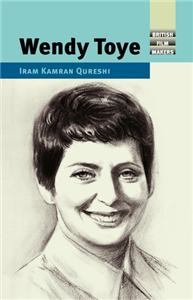
        Wendy Toye

        by Iram Kamran Qureshi

        This groundbreaking book delves into the remarkable career of Wendy Toye, one of Britain's most prolific, versatile and pioneering directors. Spanning a fascinating journey through her work in cinema, television, and advertising, the study highlights her mastery of visual storytelling, choreographic brilliance, and technical innovation. From her landmark short film The Stranger Left No Card to her contributions in musicals, comedy, fantasy films, and television productions, Toye's work consistently broke boundaries in a male-dominated industry. This insightful analysis also examines her ability to combine artistry with precision, her influence on the postwar cultural landscape, and her lasting legacy as a multidimensional creative force. A must-read for cinema enthusiasts, scholars, and anyone inspired by women's achievements in the media landscape.

      • Trusted Partner
        The Arts
        February 2009

        Daniel Calparsoro

        by Ann Davies, Nuria Triana-Toribio, Andy Willis

        Daniel Calparsoro, a director who has provided a crucial contribution to the contemporary scene in Spanish and Basque cinema, has provoked strong reactions from the critics. Reductively dismissed as a purveyor of crude violence by those critics lamenting a 'lost golden age' of Spanish filmmaking, Calparsoro's films reveal in fact a more complex interaction with trends and traditions in both Spanish and Hollywood cinema. This book is the first full-length study of the director's work, from his early social realist films set in the Basque Country to his later forays into the genres of the war and horror film. It offers an in-depth film-by-film analysis, while simultaneously exploring the function of the director in the contemporary Spanish context, the tension between directors and critics, and the question of national cinema in an area - the Basque Country - of heightened national and regional sensitivities. ;

      • Trusted Partner
      • Trusted Partner
        The Arts
        April 2011

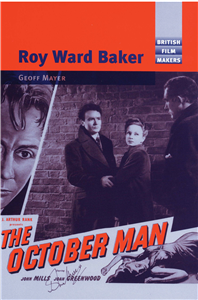
        Roy Ward Baker

        by Geoff Mayer, Brian McFarlane, Neil Sinyard

        This book traces the career of Roy Ward Baker, one of the great survivors of the British film and television industry. He directed the landmark British film Morning Departure (1949), worked at Twentieth Century Fox in Hollywood in the early 1950s where he directed Marilyn Monroe's 'breakthrough' film (Don't Bother to Knock), and followed this with a succession of fine films for Rank, culminating in the best version of the Titanic disaster, A Night to Remember in 1958. Yet within three years he was unable to secure a job in the British film industry and he moved to television series such as The Avengers, The Saint and Minder. Later Baker re-emerged as a major director of science-fiction (Quatermass and the Pit) and horror films (Asylum). Geoff Mayer provides an industrial and aesthetic context in which to understand the interrelationship between a skilled classical director and the transformation of the British film industry in the 1950s. ;

      • Trusted Partner
        The Arts
        December 2022

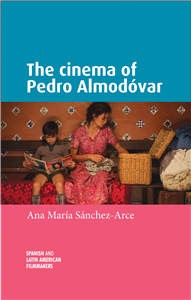
        The cinema of Pedro Almodóvar

        by Ana María Sanchez-Arce

        This book offers a comprehensive film-by-film analysis of Spain's most famous living director, Pedro Almodóvar. It shows how Almodóvar's films draw on various national cinemas and genres, including Spanish cinema of the dictatorship, European art cinema, Hollywood melodrama and film noir. It also argues that Almodóvar's work is a form of social critique, his films consistently engaging with and challenging stereotypes about traditional and contemporary Spain in order to address Spain's traumatic historical past and how it continues to inform the present. Drawing on scholarship in both English and Spanish, the book will be of interest to undergraduate and postgraduate students of film studies and Hispanic studies, scholars of contemporary cinema and general readers with a passion for the films of Pedro Almodóvar.

      • Trusted Partner
        The Arts
        June 2025

        Toronto New Wave cinema and the anarchist-apocalypse

        by David Christopher

        The Toronto New Wave (TNW) comprises a group of avant-garde filmmakers working in Canada from the 1980s and into the new millennium whose innovative film works share significant affinities with anarchist themes and aesthetics. Several of the TNW filmmakers openly identify as anarchists and/or acknowledge a debt to anarchism in their production of highly apocalyptic narratives as part of their cinematic political projects. However, recognition of anarchism's progressive apocalyptic theoretical relevance has yet to be substantially taken up by scholarship in cinema analysis. This analysis introduces an anarchist-inflected analytical methodology to understand the apocalyptic-revelatory political work these films attempt to accomplish in the perceptual space between the filmic texts and both their auteurs and potential viewers, and to re-locate the TNW within cinema history as an ongoing phenomenon with new significance in an apocalyptic era of digital distribution.

      • Trusted Partner
        The Arts
        January 2019

        Spanish cinema 1973–2010

        Auteurism, politics, landscape and memory

        by Maria M. Delgado, Robin Fiddian

        This collection offers a new lens through which to examine Spain's cinema production following the isolation imposed by the Franco regime. The seventeen key films analysed in the volume span a period of 35 years that have been crucial in the development of Spain, Spanish democracy and Spanish cinema. They encompass different genres (horror, thriller, melodrama, social realism, documentary), both popular (Los abrazos rotos/Broken Embraces, Vicky Cristina Barcelona) and more select art house fare (En la ciudad de Sylvia/In the City of Sylvia, El espíritu de la colmena/Spirit of the Beehive) and are made in English (as both first and second language), Basque, Castilian, Catalan and French. Offering an expanded understanding of 'national' cinemas, the volume explores key works by Guillermo del Toro and Lucrecia Martel alongside an examination of the ways in which established auteurs (Almodóvar, José Garci, Carlos Saura) and younger generations of filmmakers (Cesc Gay, Amenábar, Bollaín) have harnessed cinematic language towards a commentary on the nation-state. The result is a bold new study of the ways in which film has created new prisms that have determined how Spain is positioned in the global marketplace.

      • Trusted Partner
        The Arts
        April 2019

        Daniel Calparsoro

        by Nuria Triana-Toribio, Ann Davies, Andy Willis

        Daniel Calparsoro, a director who has made a crucial contribution to contemporary Spanish and Basque cinema, has provoked strong reactions from the critics. Reductively dismissed as a works of crude violence by those lamenting a 'lost golden age' of Spanish filmmaking, Calparsoro's films in fact reveal a more complex interaction with trends and traditions in both Spanish and Hollywood cinema. This book is the first full-length study of the director's work, from his early social-realist films set in the Basque Country to his later forays into the genres of the war and horror. It offers an in-depth film-by-film analysis while simultaneously exploring the director's position in the contemporary Spanish context, the tension between directors and critics and the question of national cinema in an area - the Basque Country - of heightened national and regional sensitivities.

      • Trusted Partner
        The Arts
        January 2019

        The films of Luc Besson

        Master of spectacle

        by Susan Hayward, Philip Powrie

        This fascinating collection looks at the career and films of Luc Besson, one of the most acclaimed figures in international cinema. Contributions have been assembled from all over the world, and their different approaches reflect this geographical diversity. Films covered range from Besson's first feature, La Dernier Combat, to the international blockbusters The Fifth Element and Joan of Arc. The essays range from looking at costume design to musical scores, and the final chapter offers a transcript of a previously unpublished interview with the man himself. He is the only French director to have crossed over successfully during the 1990s into the blockbuster spectacular we associate with Hollywood cinema and yet this is only the second book in English on this major international director. The films of Luc Besson will make fascinating reading for anyone interested in the career and films of the 'master of spectacle'.

      Subscribe to our

      newsletter