
Wolters Kluwer Health
Wolters Kluwer Health is a leading global publisher of medical, nursing and allied health information resources in book, journal, newsletter, looseleaf and electronic media formats.
View Rights Portal
Wolters Kluwer Health is a leading global publisher of medical, nursing and allied health information resources in book, journal, newsletter, looseleaf and electronic media formats.
View Rights Portal


Im Falle Paul de Mans ist die begriffliche Charakterisierung seines Vorgehens zusätzlich erschwert dadurch, daß die Theorie nie losgelöst von den Texten, an denen sie gewonnen wird, betrachtet werden kann.
 Trusted Partner

Als Paul de Man 1983 starb, war er der wohl bekannteste und einflußreichste Vertreter einer Richtung der Literaturkritik und ihrer Theore, die allgemein als »dekonstruktiv« bezeichnet wird. Kennzeichnend für diese Richtung ist eine erneute Konzentration auf die innere Verfaßtheit der literarischen Texte. Eine erste Auswahl dieser methodisch vorbildlich wie brillant geschriebenen Texte ist 1988 unter dem Titel »Allegorien des Lesens« in der edition suhrkamp erschienen. Die vorliegende Auswahl konzentriert sich auf die methodologischen und theoretischen Prämissen dieses Vorhabens, wie sie die Abhandlungen über die Zeitlichkeit der Literatur, über Shelley und über die Autobiographie deutlich machen. Sich auf die immanente Verfaßtheit und Bewegung von Texten einzulassen ist nach de Man kein selbstzweckhaftes, folgenloses Unternehmen. De Man beansprucht vielmehr für seine »Rückkehr zur Philologie« eine allgemeine Bedeutung; die Literaturkritik ist zugleich philosophische und politische Kritik. Damit ist der zweite Schwerpunkt dieser Auswahl bezeichnet. De Man erläutert diese These zum einen in kritischer Auseinandersetzung mit der Philosophie Jacques Derridas. Zum anderen zeigt er an zentralen Texten der ästhetischen Tradition, an Kant und Hegel, daß ihr falsches – »ideologisches« – Verständnis literarischer Texte unter der Kategorie des »Ästhetischen« ebenso weitreichende philosophische wie politische Konsequenzen hat.
Trusted Partner

 Trusted Partner


In den 1920er Jahren war vieles wagemutiger, unkonventioneller und exzessiver als heute. Keine Zeit hat so viel Glamour, Stil und Avantgarde hervorgebracht, und eine nie gekannte Experimentierlust erobert Bühnen, Kunstateliers, den Sport und so manches Schlafzimmer. Frauen machen den Flug- und Führerschein, sie greifen zur Filmkamera, sie designen eine neue Mode, sie rauchen und trinken und tanzen fröhlich am Abgrund. Thomas Bleitner stellt in diesem opulent bebilderten Band legendäre und unvergleichliche Frauen aus Film, Fotografie, Sport, Mode und Kunst vor, die in den 1920er Jahren in Berlin, Paris und New York alte Rollenmuster auf den Kopf stellten und damit für Furore sorgten. »Als die Frauen begannen, ihre Röcke zu kürzen und ihre Haare zu stutzen, war dies der größte Umbruch in der Geschichte der Mode der letzten hundert Jahre.« New York Vogue vom 1. Juli 1928
Trusted Partner

 Trusted Partner
 Trusted Partner
 Trusted Partner
Trusted Partner
Trusted Partner
Trusted Partner
Trusted Partner
 Trusted Partner

Nach seinem Erfinder, dem Sprachphilosophen John L. Austin, ist Performanz »ein neues Wort und ein garstiges Wort, und vielleicht hat es auch keine sonderlich großartige Bedeutung«. Mittlerweile findet dieser Begriff jedoch in unterschiedlichster Bedeutung Anwendung in den Kulturwissenschaften, von der Philosophie über die Linguistik, Soziologie, Anthropologie, Ethnologie, Theaterwissenschaft, Literaturtheorie, Medientheorie bis hin zu den Gender Studies. Der Band versammelt die Grundlagentexte von Austin bis Butler und zeigt in Originalbeiträgen Perspektiven der aktuellen Performanzdebatte auf.
Trusted Partner

This book describes how human rights have given rise to a vision of benevolent governance that, if fully realised, would be antithetical to individual freedom. It describes human rights' evolution into a grand but nebulous project, rooted in compassion, with the overarching aim of improving universal welfare by defining the conditions of human well-being and imposing obligations on the state and other actors to realise them. This gives rise to a form of managerialism, preoccupied with measuring and improving the 'human rights performance' of the state, businesses and so on. The ultimate result is the 'governmentalisation' of a pastoral form of global human rights governance, in which power is exercised for the general good, moulded by a complex regulatory sphere which shapes the field of action for the individual at every turn. This, unsurprisingly, does not appeal to rights-holders themselves.
Trusted Partner
The first book-length analysis of EU health policy since the COVID-19 pandemic, encompassing the creation of the European Health Union and the Recovery and Resilience Facility, this volume offers a timely and accessible analysis of the EU's health policy, institutions and governance. Focusing on the EU's health objectives and how they are pursued, it offers a detailed overview of the development of EU health policy, and five in-depth case studies of specific policy fields. The book will appeal to academic and policy audiences interested in the EU's health objectives and how it pursues them.
Trusted Partner


Infestation with parasites usually causes revulsion in those affected and many infections are kept secret through shame. In recent times there has also been a rise in non-native parasites, which often remain undetected. This book gives an overview of the most significant human parasites as well as their - prevalence - symptoms - treatment possibilities. The text is accompanied by illustrations that help when giving everyday advice. Practical icons show at a glance when, for example, the authorities must be notified and what special things need to be considered. Highly concentrated knowledge in an instant? That’s aporello!
Trusted Partner

A compilation of case studies illustrating the use of arts, culture and other community assets individuals and communities used to cope and develop resilience during the Covid-19 pandemic, demonstrating valuable lessons that might help us develop resilience in similar future crises.
Trusted Partner
Trusted Partner
 Trusted Partner
Migration and social policy in a changing world bridges the generally separate fields of social policy and migration studies. This book traces social policy responses to migration from the Industrial Revolution to today's era of globalisation and large-scale migration. Through case studies from across the globe, the book explores key themes including rural-urban migration, social citizenship, welfare internationalism and diasporic care systems. It examines how migrants are included in or excluded from social citizenship in host societies, and how they become providers of welfare services such as health and social care. Moving beyond a methodological nationalist focus, the book investigates migrant incorporation into welfare states through family networks, faith communities, and other informal welfare structures. It combines migrants' experiences with host societies' immigration politics, institutional perspectives and policies to present a comprehensive analysis of the migration-welfare relationship. This volume fills a gap in academic literature and offers policymakers, practitioners and scholars a framework for understanding the interplay between migration and social policy in our changing world.
Trusted Partner
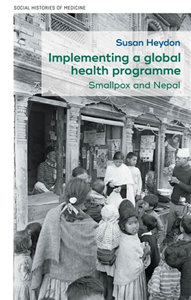
Worldwide eradication of the devastating viral disease of smallpox was devised as a distant global policy, but success depended on implementing a global vaccination programme within nation states. How this was achieved remains relevant and topical for responding to today's global communicable disease challenges. The small and poor Himalayan kingdom of Nepal faced enormous geographical and infrastructure challenges if it was going to succeed in a nationwide vaccination programme. This book acknowledges the key role of the WHO but disrupts the top-down, centre-led standard narrative. Against a background of widespread internal political and social change, Nepal's programme was expanded, effectively decentralised and a vaccination strategy introduced that aligned with people's beliefs. Few foreign personnel were involved.



