
Organisation for Researching and Composing University Textbooks in the Humanities (SAMT)
Over 140 titles of books in cooperation with universities and research centers in countries in Asia and Europe
View Rights Portal
Over 140 titles of books in cooperation with universities and research centers in countries in Asia and Europe
View Rights Portal

This book describes how human rights have given rise to a vision of benevolent governance that, if fully realised, would be antithetical to individual freedom. It describes human rights' evolution into a grand but nebulous project, rooted in compassion, with the overarching aim of improving universal welfare by defining the conditions of human well-being and imposing obligations on the state and other actors to realise them. This gives rise to a form of managerialism, preoccupied with measuring and improving the 'human rights performance' of the state, businesses and so on. The ultimate result is the 'governmentalisation' of a pastoral form of global human rights governance, in which power is exercised for the general good, moulded by a complex regulatory sphere which shapes the field of action for the individual at every turn. This, unsurprisingly, does not appeal to rights-holders themselves.


Infestation with parasites usually causes revulsion in those affected and many infections are kept secret through shame. In recent times there has also been a rise in non-native parasites, which often remain undetected. This book gives an overview of the most significant human parasites as well as their - prevalence - symptoms - treatment possibilities. The text is accompanied by illustrations that help when giving everyday advice. Practical icons show at a glance when, for example, the authorities must be notified and what special things need to be considered. Highly concentrated knowledge in an instant? That’s aporello!
 Trusted Partner
 Trusted Partner

Negotiating sovereignty and human rights takes the transatlantic conflict over the International Criminal Court as a lens for an enquiry into the normative foundations of international society. The author shows how the way in which actors refer to core norms of the international society such as sovereignty and human rights affect the process and outcome of international negotiations. The book offers an innovative take on the long-standing debate over sovereignty and human rights in international relations. It goes beyond the simple and sometimes ideological duality of sovereignty versus human rights by showing that sovereignty and human rights are not competing principles in international relations, as is often argued, but complement each other. The way in which the two norms and their relationship are understood lies at the core of actors' broader visions of world order. The author shows how competing interpretations of sovereignty and human rights and the different visions of world order that they imply fed into the transatlantic debate over the ICC and transformed this debate into a conflict over the normative foundations of international society. ;
Trusted Partner
Who are expatriates? How do they differ from other migrants? And why should we care about such distinctions? Expatriate interrogates the contested category of 'the expatriate' to explore its history and politics, its making and lived experience. Drawing on ethnographic and archival research, the book offers a critical reading of International Human Resource Management literature, explores the work and history of the Expatriate Archive Centre in The Hague, and studies the usage and significance of the category in Kenyan history and present-day 'expat Nairobi'. Doing so, the book traces the figure of the expatriate from the mid-twentieth-century era of decolonisation to today's heated debates about migration.
Trusted Partner
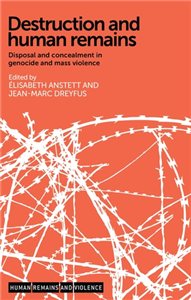
Destruction and human remains investigates a crucial question frequently neglected in academic debate in the fields of mass violence and genocide studies: what is done to the bodies of the victims after they are killed? In the context of mass violence, death does not constitute the end of the executors' work. Their victims' remains are often treated and manipulated in very specific ways, amounting in some cases to true social engineering, often with remarkable ingenuity. To address these seldom-documented phenomena, this volume includes chapters based on extensive primary and archival research to explore why, how and by whom these acts have been committed through recent history. Interdisciplinary in scope, Destruction and human remains will appeal to readers interested in the history and implications of genocide and mass violence, including researchers in anthropology, sociology, history, politics and modern warfare.
Trusted Partner


A hospital somewhere in remote South Sudan. A place where peoples’ lives are marked by extreme poverty, war, violence, the climate crisis and the daily struggle for survival. How does it feel to be human under these conditions? What moves someone to voluntarily go where nobody would want to? Andreas Lutz takes you on a journey to a project run by the humanitarian aid organization Médecins Sans Frontières in the northeast of South Sudan. Impressed by encounters with people who live under the precarious conditions of this crisis zone, he writes about his experiences as a caregiver and, among other things, about how healthcare provision works with very limited resources.
Trusted Partner
Trusted Partner
Trusted Partner

The United Nations is one of the largest providers of assistance in post-conflict situations in the world. This book considers the human rights standards applicable to the United Nations and applied by the United Nations in post-conflict situations, including East Timor, Kosovo and Afghanistan. It looks at legal principles, peace agreements, support of democracy, human rights protection, development and other forms of reconstruction with which the UN has become involved, including the grandly-named task of "state-building". It deals both with the obligation upon the UN to respect human rights in post-conflict situations, and the obligation upon the UN to ensure that human rights are respected by those in positions of power in post-conflict situations. Written by an internationally renowned list of contributors, this book will be of vital use to anyone studying conflict analysis, international relations, international law and the role of the United Nations on the world stage. ;
Trusted Partner

This book critically examines how and why Eastern enlargement has impacted on EU human rights policy. By drawing on the EU's intervention in human rights provision in Romania before 2007, it is demonstrated that the feedback effects of this intervention have led to the emergence of an EU child rights policy. Eastern enlargement has also raised the profile of Roma protection, international adoptions and mental health at the EU level. The impact of these developments has been further reinforced by the constitutional and legal provisions included in the Lisbon Treaty. It is argued that Eastern enlargement has led to the emergence of a more robust and well-defined EU human rights regime in terms of its scope and institutional clout. This book makes a substantial contribution to the scholarship on EU enlargement, Europeanisation and EU human rights policy by providing empirical evidence for the emergence and persistence of EU institutional and policy structures upholding human rights. ;
Trusted Partner


The current debate on the corona virus shows that knowledge, and with that science, plays a central role in the struggle to preserve humanity. Knowledge provides opportunities to influence the world, for better or worse. In times when emotions and appeals to baser instincts often triumph over reason and humanity, Ernst Peter Fischer reminds us of the goal of science that has been pursued since the Enlightenment: “to facilitate the conditions of human existence”. In his new book, the bestselling author takes us on an instructive, varied and enjoyable journey through the history of knowledge and science.
Trusted Partner

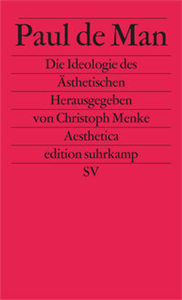
Als Paul de Man 1983 starb, war er der wohl bekannteste und einflußreichste Vertreter einer Richtung der Literaturkritik und ihrer Theore, die allgemein als »dekonstruktiv« bezeichnet wird. Kennzeichnend für diese Richtung ist eine erneute Konzentration auf die innere Verfaßtheit der literarischen Texte. Eine erste Auswahl dieser methodisch vorbildlich wie brillant geschriebenen Texte ist 1988 unter dem Titel »Allegorien des Lesens« in der edition suhrkamp erschienen. Die vorliegende Auswahl konzentriert sich auf die methodologischen und theoretischen Prämissen dieses Vorhabens, wie sie die Abhandlungen über die Zeitlichkeit der Literatur, über Shelley und über die Autobiographie deutlich machen. Sich auf die immanente Verfaßtheit und Bewegung von Texten einzulassen ist nach de Man kein selbstzweckhaftes, folgenloses Unternehmen. De Man beansprucht vielmehr für seine »Rückkehr zur Philologie« eine allgemeine Bedeutung; die Literaturkritik ist zugleich philosophische und politische Kritik. Damit ist der zweite Schwerpunkt dieser Auswahl bezeichnet. De Man erläutert diese These zum einen in kritischer Auseinandersetzung mit der Philosophie Jacques Derridas. Zum anderen zeigt er an zentralen Texten der ästhetischen Tradition, an Kant und Hegel, daß ihr falsches – »ideologisches« – Verständnis literarischer Texte unter der Kategorie des »Ästhetischen« ebenso weitreichende philosophische wie politische Konsequenzen hat.
Trusted Partner

People who have good access to their own resources and can thus meet their basic physical and psychological needs are satisfied and well equipped to get through even difficult times in a healthy way. Resource activation therefore plays a central role in therapy, coaching and counseling. It helps clients to rediscover buried resources and to use available resources for particular and everyday challenges. The fan contains 210 resource-activating questions that can directly be asked to clients and are formulated accordingly. The questions are related to strategies for strengthening physical and mental health, positive experiences, and the activation of resources in various areas of life, such as partnership, family, work, and leisure. The fan is ideal for preparing counseling and therapy sessions. For:• psychotherapists• coaches• counselors• psychiatrists• supervisors• trainers
Trusted Partner
Trusted Partner
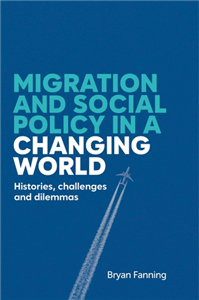
Migration and social policy in a changing world bridges the generally separate fields of social policy and migration studies. This book traces social policy responses to migration from the Industrial Revolution to today's era of globalisation and large-scale migration. Through case studies from across the globe, the book explores key themes including rural-urban migration, social citizenship, welfare internationalism and diasporic care systems. It examines how migrants are included in or excluded from social citizenship in host societies, and how they become providers of welfare services such as health and social care. Moving beyond a methodological nationalist focus, the book investigates migrant incorporation into welfare states through family networks, faith communities, and other informal welfare structures. It combines migrants' experiences with host societies' immigration politics, institutional perspectives and policies to present a comprehensive analysis of the migration-welfare relationship. This volume fills a gap in academic literature and offers policymakers, practitioners and scholars a framework for understanding the interplay between migration and social policy in our changing world.
Trusted Partner
This is the first book to examine the shifting relationship between humanitarianism and the expansion, consolidation and postcolonial transformation of the Anglophone world across three centuries, from the antislavery campaign of the late eighteenth century to the role of NGOs balancing humanitarianism and human rights in the late twentieth century. Contributors explore the trade-offs between humane concern and the altered context of colonial and postcolonial realpolitik. They also showcase an array of methodologies and sources with which to explore the relationship between humanitarianism and colonialism. These range from the biography of material objects to interviews as well as more conventional archival enquiry. They also include work with and for Indigenous people whose family histories have been defined in large part by 'humanitarian' interventions.
Trusted Partner

Im Falle Paul de Mans ist die begriffliche Charakterisierung seines Vorgehens zusätzlich erschwert dadurch, daß die Theorie nie losgelöst von den Texten, an denen sie gewonnen wird, betrachtet werden kann.
Trusted Partner

In this book Kauppi develops a structural constructivist theory of the European Union and critically analyses, through French and Finnish empirical cases, the political practices that maintain the Union's 'democratic deficit'. Kauppi conceptualises the European Union as both an arena for political contention and a nascent political order. In this evolving, multi-levelled European political field, individuals and groups construct material and symbolic structures of political power, grounded in a variety of social resources such as nationality, culture, and gender. The author shows how the dominance of both executive political resources and domestic political cultures has prevented the development of European democracy. Supranational executive networks have become more autonomous, reinforcing the dominance of the resources they control. At the same time, national political cultures condition the political status of elected institutions such as the European parliament. The book is particularly suited for undergraduate and graduate students in the fields of European Politics, European Union Studies and International Relations. ;
Trusted Partner

This series provides texts central to medieval studies courses and focuses upon the diverse cultural, social and political conditions that affected the functioning of all levels of medieval society. Translations are accompanied by introductory and explanatory material and each volume includes a comprehensive guide to the sources' interpretation, including discussion of critical linguistic problems and an assessment of recent research on the topics covered. From 1348 to 1350 Europe was devastated by an epidemic that left between a third and one half of the population dead. This source book traces, through contemporary writings, the calamitous impact of the Black Death in Europe, with a particular emphasis on its spread across England from 1348 to 1349. Rosemary Horrox surveys contemporary attempts to explain the plague, which was universally regarded as an expression of divine vengeance for the sins of humankind. Moralists all had their particular targets for criticism. However, this emphasis on divine chastisement did not preclude attempts to explain the plague in medical or scientific terms. Also, there was a widespread belief that human agencies had been involved, and such scapegoats as foreigners, the poor and Jews were all accused of poisoning wells. The final section of the book charts the social and psychological impact of the plague, and its effect on the late-medieval economy.



