
Hotel de las Ideas
Hotel de las ideas is a cooperative, with 10 co-founders.
View Rights Portal



Men, ideas and tanks reviews the development of British military ideas on armoured forces from 1903 to 1939. Great Britain was the nation which first developed the tank, first used it in action and first gained dramatic results by employment. The British continued to be world leaders in the field of mechanised warfare until the early 1930s. J. P. Harris offers strikingly new interpretations of the early history of British armoured forces and explains why Great Britain had lost the lead by the outbreak of the Second World War. Available in paperback once more, this work will be of interest to all those concerned with British military history in the first half of the twentieth century, with the history of mechanised warfare and with the history of military thought. ;
 Trusted Partner

Written specifically to cover the A2 component of the GCE Government and Politics A-level. Provides a comprehensive introduction to the various political ideas and movements that have shaped the modern world. Underpinned by the work of major thinkers such as Marx, Locke, Weber, Hobbes and Foucault, the book examines at political concepts including the state and sovereignty, the nation and democracy, representation and legitimacy, freedom, equality and rights, obligation and citizenship. Addresses traditional theoretical subjects such as socialism, marxism and nationalism as well as contemporary contemporary movements such as environmentalism, ecologism and feminism. Written in a clear, accessible style, including a number of student-friendly features, such as chapter summaries, key points to consider, definitions and pointers to further sources of information.
Trusted Partner


»Es sind Gedichte der unmöglichen, der unerwiderten, der abwesenden, der verschmähten und verschlampten Liebe ... Voller Verzweiflung und zugleich durchdrungen von der Ahnung, nein: Gewißheit, daß ... ›die Hoffnung vorüber ist. / Was bleibt, ist die Spur ihrer Lüge.‹« Erich Hackl
Trusted Partner
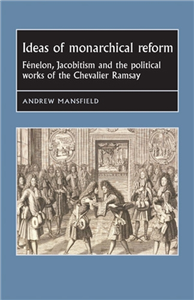
This book examines the political works of Andrew Michael Ramsay (1683-1743) within the context of early eighteenth-century British and French political thought. In the first monograph on Ramsay in English for over sixty years, the author uses Ramsay to engage in a broader evaluation of the political theory in the two countries and the exchange between them. At the beginning of the eighteenth century, Britain and France were on divergent political paths. Yet in the first three decades of that century, the growing impetus of mixed government in Britain influenced the political theory of its long-standing enemy. Shaped by experiences and ideologies of the seventeenth century, thinkers in both states exhibited a desire to produce great change by integrating past wisdom with modern knowledge.
Trusted Partner
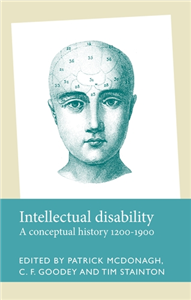
This collection explores the historical origins of our modern concepts of intellectual or learning disability. The essays, from some of the leading historians of ideas of intellectual disability, focus on British and European material from the Middle Ages to the late-nineteenth century and extend across legal, educational, literary, religious, philosophical and psychiatric histories. They investigate how precursor concepts and discourses were shaped by and interacted with their particular social, cultural and intellectual environments, eventually giving rise to contemporary ideas. Intellectual disability is essential reading for scholars interested in the history of intelligence, intellectual disability and related concepts, as well as in disability history generally.
Trusted Partner
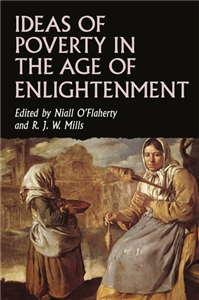
This collection of essays examines the ways in which poverty was conceptualised in the social, political, and religious discourses of eighteenth-century Europe. It brings together experts with a wide range of expertise to offer pathbreaking discussions of how eighteenth-century thinkers thought about the poor. Because the theme of poverty played important roles in many critical issues in European history, it was central to some of the key debates in Enlightenment political thought throughout the period, including the controversies about sovereignty and representation, public and private charity, as well as questions relating to crime and punishment. The book examines some of the most important contributions to these debates, while also ranging beyond the canonical Enlightenment thinkers, to investigate how poverty was conceptualised in the wider intellectual culture, as politicians, administrators and pamphlet writers grappled with the issue.
Trusted Partner
 Trusted Partner
Trusted Partner
Trusted Partner

This is the first book to survey in comparative form the transmission of imperial ideas to the public in six European countries in the nineteenth and twentieth centuries. The chapters, focusing on France, Britain, the Netherlands, Belgium, Germany and Italy, provide parallel studies of the manner in which colonial ambitions and events in the respective European empires were given wider popular visibility. The international group of contributors, who are all scholars working at the cutting edge of these fields, place their work in the context of governmental policies, the economic bases of imperial expansion, major events such as wars of conquest, the emergence of myths of heroic action in exotic contexts, religious and missionary impulses, as well as the new media which facilitated such popular dissemination. Among these media were the press, international exhibitions, popular literature, educational institutions and methods, ceremonies, church sermons and lectures, monuments, paintings and much else.
Trusted Partner

The Irish writer, Deirdre Madden, has written key novels about the Northern Irish Troubles and about contemporary Ireland. In these works, she weighs up the aftermath of violence and the impact of the shift to a more open but materialist society in the country overall. Memory, trauma, and the abiding but elusive links between the past and the present are central concerns of her fiction. This pioneering set of essays by leading experts in Irish Studies explores the many dimensions of her novels from a wide variety of perspectives. Madden's skill at interweaving novels of ideas with artist novels that draw out the complex inner predicaments of her characters is highlighted. States of dislocation are concentrated on in her texts, but also the quest for a home in the world and a lasting set of values that allows for personal integrity and authenticity. These multifaceted explorations bear out the compelling and enduring aspects of Madden's highly regarded novels.
Trusted Partner

This book is premised on the view that the idea of the avant garde has an increased importance in these times of global political crisis. Much cultural production today is shaped by a biopolitics that construes all creative and knowledge production in terms of capital accumulation. A different kind of culture is possible. This collection of writings, essays, interviews and artworks by many of today's most radical cultural practitioners and astute commentators on matters avant garde mediates the different strategies and temporalities of avant-garde art and politics. Tracing diverse genealogies and trajectories, the book offers an inter-generational forum of ideas that covers different arts fields, from visual art, art activism, photography, film and architecture, to literature, theatre, performance, intermedia and music. This is an extraordinarily rich collection and is sure to be a benchmark for many years.
Trusted Partner

This book provides a careful and systematic analysis of Anthony Ascham's career and writings for the first time in English. During the crucial period between the Second Civil War and the establishment of the English Republic, when he served as official pamphleteer of the Parliament and the republican government, Ascham put forward a complex argument in support of Parliament's claims for obedience which drew on the political thought of Grotius, Hobbes, Selden, Filmer and Machiavelli. He combined ideas taken from these authors and turned them into a powerful instrument of propaganda to be deployed in the service of the political agenda of his Independent patrons in Parliament. This investigation of Ascham's works brings together an intellectual analysis of his political thought and an exploration of the interaction between politics, propaganda and political ideas.
Trusted Partner

This book provides the most comprehensive analysis of the post-war political thought of the Liberals and Liberal Democrats to date. The rationale of the book stems from a belief that contemporary debate over the party's future ideological direction can only be fully appreciated by placing it within a broader historical context. The book begins by outlining the three dominant ideological traditions within the Liberals and Liberal Democrats - namely, classical liberalism, the 'centre' and social liberalism. The main ideas, policies and personalities associated with each tradition are evaluated. Leading experts in the field then examine a range of themes and issues including constitutional reform, decentralization, political economy, social morality, internationalism and political strategy. The final section consists of three commentaries from different ideological perspectives written by leading Liberal Democrat MPs - Vincent Cable, David Howarth and Steve Webb. In adopting a new approach to the Liberals and Liberal Democrats and in combining expert analysis with political commentary, this book will be of interest to students and the general reader alike. ;
Trusted Partner

The forgotten legacy of religious Jewish anarchism, and the adventures and ideas of its key figures, finally comes to light in this book. Set in the decades surrounding both world wars, No masters but God identifies a loosely connected group of rabbis and traditionalist thinkers who explicitly appealed to anarchist ideas in articulating the meaning of the Torah, traditional practice, Jewish life and the mission of modern Jewry. Full of archival discoveries and first translations from Yiddish and Hebrew, it explores anarcho-Judaism in its variety through the works of Yaakov Meir Zalkind, Yitshak Nahman Steinberg, Yehudah Leyb Don-Yahiya, Avraham Yehudah Heyn, Natan Hofshi, Shmuel Alexandrov, Yehudah Ashlag and Aaron Shmuel Tamaret. With this ground-breaking account, Hayyim Rothman traces a complicated story about the modern entanglement of religion and anarchism, pacifism and Zionism, prophetic anti-authoritarianism and mystical antinomianism.
Trusted Partner

Fast nichts ist uns Menschen so wichtig wie unser subjektives, bewußtes Innenleben – und doch wissen wir relativ wenig über seine Genese.Benjamin Libet gehört zu den Pionieren auf dem Gebiet der Bewußtseinsforschung und hat zahlreiche Experimente durchgeführt, die gezeigt haben, wie das Gehirn Bewußtsein produziert. In seinem 2004 erschienenen und jetzt auf deutsch vorliegenden Buch Mind Time präsentiert er erstmals eine eigene Deutung seiner berühmten »Libet-Experimente«, die die aktuelle Debatte über die Bedeutung der Hirnforschung für unser Menschenbild überhaupt erst angestoßen haben.Im Zentrum der Experimente steht der Nachweis, daß jedem bewußten Prozeß ein unbewußter, jedoch meßbarer Prozeß zeitlich vorausgeht. Diese zeitliche Differenz – die Mind Time – läßt den Schluß zu, daß unbewußte Prozesse in unserem Gehirn unser Bewußtsein steuern und nicht umgekehrt das Bewußtsein »Herr im Haus« ist. Die vermeintlichen freien Willensakte etwa sind längst initiiert, bevor uns ein Handlungswunsch überhaupt gegenwärtig ist. Libet behandelt die weitreichenden Folgen seiner Entdeckung nicht nur für die Willensfreiheit, sondern auch für die Identität der Person und die Beziehung zwischen Geist und Gehirn. Klar und verständlich dargestellt, ermöglichen Libets Experimente und Theorien es sowohl Spezialisten als auch interessierten Laien, an einem der spannendsten Forschungsprogramme dieser Tage teilzuhaben – der Erforschung des menschlichen Bewußtseins.
Trusted Partner
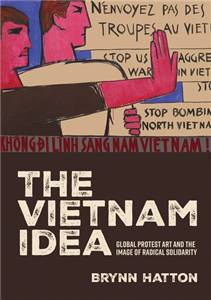
The Vietnam idea examines how Vietnam became a potent symbol for global movements fighting colonialism, racism, and imperialism during the American War and its aftermath. Rather than focusing on Vietnam as a place, Brynn Hatton explores how artists and activists around the world used the idea of 'Vietnam' to express political identification and solidarity through posters, films, protest actions, exhibitions, and conceptual art. Drawing on international archives, the book reveals how diverse visual works helped shape the political imagination of the global left, and continue to influence how we see identity, conflict, and solidarity today.
Trusted Partner

Fast nichts ist uns Menschen so wichtig wie unser subjektives, bewußtes Innenleben – und doch wissen wir relativ wenig über seine Genese. Benjamin Libet gehört zu den Pionieren auf dem Gebiet der Bewußtseinsforschung und hat zahlreiche Experimente durchgeführt, die gezeigt haben, wie das Gehirn Bewußtsein produziert. In »Mind Time« präsentiert er erstmals eine eigene Deutung seiner berühmten »Libet-Experimente«, die die aktuelle Debatte über die Bedeutung der Neurowissenschaften für unser Menschenbild überhaupt erst angestoßen haben. Dieses Buch gehört zu den zentralen Arbeiten der modernen Hirnforschung.
Trusted Partner


Two of today’s leading scientists, Ernst Peter Fischer and Detlev Ganten, reconfirm the legacy of two influential 19th-century researchers. To mark the 200th birthday of Rudolf Virchow (1821–1902) and Hermann von Helmholtz (1821–1894), they explain why pioneering research and holistic thinking are still relevant for health science and practice, and for a sustainable balance of people, society and the environment. The historical achievement of Virchow and Helmholtz continues today with the work of researchers like Emmanuelle Charpentier and Christian Drosten, so ensuring that the humane idea continues to be fruitful in the future. An insight into the history of medical science.
Trusted Partner


The most dangerous people are those you trust. The dismembered body of a young woman is discovered in a forest near Hamburg. Her remains give a terrifyingly vivid account of the unimaginably cruel torture she suffered before her death. She won't be the only victim. Within a very short period of time, more women are discovered. Assistant District Attorney Alex Gutenberg and criminal psychologist Dr. Evelin Wolf feverishly try everything to bring down the serial killer before he takes his next victim. A clue leads them to a severely mentally disturbed inmate of an asylum for the criminally insane. He seems to be the key to solving the current crimes. But the interned remains silent. Evelin has only one chance: She must succeed in penetrating the inmate's tainted mind. But the price is high. Evelin tracks down a terrible secret and suddenly finds her own life at stake…


